Modern Scientific Measurements Fundamentally Depend on Comparison and Counting
📰 Original title: All the Fancy Measuring Devices Used in Science Rely on Two Stone-Age Techniques
🤖 IA: It's clickbait ⚠️
👥 Users: It's clickbait ⚠️
View full AI summary: https://en.killbait.com/modern-scientific-measurements-fundamentally-depend-on-comparison-and-counting.html?utm_source=mastodon_world&utm_medium=social&utm_campaign=killbait.mastodon_world
#science #measurement #instruments
Modern Scientific Measurements Fundamentally Depend on Comparison and Counting
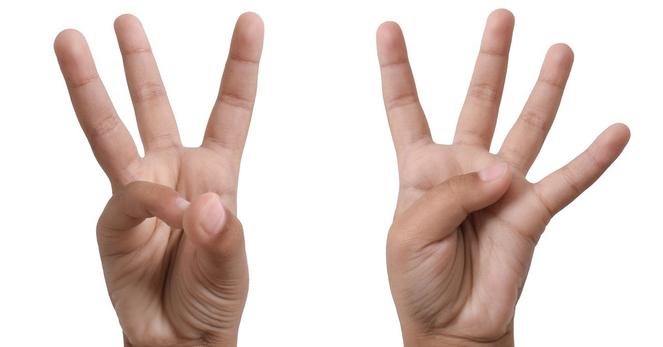
Despite the advanced technology in modern scientific instruments, all measurement fundamentally relies on just two ancient techniques: comparison and counting. Whether determining length, mass, time, or electrical properties, scientists are essentially comparing one quantity to another or counting discrete units. Length measurements, from simple rulers to elaborate devices like balances and force gauges, rely on comparison of distances. Mass is often measured with balance scales to avoid inconsistencies caused by varying gravitational forces. Time measurement, from sundials to analog clocks, also involves comparing positions or distances, such as the shadow cast by a gnomon or the location of clock hands. Digital devices, like timers or voltmeters, operate by counting discrete values, demonstrating that even modern electronics depend on the same basic principles. Various sensors, such as thermistors, convert environmental properties into measurable electrical signals, which can then be quantified through counting or comparison. The article emphasizes that, despite the appearance of sophistication, the underlying principles of measurement have remained consistent since ancient times. This insight shows that science, at its core, boils down to human ingenuity in applying simple methods—comparison and counting—to understand the world.
Modern Scientific Measurements Fundamentally Depend on Comparison and Counting
📰 Original title: All the Fancy Measuring Devices Used in Science Rely on Two Stone-Age Techniques
🤖 IA: It's clickbait ⚠️
👥 Users: It's clickbait ⚠️
View full AI summary: https://en.killbait.com/modern-scientific-measurements-fundamentally-depend-on-comparison-and-counting.html?utm_source=mastodon_social&utm_medium=social&utm_campaign=killbait.mastodon_social
#science #measurement #instruments
Modern Scientific Measurements Fundamentally Depend on Comparison and Counting
Despite the advanced technology in modern scientific instruments, all measurement fundamentally relies on just two ancient techniques: comparison and counting. Whether determining length, mass, time, or electrical properties, scientists are essentially comparing one quantity to another or counting discrete units. Length measurements, from simple rulers to elaborate devices like balances and force gauges, rely on comparison of distances. Mass is often measured with balance scales to avoid inconsistencies caused by varying gravitational forces. Time measurement, from sundials to analog clocks, also involves comparing positions or distances, such as the shadow cast by a gnomon or the location of clock hands. Digital devices, like timers or voltmeters, operate by counting discrete values, demonstrating that even modern electronics depend on the same basic principles. Various sensors, such as thermistors, convert environmental properties into measurable electrical signals, which can then be quantified through counting or comparison. The article emphasizes that, despite the appearance of sophistication, the underlying principles of measurement have remained consistent since ancient times. This insight shows that science, at its core, boils down to human ingenuity in applying simple methods—comparison and counting—to understand the world.
One approach to clarify brand identity - online vs. offline.
Too many contact options or neither at all. Creative mindsets, no flexible solution.
How and where to approach intent that actually is worth the effort?
https://www.linkedin.com/pulse/volume-channel-conversion-uplift-jovica-petrovic-0416e
#Emissions #Advertising
#Measurement #Sustainability

Volume - channel conversion uplift
One social media channel profile for each (product) solution. The direct-to-consumer vs.
This year's theme emphasises the that accurate, internationally recognised measurements provide the vital, objective scientific evidence that governments need to make informed, transparent, and enforceable public policies.
#worldmetrologyday #metrology #metreconvention #measurements #measurement #measurementscience #internationalsystemofunits #systèmeinternationaldunités #metricsystem #raiseawareness #raisingawareness #sofiaflorina #ソフィアフロリナ
Happy World Metrology Day, 20 May, 2026. 2026 Theme: "Metrology: Building Trust in Policy Making". This year, we celebrate the 151st anniversary of the signing of the Metre Convention - a milestone that underscores a century and a half of international collaboration in measurement science.
#worldmetrologyday #metrology #metreconvention #measurements #measurement #internationalsystemofunits #systèmeinternationaldunités #metricsystem #raiseawareness #raisingawareness #sofiaflorina #ソフィアフロリナ
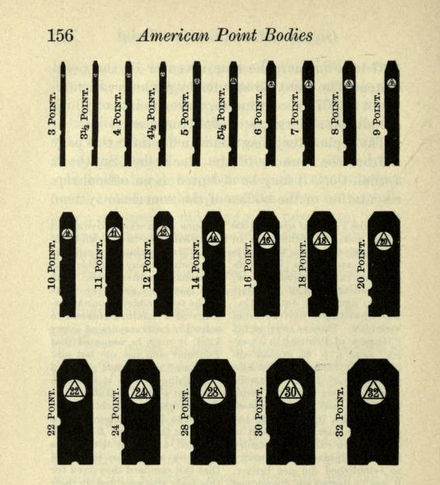
Points are a weird and inconsistent unit of measure
Where Webtech and LaTeX can't agree
Points are a weird and inconsistent unit of measure
Where Webtech and LaTeX can't agree
Evaluation is a measurement problem. If you can't define what success looks like operationally, your evaluation framework is measuring noise.
#Evaluation #Measurement #AI
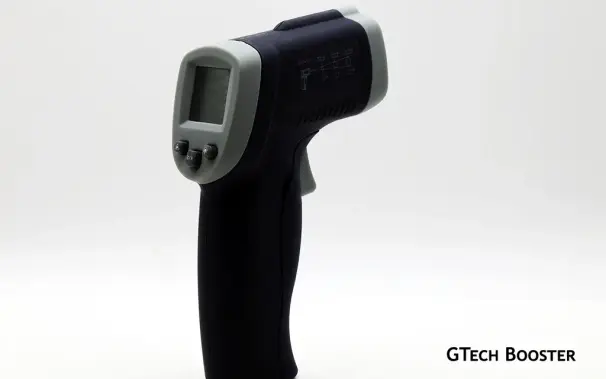
Why the thermometer gun – The science of modern screening
If you grew up before the digital age, a temperature check usually meant sitting still with a cold glass rod tucked under your armpit for three long minutes. Today, we use guns that do the job in a second. Here is the science, safety, and why this shift happened.
 KillBait News
 KillBait
 Lumotraq
 Sofia Florina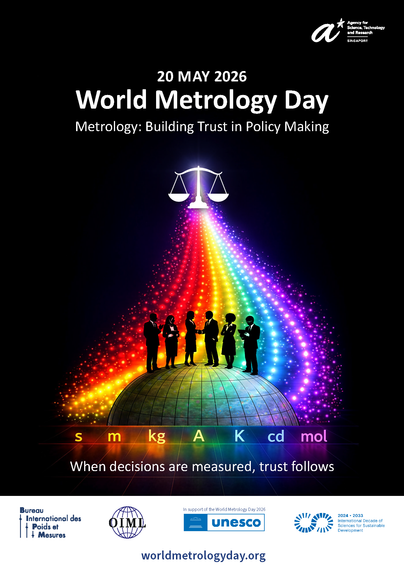
 Hacker News
 Hacker News
 The Durability Curve
 GTech Booster
 💧🌏 Greg Cocks