
A career is built on decisions.
A vocation is built on something deeper—something that does not let go.
The question is: do you follow it?
https://www.linkedin.com/feed/update/urn:li:activity:7467847679818219520
#Vocation #LongTermThinking #GrowthMindset #SelfDevelopment #SelfDiscovery #DareToDream #Courage

#vocation #purposedrivenwork #careergrowth #leadership #personaldevelopment #emberhart #character #davidbrooks #decisionmaking | Emberhart

Moments That Matter: The Hidden Cost of Not Paying Attention Most people move through life without fully noticing the weight of the moments they are in. Decisions are made quickly, attention shifts constantly, and meaning is often recognized only in hindsight. Yet the ability to stay present long enough to truly see what is unfolding is rare. Presence is not passive awareness; it is an active discipline of noticing what others overlook while it is still happening. There is also a deeper challenge beneath this. Very few people take the time, or develop the strength, to think things through with patience and honesty. In a world that rewards speed and reaction, sustained reflection has become uncommon. Many respond to life as it happens rather than engaging with it deeply enough to understand what it is asking of them. The result is not a lack of information, but a lack of clarity. This combination—limited presence and limited reflection—shapes the way most life choices are made. Important signals are missed, and meaningful directions are often delayed or ignored. Yet within these ordinary moments lies the possibility of something different: the ability to slow down, to stay with experience long enough to understand it, and to think carefully enough to recognize what truly matters. Unlike careers, vocations are rarely linear. They unfold through uncertainty, doubt, and moments where the cost seems higher than the reward. Yet what distinguishes vocation is this: walking away feels harder than continuing. Many people can abandon a job. Few can ignore what continually draws them back. Often, this begins with a moment of clarity—an experience of beauty, curiosity, or meaning that captures attention and quietly narrows the path forward. In a world that encourages endless options, vocation brings focus by revealing what truly matters. This path is not meant to be walked alone. Mentors, experience, and deliberate practice shape the journey. Over time, the work evolves into something deeper than performance—it becomes a relationship between your strengths and the needs of the world. Choosing such a path is not without trade-offs. Every meaningful decision closes other doors. Yet within that constraint lies clarity. The question is not whether the path is easy, but whether it feels alive. In the end, vocation is less about certainty and more about responsiveness. It asks for action, commitment, and the willingness to begin before everything is clear. Because in a world full of choices, the rarest advantage is not knowing exactly where to go—it is having the courage to follow what continues to call. 📚 https://lnkd.in/d3JucvAf #Vocation #PurposeDrivenWork #CareerGrowth #Leadership #PersonalDevelopment #Emberhart #Character #DavidBrooks #DecisionMaking
LinkedIn
The Wisdom of Systems: Accumulation, Threshold, and the Inevitability of Correction

A deep systems essay on compounding, critical thresholds, collapse, resilience, and renewal—explaining why correction is built into complex systems.

Reviews, Rants & Raves
#atomichabits #behaviorchange #consistency #growthmindset #selfimprovement #jamesclear #habittracking #nevermisstwice #emberhart | Emberhart

How to Make Atomic Habits Stick for Life Sustainable change doesn’t come from intensity—it comes from consistency that feels rewarding enough to repeat. One of the most overlooked truths in behavior change is simple: we don’t repeat what’s logical—we repeat what’s satisfying. The real challenge isn’t starting a good habit, it’s making it enjoyable enough to sustain over time. The most effective habits close the gap between effort and reward. While long-term outcomes take time, small, immediate wins create the momentum we need today. Whether it’s tracking progress, creating visible cues, or celebrating small completions—what gets rewarded gets repeated. Consistency beats perfection. Missing once is human; missing twice is where patterns begin to break. Progress is not about flawless execution, but about returning quickly and reinforcing the identity you’re building. At the same time, be mindful: metrics are tools, not the goal. When we focus only on numbers, we risk losing sight of the behavior and identity behind them. Accountability can accelerate growth. When commitments become visible and consequences immediate, intentions turn into action. And when habits align with your natural strengths and interests, consistency becomes far less of a struggle. The key is finding that balance—the “just challenging enough” zone where growth stays engaging. Because the real difference between short-term motivation and long-term success is the ability to keep showing up, even when it gets repetitive. 🔍 https://lnkd.in/dEcwQa4c Small actions may feel insignificant in isolation—but over time, they compound into something far greater: a new standard, a new identity, a new trajectory. #AtomicHabits #BehaviorChange #Consistency #GrowthMindset #SelfImprovement #JamesClear #HabitTracking #NeverMissTwice #Emberhart

LinkedIn

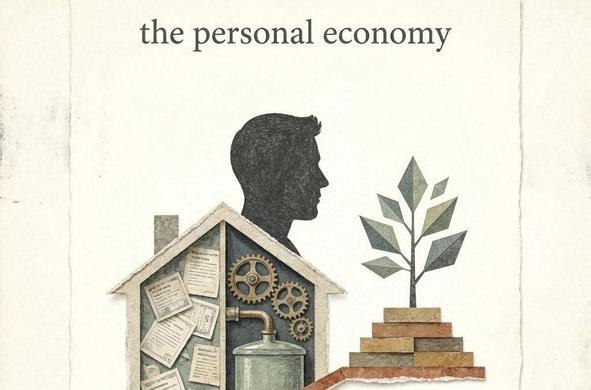
A paycheck is not a personal economy. This essay explores the real difference between earning money and building a financial system strong enough to compound, absorb shocks, and create autonomy over time.

This Part 01 Of What The Sandpile Knows Essays Series: a series on wrong maps, category errors, structural betrayal, personal economy, crisis, and renewal.

👇
https://reviewsrantsandraves.substack.com/p/the-personal-economy-why-most-people

#Economics #SystemsThinking #PersonalEconomy #DecisionMaking #LongTermThinking #FinanceEssay #Autonomy

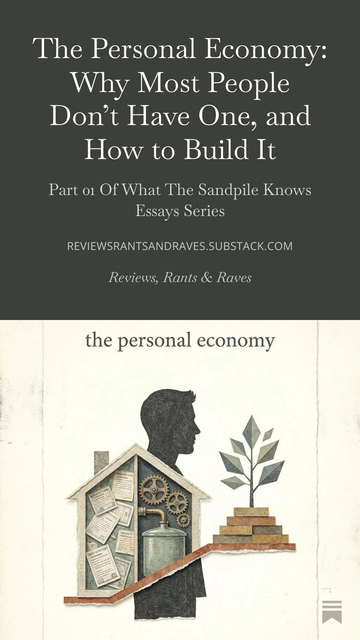
The Personal Economy: Why Most People Don’t Have One, and How to Build It

Most people have income, but not a personal economy. This essay explains how surplus, compounding, resilience, and governance create real financial autonomy.

Reviews, Rants & Raves

Most people don’t have a personal economy. They have a paycheck, a stack of bills, and a plan that works as long as nothing goes wrong.

This essay is about the difference between earning money and building a system that can actually survive life: one with surplus, compounding, resilience, and rules that protect the future from short-term drift.

Essay 👇
https://reviewsrantsandraves.substack.com/p/the-personal-economy-why-most-people

#PersonalFinance #Compounding #FinancialAutonomy #SystemsThinking #WealthBuilding #RiskManagement #LongTermThinking

Markets don’t reward effort—they reward timing, discipline, and risk control. Most retail investors lose not because they lack opportunities, but because they overreact to noise. Real wealth is built by staying positioned when others are emotionally exiting positions. Volatility is not the enemy; it is the price of entry for long-term asymmetry. Think in cycles, not days.
#investing #finance #wealthbuilding #longtermthinking #marketstrategy
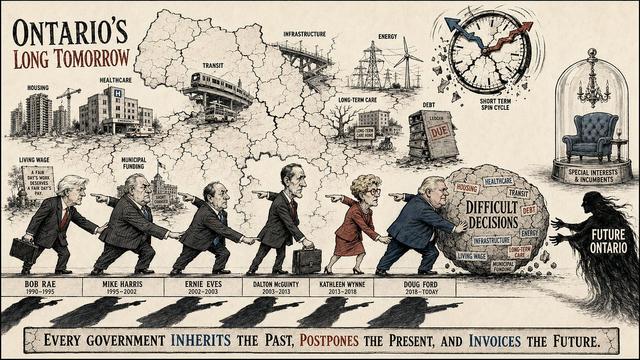
Ontario’s Long Tomorrow: Political Temporal Myopia and the Province That Keeps Billing the Future

A sharp analysis of how Ontario’s political system delays costs, defers responsibility, and quietly shifts today’s problems into tomorrow’s crisis.

Curmudgeonly Canadian

Writing for the Unborn

By Cliff Potts, CSO, and Editor-in-Chief of WPS News

Baybay City, Leyte, Philippines — May 3, 2026, 10:05 a.m.

Most of what I write will not be read today. That is not pessimism. That is structure. The timeline I’m working on does not reward immediacy. It rewards survival. Platforms shift, audiences drift, and attention resets every morning like nothing came before it. If I measure the work by what happens in the first twenty-four hours, then the work will always look like failure. So I don’t. I measure it by whether it still exists when someone goes looking for it later.

That changes how you write. You stop trying to win the moment and start trying to leave a record. You choose clarity over cleverness. You document what actually happened, not what plays well. You accept that most people will scroll past, and that some of the people who need it most have not even been born yet. That is the audience. Not the crowd. Not the algorithm. The future reader who stumbles into a piece of writing and realizes someone was paying attention when it mattered.

For more from Cliff Potts, see https://cliffpotts.org

If this work helps you understand what’s happening, help me keep it going: https://www.patreon.com/cw/WPSNews

#archives #audience #digitalPreservation #IndependentJournalism #longTermThinking #WPSNews #writing