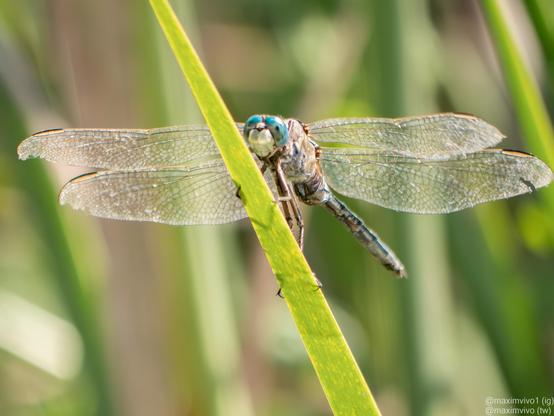
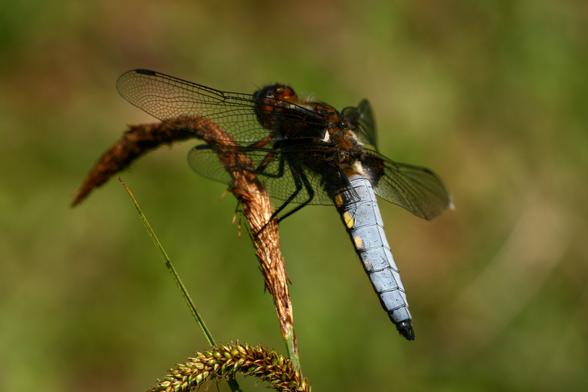
Libellula depressa (fam. Libellulidae). Macho/Male.
[ES] ¿Sabéis distinguir las libélulas de los caballitois del diablo? Ambos son odonatos, pero se clasifican en diferentes subórdenes: Anisotpera y Zygoptera, respectivamente. Se diferencian muy bien:
– Ojos: los de las libélulas se tocan, los de los caballitos del diablo están separados.
– Alas: las libélulas mantienen las alas extendidas cuando se posan, y estas no se estrechan en la base; los odonatos las juntan sobre su cuerpo y se estrechan hacia la base (como "raquetas").
– Cuerpos: en general, las libélulas son más grandes y robustas que los caballitos del diablo.
Según lo anterior, está claro que la de la foto es una libélula (y encima se llama Libellula). La hembra de esta especie tiene un color amarillo parduzco, mientras que el macho es gris pulverulento, como el de la foto.
Fotografiada el 01/05/2026 en la provincia de Bizkaia.
[EN] Do you know how to distinguish a dragonfly from a damselfly? It's easy:
– Eyes: in dragonflies the eyes touch, while in damselflies are separated.
– Wings: dragonflies keep their wings open when they are still, while damselflies join them over their bodies.
– Bodies: dragonflies are bigger and more robust than damselflies.
So, the one in the photo is a dragonfly. The female of this species is yellowish brown, while the male is blueish.
Photographed on 2026/05/01 in the province of Bizkaia (Spain).
Equipo/Equipment: Canon EOS 400D + Tamron SP 90 mm f/2.8 Di MACRO 1:1
ISO 100, s 1/200, f/8,0. A pulso/Handheld.
#odonata #anisoptera #libellulidae #libellula
#libélula #dragonfly #insecto #insect #bicho #bug
#macro #macrophotography #macrofotografía Fredensborg
 Diego Pastor
 Jens
Jens
 Dr. Jamaica
 Gonny
Gonny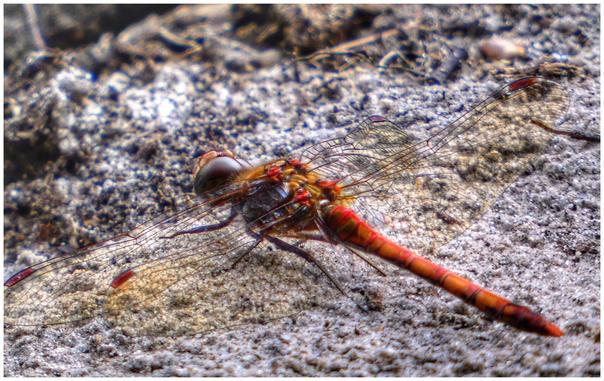
 FonsecAsturias
 Tronsawyer
 Màxim Castillo Vivó