Updates: Recent Science Fiction Purchases No. CCCXLIX (Aldous Huxley, Joyce Thompson, John Collier, and an anthology of stories from The Magazine of Fantasy and Science Fiction)

Which books/covers/authors intrigue you? Which have you read? Disliked? Enjoyed?

1. The Best from Fantasy and Science Fiction, 8th Series, ed. Anthony Boucher (1959)

  • Ed Emshwiller’s cover for the 1963 edition

From the back cover: No summary blurb.

Contents: C. S. Lewis’ “Ministering Angels” (1955), Poul Anderson’s “Backwardness” (1958), Kit Reed’s “The Wait” (1958), Isaac Asimov’s “The Up-to-Date Sorcerer” (1958), Fritz Leiber’s “A Deskful of Girls” (1958), Damon Knight’s “Eripmav” (1958), Brian W. Aldiss’ “Poor Little Warrior!’ (1958), Shirley Jackson’s “The Omen” (1958), Jules Verne’s “Gilt Braltar” (1887), Avram Davidson’s “The Grantha Sighting” (1958), C. M. Kornbluth’s “Theory of Rocketry” (1958), John Shepley’s “Gorilla Suit” (1958), Zenna Henderson’s “Captivity” (1958), and Alfred Bester’s “The Men Who Murdered Mohammed” (1958)

Initial Thoughts: I love anthologies. I need to finally tackle a Zenna Henderson story!

2. Aldous Huxley’s Island (1962)

  • Emanuel Schongut’s cover for the 1972 edition

From the back cover: Contains no clear blurb about the book. I’ve quoted the blurb from SF Encyclopedia: “Island (1962) presents a utopian alternative to the previous books, though without much energy. Pala and Rendang – the primary Islands in question – are set safely in the Indonesian Archipelago, and Pala in particular has long enjoyed a mildly euphoric existence, sustained spiritually by religious practices derived from Tantric Buddhism, and physically by moksha, a sort of benign soma, whose psychedelic effects – as shared by the island’s inhabitants in unison – smooth the rough edges of the world. But the book itself is powerless to convince.”

Initial Thoughts: I’ve read, and enjoyed, Huxley’s Brave New World (1932) and the bizarre Ape and Essence (1948) (which I never managed to review). When I saw Islands (1962) in the bargain bin at my local used book store foe $1, I couldn’t resist.

3. Joyce Thompson’s Conscience Place (1984)

  • Jackie Morris’ cover for the 1986 edition

From the back cover: “The People of the Place are the victims of progress, although they are unaware of their physical deformities, and their existence, in a community somewhere in America, is a closed guarded secret from a guilty world.

For the People are the mutant offspring of nuclear plant workers. Loved and cherished by the Fathers, they are allowed to live out their brief lives in dignity and harmony and in something approaching joy. Until their miniature civilization is threatened by the very ones who nurture them.

In the ensuring struggle to survive, the People learned the bitter truth of who they are and the lessons of their history.”

Initial Thoughts: Not sure where I learned of this one. SF Encyclopedia, in its limited fashion, aims a kind description its way.

4. John Collier’s Tom’s A-Cold (1933)

  • Uncredited (“K” initial) cover for the 1st edition

From the inside flap: Unfortunately, copies with dust jackets are FAR too expensive for me to purchase. Here’s the blurb from SF Encyclopedia: “Radically dissimilar to his most familiar work is Tom’s A-Cold (1933; vt Full Circle 1933), a remarkably effective Scientific Romance set in a 1990s Ruined Earth, long after an unexplained Disaster has decimated England’s (and presumably the world’s) population and thrust mankind back into rural barbarism, a condition out of which the eldest survivors, who remember civilization, are trying to educate the young third generation. The simple plot plays no tricks on the reader: the young protagonist, a born leader, rises through raids and conflict to the chieftainship, undergoes a tragedy, and reconciles himself at the novel’s close to the burdens of a government which will improve the lot of his people. Throughout the novel, very movingly, Collier renders the reborn, circumambient natural world with a hallucinatory visual intensity found nowhere else in his work. Along with Alun Llewellyn’s The Strange Invaders (1934), Tom’s A-Cold can be seen, in its atmosphere of almost loving conviction, as a genuine successor to Richard Jefferies’s After London (1885).”

Initial Thoughts: I encountered a few mentions of this one in Andrew Hammond’s monograph Cold War Stories: British Dystopian Fiction, 1945-1990 (2018). Clute’s blurb above makes it out to be a real winner. Can’t wait to read this one.

For book reviews consult the INDEX

For cover art posts consult the INDEX

For TV and film reviews consult the INDEX

#1930s #1960s #1980s #AldousHuxley #avantGarde #bookReviews #JohnCollier #JoyceThompson #sciFi #scienceFiction
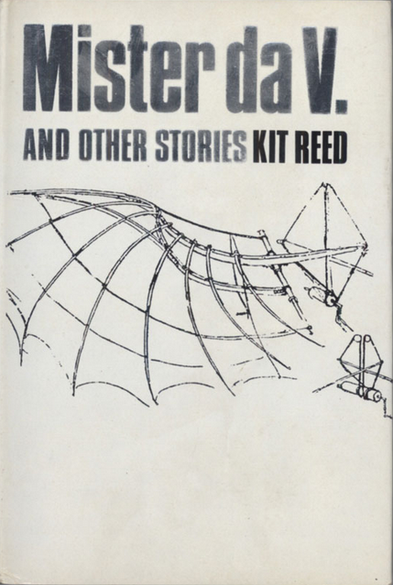
Book Review: Mister Da V. and Other Stories, Kit Reed (1967)

(Uncredited cover for the 1967 edition) 4.25/5 (collated rating: Good) Kit Reed has been publishing literary, thought-provoking, and darkly satirical sci-fi + speculative fiction + non-genre fictio…

Science Fiction and Other Suspect Ruminations

Updates: Recent Science Fiction Purchases No. CCCXLVIII (Eric Frank Russell, Ben Bova, Pat Frank, and John Collier)

Which books/covers/authors intrigue you? Which have you read? Disliked? Enjoyed?

1. Men, Martians, and Machines, Eric Frank Russell (1955)

  • Paul Lehr’s–uncredited but certainly his style–cover for the 1965 edition

From the back cover: “VOYAGE OF THE MARATHON. Even at the time when space ships were making regular voyages across the universe, the MARATHON was a remarkable craft. Powered by the Flettner system, its speed was so great that for the first time exploration of the outer galaxies was made possible.

MEN, MARTIANS AND MACHINES describes some of the great voyages made by the MARATHON. There was, for example, the planet which was solely inhabited by machines–survivors, perhaps, from a civilization in which the first machine-makers had perished. On another planet, the inhabitants had developed the power of hypnotism to a fantastic degree, so that the observer saw only what he was willed to see.”

Contents: “Jay Score” (1941), “Mechanistria” (1942), “Symbiotica” (1943), “Mesmerica” (1955).

Initial Thoughts: I’ve only indirectly explored a few of Russell’s visions. I selected this one as the Jay Score / Marathon sequence stories contain examples of early genre magazine non-white characters.

2. Forbidden Area, Pat Frank (1956)

  • Barye Phillips’ cover for the 1957 edition

From the back cover: “ONLY SEVEN AMERICANS KNEW WHAT WAS COMING. The time of the enemy attack was cunningly chosen–Christmas Eve in a nation sleeping in peace.

Death would rain down from giant bombers–horror, fire and destruction.

Only seven Americans–six men and one girl in a secret room in the Pentagon–knew absolutely, factually, and without the shadow of a doubt that the United States was about to be destroyed.

They knew there wasn’t much time left. They told the brass; they reported to their general. But nobody would listen to them.

AND TOMORROW WAS CHRISTMAS EVE.”

Initial Thoughts: Yes, this might not be technically SF. However, it’s a nuclear-themed thriller that might be in Frank’s “near future.” I recently read Frank’s Alas, Babylon (1959) and wanted to read a bit more of his work. I also adore the cover!

3. The Exiles Trilogy, Ben Bova (1980)

  • Uncredited cover for the 1st edition

From the back cover: “EXILED TO THE STARS! They were Earth’s best and brightest: the brilliant young generation of scientists who were the last hope of an overburdened planet.

But their breakthrough in genetic engineering threatened the despotic World Government, and they were rewarded for their success by the cruelest punishment ever devised.

Banned from Earth forever, they turned their exile into humankind’s greatest adventure. They left behind a million years of evolution and embarked on a one-way voyage across the Universe!”

Contents: Exiles from Earth (1971), Flight of Exiles (1972), End of Exile (1973)

Initial Thoughts: I am aware that these novels are most likely bottom-of-the-barrel generation ship stories. To add insult to injury, my cover is misprinted at an angle. However, I am on a (misguided?) quest to read all pre-1985 examples of the subgenre. If you’re new to the site, here’s my index on the topic. Also, here’s my most recent installment of my series: Mari Wolf’s “The First Day of Spring” (1954) and Francis G. Rayer’s “Continuity Man” (1959).

4. Tom’s A-Cold, John Collier (1933)

  • Uncredited (there’s a “K” initial) cover for the 1st edition

From the inside flap: My edition came sans dust jacket. Couldn’t find a pristine edition within my price range. Alas.

Initial Thoughts: All I know about this one are a few brief mentions in Andrew Hammond’s Cold War Stories: British Dystopian Fiction, 1945-1990 (2017) and the substantial SF Encyclopedia entry that I’ll reproduce for you:

“Radically dissimilar to his most familiar work is Tom’s A-Cold (1933; vt Full Circle 1933), a remarkably effective Scientific Romance set in a 1990s Ruined Earth, long after an unexplained Disaster has decimated England’s (and presumably the world’s) population and thrust mankind back into rural barbarism, a condition out of which the eldest survivors, who remember civilization, are trying to educate the young third generation. The simple plot plays no tricks on the reader: the young protagonist, a born leader, rises through raids and conflict to the chieftainship, undergoes a tragedy, and reconciles himself at the novel’s close to the burdens of a government which will improve the lot of his people. Throughout the novel, very movingly, Collier renders the reborn, circumambient natural world with a hallucinatory visual intensity found nowhere else in his work. Along with Alun Llewellyn’s The Strange Invaders (1934), Tom’s A-Cold can be seen, in its atmosphere of almost loving conviction, as a genuine successor to Richard Jefferies’s After London (1885).”

Sounds great!

For book reviews consult the INDEX

For cover art posts consult the INDEX

For TV and film reviews consult the INDEX

#1940s #1950s #1960s #1970s #benBova #bookReviews #books #EricFrankRussell #fiction #JohnCollier #PatFrank #sciFi #scienceFiction
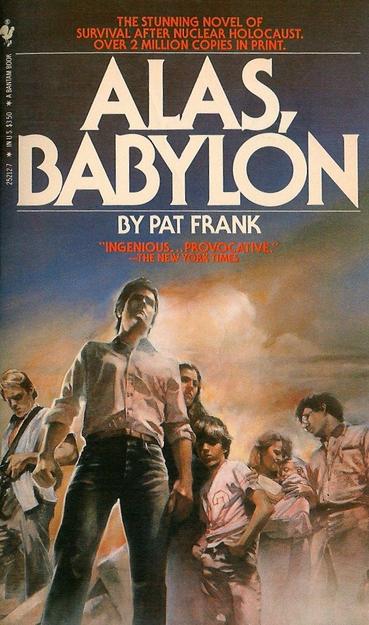
Book Review: Alas, Babylon, Pat Frank (1959)

Uncredited cover for the 1960 edition of Pat Frank’s Alas, Babylon (1959) 4/5 (Good) Pat Frank (1907-1964) began his writing career working for local papers in northeastern Florida before a s…

Science Fiction and Other Suspect Ruminations
John Collier crosses my path

* writing on Cabaret I find its antecedent stage-play, written by John Van Druten, award winner, 1952/53, where it adapted and dramatised Christopher Isherwood's Goodbye to Berlin, in turn adapted into a film bearing the same title as the play, I Am a Camera, screenplay by John Collier * . . . who is

outside light

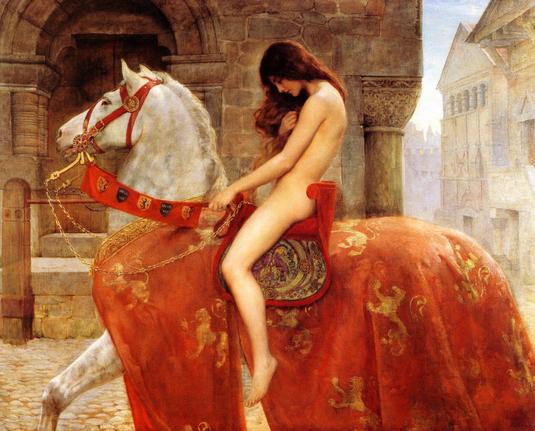
« Lady Godiva », 1897

by John Collier (british painter, 1850-1934)
oil on canvas, 142x183 cm

#vintagefantasyart #fantasyart #fantasyillustration #preraphaelites #medievalism #JohnCollier #ladygodivaofcoventry

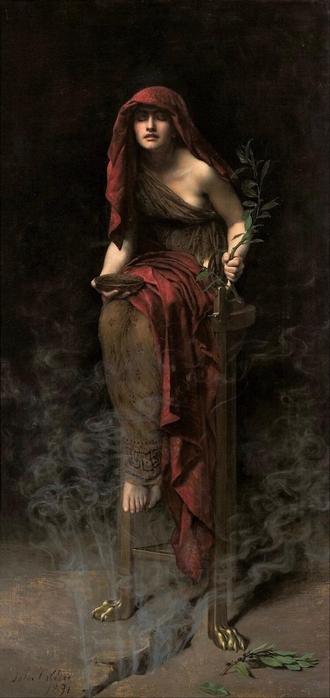
Priestess of Delphi (1891) by John Collier
#art #JohnCollier

I've found what I was looking for:
"Why not go to mythology? Are we saving the heroic storylines for something else?"

I'll write HeroPunk (aka DefeatPunk / TolkienPunk)
Fight the hopeless battle as if our future depends on it. It does

"[S}tory — one of our original and most critical survival tools — is what we need now."

https://www.noemamag.com/its-time-to-give-up-hope-for-a-better-climate-get-heroic/

via [email protected]

#JRRTolkien #PamelaSwanigan #JohnCollier #TheLongDefeat #TheLordOfTheRings #Heroes #story #myth #defeatPunk

It’s Time To Give Up Hope For A Better Climate & Get Heroic

For humanity’s fight against climate change to gain real momentum, we need to find the selfless courage that comes when our time is inevitably nigh.

NOEMA

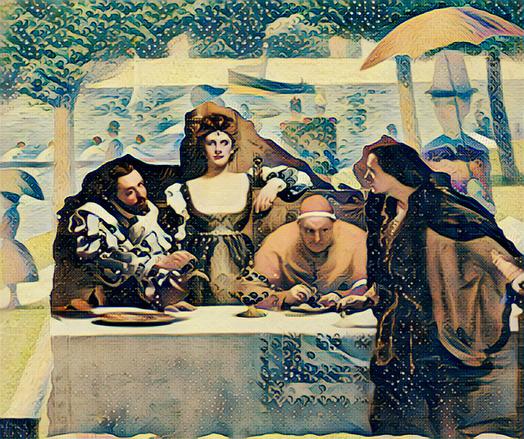
Sunday in The Park with The Borgias - This musical, in the tradition of Sondheim, a Romantic Comedy set in the Renaissance & Paris in the late 1800s, has an ironic edge that speaks to our times.

#StephenSondheim #Sondheim #MusicalTheatre #SundayInThePark #AGlassOfWineWithCaesarBorgia #JohnCollier #GeorgesSeurat
#AlternativeHistoryOfTheatre

Clean Energy*

Near Pittsburgh, Pennsylvania. Champion no. 1 coal cleaning plant. Loading cars with clean coal. (Nov. 1942)

John Collier Jr., 1913-1992

https://americanimage.ideum.com/biography.html

#photography #history #JohnCollier

*Sorry, coudn't resist. 😅

Biography - The American Image - The Photographs of John Collier Jr.

The American Image - The Photographs of John Collier Jr.  An interactive online photography exhibit which includes a collection, activities, and mashups exploring the vintage photographs from the World War Two era.

Lady Godiva
#painting by John Collier, 1897
#JohnCollier #art #erotic #nude #nsfw

Lilith’s dance
Birdsong in motion
My faith asunder

Image: Lilith - John Collier 1887

#575Prompt @aethelshane #asunder
#DailyHaikuPrompt #BirdSong
#Lilith #JohnCollier #PreRaphaelite