Emulador de IMSAI 8080 con Teensy 4.1

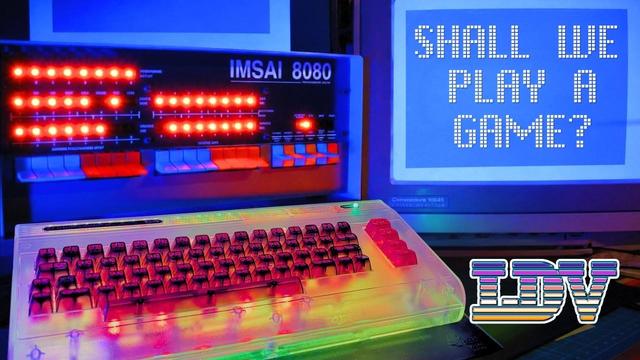
En este artículo vamos a emular sobre una Teensy 4.1 el IMSAI 8080, protagonista indiscutible de la historia de la informática.

Sobre IMSAI 8080

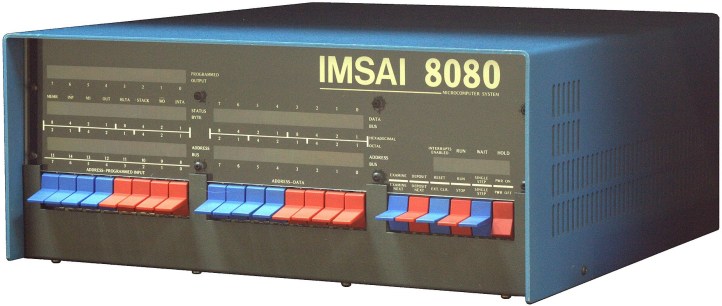
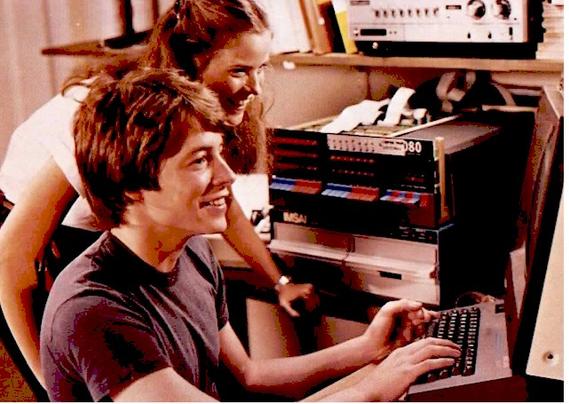
El éxito del Altair 8800 llevó a los ingenieros de IMSAI a desarrollar una versión mejorada, lo que supondría el primer clon de la historia de la informática. Esta máquina en particular consiguió el estatus de icónica al ser protagonista de la película de primeros de los 80 «Juegos de Guerra».

A nivel de arquitectura, mantenía el procesador Intel 8080 a 2 MHz, 4 KB de RAM y el bus S-100, aunque se integraba en una carcasa de aluminio más robusta, una fuente de alimentación más potente y una placa madre con 22 ranuras de expansión.

Emulador

Utilizaremos como base el emulador de IMSAI 8080 integrado en Z80pack.

Cambios en nuestro emulador

Se realizan cambios en el código original incluyendo:

  • Se deshabilita el panel LED y switches.
  • No se emula la APU.
  • Se conservan los archivos estrictamente necesarios para ejecutar el emulador.
  • El módulo imsai-hal.c se reimplementa para Teensy como imsai_hal_teensy.cpp.
  • Siempre usa la ROM MPU-A.
  • Se añaden comandos locales para la carga de archivos de disco DSK:
    • L X file.dsk: monta archivo imagen de disco file.dsk desde microSD en unidad X (A–D)
    • B: arranca unidad A
    • B X: arranca unidad X.
    • S: muestra estado de las cuatro unidades: archivos cargados y si permite boot.
    • [Ctrl][R]: reinicio software.
  • Se mantiene embebida imagen de IMDOS 2.02 como opción de arranque sin microSD.

Entorno e instalación del emulador

Elementos

Vamos a necesitar los siguientes elementos:

  • Placa Teensy 4.1.
  • Tarjeta microSD con formato FAT32.

Instalación

Nos basta con descargar el código fuente de GitHub.

$ git clone https://github.com/RafaGS/imsai4Teensy.git

Construimos los binarios y los subimos a la placa.

Preparación de la microSD

Prepararemos una microSD en formato FAT32 donde creamos un directorio imsai y ahí pondremos los archivos DSK.

Emulación

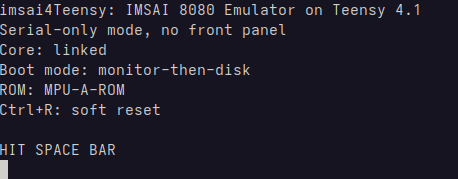
Una vez realizada la subida, y conectada la microSD a la Teensy, nos conectamos vía serie. Aparecerá información sobre el emulador. Pulsaremos la barra espaciadora para comenzar la emulación.

Aparecerá la versión del monitor ROM de IMSAI.

IMSAI IEEE MONITOR VERS 1.0

Dispondremos de un prompt en forma de interrogante.

CP/M 2.2

Comenzaremos por CP/M, por lo que indicaremos con L que cargue el disco correspondiente.

?L A cpm22.dsk

A lo que el sistema nos dará una confirmación.

[LOADED A: cpm22.dsk]

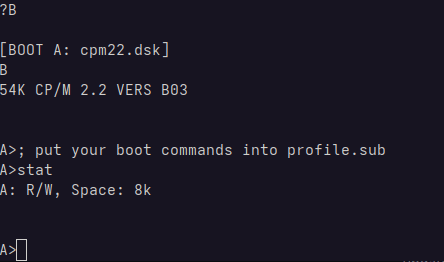
Con la instrucción B, arrancaremos el sistema operativo.

Comenzaremos por CP/M, por lo que indicaremos con L que cargue el disco correspondiente.

?L A cpm22.dsk

A lo que el sistema nos dará una confirmación.

[LOADED A: cpm22.dsk]

Con la instrucción B, arrancaremos el sistema operativo.

Una vez que aparece el prompt de CP/M, podemos realizar tareas típicas en este sistema.

Podemos volver al monitor en cualquier momento mediante la pulsación de [Crtl][R].

IMDOS

IMDOS es la particularización de CP/M para IMSAI. Vamos a cargarlo mediante la orden L.

?L A imdos202.dsk

A lo que el sistema nos dará una confirmación.

[LOADED A: imdos202.dsk]

Asimismo, agregaremos en la unidad B el disco de BASIC.

?L B xybasic.dsk

Con la instrucción B, arrancaremos el sistema operativo.

Desde el prompt, podremos realizar tareas típicas.

Podemos, por ejemplo, ejecutar BASIC. Para ello, iremos a la unidad B y ejecutaremos XYCPMBCB.

A>B: B>XYCPMBCB

Se ejecutará el BASIC, pidiéndonos la típica información de ancho de pantalla y memoria.

Finalmente, podremos escribir un nuevo «Hola mundo».

#1975 #IMSAI #Intel8080 #PJRCTeensy41

IMSAI 8080 - You know that computer from War Games

https://makertube.net/w/wPFE51rS1KmpaV2GmvH9HD

IMSAI 8080 - You know that computer from War Games

PeerTube

IMSAI 8080 - You know that computer from War Games

https://makertube.net/w/8mZyNmgP1ZqVw1gyB3A1Kt

IMSAI 8080 - You know that computer from War Games

PeerTube
After printing some switch caps for the #Imsai-8080 clone, I give the mouse cover a try. The electronic was included as a goodie, the case for self print.
#BambuLab #X1C

The Secret Father of Modern Computing: How Ed Roberts created the personal computer industry—and then walked away

https://every.to/the-crazy-ones/the-secret-father-of-modern-computing

#Altair #computinghistory #computers #vintagecomputing #retrocomputing #retrocomputers #vintagecomputers #S100 #CPM #8080 #IMSAI #EdRoberts #ACM

The Secret Father of Modern Computing

How Ed Roberts created the personal computer industry—and then walked away

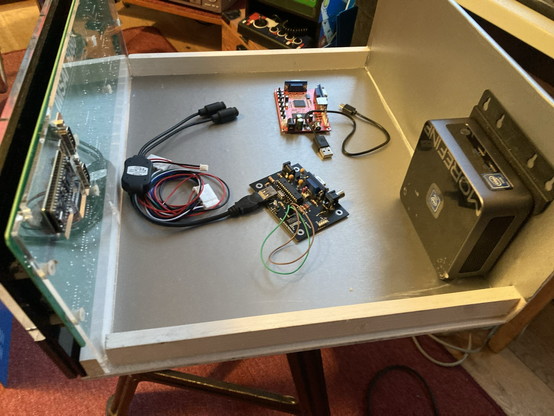
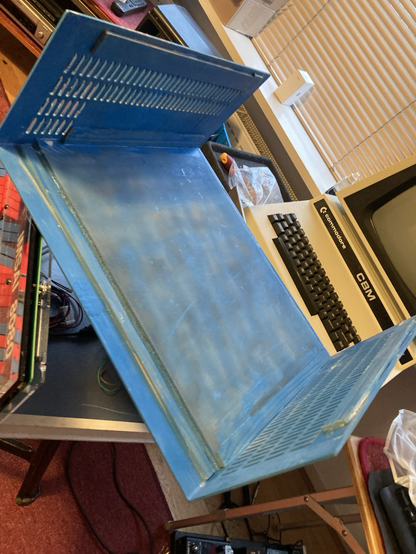
Hier ist das Resultat meines 3D Druck-Marathons. Eine Full Size Case für das IMSAI 8080 Repro Kit von The High Nibble. Insgesamt wäre es wahrscheinlich schneller und besser gegangen wenn ich das gleich in Metall hätte biegen lassen. Ansporn ist ist aber immer: “Selber machen ist immer besser als andere fragen.” Das Case bietet nun Platz für Netzteile, Retro-Scaler, VT 100 Emulator und Mini-PC. #retrocomputing #altecomputer #imsai #IMSAI8080 #3ddrucker #commodore #vectrex

#WritersCoffeeClub Ch 12 Nbr 15 FEV— Have you used any form of AI to help in creating your work? Do you have a red line? Where is it? Full Essay Version

I've been around long enough that I remember when the #Altair 8080 (the first commercial personal computer) got a full page ad in Scientific American. My BFF and I talked about it after school (11th grade, I think?) for hours. I had my own slimline phone on my own extension. I was a privileged kid. The #computer club had a teletype connection to a computer that ran #BASIC. We also had access to an #IBM mainframe assembler using #MIS (pencil in) punch cards. A friend built an #IMSAI 8080 with 256 bytes of memory and it played songs we could listen to by tuning to part of the FM band influenced by the frequency of bits passing through the memory buss.

Why do I bring this up? The first things we programmed (after ping-pong on the toggle switch lights, Star Trek, and later adventure games) where types of artificial intelligence. We've been "teaching" computers to "think" for us since we could rip them away from the greedy money grubbers who wanted to do things like accounting and payroll. Current concepts of AI rely on pattern matching against databases, in very simplified terms. Early #AI were procedural, and if it solved your math problem, spelled your word correctly, or found data in the noise, it was intelligent. It is inescapable that unless we write longhand or type on a typewriter, that we have used what someone terms AI.

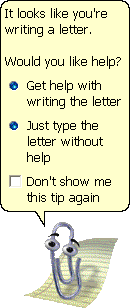
Anybody remember Clippy?

The key to this question, and how I am going to take it, is to focus on the word "creating." To me, that highlights generating something. Text. Graphics. Though this implies #genAI (the current thing, something like #Diffusion or #ChatGPT). It also means graphic tools that I use to remove and add image elements to photos, or otherwise intelligently improve them in ways I could imagine but was previously incapable due to lack of talent, practice, or understanding of the unenhanced tools.

As for text, I remember once writing a chatbot psychologist. IF-THEN-ELSE. In BASIC, back in high school or it may have been in an equivalent language on a DEC-10 at university. It did not pass the Turing Test, but it could lift one's mood, which could help with me "creating" work!

I've no interest in using something like chatGPT to build a story from prompts. It would be the program's story, not mine. It would be a Cliff Notes version of an unwritten story, summarized, never provided a soul, before even being written. Because these things work by pattern matching and predicting what would be the next word (based on an average of everybody's writing or specific genres or authors), it would be pure statistical fabrication—not even fabulation, which implies creative fantasy. It would be a story with none of the emotion, feeling, or meaning I'd put into it. It would be phantom chatter masquerading as wit through statistical randomness. No enlightenment possible, except by accident.

As an author, why would I even try to replace myself, or create the tools for others to try to do the same? I suspect people that do, do so as I wrote above because they are "incapable due to lack of talent, practice, or understanding of the tools." I'll add, also laziness, though I tar myself with the same brush as I wrote above.

Never discount greed. Authors cost money. Computers cost once.

In any case, the AI tools built into the software I do use barely save me time as it is. I can't start a dictation with the 1st person personal pronoun on any of my systems. Statistically, more people start dictation with "Hi" then "I," so I always have to correct that. Thanks to auto-incorrect, even the words I spell correctly (few enough as it is) get changed. In this very article, the tool insisted I had a "teletype connection to a commuter!" Not only do I have to be aware of my own tendency toward grammar issues and typos, I have to proof for AI typos, including chaining typos since the tools keep track of some meaning and can spawn a hellacious brew of misconception and embarrassment should it slip out to readers. I know what I mean to write. Sometimes I find myself overruled by my own tools.

Have I used AI? Not genAI. Procedural tools, yes. Not for willingly generating text.

Red line? Yes. No generating story or text. What's the point?

[Author retains copyright (c)2024 R.S.]

#BoostingIsSharing and #CommentingIsCool

#fiction #romance #fantasy #sf #sff #sciencefiction #writing #writer #writers #author #writingcommunity #writersOfMastodon
#RSdiscussion #theComingLaborApocalypse

Гэри Килдалл — изобретатель, предприниматель, легенда

11 июля 1994, ровно 30 лет назад, ушел из жизни Гэри Килдалл, автор операционной системы CP/M, ставшей стандартом индустрии в начале 1980-х. Часто говорят, что Килдалл – человек, который должен был стать Биллом Гейтсом. Весельчак, изобретатель, программист, миллионер, телеведущий, просветитель, математик – таким мы его запомнили. Многие из обителей Хабра выросли на его телепередачах о компьютерах. И почти все встречались с его наследием, хоть и не всегда знали об этом. История Гэри Килдалла — это история о творческом гении и предпринимательском духе, которые привели к созданию одной из самых важных операционных систем в истории вычислительной техники. Его инновационные идеи до сих пор актуальны для современных технологий.

https://habr.com/ru/companies/timeweb/articles/824154/

#timeweb_статьи #cp/m #гэри_килдалл #ms_dos #dos #билл_гейтс #PL/M #intel #msft #ibm #история_осб #digital_research #IMSAI

Гэри Килдалл — изобретатель, предприниматель, легенда

11 июля 1994, ровно 30 лет назад, ушел из жизни Гэри Килдалл, автор операционной системы CP/M, ставшей стандартом индустрии в начале 1980-х. Часто говорят, что Килдалл – человек, который должен был...

Хабр