Pancreatic Cancer Drug. University of Cincinnati oncologists have developed a drug that stops pancreatic cancer from suppressing the anti-tumor immunity that threatens to eradicate it. #pancreatic #cancer #immunotherapy #hsp70 #sapCDOPG
https://www.instagram.com/p/DPa20mdDoub/
Howard G. Smith MD, AM on Instagram: "Pancreatic Cancer Drug University of Cincinnati oncologists have developed a drug that stops pancreatic cancer from suppressing the anti-tumor immunity that threatens to eradicate it. Using a pre-clinical mouse pancreatic cancer model, the researchers pinpointed that the protein Hsp70 is produced by the cancer cells to defuse the anti-cancer immune response. Their next step was to find an antidote Hp70. That they did by developing the rescue agent SapC-DOPG. This drug adheres to pancreatic cancer cells, inhibits Hsp70, and destroys the tumor’s shield against killer T lymphocytes. The next step is to bring this rescue compound and others like it into the clinic for an array of trials. Hopefully, they will confirm the effectiveness of this concept and join the fight against this dread disease…..someday soon. #pancreatic #cancer #immunotherapy #hsp70 #sapCDOPG"

0 likes, 0 comments - drhowardsmithreports on October 5, 2025: "Pancreatic Cancer Drug University of Cincinnati oncologists have developed a drug that stops pancreatic cancer from suppressing the anti-tumor immunity that threatens to eradicate it. Using a pre-clinical mouse pancreatic cancer model, the researchers pinpointed that the protein Hsp70 is produced by the cancer cells to defuse the anti-cancer immune response. Their next step was to find an antidote Hp70. That they did by developing the rescue agent SapC-DOPG. This drug adheres to pancreatic cancer cells, inhibits Hsp70, and destroys the tumor’s shield against killer T lymphocytes. The next step is to bring this rescue compound and others like it into the clinic for an array of trials. Hopefully, they will confirm the effectiveness of this concept and join the fight against this dread disease…..someday soon. #pancreatic #cancer #immunotherapy #hsp70 #sapCDOPG".

Instagram

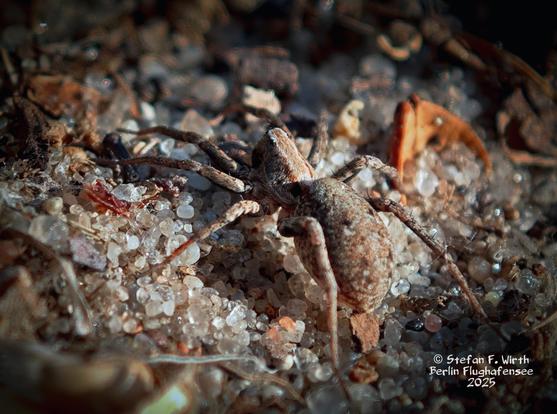
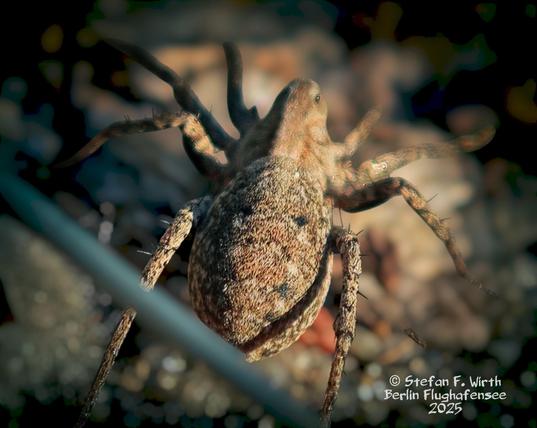
The burnt #wolfspider, #Xerolycosa #nemoralis (#Lycosidae, #Araneae), is a #species of #spider native to Eurasia that prefers dry #habitats, hunts prey actively and rests in a self-dug burrow. The authors A. Bednarek et al. (2016) studied the spider's response to thermal #stress in form of an increased #Hsp70 (protein/ enzyme complex) synthesis in by humans polluted environments. #Biodiversity
© #StefanFWirth #Berlin 2025

A. Bednarek et al. (2016)
https://doi.org/10.1016/j.ecoenv.2016.04.027

#Photos
© S F. Wirth

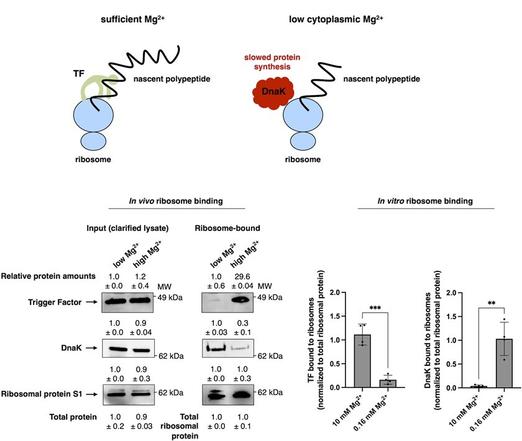
#Hsp70 chaperones preserve #ProteinSynthesis by promoting folding & preventing aggregation. @microbelab reports a new role of Hsp70 in #Salmonella survival during low Mg2+ conditions by binding to the #ribosome & reducing protein synthesis #PLOSBiology https://plos.io/4431K1j
Chaperone Hsp70 helps Salmonella survive infection-relevant stress by reducing protein synthesis

Hsp70 chaperones preserve protein synthesis by promoting protein folding and preventing its aggregation. This study reports a new role of Hsp70 in Salmonella enterica survival during low Mg2+ conditions by binding to the ribosome and reducing protein synthesis.

Researchers discover how mitochondria call for help when under stress

As life propagated across Earth in the form of the widest variety of single-celled organisms, sometime between 3.5 and 1 billion years ago one such organism managed an evolutionary coup: Instead of devouring and digesting bacteria, it encapsulated its prey and used it as a source of energy. As a host cell, it offered protection and nutrition in return.

Phys.org
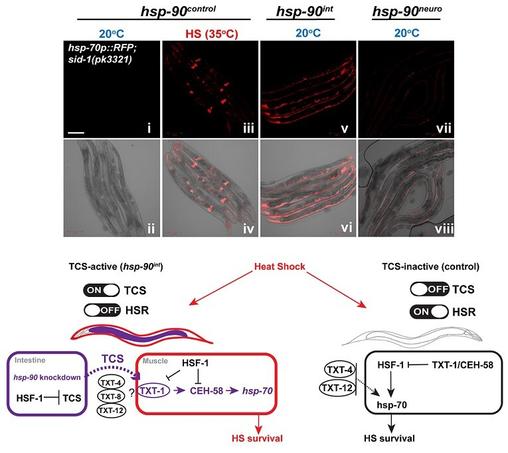
How does transcellular activation of #chaperone Hsp70 occur? @HawleLab &co reveal a gut-to-muscle stress signaling pathway that activates #Hsp70 expression in muscle cells, independently of HSF-1, enhancing both stress resistance & longevity #PLOSBiology https://plos.io/3jRbUzp
Transcellular chaperone signaling is an intercellular stress-response distinct from the HSF-1–mediated heat shock response

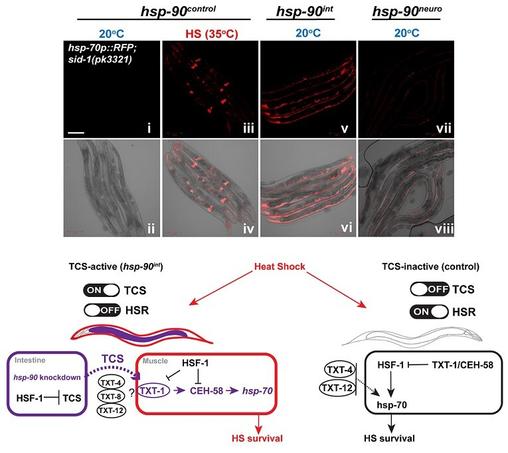
The transcellular activation of Hsp70 chaperone from one tissue to another is poorly understood. A study in the nematode Caenorhabditis elegans reveals a gut-to-muscle stress signaling pathway that activates Hsp70 expression in muscle cells independently of HSF-1, enhancing both stress resistance and longevity.

How does transcellular activation of #chaperone Hsp70 occur? @HawleLab &co reveal a gut-to-muscle stress signaling pathway that activates #Hsp70 expression in muscle cells, independently of HSF-1, enhancing both stress resistance & longevity #PLOSBiology https://plos.io/3jRbUzp
Transcellular chaperone signaling is an intercellular stress-response distinct from the HSF-1–mediated heat shock response

The transcellular activation of Hsp70 chaperone from one tissue to another is poorly understood. A study in the nematode Caenorhabditis elegans reveals a gut-to-muscle stress signaling pathway that activates Hsp70 expression in muscle cells independently of HSF-1, enhancing both stress resistance and longevity.

How does transcellular activation of #chaperone Hsp70 occur? @HawleLab &co reveal a gut-to-muscle stress signaling pathway that activates #Hsp70 expression in muscle cells, independently of HSF-1, enhancing both stress resistance & longevity #PLOSBiology https://plos.io/3jRbUzp
Transcellular chaperone signaling is an intercellular stress-response distinct from the HSF-1–mediated heat shock response

The transcellular activation of Hsp70 chaperone from one tissue to another is poorly understood. A study in the nematode Caenorhabditis elegans reveals a gut-to-muscle stress signaling pathway that activates Hsp70 expression in muscle cells independently of HSF-1, enhancing both stress resistance and longevity.

For those interested, our most recent paper on #ExtracellularVesicles from uterine smooth muscle cells. More on the way!

#pregnancy #uterus #chaperones #Hsp70

https://www.publish.csiro.au/rd/RD20242

Inducible heat shock protein A1A (HSPA1A) is markedly expressed in rat myometrium by labour and secreted via myometrial cell-derived extracellular vesicles

The myometrium goes through physiological, cellular and molecular alterations during gestation that necessitate effective cellular proteostasis. Inducible heat shock protein A1A (HSPA1A) is a member of the 70-kDa heat shock protein A (HSPA) family, which acts as a chaperone to regulate proteostasis; however, HSPA1A also participates as a cytokine in inflammatory regulation, leading to its designation as a chaperokine. This study examined the spatiotemporal expression of HSPA1A protein in the rat myometrium throughout gestation and assessed whether it is secreted as cargo of myometrial cell-derived extracellular vesicles (EVs). Immunoblot analysis demonstrated that HSPA1A expression was markedly elevated during late pregnancy and labour and increased by uterine distension. Myometrial HSPA1A expression in situ increased in myocytes of longitudinal and circular muscle layers from Day 19 through to postpartum, specifically in the cytoplasm and nuclei of myocytes from both muscle layers, but frequently detectable just outside myocyte membranes. Scanning electron microscopy examination of samples isolated from hTERT-HM cell-conditioned culture medium, using EV isolation spin columns, confirmed the presence of EVs. EV lysates contained HSPA8, HSPA1A and the EV markers apoptosis-linked gene 2-interacting protein X (Alix), the tetraspanin cluster of differentiation 63 (CD63), tumour susceptibility gene 101 (TSG101) and HSP90, but not the endoplasmic reticulum protein calnexin. These results indicate that HSPA1A may act as a chaperokine in the myometrium during pregnancy.

CSIRO PUBLISHING
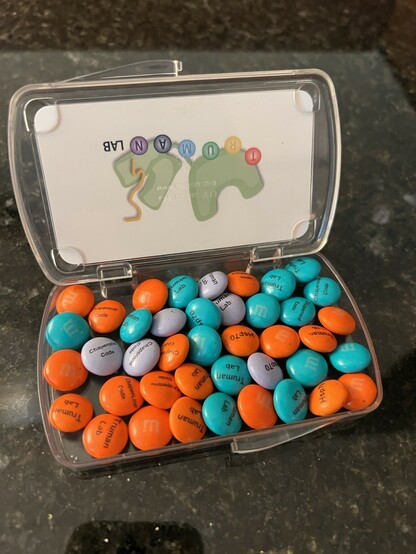
Chaperone code m&m’s ready to give out at #CellBio2022 😀 #chaperone #hsp70 #science
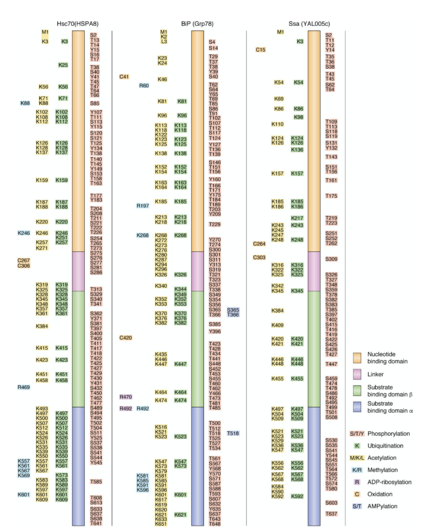
Proteomic studies have uncovered a huge number of post-translational modifications on chaperones (over 100!). We like to think of these #PTMs like keys on a piano. Stresses to cells like heat or DNA damage cause a unique combination of keys (PTMs) to be played making a song (unique #Hsp70 function). We are trying to match stresses to each PTM and work out the function of this "chaperone code" in normal and cancerous cells. For more, please see: https://www.sciencedirect.com/science/article/pii/S0021925817501076?via%3Dihub