 Patrick G. Eddington
Coming tomorrow re: #FISA and more. Subscribers only, but it's free so sign up now to get it Monday morning: www.therepublicsentinel.com
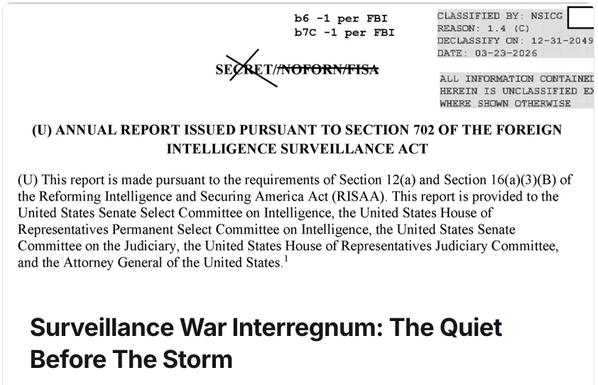

Foreign intelligence can touch Americans’ data, so guardrails matter. The CIA and NSA need tools to track foreign threats, but oversight keeps those tools from becoming domestic spying. #FISA #Privacy #NationalSecurity #homelandsecurity #terrorism

Why I'm leaving #GitHub
source: jorijn.com/en/blog/leaving-git…
TL;DR • GitHub logged 257 incidents in May 2025 to April 2026, 48 of them major. The CTO publicly apologised and said capacity needs to scale 30x to keep up with AI-driven load.
• In August 2025 GitHub stopped having its own CEO. It is now a unit of Microsoft's #CoreAI division, the same group building Copilot and the broader AI stack.
• On April 24, 2026 GitHub flipped #Copilot Free, Pro, and Pro+ user-interaction data to opt-in for AI training by default. There is no repository-level opt-out.
• US-jurisdictional risk under #FISA Section 702 and the CLOUD Act is unresolved. Microsoft's own attorney told the French Senate under oath he could not #guarantee #EU data was safe from silent US #government access.
So tell me why do they still use GitHub?
#news #software #privacy #ai #economy #fail #problem #ethics #protest #foss #floss #opensource #code #coder #developer #nerd #hacker #usa #politics #freedom #internet #online #service #control #access #technology #economy #platform #criticism #future #society #microsoft #bigdata #bigtech #power
House Republicans blocked Trump's push to extend FISA surveillance powers, marking a rare defeat for the president and weakening Speaker Johnson's position.
https://worldbriefly.news/trump-suffers-rare-defeat-as-house-republicans-revolt-over-fisa-extension

"We're entering an era of automated, turbo-charged assaults on privacy – and as tech companies give the government new AI-driven means of monitoring Americans at a massive scale, we're also seeing a bipartisan resistance from elected leaders to update the privacy rules of engagement for a new future.
This dynamic was witnessed this past week in the bipartisan passage of an extension to a key spy bill, but also through a deluge of less-publicized privacy-eroding bills collectively defining a new era of government-obtainable user data.
Evolving Surveillance Threats
The Foreign Intelligence Surveillance Act of 1978, or FISA, has long served as a controversial pillar of how the U.S. conducts surveillance abroad. It allows federal law enforcement and intelligence agencies to intercept the digital communications of foreign nationals located outside the United States without warrants, and is one of the most controversial pillars of modern surveillance policy.
At the center of FISA is a secretive court that reviews and approves government requests to conduct surveillance, without the knowledge of the person being monitored. While intended to target foreign individuals outside the United States, FISA surveillance inevitably sweeps more broadly. Because online networks are global, FISA surveillance can also extend to individuals who are not themselves under investigation. As a result, entirely domestic conversations can be collected, stored, and queried by intelligence agencies without requiring a traditional warrant.
Despite controversy over FISA, a bipartisan coalition within the U.S. House of Representatives just approved a three-year extension of the spy power program, declining to make any revisions."
https://www.yahoo.com/news/articles/era-mass-surveillance-taking-shape-204900849.html
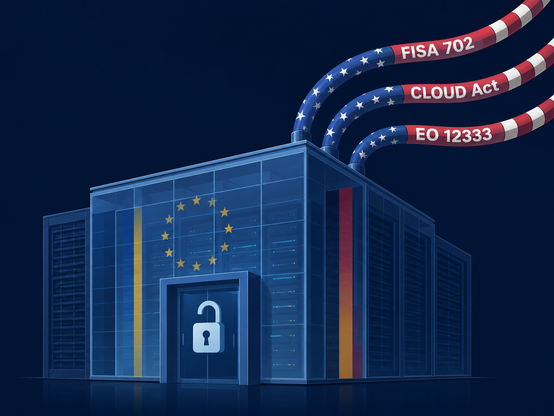
Google & Microsoft publient deux fois par an leurs rapports sur
les demandes gouvernementales de données. Mais derrière les
assignations ordinaires se cache une seconde couche : FISA 702,
le CLOUD Act et EO 12333 — des lois américaines qu'aucune
clause de résidence des données ne peut neutraliser.
Au H1 2025, les demandes FISA ont touché 177.000+ comptes
Google et 33.000+ comptes Microsoft.
 Spy Stuff
 Script Kiddie

 BINJ.News
 World Briefly
 InformactionsMC
 Miguel Afonso Caetano
 BeLibre