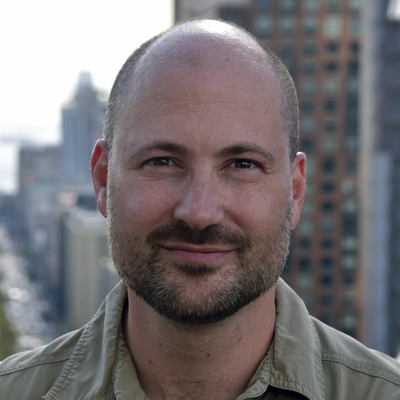
 Noam Ross
What's a good gift for someone going off to start a (disease ecology) Ph.D. program?
 Haven D'Angelo, MS
I don't think I wrote a new #introduction when I migrated from .social.
I'm a #computational #InfectiousDisease #epidemiologist and #biostatistician. I work on #CausalInference and #NetworkScience methods in ID Epi and #DiseaseEcology #DisEcol
I'm a #computational #InfectiousDisease #epidemiologist and #biostatistician. I work on #CausalInference and #NetworkScience methods in ID Epi and #DiseaseEcology #DisEcol
Super excited about the latest piece of art I commissioned from the amazing Rosemary Hartman (https://www.etsy.com/shop/RosiesColoredGlasses):
"Host Pathogen Data Model", a quadriptych in stained glass.

RosiesColoredGlasses - Etsy
Shop Stained glass with optimism. by RosiesColoredGlasses located in Sacramento, California. Smooth shipping! Has a history of shipping on time with tracking. Speedy replies! Has a history of replying to messages quickly. Rave reviews! Average review rating is 4.8 or higher
 EPPIcenter at UCSF
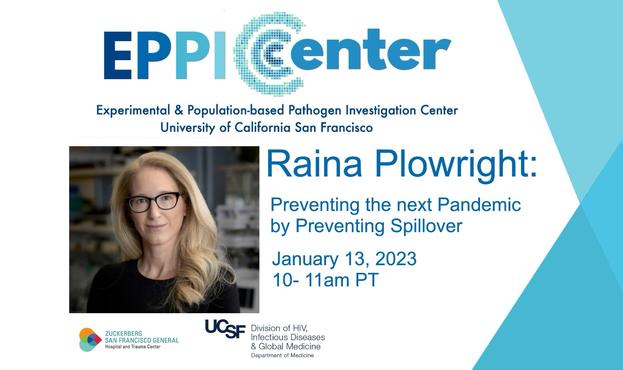
Jan 13 at 10am pst
Raina Plowright: Preventing the next Pandemic by Preventing Spillover
@epiverse
@idjclub #IDMastodon #onehealth #pandemics #spillover #DiseaseDynamics #epiverse #DisEcol #Bats #GlobalHealth
Spread the word @noamross
@DNAdataPhile
@ProfKen
@EdMHill
@olireiv
@ddestoum
@maciekboni
@andreashandel
https://calendar.ucsf.edu/event/eppicenter_seminar_raina_plowright_5699

Out from the EHA team + longstanding USAID PREDICT + IDRC collaborators: Prevalence of bat viruses associated with land-use change in Brazil
"We found that deforested sites had a less diverse bat community than forested sites, but higher viral prevalence and richness...In particular, viruses from the Coronaviridae family were detected more frequently in generalist species compared to specialist species."
https://www.frontiersin.org/articles/10.3389/fcimb.2022.921950/full
#OneHealth #EpiVerse #DiseaseEcology #DisEcol #Bats #JournalCLub

Prevalence of bat viruses associated with land-use change in the Atlantic Forest, Brazil
IntroductionBats are critical to maintaining healthy ecosystems and many species are threatened primarily due to global habitat loss. Bats are also important hosts of a range of viruses, several of which have had significant impacts on global public health. The emergence of these viruses has been associated with land-use change and decreased host species richness. Yet, few studies have assessed how bat communities and the viruses they host alter with land-use change, particularly in highly biodiverse sites.MethodsIn this study, we investigate the effects of deforestation on bat host species richness and diversity, and viral prevalence and richness across five forested sites and three nearby deforested sites in the interior Atlantic Forest of southern Brazil. Nested-PCR and qPCR were used to amplify and detect viral genetic sequence from six viral families (corona-, adeno-, herpes-, hanta-, paramyxo-, and astro-viridae) in 944 blood, saliva and rectal samples collected from 335 bats.ResultsWe found that deforested sites had a less diverse bat community than forested sites, but higher viral prevalence and richness after controlling for confounding factors. Viral detection was more likely in juvenile males located in deforested sites. Interestingly, we also found a significant effect of host bat species on viral prevalence indicating that viral taxa were detected more frequently in some species than others. In particular, viruses from the Coronaviridae family were detected mo...
Two positions on in my computational research group at EcoHealth Alliance: an entry-level research/admin assistant and a data scientist position. Join a great organization on a team working on disease ecology and emergence forecasting!
https://ecoevo.social/@noamross/109478803985142282
https://ecoevo.social/@noamross/109478840554235551
#DataScience, #RStats, #Epidemiology #DiseaseEcology #DisEcol @jobsecoevo @rstats #EpiVerse #DataDon #Job

Noam Ross (@[email protected])
Content warning: JOB (1 of 2!): Research Data Scientist, Disease Ecology, NYC/Remote
Check out these Simuliidae larvae hanging out on a stream rock. Turns out they are previously unknown hosts of Onchocerca volvulus, which causes river blindness, and maintain it in the Ituri Highlands of DR Congo.
Story, photos and (wriggly) video at the post below, tremendous science in the paper above! 👆
https://www.ecohealthalliance.org/2022/12/plos-oncho-drc #OneHealth #EpiVerse #DiseaseEcology #DisEcol #Epidemiology

Tremendous work by this North-South team, including my colleague Anne Laudisoit and #EcoHealthNet-supported students, finding that river blindness in the Ituri Highlands of DR Congo is locally maintained by a previously unknown vector (S. dentulosum). Implies that cryptic vectors could carry the disease in other regions!
https://journals.plos.org/plosntds/article?id=10.1371/journal.pntd.0010684
@epsteinjon #InfectiousDisease #OneHealth #DisEcol #Epidemiology
Looking for the servers or hashtags that #EpiTwitter folks have been landing in the #twittermigration. I see just a trickle across the #InfectiousDisease #OneHealth #EpiMastadon #EpiStats #DisEcol hashtags.
Hi all! My #introduction:
I'm a computational ecologist interested in disease dynamics (#DisEcol!), zoonotic spillover, spatiotemporal processes and the intersection of mechanistic models, Bayes + ML. I work at EcoHealth Alliance, an NGO focused on the links between conservation + health.
I do a fair bit of #rstats and lead a project at @rOpenSci facilitating peer-review of scientific software.
I'm Brooklyn-based, and will sometimes toot about local #NYC politics, #cycling and #bikepacking.