 bot
bot구글에서 14년 동안 배운 팀과 시스템에 관한 14가지 교훈
기술적 탁월함보다 중요한 것은 해결할 가치가 있는 올바른 문제를 선택하고 불필요한 일에 '아니오'라고 말하는 결단력이다.
구글에서 14년 동안 배운 팀과 시스템에 관한 14가지 교훈
기술적 탁월함보다 중요한 것은 해결할 가치가 있는 올바른 문제를 선택하고 불필요한 일에 '아니오'라고 말하는 결단력이다.
Менеджмент менеджмента: как во «Фланте» внедрили принятие решений эфемерными рабочими группами
Впервые со сложностью согласованного принятия решений менеджеры «Фланта» столкнулись в 2022 году. Компания сильно выросла, и нужно было синхронизировать процессы в разных командах, развивать межкомандные коммуникации, продажи и управление бюджетом. Число руководителей уже не позволяло выбирать решения единогласно. Мы пробовали собрать рабочие группы по пяти основным направлениям задач, но быстро выяснилось, что их состав недостаточно гибкий. Гораздо более эффективным подходом оказались эфемерные рабочие группы для решения каждой конкретной проблемы. В статье рассказываем, как они появились и работают.
https://habr.com/ru/companies/flant/articles/865652/
#ephemeral #ephemeral_workgroups #decision_making #decision_management #принятие_решений #daas #project_management #менеджмент_в_it
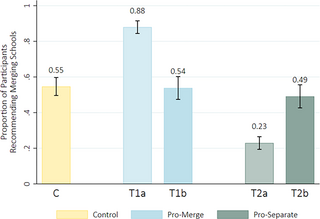
How individuals navigate perspectives and attitudes that diverge from their own affects an array of interpersonal outcomes from the health of marriages to the unfolding of international conflicts. The finesse with which people negotiate these differing perceptions depends critically upon their tacit assumptions—e.g., in the bias of naïve realism people assume that their subjective construal of a situation represents objective truth. The present study adds an important assumption to this list of biases: the illusion of information adequacy. Specifically, because individuals rarely pause to consider what information they may be missing, they assume that the cross-section of relevant information to which they are privy is sufficient to adequately understand the situation. Participants in our preregistered study (N = 1261) responded to a hypothetical scenario in which control participants received full information and treatment participants received approximately half of that same information. We found that treatment participants assumed that they possessed comparably adequate information and presumed that they were just as competent to make thoughtful decisions based on that information. Participants’ decisions were heavily influenced by which cross-section of information they received. Finally, participants believed that most other people would make a similar decision to the one they made. We discuss the implications in the context of naïve realism and other biases that implicate how people navigate differences of perspective.

Citations play an important role in researchers’ careers as a key factor in evaluation of scientific impact. Many anecdotes advice authors to exploit this fact and cite prospective reviewers to try obtaining a more positive evaluation for their submission. In this work, we investigate if such a citation bias actually exists: Does the citation of a reviewer’s own work in a submission cause them to be positively biased towards the submission? In conjunction with the review process of two flagship conferences in machine learning and algorithmic economics, we execute an observational study to test for citation bias in peer review. In our analysis, we carefully account for various confounding factors such as paper quality and reviewer expertise, and apply different modeling techniques to alleviate concerns regarding the model mismatch. Overall, our analysis involves 1,314 papers and 1,717 reviewers and detects citation bias in both venues we consider. In terms of the effect size, by citing a reviewer’s work, a submission has a non-trivial chance of getting a higher score from the reviewer: an expected increase in the score is approximately 0.23 on a 5-point Likert item. For reference, a one-point increase of a score by a single reviewer improves the position of a submission by 11% on average.
new preprint on the use of #LLMs as cognitive models, that is, as models of human cognition:
pretraining Arithmetic-GTP with environmentally plausible distributions of probabilities and values leads to embeddings for expected values that in turn can be used to predict between 65% and 95% of human choices in 4 extant datasets of risky choice and inter-temporal choice
1/2
Not trying to be Debby Downer here, but realism and anticipatory thinking is important. #infosec #cybersecurity #cognition #decision_making
https://neurosciencenews.com/optimism-cognition-decision-making-25307/
The development of reasoning systems that can reason and plan in a continuously changing environment is emerging as an important area of research in Artiicial Intelligence. This paper describes some of the features of a Procedural Reasoning System (PRS) that enables it to operate eeectively in such e n vironments. The basic system design is rst described and it is shown how this architecture supports both goal-directed reasoning and the ability t o r e a c t rapidly to unanticipated changes in the environment. The decision-making capabilities of the system are then discussed and it is indicated how the system integrates these components in a manner that takes account of the bounds on both resources and knowledge that typify most real-time operations. The system has been applied to handling malfunctions on the space shuttle , threat assessment, and the control of an autonomous robot.

 Habr
Habr

 Hacker News
 Ulrike Hahn
 considerate
 nope
nope