Dive into powerful true testimonies of answered prayer and unshakable faith. Discover how God still speaks today through real life stories of hope, healing, and divine guidance — encouraging your heart and igniting your spirit!

Click here: https://www.ourgodstillspeaks.com/

#GodStillSpeaks #FaithJourney #AnsweredPrayer #ChristianTestimony #HopeInChrist #DivineGuidance

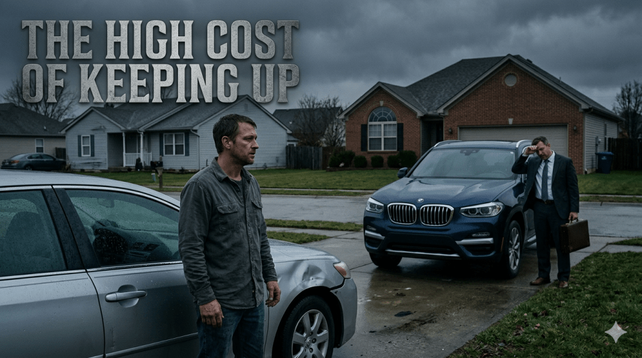
The Root That Wouldn’t Die

2,116 words, 11 minutes read time.

In the heart of Ridgeview, a close-knit town tucked into the southern mountains where the Blue Ridge foothills rose in gentle, forested waves and the air carried the faint scent of pine and woodsmoke year-round, Ethan Carter was the kind of man everyone knew and trusted. Mornings often found him on his wide front porch, coffee steaming in the crisp air, waving to neighbors who sat rocking on theirs, swapping stories about the latest blaze of fall colors on the sugar maples or who was fixing up an old cabin along one of the winding ridge roads. The town moved at its own unhurried pace: kids biking down quiet streets after school, families gathering at the diner on Main Street for Friday night catfish specials and homemade pies, church bells echoing off the valleys every Sunday morning like a gentle call to gather. Porch lights glowed against the evening mist that drifted up from the lower hollows, and folks still waved when they passed on the two-lane roads, knowing most everyone by name. It was the kind of place where community ties ran deep, where a helping hand or a shared meal mattered more than any headline—yet even in such a place, hidden burdens could quietly take root.

At Grace Community Church, Ethan was equally dependable. He arrived early each Sunday, Bible in hand, offering warm handshakes and quiet encouragement to families filing in. He taught the adult Sunday school class on books like James, unpacking passages about faith showing itself in action with clear, straightforward insight. He led the men’s accountability group, sitting with brothers as they shared real struggles—pride, temptation, doubt—and always pointing them toward Scripture without shortcuts or fluff. His technical gifts served the church too: he kept the website updated, smoothed out live-stream issues during services, and set up the online giving portal that steadied the budget through lean seasons.

His wife, Sarah, sat beside him in the pew every week, thankful for the steady man she had married twenty years before. Their two teenage children—now driving, questioning faith, and navigating their own paths—still saw him as the family’s anchor. He prayed with them at night, fixed whatever broke around the house, and provided faithfully from the income his business brought in. On the surface, everything held together.

But Ethan carried a root no one could see.

Fifteen years earlier, at the first church where he had come to faith as a young man fresh out of college with a computer science degree, Ethan had thrown himself into serving. He saw the sanctuary’s outdated sound system, flickering projector, and nonexistent website as clear opportunities to use his gifts. He volunteered to revamp the church site, set up basic live-streaming equipment in an era when that felt innovative for a small congregation, and handled audio mixing so the message came through undistorted. It energized him deeply—removing distractions so people could hear the gospel without hindrance. This was quiet, behind-the-scenes faithfulness, the kind Scripture honors: serving one another as good stewards of God’s varied grace (1 Peter 4:10).

Pastor Mark Reynolds noticed Ethan’s reliability and dedication. One Sunday after the service, Mark pulled him aside in the hallway. “Ethan, you’re one of our trusted guys,” he said. “Chosen for something bigger. God has His hand on you.” Ethan felt truly seen for the first time in a church setting. He pictured stepping further into media and tech ministry—perhaps leading a small team, training volunteers, or expanding digital outreach as the church grew.

Instead, Mark redirected him toward children’s ministry.

“God needs faithful men in the kids’ wing,” Mark explained. “We have a real shortage of male leaders down there. It’s where the kingdom impact happens most—shaping the next generation early. You’re steady, you’re married now, kids on the way soon. This is your spot.”

Ethan trusted Mark’s leadership. He gave it his best effort. For months he showed up faithfully, helped with crafts, led small groups of energetic five-year-olds through simple Bible stories. He was patient, kind, and well-prepared. But inside, it drained him in ways he could not fully articulate. His thoughts kept drifting to troubleshooting the sanctuary soundboard, coding cleaner website templates, finding better ways to connect people digitally. He felt like a square peg forced into a round hole—his God-given technical wiring ignored while the church funneled “trusted” men into visible, relational roles that fit a narrower mold of ministry. When he gently brought up his heart for media and tech service, Mark brushed it aside: “We already have people handling that side. Children’s ministry needs men like you more right now.”

The rejection cut deeper than Ethan let on at the time. He left that church quietly, wounded in a way that felt almost invisible to others. He told himself he had forgiven Mark, that he had moved on, that he had planted new roots at Grace Community. But the root stayed buried, feeding quietly on the memory.

Years later, as Ridgeview businesses thanked him publicly at chamber meetings and Grace Community leaned heavily on his technical expertise, the old wound twisted sharper whenever similar situations arose. When a young man at church approached leadership about helping with media or tech, Ethan felt a quiet pang of resentment rise unbidden. When the church publicly honored volunteers serving in “frontline” ministries like children’s or youth work, he would smile and applaud along with everyone else, but inside he replayed Mark’s words: “This is your spot.” He justified the bitterness as practical wisdom—”I know what happens when churches overlook real gifting”—but it poisoned his prayers. On communion Sundays, as he took the bread and cup in remembrance of Christ’s forgiveness, he felt the sharp hypocrisy of withholding that same forgiveness from Mark in his heart.

For years the double life held firm. At home, Ethan remained present and attentive—helping the kids with homework, leading family devotions, staying up late to push client site updates live before deadlines. At church, he continued exemplary service, teaching on Ephesians 4:31 about putting away all bitterness, wrath, and anger while secretly cherishing the very thing he warned against. In private moments, late at night in his home office with the server fans humming softly and the dark ridge shadows pressing against the window, he would scroll through old church archives, see Mark still leading and thriving, and feel the wound reopen fresh. Joy seeped out of his faith like warmth escaping through a cracked window on a chilly fall evening.

Then came the Wednesday evening Bible study that cracked everything open.

The group had been working steadily through Hebrews chapter 12. Ethan stood at the front, projecting the verses onto the screen with his own reliable setup, teaching with the usual clarity and care. When he read verse 15 aloud—”See to it that no one fails to obtain the grace of God; that no ‘root of bitterness’ springs up and causes trouble, and by it many become defiled”—the words struck him like a physical blow. His voice faltered for the first time anyone could recall. He tried to recover, explaining how bitterness spreads its poison beyond one heart to defile families, churches, entire communities—but the room seemed to shrink around him. Faces blurred. The irony burned hot: here he was, the man who connected Ridgeview’s businesses and kept the church stream running smoothly, warning others about a root he had been feeding for fifteen years, letting it defile his own heart and subtly strain his closest relationships.

He excused himself abruptly, mumbling something about needing air, and slipped into the empty hallway. Leaning against the wall under the harsh fluorescent light, Ethan felt the full weight come crashing down—the dismissed gifts, the forced role that never fit, the years of quiet judgment toward leaders who reminded him even faintly of Mark. He had preached forgiveness while refusing to practice it. He had taught grace while blocking it in his own life. Mark 11:25 echoed clearly in his mind: “Whenever you stand praying, forgive, if you have anything against anyone, so that your Father also who is in heaven may forgive you your trespasses.”

That night Ethan drove home along the winding mountain roads, the ridges black against a starry sky. In the driveway, engine off, he sat in silence and prayed raw prayers—no polished words, just broken confession and surrender. When he finally went inside, Sarah was still awake, reading on the couch. He sat beside her, took her hand, and told her everything: the old church, Pastor Mark’s redirection to children’s ministry, the ignored calling to serve through tech, the bitterness he had nursed like a hidden wound even as God had blessed his gifts in Ridgeview. Tears came—for the original hurt, for the hypocrisy it had bred, for the joy and closeness it had stolen from their marriage and family over the years.

Sarah listened without interruption, her own eyes filling with tears. She felt hurt for him, angry at the damage done, but her love remained steady. They talked deep into the night as the mist lifted outside the windows. The road ahead would not be easy or quick. Ethan stepped back from teaching and leading the men’s group for a season—not out of shame alone, but out of reverence for the holiness of those roles and a desire to walk in integrity. He sought Christian counseling to process the wound properly. He pursued real accountability with a couple of trusted brothers who would ask hard questions without judgment. Most importantly, he began praying specifically for Mark—not with easy feelings at first, but in simple obedience, asking God to bless and heal the man who had once hurt him.

He even drafted a letter to Mark, pouring out the pain honestly while releasing the grudge and owning his own part in letting it fester so long. He never sent it—forgiveness did not require confrontation in this case—but writing it helped loosen the root’s grip.

Slowly, painfully, the bitterness gave way. Ethan returned to serving at Grace, still handling the tech side but now with a lighter heart and freer hands. He began mentoring a couple of younger men interested in web development and digital ministry, encouraging them in ways he had once wished someone had encouraged him. The resentment that had defiled so much quietly yielded to mercy. He never turned his story into a dramatic stage testimony; instead, he shared it quietly, one-on-one or in small accountability settings, with men carrying similar hidden hurts—always pointing them to the same unchanging truth: secret roots thrive in darkness, but God’s light exposes them not to destroy, but to heal.

The double life promises control and safety; it delivers only chains. Confession, though costly and humbling, opens the door to true freedom. And in Christ, that freedom restores what resentment tried so hard to kill forever—joy, intimacy with God, closeness in marriage and family, and authentic service that honors the gifts He has given.

Author’s Note

This story is deeply personal to me.

Years ago I sat across from church elders, pouring out my heart and explaining the technical gifts God had given me. I talked about building websites, improving live streams, and using technology to help the gospel reach farther. Instead of being encouraged, I was gently but firmly pushed into children’s ministry because they “needed more faithful men down there.” The rejection stung deeply.

From that pain and disappointment, I found my voice in this blog.

What I learned through the hurt is something I now say boldly: You don’t need the permission of church elders to do God’s work. And you don’t even have to serve God inside the walls of a church building. Honestly, if someone had told me back then that I would one day be blogging and writing several times a week, speaking directly to men about God and faith, I would have laughed out loud.

Writing The Root That Wouldn’t Die was my way of facing that hidden wound. Ethan’s story is fiction, but the hurt he carries is real—because I’ve carried it too. If you’ve ever been wounded while trying to serve in the church, if you’ve ever felt your gifts were overlooked or redirected, please know you are not alone.

The beautiful truth is that Jesus doesn’t need our titles, our positions, or anyone’s approval to use us. He simply asks for a surrendered heart. What was meant to silence me became the very place where my voice was born.

If this story stirred something in you, I pray it leads you one step closer to releasing whatever root you’ve been carrying. God is faithful to heal what we finally surrender to Him.

Call to Action

If this story struck a chord, don’t just scroll on. Join the brotherhood—men learning to build, not borrow, their strength. Subscribe for more stories like this, drop a comment about where you’re growing, or reach out and tell me what you’re working toward. Let’s grow together.

D. Bryan King

Sources

Disclaimer:

The views and opinions expressed in this post are solely those of the author. The information provided is based on personal research, experience, and understanding of the subject matter at the time of writing. Readers should consult relevant experts or authorities for specific guidance related to their unique situations.

#accountabilityGroup #biblicalForgiveness #bitternessAndResentment #bitternessDefiles #bitternessInChristianity #christianCharacterStory #christianFamilyStory #ChristianFiction #christianFictionShortStory #ChristianHopeStory #ChristianMenStruggles #ChristianRedemptionStory #christianShortStories #ChristianShortStory #ChristianTestimony #churchBetrayal #churchHurt #churchWounds #confessionAndRepentance #dealingWithBitterness #doubleLife #doubleLifeHypocrisy #ephesians431 #exposedSin #faithAndForgiveness #forgivenessAndHealing #forgivenessJourney #forgivenessStory #freedomFromBitterness #godsLight #healingFromChurchHurt #healingFromResentment #hebrews1215 #hiddenRoot #hiddenSin #lettingGoOfHurt #livingADoubleLife #mark1125 #mercyAndGrace #ministryCalling #mountainTownFiction #overcomingUnforgiveness #pastoralHurt #poisonOfBitterness #redemptionThroughConfession #rootOfBitterness #rootOfBitternessStory #secretBitterness #secretSinExposed #secretSins #smallTownChristianFiction #southernMountainStory #spiritualDoubleLife #spiritualHypocrisy #spiritualRestoration #theRootThatWouldntDie #trueRepentance #unforgiveness #unforgivenessConsequences #walkingInTheLight #webDeveloperChristianStory

When Silence Gives Way to Witness

DID YOU KNOW

Did you know that God often chooses unlikely voices to speak life into entire communities?

In John 4:27–42, we encounter a moment that quietly overturns many of our assumptions about who is qualified to speak about God. The Samaritan woman at the well was not trained, respected, or positioned for influence. She carried social shame, religious confusion, and relational failure. Yet after a single encounter with Jesus, she became a catalyst for awakening in her town. Scripture tells us that “many of the Samaritans from that town believed in Him because of the woman’s testimony” (John 4:39). The Greek term for testimony, martyria, implies a truthful witness rather than a polished argument. What moved the people was not her credibility by social standards but the authenticity of her encounter with Christ.

This pattern appears repeatedly in Scripture. God delights in using voices that have been discounted or silenced by others. Moses protested that he could not speak well, Jeremiah claimed he was too young, and yet both were commissioned by God. In the case of the Samaritan woman, Jesus does not instruct her to remain silent until she understands theology more fully. He allows her lived experience to become the bridge through which others meet Him. This invites us to reconsider our own hesitations. The power of testimony rests not in eloquence but in obedience. When God intersects a life, even briefly, He creates a story worth telling, and He often intends that story to travel further than we imagine.

Did you know that silence can slowly become a spiritual habit that dulls our sense of calling?

The study reminds us that silence rarely begins as defiance. More often, it begins as self-protection. We assume people will reject our words, misunderstand our motives, or dismiss our faith. Over time, these assumptions harden into patterns. Scripture warns us subtly but firmly against this drift. In Song of Solomon 3:1–2, the beloved rises in the night to search for the one her soul loves, refusing to remain passive in longing. While poetic, the image speaks to spiritual pursuit that refuses complacency. Love that remains unexpressed eventually grows restless. Faith works the same way.

When believers stop speaking about God’s work in their lives, faith can become internalized to the point of stagnation. Jesus never intended the kingdom of God to be hidden behind private conviction alone. He declares, “What I tell you in the dark, speak in the light” (Matthew 10:27). Silence may feel safe, but it slowly reshapes our identity. We begin to see ourselves as observers rather than participants in God’s mission. The monotony mentioned in the study is not simply boredom; it is the erosion of expectancy. God calls His people to remain alert, attentive, and responsive, trusting that even simple words, offered humbly, can awaken hearts beyond our sight.

Did you know that speaking up is an act of trust in the Holy Spirit, not confidence in yourself?

One of the most freeing truths in Scripture is that God never places the weight of conversion on human shoulders. In Exodus 21–23, God lays out laws meant to form a just and compassionate community, reminding Israel that obedience flows from trust in His authority, not human control. Similarly, when believers speak about God’s work, they are not responsible for outcomes. Paul later affirms this when he writes, “I planted, Apollos watered, but God gave the growth” (1 Corinthians 3:6). Our role is participation, not persuasion.

The Samaritan woman did not explain doctrines or resolve centuries of ethnic tension. She simply said, “Come, see a man who told me everything I ever did.” That invitation created space for the Spirit to work. This reframes speaking up as an act of humility rather than boldness. We trust that God can use our words, however imperfect, to accomplish His purposes. The Hebrew concept of dabar—word—carries both speech and action. When God speaks, things happen. When we speak in alignment with His work, we participate in that unfolding action. Confidence, then, is not rooted in self-assurance but in reliance on God’s Spirit to do what only He can do.

As we reflect on these truths, we are gently invited to examine our own patterns. Where have we remained silent out of fear or assumption? Where might God be prompting us to speak—not loudly or forcefully, but faithfully? The call to action in this study is not about constant talking, but timely obedience. Verbalizing what God has done for us, with humility and gratitude, becomes an offering of trust. It acknowledges that the kingdom of heaven is near and that God is still drawing people to Himself through ordinary lives and honest words. Today’s invitation is simple yet demanding: listen for where God is at work, and when He prompts you to speak, trust Him enough to do so.

FEEL FREE TO COMMENT, SUBSCRIBE, AND REPOST, SO OTHERS MAY KNOW


#ChristianTestimony #John4SamaritanWoman #obedienceAndWitness #sharingYourFaith #speakingAboutFaith #spiritualCourage

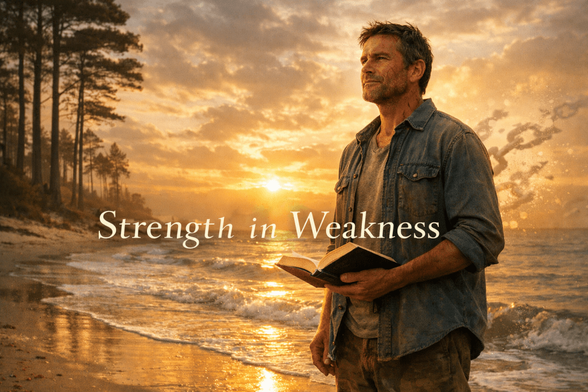
Strength in Weakness

1,212 words, 6 minutes read time.

In the rolling hills of a small Tennessee town, Elias was born the second son into a Gentile family chasing an elusive American dream. His parents measured success in dollars and status, valuing possessions over promises. From his earliest memories, Elias learned the world could wound deeply—even at home.

Caleb, the firstborn, was anointed the golden child. Handsome and bold, he received new clothes, excuses for misbehavior, and endless boasts to neighbors about the bright future ahead. Elias, the hand-me-down child, wore Caleb’s faded shirts, cousins’ worn shoes, and coats that never fit. He learned not to ask, not to complain, and to fade into the background.

As boys, Caleb thrived on chaos. He stole, lied, experimented with pills and alcohol, started fights, and always shifted blame. Elias became his favorite scapegoat: framed for missing money or broken rules, punished while Caleb smirked from the doorway. Caleb grew into a narcissist who fully believed his own deceptions, convinced the world owed him whatever he took.

School offered Elias no refuge. Dyslexia and poor eyesight made reading painful; teachers’ “help” felt like shame. Yet he persisted—front-row seats, slow deliberate study, twice the effort. Outside, bullies and rumors added scars, but Elias responded with patience and quiet courage.

At home the abuse deepened: unwarranted spankings, threats, harsh words, even incidents involving a knife or pencil. Still, Elias protected his younger sister and fragile baby brother where adults—and Caleb—failed.

Though their family had no Jewish roots, Caleb grew obsessed with Old Testament stories of firstborn blessings. He came to believe he was entitled to a solemn patriarchal mantle from their father. As teenagers and young men, he manipulated moments to claim it—staged responsibility, calculated devotion—yet the affirmation he craved never came.

Caleb’s troubles escalated. He fell in with check-cashing schemes, forging signatures and passing bad checks. When the law closed in, Elias and the family scraped together money to pay off victims and keep him out of jail. But Caleb could not stop. Petty theft followed—shoplifting, stealing from employers—and eventually landed him behind bars.

In his early twenties, shortly after getting out, Caleb got a young woman pregnant. For a moment responsibility flickered, but pride and fear prevailed. With their parents’ help—harsh words, threats, cold exclusion—he denied the child and drove her from town. She left heartbroken; Caleb never looked back.

Elias, meanwhile, fought for a different future. He earned a partial scholarship and loans to attend college, drawn to the logic and order of computers. But his parents, ever in financial turmoil, “borrowed” his tuition money and talked him into buying an expensive truck he couldn’t afford—an “investment” that buried him in debt. Payments swallowed everything; college became impossible. He dropped out, dreams deferred once again.

Their father’s health declined. Caleb intensified his campaign for a deathbed blessing, hovering with practiced concern. But no dramatic benediction arrived. Their father died quietly, offering no special mantle to the eldest son. Caleb inherited only an empty title no one acknowledged.

Caleb’s defiance continued unchecked. He ignored warning signs of diabetes—weight gain, thirst, tingling feet—laughing off doctors and medicine. Years later, infections and failed circulation cost him both legs below the knee. The man who once ran from every consequence now sat confined, staring at what rebellion had taken.

Long before that end, Elias reached his breaking point. He left the truck, the debts, and the demands behind, moving five hundred miles away to the quiet shores of northern Florida.

There, for the first time, good people surrounded him. A small church welcomed him without judgment. An older mentor at a repair shop gave steady work and patient encouragement. Neighbors shared meals, listened, and celebrated his progress. With their quiet support, Elias taught himself programming—late nights, line by line, through free tutorials and library books. Curiosity became skill, then a livelihood building websites and solving real problems.

In the army years earlier, his faith had already proven active: carrying a suicidal comrade to safety, standing alone for truth. Now, far from Tennessee, that faith deepened. Elias came to understand God’s power made perfect in weakness (2 Corinthians 12:9).

From a distance he heard of Caleb’s amputations and the hollow pursuit of a patriarch’s blessing their family never possessed. There was no triumph—only sorrow for a brother lost to illusion and narcissism, for an abandoned child, for a woman driven away, and profound gratitude for the narrow, faithful path Elias had walked.

On the quiet shores of northern Florida, amid gentle waves, whispering pines, and the steady presence of people who chose to love him well, Elias walks forward each day—imperfect, scarred, self-taught, quietly faithful. He knows true strength lies not in golden dreams, imagined blessings, or flawless beginnings, but in a heart surrendered to God’s perfect power.

Author’s Note

This is a work of fiction, shaped to explore timeless truths about brokenness, resilience, and grace. Names, characters, places, and events are products of imagination or used fictitiously. Any resemblance to actual persons or occurrences is coincidental.

At its core, “Strength in Weakness” seeks to illuminate a quiet yet profound reality: God often chooses the overlooked, the scarred, and the imperfect as vessels for His greatest work. In a world that celebrates the flawless and the bold, this story honors the strength found in surrender, the courage born of pain, and the hope that emerges when human effort ends and divine grace begins.

I have deliberately left Elias’s story unfinished. We do not yet see the full scope of how God has used—and continues to use—his life. Like all of us, Elias remains a work in progress, still walking the narrow path, still learning to trust in weakness. The final chapters are not mine to write; they belong to the Author who is never hurried and never finished.

However, Caleb’s story seems to have been written—its trajectory obvious, its ending unsaid yet grimly predictable. But that ending hasn’t truly been written either. As long as breath remains, there is time. Time for Caleb to turn, to seek God, to find mercy that can rewrite even the most wayward life into one of redemption.

If this tale stirs something in you—perhaps a recognition of your own hidden battles, unmet longings, or slow healing—may it serve as a gentle reminder: your weakness is not the end of your story, nor is anyone else’s rebellion beyond the reach of grace. In the hands of a faithful God, it can become the very place where His power is most clearly seen.

— Bryan

Call to Action

If this story struck a chord, don’t just scroll on. Join the brotherhood—men learning to build, not borrow, their strength. Subscribe for more stories like this, drop a comment about where you’re growing, or reach out and tell me what you’re working toward. Let’s grow together.

D. Bryan King

Sources

Disclaimer:

The views and opinions expressed in this post are solely those of the author. The information provided is based on personal research, experience, and understanding of the subject matter at the time of writing. Readers should consult relevant experts or authorities for specific guidance related to their unique situations.

#2Corinthians129 #abandonedChild #armyVeteranStory #biblicalWeaknessStrength #brokenFamilyHealing #ChristianTestimony #churchCommunitySupport #codingSelfTaught #collegeDropoutSuccess #computerSkillsJourney #diabetesConsequences #distantFamily #dyslexiaSuccessStory #emotionalScarsHealing #faithJourney #faithfulLiving #familyDysfunction #firstbornBlessingObsession #forgivenessWithoutReconciliation #gentileFamilyDynamics #godUsesBroken #godSGraceInWeakness #godlyStrength #goldenChildSyndrome #graceSufficient #guardianInstinct #handMeDownChild #imperfectFaith #inspirationalChristianStory #mentorEncouragement #moralIntegrity #movingAwayForPeace #narcissismFallout #narcissisticSibling #northernFloridaLife #overcomingAbuse #overcomingAdversity #overlookedChildRises #patriarchIllusion #peacefulNewBeginning #personalGrowthStory #protectiveBrother #quietCourage #quietFaith #rebellionConsequences #redemptionThroughFaith #resilienceStory #selfMadeSuccess #selfTaughtProgrammer #siblingRivalry #southernFamilyDrama #southernTennesseeUpbringing #SpiritualGrowth #strengthInWeakness #toxicParents #wavesAndPines #wheelchairAftermath

Skales defends controversial testimony at Harvesters Church following online backlash

​Story Highlights

Nigerian singer Skales has issued a firm clarification regarding his recent testimony at Harvesters Church, insisting that testifying about God’s goodness is never wrong regardless of one’s profession. On Tuesday, January 6, 2026, the music star addressed the criticism surrounding his crossover service appearance, arguing that entertainers and creatives serve a divine purpose by making life lighter for others, even if they do not operate from the pulpit.

Image Credit: Instagram / @youngskales

​Nigerian music star Skales has addressed the growing criticism surrounding his recent appearance at a popular Lagos church.

​The singer faced significant public scrutiny after sharing a testimony regarding his career success and his hit song “Shake Body” during the crossover service at Harvesters International Christian Centre.

​Social media users debated whether a secular artist should credit God for songs that dominate club playlists. ​In a measured response released on Tuesday, January 6, 2026, Skales stated he needed to address the issue with clarity rather than emotion.

​A different assignment

​Skales argued that service to God extends far beyond the traditional church setting or the clergy. ​The “Shake Body” crooner emphasised that professionals in various fields, including entertainment, play a vital role in God’s plan.

​He listed musicians, filmmakers, athletes, and teachers as examples of people who function to make life easier for others. ​According to Skales, operating outside the church leadership structure does not diminish the value of a believer’s calling.

​This stance comes as the skales testimony on secular hit shake body ignites fresh church debate across social media platforms regarding the relationship between secular entertainment and Christian faith.

​He wrote, “I truly believe that those who believe in the Word but are not in the pulpit do not have a lesser calling, just a different assignment.”

​Standing by the testimony

​Despite the mixed reactions, the singer remained adamant that acknowledging divine help is always appropriate. ​Skales noted that he would never view testifying about God’s goodness as an error.

​Referencing 1 Corinthians 12:28, he affirmed his identity as a child of God who is unafraid to share his gratitude with the world.

​This is not the first time the artist has linked his musical success to spiritual intervention.

​Fans will recall how afrobeats skales credits shiloh prayer as shake body goes global during previous interviews about the longevity of his career.

​His latest statement aims to close the chapter on the controversy while affirming his personal faith.

​Skales concluded his message by stating that just because a miracle or assignment happens outside the church building, it remains significant.

Share to friends        #afrobeats #CelebrityNews #ChristianTestimony #HarvestersChurch #Lagos #NigerianMusic #ShakeBody #Skales

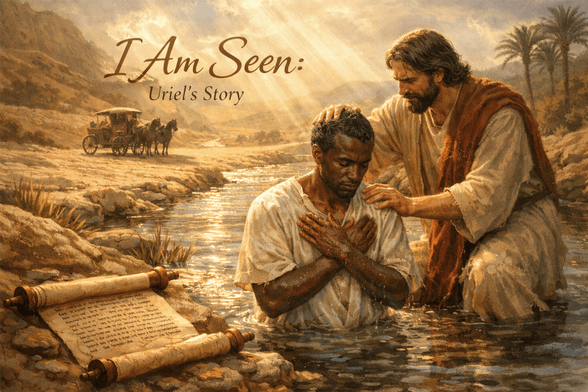
I Am Seen: Uriel’s Story

1,680 words, 9 minutes read time.

I am Uriel. I have been many things in my life — a servant of the queen, her treasurer, a man entrusted with her wealth, her correspondence, her secrets. Respected, feared, admired. Yet in the quiet of my heart, I have often felt… unseen. Not just overlooked by men, but unseen by God.

For years, I had believed that my position, my intelligence, my loyalty, and my ability to navigate the intrigues of court life could define me. That I could earn respect, perhaps even God’s favor, through accomplishment. But the truth I carried in my heart told a different story. I was a eunuch, a man marked by society as incomplete, and no title, no honor, no treasure could hide the ache of exclusion.

That day, I rode south on the desert road from Jerusalem to Gaza. My chariot rattled over stones that seemed to mock the rhythm of my heartbeat, the sun pressing down with a relentless weight. In my hands was a scroll — Isaiah 53 — the words of the suffering servant, pierced for our transgressions, led like a lamb to the slaughter. I had read these words many times before, but today they burned differently.

As I read, I reflected on Isaiah 56:3-5 — the promise to eunuchs and the marginalized. I felt a warmth in my chest as if God were speaking directly to me: “Some are born that way, some are made that way, some choose devotion for the kingdom of heaven. God sees you. You are not lesser. You are not overlooked.”

Could it really be true? Could a man like me — excluded from family, from the society I served, defined by usefulness rather than worth — truly belong? Could I be accepted by God?

I thought of the queen’s court. Every day, I managed treasures, counseled ministers, carried the queen’s correspondence. I was trusted with her wealth, her secrets, her reputation. Men came to me for advice, for judgment, for strategy. Yet I walked among them as a man seen only for what he could do, not who he was. Every glance reminded me: I was different — useful, yes, but incomplete.

I reflected on my own pride. I had relied on titles and intellect, on influence and cunning, to craft my identity. I had learned to hide my loneliness behind a mask of competence. But in the heat of the desert and the stillness of my soul, I realized that all of it was hollow. Who truly saw me? Who truly knew me?

Then he appeared. Philip. Walking steadily toward me, eyes focused, yet gentle. Later I learned he had been sent by an angel of the Lord — divinely orchestrated, guided to this road at exactly this moment. My breath caught. There was authority in him, yes, but also a kindness I had rarely encountered. Something in his presence radiated God’s intent.

Philip spoke simply: “Do you understand what you are reading?”

I hesitated, pride rising as it always did. I knew the scriptures. I could recite them, interpret them, debate them with scholars. But he did not speak to test my knowledge. His question invited honesty. I spoke of Isaiah 53, of the suffering servant who bore our pain, pierced for our transgressions. I confessed my confusion, my longing, my sense of unworthiness. “How can a man like me,” I asked, “find a place in God’s kingdom? I am a eunuch. I have no sons, no family legacy. I am… incomplete.”

Philip nodded, his expression steady, patient. “The Spirit opens hearts to see what is true,” he said. “God looks at the heart, not at status or appearance. He sees you, Uriel. He calls you.”

I felt again the echo of Jesus’ words about eunuchs — self-denial, surrender, devotion beyond societal expectations. This was the path God offered: not pride, not titles, not the approval of men, but humility and obedience. My walls began to crumble. The pride that had insulated me for years, the fear of exposure, the ache of exclusion — all were being unmasked in the light of God’s acceptance.

I thought back to my days in the palace: the careful calculations, the whispered secrets, the constant weighing of trust and betrayal. I had been a man of influence, yes, but never a man free. Always performing, always measured. Always hiding the parts of myself that the world deemed “incomplete.” I realized then that God’s kingdom did not measure me by what society demanded, but by what He saw — a heart capable of faith, a soul capable of surrender.

I looked down at the water in the desert ravine, a narrow pool glimmering under the sun. My chest tightened. “See,” I said to Philip, pointing, “here is water! What prevents me from being baptized?”

We left the chariot together. I stepped into the cool water, the desert air contrasting sharply against the stream’s embrace. As I lowered myself beneath the surface, I felt more than water surrounding me — I felt the weight of years of shame and fear, pride and secrecy, lifting. When I rose again, I gasped, tasting freedom for the first time in my life.

Philip smiled. We sat for a while on the bank, the scroll still in my hands. He asked quietly about my life, my fears, my doubts. I spoke of the isolation I had felt as a eunuch in a society that prizes legacy and masculinity, of the times I wondered if God could ever use someone like me. He listened. And I understood, in a way I never had before, that God’s acceptance is not earned through achievement or conformity, but received through honesty, humility, and surrender.

I mounted my chariot once more, the scroll of Isaiah 53 still in my hands, but now a new understanding in my heart. I was not merely a treasurer, not merely a eunuch, not merely a man defined by society. I was seen. Fully. By God. And in that sight, I was made whole.

As I rode down the road, I thought of men I knew — proud, successful, burdened by secrecy or shame, afraid to be seen as they truly are. I thought of the armor we wear, the masks we craft, the chains of pride we carry. I wanted to tell them: true strength is not measured by titles, wealth, or control. True strength is courage, humility, and surrender. To be seen by God is freedom beyond any earthly measure.

I am Uriel. I am seen. I am known. And I will never be the same.

Author’s Note – Inclusion and God’s Promise

There are times in life when we feel invisible — when the world notices what we do but never who we truly are. Perhaps you’ve carried the weight of pride, fear, or isolation, wondering if anyone really sees you.

We don’t know the name of the eunuch that day on the desert road, but God does. History preserves his title, his position, his nationality — but not the man’s name. Yet in God’s eyes, he is known. He has a new name, one that is written on a memorial, within the walls of God’s temple. He new name is etched in eternity. Isaiah 56:4–8 promises:

To the eunuchs who keep my Sabbaths,
who choose what pleases me and hold fast to my covenant—
to them I will give within my temple and its walls a memorial and a name better than sons and daughters; I will give them an everlasting name that will endure forever.

And foreigners who bind themselves to the Lord to minister to him,
to love the name of the Lord, and to be his servants,
all who keep the Sabbath without desecrating it
and who hold fast to my covenant—these I will bring to my holy mountain and give them joy in my house of prayer. Their burnt offerings and sacrifices will be accepted on my altar; for my house will be called a house of prayer for all nations.”

Notice that Isaiah specifically promises that “their burnt offerings and sacrifices will be accepted…for all nations.” God intended the temple to be a place where those excluded by society — eunuchs, foreigners, outsiders — could encounter Him fully.

Yet centuries later, Jesus braided a whip and overturned the tables of the money changers in the temple. Why? Because the vendors were in the Court of the Gentiles, the only place where non-Jews could approach God. They had turned God’s house — God’s house of prayer for all nations — into a marketplace that excluded and exploited outsiders.

This act reveals God’s heart: He calls the marginalized to worship freely, and He opposes systems that keep them out. The eunuch’s story on the desert road echoes this truth: even if society excludes or overlooks you, God sees you, welcomes you, and your devotion is honored in His eternal house.

May this promise speak to anyone who has ever felt unseen or excluded. You are seen. You are known. And your name is written on the walls of God’s eternal temple.

Call to Action

If this story struck a chord, don’t just scroll on. Join the brotherhood—men learning to build, not borrow, their strength. Subscribe for more stories like this, drop a comment about where you’re growing, or reach out and tell me what you’re working toward. Let’s grow together.

D. Bryan King

Sources

Disclaimer:

The views and opinions expressed in this post are solely those of the author. The information provided is based on personal research, experience, and understanding of the subject matter at the time of writing. Readers should consult relevant experts or authorities for specific guidance related to their unique situations.

#Acts8Story #authenticFaith #baptismStory #BibleStoryForMen #BibleTeaching #biblicalCharacterStudy #biblicalDevotion #biblicalInspiration #biblicalMeditation #BiblicalReflection #biblicalShortStory #ChristianDevotion #ChristianEncouragement #ChristianEncouragementForMen #ChristianInspiration #ChristianNarrative #ChristianShortStory #ChristianStorytelling #ChristianStorytellingForMen #ChristianTestimony #divineCalling #EthiopianEunuch #eunuchAndGod #eunuchCourage #eunuchFaith #eunuchIdentity #eunuchInBible #eunuchObedience #eunuchReflection #eunuchSalvation #faithAndHumility #faithAndSurrender #faithInGod #faithJourney #faithLesson #GodKnowsYourName #GodSeesYou #GodSAcceptance #GodSEternalPromise #GodSHouse #GodSPromise #inclusionInGodSKingdom #inclusionInScripture #Isaiah56 #lifeTransformation #marginalizedInBible #menAndFaith #newBeginnings #PhilipAndTheEunuch #prayerForAllNations #scriptureStory #spiritualAwakening #SpiritualGrowth #spiritualMetaphor #surrenderToGod #trustGodStory #UrielStory

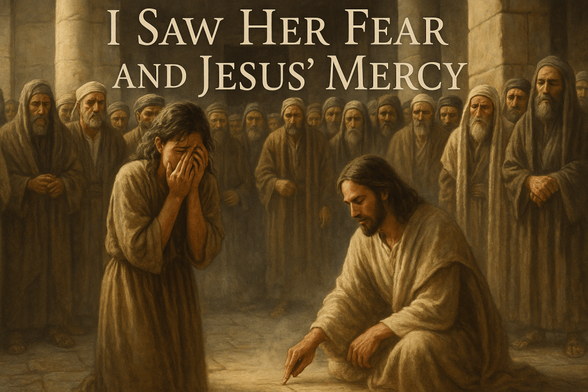
I Saw Her Fear and Jesus’ Mercy: A Tale of Shame and Forgiveness

1,970 words, 10 minutes read time.

I’ve seen a lot in my life, more than most men would admit even to themselves. I was there, in Jerusalem, among the crowd that day in the temple courts, when they dragged her out for all to see. I remember the sun hitting the stone floor, the dust rising in little clouds as feet shifted nervously. I was young, ambitious, eager to impress, and arrogant enough to believe I understood righteousness. That morning, I would discover just how little I knew—not just about the law, but about the weight of sin, fear, and the grace I thought I despised.

They brought her in like a carcass on display. A woman, alone, trembling, her hair loose around her shoulders, her eyes wide with panic. You could see the fear in her every movement, a sharp, tangible thing, gripping her chest like a fist. The Pharisees were behind her, men dressed in the finest robes, pointing, shouting, demanding justice. I wanted to look away, I really did, but my eyes were glued to her. I recognized that look. I had seen it in men before, when we were caught lying, cheating, or failing in ways that our pride couldn’t hide. And now, it was a woman’s body and her heart being punished in public.

I remember thinking, “She should have thought ahead. She should have controlled herself.” That was my arrogance talking, my pride trying to hide the fact that I, too, had done things I was desperate to cover. Lust, ambition, greed—my own sins were small in the eyes of men but monstrous in the eyes of God. I justified it to myself, like all men do, but standing there, watching her shame poured out for all to see, I felt the first twist of unease in my chest.

The woman’s hands were shaking. She tried to cover herself, not with clothes, but with whatever dignity she had left. Her eyes darted to the crowd, and I saw something I’d never admit aloud—she wasn’t just scared of death; she was terrified of exposure. Pride and shame are cruel twins, and she was caught in both. I felt a flicker of recognition because I had lived that fear myself, hiding my failures, pretending my work and status made me untouchable, pretending my self-reliance could shield me from God’s eyes.

The Pharisees were relentless. They asked Jesus directly, “Teacher, this woman was caught in the act of adultery. Now Moses commanded us to stone such women. What do you say?” Their voices were sharp, accusing, full of malice disguised as devotion. I wanted to step back, to avoid the tension, but something kept me rooted. Maybe it was curiosity, maybe it was fear of missing what was about to unfold, but mostly it was a strange, uneasy hope that someone—anyone—would do what I couldn’t: face the truth.

Jesus looked at them, calm, quiet, not even flinching at the hostility. Then, he bent and wrote something in the dust. I don’t know what he wrote, though I’ve wondered about it every day since. Some say he was writing their sins; some say he was simply buying time. All I know is that it was deliberate, slow, deliberate, like a man who could see into the hearts of every person there. The crowd shifted, uncomfortable under a gaze that cut deeper than any stone.

I felt my own chest tighten. Pride. Shame. Fear. Jesus wasn’t even looking at me, but somehow he was. I remembered the things I’d tried to bury: the deals I’d made that hurt others, the women I’d lusted after in secret, the lies I’d told to protect myself. And for the first time, I felt the full weight of it—not as theory, not as doctrine, but as a living, breathing accusation that didn’t yell or demand—it just existed.

Then he spoke, and his voice was calm, but it carried like a thunderclap in my head: “He who is without sin among you, let him be the first to throw a stone at her.”

The crowd was stunned. You could see it in their eyes, the calculation. Who could claim to be without sin? Who could honestly lift a hand in judgment? And one by one, the stones stopped mid-air. One by one, the men shuffled away, heads bowed, hiding their guilt behind robes and excuses. I don’t think any of us realized at that moment how heavy the relief of confession—or avoidance—really was. Some walked slowly, some ran, but all left shadows of their pride behind in the dust.

And there she was, standing before Jesus, alone again, trembling but alive. Her eyes met his, and I swear, in that moment, you could see everything she had been holding in: fear, shame, longing, and a flicker of hope she didn’t even know she could feel. Jesus said something I’ve never forgotten: “Woman, where are they? Has no one condemned you?”

She whispered, barely audible, “No one, Lord.”

“Neither do I condemn you,” he said. “Go, and from now on, sin no more.”

I’ve never seen a man—or a woman—look so unburdened. Relief, humility, awe. It wasn’t just mercy; it was recognition, acknowledgment, the kind of grace that rips open your chest and pours light into the cracks you’ve been hiding in. I saw her walk away, not perfect, not free from struggle, but no longer paralyzed by shame. I wanted that, and I didn’t know it yet, because the pride inside me was too thick, too noisy.

Watching her, I thought about all the ways men hide. We hide behind our work, our reputation, our anger, our self-reliance. We hide in plain sight, crafting stories of control and competence while we’re rotting inside. And here was Jesus, cutting through it all with words that were simple, direct, devastatingly honest, and impossibly kind.

I wanted to be that brave. I wanted to be that humble. But I was still the man who justified his choices, who rationalized deceit and ambition. I remember walking home that day, dust on my sandals, sun on my back, feeling like the air itself was heavier. I thought I had understood mercy, but I hadn’t. I had only watched it unfold, envying it, afraid of it, unsure of what it would ask of me.

It’s funny. I’ve tried to be honest about my life since then, in my own twisted way. I’ve told people stories about my failures, but I’ve always spun them to make myself look better, to soften the edges. Pride is a cruel storyteller. It allows a man to tell the truth, but only the parts that make him appear strong. The rest festers in silence, and silence is dangerous.

I’ve seen that woman in my dreams more times than I can count. Not because I think of her specifically, but because she embodies what I avoid. Fear, yes, but also vulnerability. The courage to stand in front of judgment and let someone else hold your brokenness. And Jesus…Jesus is the mirror I don’t want to face. His words aren’t threats—they’re invitations. Invitations to be real, to face what we’ve buried, to lay down pride and shame and accept the grace that is offered freely, whether we feel deserving or not.

Men in this room, I speak to you directly because I see you. I’ve been you. I’ve carried my ambition, my lust, my anger, like armor. And in doing so, I’ve been at war with myself more than with anyone else. We think success, status, and control can hide our sins. They can’t. And if we don’t face them, they become chains, not shields.

I want to tell you something about that day that the Pharisees and the crowd couldn’t see. That woman’s freedom wasn’t just for her. It was a lesson for all of us who were watching, and for all of us who would walk away thinking we were safe because we hadn’t been caught. Jesus showed us that sin is not a contest; it’s not a mark of weakness to hide—it’s an opportunity for grace if we are brave enough to accept it.

I didn’t accept it that day. I wanted to. I desired it more than I can articulate. But my pride whispered lies, and my fear cemented them. And so, I walked away with dust in my eyes and fire in my chest, understanding in a way I couldn’t yet embrace that forgiveness is not cheap, and true courage is not in pretending to be flawless—it is in standing in the light of truth, broken and exposed, and letting God meet you there.

Since that day, I’ve tried to live differently, though I fail constantly. I still get angry, I still lust, I still cling to control. But I remember her, I remember Jesus’ words, and I remember the weight of that crowd, watching, judgment in every eye, and yet mercy prevailing. That memory keeps me honest more than fear ever could.

To the men listening, to the men who hide, who posture, who fear vulnerability, hear this: the day will come when pride fails, when ambition falls short, when control cannot save you. And at that moment, your sins, your shame, your fear—they will all meet you. The question is, will you meet it with walls or with open hands? Will you walk away hardened, or will you step forward, trembling, and accept the grace that waits?

The woman walked away that day with a chance she did nothing to earn. And so do we. Not because we are righteous. Not because we are clever. But because God’s mercy is greater than our mistakes, greater than our pride, greater than our fear. And if we dare, if we are brave enough to be honest, it can meet us too.

I am telling you this story because I failed to act, because I failed to be real, and because I hope that you, sitting here, will not make the same mistake. Your life, your freedom, your peace—they are waiting for you in the same place it waited for her: in the acknowledgment of your sin, in the willingness to stand exposed, and in the acceptance of a forgiveness that no one deserves but everyone needs.

I keep fighting the good fight. I stumble, I fall, I fail. But I remember that day. I remember the fear. I remember the mercy. And I remember that the God who wrote in the dust that morning can write in your life too, if you let Him.

Be real. Face your sin. Accept His forgiveness. And keep walking, even when it terrifies you.

Call to Action

If this story struck a chord, don’t just scroll on. Join the brotherhood—men learning to build, not borrow, their strength. Subscribe for more stories like this, drop a comment about where you’re growing, or reach out and tell me what you’re working toward. Let’s grow together.

D. Bryan King

Sources

Disclaimer:

The views and opinions expressed in this post are solely those of the author. The information provided is based on personal research, experience, and understanding of the subject matter at the time of writing. Readers should consult relevant experts or authorities for specific guidance related to their unique situations.

#authenticChristianStory #biblicalAccount #biblicalLesson #biblicalNarrative #biblicalStory #biblicalTestimony #christianGrace #christianLifeStory #christianTeaching #christianTestimony #confrontingFear #confrontingSin #confrontingTemptation #courageAndFaith #divineMercy #emotionalRedemption #emotionalStory #facingSin #faithAndCourage #faithJourney #fearOfExposure #firstPersonTestimony #forgivenessStory #graceInAction #graceOfGod #guiltAndForgiveness #humanWeakness #humility #humilityAndPride #innerBattle #jesusForgiveness #jesusIntervention #john8 #lifeChangingStory #livingWithGrace #maleBelievers #maleIdentityStruggles #maleStruggles #menAndFaith #mercyAndRedemption #moralAmbiguity #moralChallenge #moralStruggle #overcomingLust #overcomingSin #personalReflection #prideAndShame #rawChristianStory #rawFaithJourney #realFaith #realLifeStruggles #shameAndFear #sinAndRedemption #spiritualAwakening #spiritualGrowth #trueRepentance #unbelievers #vulnerability #walkingWithGod #witnessingJesus #womanCaughtInAdultery

The church & the providence: Through your will and power, they did everything that you had already decided should be done. Acts 4:28 — Steemit

The Book of Acts tells of the times of the early Church, a time when the communion of believers was manifested through… by bernardo69

Steemit
YouTube

Enjoy the videos and music you love, upload original content, and share it all with friends, family, and the world on YouTube.

The God Who Rewrites Stories

God doesn't discard broken stories- He rewrites them. What the enemy meant for destruction, God will use to glorify Himself. If you've fallen, stand. If you're shattered, surrender. The story is not over.
#GodIsStillWorking #HopeRestored #ChristianTestimony #SurvivorOfGrace