I Saw Her Fear and Jesus’ Mercy: A Tale of Shame and Forgiveness
1,970 words, 10 minutes read time.
I’ve seen a lot in my life, more than most men would admit even to themselves. I was there, in Jerusalem, among the crowd that day in the temple courts, when they dragged her out for all to see. I remember the sun hitting the stone floor, the dust rising in little clouds as feet shifted nervously. I was young, ambitious, eager to impress, and arrogant enough to believe I understood righteousness. That morning, I would discover just how little I knew—not just about the law, but about the weight of sin, fear, and the grace I thought I despised.
They brought her in like a carcass on display. A woman, alone, trembling, her hair loose around her shoulders, her eyes wide with panic. You could see the fear in her every movement, a sharp, tangible thing, gripping her chest like a fist. The Pharisees were behind her, men dressed in the finest robes, pointing, shouting, demanding justice. I wanted to look away, I really did, but my eyes were glued to her. I recognized that look. I had seen it in men before, when we were caught lying, cheating, or failing in ways that our pride couldn’t hide. And now, it was a woman’s body and her heart being punished in public.
I remember thinking, “She should have thought ahead. She should have controlled herself.” That was my arrogance talking, my pride trying to hide the fact that I, too, had done things I was desperate to cover. Lust, ambition, greed—my own sins were small in the eyes of men but monstrous in the eyes of God. I justified it to myself, like all men do, but standing there, watching her shame poured out for all to see, I felt the first twist of unease in my chest.
The woman’s hands were shaking. She tried to cover herself, not with clothes, but with whatever dignity she had left. Her eyes darted to the crowd, and I saw something I’d never admit aloud—she wasn’t just scared of death; she was terrified of exposure. Pride and shame are cruel twins, and she was caught in both. I felt a flicker of recognition because I had lived that fear myself, hiding my failures, pretending my work and status made me untouchable, pretending my self-reliance could shield me from God’s eyes.
The Pharisees were relentless. They asked Jesus directly, “Teacher, this woman was caught in the act of adultery. Now Moses commanded us to stone such women. What do you say?” Their voices were sharp, accusing, full of malice disguised as devotion. I wanted to step back, to avoid the tension, but something kept me rooted. Maybe it was curiosity, maybe it was fear of missing what was about to unfold, but mostly it was a strange, uneasy hope that someone—anyone—would do what I couldn’t: face the truth.
Jesus looked at them, calm, quiet, not even flinching at the hostility. Then, he bent and wrote something in the dust. I don’t know what he wrote, though I’ve wondered about it every day since. Some say he was writing their sins; some say he was simply buying time. All I know is that it was deliberate, slow, deliberate, like a man who could see into the hearts of every person there. The crowd shifted, uncomfortable under a gaze that cut deeper than any stone.
I felt my own chest tighten. Pride. Shame. Fear. Jesus wasn’t even looking at me, but somehow he was. I remembered the things I’d tried to bury: the deals I’d made that hurt others, the women I’d lusted after in secret, the lies I’d told to protect myself. And for the first time, I felt the full weight of it—not as theory, not as doctrine, but as a living, breathing accusation that didn’t yell or demand—it just existed.
Then he spoke, and his voice was calm, but it carried like a thunderclap in my head: “He who is without sin among you, let him be the first to throw a stone at her.”
The crowd was stunned. You could see it in their eyes, the calculation. Who could claim to be without sin? Who could honestly lift a hand in judgment? And one by one, the stones stopped mid-air. One by one, the men shuffled away, heads bowed, hiding their guilt behind robes and excuses. I don’t think any of us realized at that moment how heavy the relief of confession—or avoidance—really was. Some walked slowly, some ran, but all left shadows of their pride behind in the dust.
And there she was, standing before Jesus, alone again, trembling but alive. Her eyes met his, and I swear, in that moment, you could see everything she had been holding in: fear, shame, longing, and a flicker of hope she didn’t even know she could feel. Jesus said something I’ve never forgotten: “Woman, where are they? Has no one condemned you?”
She whispered, barely audible, “No one, Lord.”
“Neither do I condemn you,” he said. “Go, and from now on, sin no more.”
I’ve never seen a man—or a woman—look so unburdened. Relief, humility, awe. It wasn’t just mercy; it was recognition, acknowledgment, the kind of grace that rips open your chest and pours light into the cracks you’ve been hiding in. I saw her walk away, not perfect, not free from struggle, but no longer paralyzed by shame. I wanted that, and I didn’t know it yet, because the pride inside me was too thick, too noisy.
Watching her, I thought about all the ways men hide. We hide behind our work, our reputation, our anger, our self-reliance. We hide in plain sight, crafting stories of control and competence while we’re rotting inside. And here was Jesus, cutting through it all with words that were simple, direct, devastatingly honest, and impossibly kind.
I wanted to be that brave. I wanted to be that humble. But I was still the man who justified his choices, who rationalized deceit and ambition. I remember walking home that day, dust on my sandals, sun on my back, feeling like the air itself was heavier. I thought I had understood mercy, but I hadn’t. I had only watched it unfold, envying it, afraid of it, unsure of what it would ask of me.
It’s funny. I’ve tried to be honest about my life since then, in my own twisted way. I’ve told people stories about my failures, but I’ve always spun them to make myself look better, to soften the edges. Pride is a cruel storyteller. It allows a man to tell the truth, but only the parts that make him appear strong. The rest festers in silence, and silence is dangerous.
I’ve seen that woman in my dreams more times than I can count. Not because I think of her specifically, but because she embodies what I avoid. Fear, yes, but also vulnerability. The courage to stand in front of judgment and let someone else hold your brokenness. And Jesus…Jesus is the mirror I don’t want to face. His words aren’t threats—they’re invitations. Invitations to be real, to face what we’ve buried, to lay down pride and shame and accept the grace that is offered freely, whether we feel deserving or not.
Men in this room, I speak to you directly because I see you. I’ve been you. I’ve carried my ambition, my lust, my anger, like armor. And in doing so, I’ve been at war with myself more than with anyone else. We think success, status, and control can hide our sins. They can’t. And if we don’t face them, they become chains, not shields.
I want to tell you something about that day that the Pharisees and the crowd couldn’t see. That woman’s freedom wasn’t just for her. It was a lesson for all of us who were watching, and for all of us who would walk away thinking we were safe because we hadn’t been caught. Jesus showed us that sin is not a contest; it’s not a mark of weakness to hide—it’s an opportunity for grace if we are brave enough to accept it.
I didn’t accept it that day. I wanted to. I desired it more than I can articulate. But my pride whispered lies, and my fear cemented them. And so, I walked away with dust in my eyes and fire in my chest, understanding in a way I couldn’t yet embrace that forgiveness is not cheap, and true courage is not in pretending to be flawless—it is in standing in the light of truth, broken and exposed, and letting God meet you there.
Since that day, I’ve tried to live differently, though I fail constantly. I still get angry, I still lust, I still cling to control. But I remember her, I remember Jesus’ words, and I remember the weight of that crowd, watching, judgment in every eye, and yet mercy prevailing. That memory keeps me honest more than fear ever could.
To the men listening, to the men who hide, who posture, who fear vulnerability, hear this: the day will come when pride fails, when ambition falls short, when control cannot save you. And at that moment, your sins, your shame, your fear—they will all meet you. The question is, will you meet it with walls or with open hands? Will you walk away hardened, or will you step forward, trembling, and accept the grace that waits?
The woman walked away that day with a chance she did nothing to earn. And so do we. Not because we are righteous. Not because we are clever. But because God’s mercy is greater than our mistakes, greater than our pride, greater than our fear. And if we dare, if we are brave enough to be honest, it can meet us too.
I am telling you this story because I failed to act, because I failed to be real, and because I hope that you, sitting here, will not make the same mistake. Your life, your freedom, your peace—they are waiting for you in the same place it waited for her: in the acknowledgment of your sin, in the willingness to stand exposed, and in the acceptance of a forgiveness that no one deserves but everyone needs.
I keep fighting the good fight. I stumble, I fall, I fail. But I remember that day. I remember the fear. I remember the mercy. And I remember that the God who wrote in the dust that morning can write in your life too, if you let Him.
Be real. Face your sin. Accept His forgiveness. And keep walking, even when it terrifies you.
Call to Action
If this story struck a chord, don’t just scroll on. Join the brotherhood—men learning to build, not borrow, their strength. Subscribe for more stories like this, drop a comment about where you’re growing, or reach out and tell me what you’re working toward. Let’s grow together.
D. Bryan King
Sources
Disclaimer:
The views and opinions expressed in this post are solely those of the author. The information provided is based on personal research, experience, and understanding of the subject matter at the time of writing. Readers should consult relevant experts or authorities for specific guidance related to their unique situations.
#authenticChristianStory #biblicalAccount #biblicalLesson #biblicalNarrative #biblicalStory #biblicalTestimony #christianGrace #christianLifeStory #christianTeaching #christianTestimony #confrontingFear #confrontingSin #confrontingTemptation #courageAndFaith #divineMercy #emotionalRedemption #emotionalStory #facingSin #faithAndCourage #faithJourney #fearOfExposure #firstPersonTestimony #forgivenessStory #graceInAction #graceOfGod #guiltAndForgiveness #humanWeakness #humility #humilityAndPride #innerBattle #jesusForgiveness #jesusIntervention #john8 #lifeChangingStory #livingWithGrace #maleBelievers #maleIdentityStruggles #maleStruggles #menAndFaith #mercyAndRedemption #moralAmbiguity #moralChallenge #moralStruggle #overcomingLust #overcomingSin #personalReflection #prideAndShame #rawChristianStory #rawFaithJourney #realFaith #realLifeStruggles #shameAndFear #sinAndRedemption #spiritualAwakening #spiritualGrowth #trueRepentance #unbelievers #vulnerability #walkingWithGod #witnessingJesus #womanCaughtInAdultery
 Intentional Faith
 Bryan King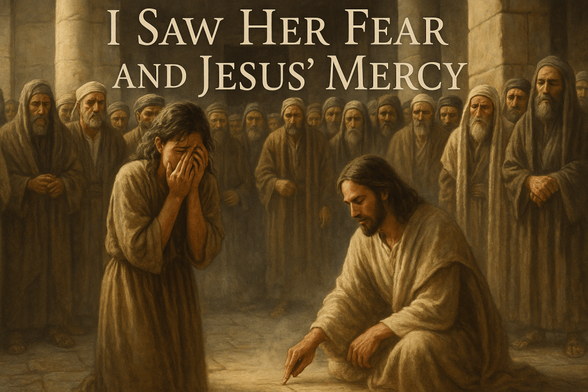
 Alive in Christ
 Assembly Bethesda
 Cpaphil
 Cpaphil