 Gems of Knowledge
Don’t Wait to Come Back
Repentance isn’t punishment—it’s freedom and restoration. Don’t wait to turn back to God. He’s ready to restore you right now.https://gemsofknowledge.com/2026/05/11/dont-wait-to-come-back/

Don’t Wait to Come Back
Repentance isn’t punishment—it’s freedom and restoration. Don’t wait to turn back to God. He’s ready to restore you right now.https://gemsofknowledge.com/2026/05/11/dont-wait-to-come-back/
The Love That Goes Beyond Forgiveness
DID YOU KNOW
Did you know that forgiveness is only the beginning of healing, not the end of it?
When Paul writes to the Corinthians, he addresses a situation where discipline had already taken place, and now the greater challenge remained—what comes next. “You should rather forgive and comfort him… confirm your love for him” (2 Corinthians 2:7–8). The Greek word for forgive here is χαρίζομαι (charizomai), rooted in charis (grace), meaning to freely give favor. This reminds us that forgiveness is not a transaction but a gift. Yet Paul does not stop there. He calls the church to comfort, which in Greek is παρακαλέω (parakaleō)—to come alongside, to encourage, to strengthen. Forgiveness releases the debt, but comfort restores the person.
Too often, we forgive in word but withhold in spirit. We say, “I forgive you,” yet our posture remains guarded, distant, or even superior. That subtle grudge lingers beneath the surface. But Scripture calls us higher. Just as Christ did not merely forgive us but also drew us near, we are invited to move beyond minimal obedience into relational restoration. This is where love begins to mature. “Love is patient and kind… it keeps no record of wrongs” (1 Corinthians 13:4–5). Love does not simply cancel the offense; it rebuilds the relationship.
Did you know that unresolved forgiveness can overwhelm a soul rather than restore it?
Paul gives a striking warning: “lest somehow this person should be overwhelmed by excessive sorrow” (2 Corinthians 2:7). The word “overwhelmed” suggests being swallowed up, consumed, or drowned. There is a weight that unaddressed guilt can carry, and without the balancing force of grace, it can crush a person’s spirit. Forgiveness without comfort leaves the offender in a state of emotional and spiritual limbo—no longer condemned, but not fully restored either.
This insight reveals something about the heart of God. He does not forgive us reluctantly or partially. Psalm 33 reminds us, “The earth is full of the goodness of the Lord” (Psalm 33:5). His forgiveness is complete and accompanied by restoration. When we fail to extend that same grace to others, we misrepresent His nature. Colossians 3:13 echoes this truth: “forgiving one another… even as Christ forgave you.” Christ’s forgiveness was not cold or distant—it was sacrificial, embracing, and transformative. When we withhold comfort, we risk leaving others trapped in shame rather than leading them into freedom.
Did you know that forgiveness reveals your character more than your words ever could?
Paul makes this clear when he says, “I wrote… in order that I could know your proven character, whether you are obedient in everything” (2 Corinthians 2:9). Forgiveness becomes a test—not of emotion, but of obedience. The Greek word for “proven” is δοκιμή (dokimē), referring to something tested and found genuine. It is easy to speak of grace; it is far more revealing to live it out when it costs us something.
This brings us back to Deuteronomy, where God calls His people to remember His commands and live them out in daily life. “You shall love the Lord your God with all your heart…” (Deuteronomy 6:5). That love is not abstract—it is expressed in obedience. When we choose to forgive and then continue to walk in love toward those who have wronged us, we demonstrate a faith that is alive and active. It reflects the transforming work of the Holy Spirit within us. This is the fruit of the Spirit in action—love that does not depend on circumstances, but on surrender.
Did you know that true forgiveness mirrors the love revealed at Easter?
At the heart of the gospel is a love that forgives the undeserving. Easter stands as the ultimate declaration of that truth. Christ did not wait for us to earn forgiveness; He extended it freely. Romans 5:8 tells us, “God demonstrates His own love toward us, in that while we were still sinners, Christ died for us.” This is the foundation of all Christian forgiveness. We forgive not because others deserve it, but because we have received it.
The connection to our spiritual growth is unmistakable. Galatians 5:22 identifies love as the first fruit of the Spirit because it is the root from which all other virtues grow. The Greek ἀγάπη (agapē) describes a self-giving, sacrificial love that seeks the good of others. When we forgive, comfort, and restore, we are not merely resolving conflict—we are participating in the very nature of Christ. We become living expressions of His grace in a broken world.
There is a difference between forgiving to move on and forgiving to move closer. The first creates distance; the second builds connection. Christ’s love always moves toward restoration. When He called Peter after his denial, He did not merely absolve him—He restored him. That is the pattern we are called to follow.
As you reflect on this today, consider where you may have stopped short. Have you forgiven but not comforted? Released the offense but withheld the relationship? The invitation of Scripture is clear: let forgiveness grow into love. Let grace overflow into action. In doing so, you not only bring healing to others—you experience the fullness of God’s grace in your own life.
FEEL FREE TO COMMENT, SUBSCRIBE, AND REPOST, SO OTHERS MAY KNOW
#2Corinthians2Meaning #biblicalForgiveness #ChristianLove #ForgivenessAndRestoration #fruitOfTheSpiritLove

The Cost of the Clean Exit: When the System Protects the Liar
3,572 words, 19 minutes read time.
Grant Miller sat in the clinical, blue-light glow of his home office, the low hum of three synchronized monitors serving as the only soundtrack to the wreckage of a decade. On the center screen, a spreadsheet acted as a cold, digital autopsy of ten years of his life. As a systems architect, Grant didn’t have “hobbies”; he had projects that required infrastructure, precision, and an uncompromising adherence to the truth. When he first walked into the local “Learn to Skate” rink with a camera bag and a laptop, he wasn’t looking for a plaque or a pat on the back. He saw a system that was broken—a chaotic, paper-trail operation where registrations were lost in overstuffed filing cabinets and the club’s “digital presence” was a joke. Over the next ten years, Grant didn’t just volunteer; he engineered. He built a fortress. By the time the dust settled, he had clocked over $65,000 in professional volunteer hours based on federal labor standards, and his private servers groaned under the weight of 100,000 high-resolution images captured on $10,000 of his own professional gear. He was the invisible backbone of the club, the man who turned a disorganized mess into a streamlined, encrypted powerhouse that parents actually trusted with their data and their children’s milestones.
The sheer volume of the work was staggering when viewed through the lens of objective data. We are talking about ten years of Saturday mornings spent in sub-zero rinks, ten years of weeknights spent editing thousands of RAW files to ensure every kid in the program had a hero shot that made them feel like an Olympian. Grant didn’t just take pictures; he managed the club’s identity. He built the website, secured the databases, and handled the tech support that the board was too technologically illiterate to understand. In the world of non-profits, a man like Grant is a unicorn—a high-level professional providing enterprise-grade solutions for the price of a lukewarm coffee. But the danger of being the man who builds the system is that you eventually become the only person who knows how the gears actually turn, and in a landscape ruled by small-town egos, that technical mastery is often viewed not as an asset, but as a threat to the established order of those who prefer to rule in the dark.
In the world of small-town sports politics, efficiency is a direct threat to those who thrive on opacity and “good old boy” networks. For years, the club’s board elections had been tainted by what the locals quietly called “funny business.” It was a shadowy, manual practice where Sarah, the Skating Director, and her inner circle would physically call members over the phone, pressuring them to cast votes for her hand-picked candidates in direct violation of the club’s own bylaws. It was a system built on social engineering and intimidation, a way to ensure that the “inner circle” remained unchallenged and that the director’s personal fiefdom remained intact. Sarah wore her high-level credentials with the national Figure Skating Association like a medieval mace, using her title to silence dissent and maintain a status quo that favored her cronies over the actual growth of the program. She didn’t want a fair vote; she wanted a coronation every cycle.
To kill this corruption and bring the club into the twenty-first century, Grant had implemented a third-party, industry-standard voting system years prior. He didn’t build the software—he was too smart for that—but he selected a platform that offered absolute integrity, two-factor authentication, and a verifiable audit trail. It was a secure tool designed to ensure that every member had a private, un-pressured voice, effectively stripping Sarah of her ability to manipulate the outcomes through late-night phone calls and locker-room arm-twisting. Ironically, that very system is still used by the club today, a testament to its reliability and Grant’s foresight in building something that could withstand the very rot he was trying to excise. But the moment the digital tally finally reflected a result that Sarah couldn’t control, the “funny business” shifted from the voting booth to a direct, surgical strike on Grant Miller’s reputation.
The transition from “valued volunteer” to “enemy of the state” happened with the flick of a bureaucratic switch. When the election results didn’t go Sarah’s way, she didn’t look in the mirror; she looked for a scapegoat. Using her high-level influence and her direct line to the national Figure Skating Association, she filed an informal grievance that was as calculated as it was malicious. She accused Grant of “digital manipulation,” claiming that he had used his administrative access to rig the election results through the third-party software. It was a character-assassinating smear designed to hit a technical professional where it hurts most: his integrity. She banked on the Association’s fundamental ignorance of technology, knowing that to a group of aging administrators, “software” was a magic black box that could be easily manipulated by a “hacker” in their midst. She didn’t need proof; she only needed to trigger the investigation to isolate Grant and cast a shadow of doubt over the entire digital infrastructure he had built.
The move was a masterclass in institutional bullying. Suddenly, the man who had donated $65,000 worth of his life to the program was being treated like a criminal in a defensive crouch. The Association, instead of looking at Sarah’s history of “funny business” or the verifiable logs of the third-party system, reflexively protected their director. They launched an inquiry that forced Grant to spend weeks of his own time—time he could have spent with his family or on his actual career—defending his honor against a baseless lie. This is the raw reality of the volunteer grind: the moment you stop being a “useful tool” and start being a “check on power,” the institution will turn on you with a cold, mechanical indifference that would make a corporate HR department blush. Grant found himself in a fight he never asked for, forced to prove a negative against a woman who had spent years treating the club’s bylaws like suggestions.
Grant didn’t retreat into anger; he retreated into the data. While Sarah was busy playing the victim in rink-side whispers and backroom meetings, Grant was operating with the cold, methodical precision of a man who knew that in a digital world, every lie leaves a footprint. He understood that the burden of proof in an institutional inquisition is rarely on the accuser, so he built a defense that was mathematically irrefutable. He spent dozens of hours—hours on top of the decade he’d already sacrificed—compiling a forensic dossier that documented every interaction with the voting software. He didn’t just tell them he didn’t rig the election; he showed them the server logs, the encrypted handshakes, and the third-party security protocols that made it impossible for an administrator to alter an individual ballot once cast. He presented a timeline of every email sent, every website modification made, and every administrative login, cross-referenced against the club’s own bylaws which Sarah had so casually ignored for years.
The sheer density of the evidence was a silent middle finger to the incompetence of the board. Grant produced a document that mapped the “funny business” of previous years—the phone call logs and the manual tallies that didn’t add up—and contrasted it with the sterile, unassailable integrity of the digital system he had implemented. He was forcing the Association to look at the mirror, showing them that the only person with a history of manipulation was the woman pointing the finger. For a man who lived by the logic of “if-then” statements, the hearing wasn’t an emotional plea for his reputation; it was a technical demonstration of Sarah’s malice. He sat across from the Association representatives—people who likely struggled to reset their own Wi-Fi routers—and spoke to them in the language of objective truth. He didn’t ask for their trust; he demanded they acknowledge the data.
The hearing was a collision between professional competence and bureaucratic ego. Grant watched as the Association reps flipped through his forensic audit with the glazed eyes of people who had realized they were in way over their heads. They had walked into the room expecting to slap the wrist of a “rogue volunteer” and instead found themselves staring at a mountain of evidence that implicated their own director in years of procedural misconduct. They saw the locks on the third-party system, they saw the clean logs, and they saw the verified results that matched the will of the members perfectly. There was no “hacker,” no “manipulation,” and no “rigging.” There was only a man who had done his job too well and a woman who had tried to destroy him for it. The truth was sitting on the table, cold and heavy, but the institution wasn’t interested in truth; it was interested in liability.
The final verdict arrived not with a bang, but with a whimper—a two-paragraph email that was a masterclass in corporate-filtered non-apology. The Association stated they could “find no fault” in Grant’s actions, a clinical way of admitting he was innocent without actually saying he had been wronged. There was a weak, throwaway sentence about the “inconvenience of the investigation,” but no mention of the ten years of service, the $65,000 in labor, or the 100,000 photos that had built their brand. Even more galling was the silence regarding Sarah. There was no reprimand, no suspension, and no acknowledgment of her baseless smear campaign. She was allowed to keep her office and her title, protected by a system that values the survival of the hierarchy over the character of its builders. The Association had looked at a decade of loyalty and a month of character assassination and decided that the status quo was worth more than a man’s honor.
In the immediate aftermath, Grant felt the weight of the “sunk cost fallacy” pulling at his gut. Ten years. Over a hundred thousand images of kids learning to find their edges, of parents crying in the stands, of a community he thought he was part of. He looked at the hard drives in his office—$10,000 worth of gear and an archive of a decade’s worth of growth—and realized that the club didn’t deserve a single byte of it. The “Actionable Fix” in this scenario wasn’t to stay and fight a guerrilla war against Sarah’s ego; it was to perform a total, scorched-earth decoupling of his identity from the program. He wasn’t just a volunteer leaving a post; he was an architect reclaiming his blueprints. He realized that Sarah had successfully weaponized the institution to run off its most valuable asset, and the board was too weak or too complicit to stop her.
The raw truth that every high-level volunteer eventually learns is that the institution doesn’t love you back. It is a machine that consumes “useful idiots” until they become “inconvenient truths,” and then it discards them with a form letter. Grant’s exit wasn’t a retreat; it was an evacuation of value. He deleted his administrative access, handed over the keys to the digital fortress he had built, and walked away with the one thing Sarah could never touch: his integrity. He understood that the club would likely devolve back into the “funny business” of phone-call voting and paper-trail chaos within a year, and he finally stopped caring. Forgiveness, for Grant, was the cold realization that he no longer owed his energy to a group of people who would trade his decade of sacrifice for a director’s comfort.
The first Saturday morning after his resignation was the loudest silence Grant had ever experienced. For ten years, the rhythmic scratch of toe picks, the deep hum of blades carving precise circles, and the echoes of classical scores over the PA system had been the heartbeat of his weekend. Now, sitting in his kitchen with a cup of coffee that didn’t need to be rushed, he felt the phantom weight of the camera bag on his shoulder. He looked at his gear—the Nikon bodies, the 70-200mm f/2.8 lens that had captured a hundred thousand tiny triumphs—and realized they were just tools again, no longer weapons of a community’s legacy. The realization hit him with the cold precision of a data point: he had been a ghostwriter for a story that the lead character was trying to delete. Sarah still held the keys to the rink, but she no longer held the keys to his time, a currency that, once spent, offers no refunds.
The “funny business” resumed almost immediately. Reports filtered back through the grapevine of the old “phone tree” tactics resurfacing, of board meetings descending back into the opaque, disorganized chaos that had defined the era before Grant’s digital intervention. The club was regressing, shedding its professional skin and returning to its form as a petty fiefdom. It was the natural state of an organization that chooses a comfortable lie over a demanding truth. Grant watched from the sidelines, not with the bitterness of a man who had lost, but with the detached observation of a scientist watching a predictable chemical reaction. When you remove the structural integrity of a building—the architect and the foundation—it doesn’t collapse all at once; it leans until it eventually becomes uninhabitable.
While the Association’s weak apology sat in his inbox like a digital insult, the real “audit” of Grant’s decade came from the people Sarah couldn’t control: the parents. His private gallery links began to see a spike in traffic. Families were downloading the archives, realizing that the man who had documented their children’s lives from their first wobbles to their high school graduations was gone. Those 100,000 photos weren’t just data; they were the only evidence of a decade of growth that the club had essentially disowned. Grant realized that by attacking his integrity, Sarah had inadvertently highlighted his value. Every high-resolution shot was a reminder of a standard she could never replicate with a smartphone and a grudge.
The $65,000 in volunteer hours was gone, a sunk cost in the ledger of his life, but the forensic defense he had built remained a masterclass in tactical self-preservation. He had proven that a man with a paper trail is a man who cannot be easily erased. He had shown that even in a rigged game, the player who keeps the best records can walk away with his name intact. This is the raw truth for any man in the trenches of a volunteer organization: build the system, but keep the logs. Serve the community, but never trust the institution. The only thing you truly own at the end of a ten-year grind is your reputation and the data that proves you were the one who held the line when everyone else was busy making phone calls.
Grant Miller eventually closed the spreadsheet. He archived the folder labeled “Skating Club Litigation” and moved it to a backup drive, a dark corner of his digital life that he intended to visit only if the “funny business” ever crossed the line into legal territory again. He wasn’t waiting for Sarah to be fired, and he wasn’t waiting for the Association to grow a spine and offer a real apology. That would be giving them more of his life, and he had already donated enough. The final transaction was the act of clicking “Logout” for the last time—not just from a server, but from a narrative that no longer served him.
Author’s Note
In the world of “sanitized” faith, we’re told forgiveness is a warm, fuzzy reconciliation. We’re fed a version of grace that expects a man to just “shake hands and forget” while his reputation is still bleeding out. But the reality of the grind teaches a harder truth: Sometimes, forgiveness is the tactical decision to stop trying to collect a debt from a bankrupt person. It’s handing the bill to a higher authority and walking off the job site.
For the men who know me, you’ll recognize the skeleton of this story. It’s loosely based on my own ten-year tour in the trenches—a decade of professional-grade labor met with a calculated strike at my integrity. Note that all specific names and locations have been changed to protect everyone involved. For a man in my field, a formal accusation of “manipulation” or “rigging” is a direct hit on my livelihood. I operate under a strict standard of professional appearance; a smear like this could ha
Even years later, I still feel the weight. Every year when the house lights dim and the ice shows begin, the struggle resurfaces like a ghost in the rafters. It’s a seasonal reminder of a wound that hasn’t fully closed—not because of a lack of faith, but because I refuse to lie about the truth. I still run the ice show circuit, taking the photos and giving them away for free, promoting the achievements of these young athletes and the sport itself. I do the work because the work has value to those skaters and thier families.
I’ve had to face the bitter reality that the people who launched this path of destruction were never held accountable—and in all likelihood, they never will be on this side of eternity. Even though her actions and that path of wreckage continue to this day, there was no grand moment of justice, no public clearing of my name, and no professional consequence for the liar. From what I’ve been told, this began long before I arrived and has left a trail of destroyed lives in its wake. This includes one individual handed a lifetime ban from skating—a move reminiscent of the Tonya Harding fallout—simply for trying to protect a skater from abuse. That wake of destruction remains active, and the wreckage continues to pile up. I have to believe that one day, God will say “enough.” This is my way of turning this situation over to God.
In Enemies of the Heart, Andy Stanley identifies Anger as the result of a “debt” mindset—the conviction that “you owe me.” When a bureaucrat smears your name or devalues a decade of your life, they create a massive debt. We wait for the apology or the admission of guilt to “balance the books,” but a bankrupt person can’t pay you back. Stanley’s solution isn’t “feelings”; it’s a business decision: Cancel the debt. You aren’t saying what they did was right; you’re deciding you will no longer wait for a thief to return what they stole.
I’ve heard the fake apologies—the corporate-speak non-apologies meant to shift the blame. Specifically: “I’m sorry you got your feelings hurt.” Let’s be blunt: that’s a tactical maneuver, not an apology. It ignores the lie, the rigged system, and the malicious intent. It treats a professional betrayal like an emotional glitch on your part. It’s the cowards’ way out.
Understand this: there is no commandment that forces you to associate with people like this. In my opinion, based on the Word, there are actually commandments not to associate with them. Scripture doesn’t call us to be door-mats for the deceptive. It tells us to “have nothing to do with them” (2 Timothy 3:5) and to “shun” those who persist in division and deceit. Forgiveness is about your heart’s freedom from their debt; it is not a legal requirement to invite a known liar back to your table.
“Forgive and forget” is a myth. Even the resurrected Christ carries the record of what was done to Him.
“Then I saw a Lamb, looking as if it had been slain, standing in the center of the throne…” — Revelation 5:6 (NIV)
The scars on the resurrected Christ prove that memory and mercy are not mutually exclusive. Those wounds are the eternal record of the price He paid. He hasn’t “forgotten” the cost; He absorbed the debt so the bill never reaches the one who owed it. Forgiveness isn’t forgetting; it’s absorbing the hit.
I wrote this for the men who still struggle, like I do, with the hard facts. I wrote it for the men who have done the work, kept the logs, and watched the “system” protect the liar. If you’re in those shoes, understand this: Your integrity isn’t defined by their inability to tell the truth. I know that one day God will hold them accountable, even if they never face justice on this earth. Scripture is clear: “It is mine to avenge; I will repay,” says the Lord. Sometimes, the most masculine thing you can do is shake the dust off your boots, cancel the debt, and leave the final audit to the only Judge who actually keeps the books.
Call to Action
If this story struck a chord, don’t just scroll on. Join the brotherhood—men learning to build, not borrow, their strength. Subscribe for more stories like this, drop a comment about where you’re growing, or reach out and tell me what you’re working toward. Let’s grow together.
D. Bryan King
Sources
Disclaimer:
The views and opinions expressed in this post are solely those of the author. The information provided is based on personal research, experience, and understanding of the subject matter at the time of writing. Readers should consult relevant experts or authorities for specific guidance related to their unique situations.
#accountability #AndyStanley #betrayal #biblicalForgiveness #CareerReputation #CharacterAssassination #CorporateGaslighting #dataIntegrity #DebtCancellation #DigitalManipulation #DocumentingTruth #ElectionRigging #enemiesOfTheHeart #FakeApologies #FigureSkatingAssociation #ForensicAudit #ForgivenessVsReconciliation #InstitutionalCorruption #InstitutionalCowardice #IntegrityInTech #LeadershipAccountability #masculineFaith #moralCourage #NonProfitPolitics #PhotographyArchives #ProfessionalIntegrity #recoveringFromBetrayal #ResurrectedScars #Revelation56 #ShakingTheDust #SkatingDirector #SmallTownCorruption #SmearCampaigns #StandardOfAppearance #standingFirm #SystemsArchitect #TheSlainLamb #ThirdPartyVotingSystems #VengeanceIsMine #VolunteerBurnout
The Power of Forgiveness: Healing Yourself and Others in Christian Living for Men—No Excuses, No Weakness, No BS
1,428 words, 8 minutes read time.
Forgiveness is war. It is war against bitterness, against self-pity, against the lie that nursing grudges makes you strong. It doesn’t. It makes you small. It chains your mind to the past. It turns pain into identity. Christian living for men demands toughness, but not the cheap toughness of emotional armor. Real toughness is the ability to confront injury, acknowledge it, and refuse to be ruled by it.
The culture soft-pedals this. “Forgive and forget.” Sounds nice. It is half-truth garbage. Humans do not forget. Memory exists for survival and learning. Even the risen Jesus bore scars. Why? To remind us of cost and consequence. To testify that suffering existed and was overcome. The scars are not erased. The meaning of the scars is transformed.
Men must grasp this. Forgiveness is not erasure. It is liberation. You remember what happened. You refuse to let it own you. You release the debt you believe others owe. That is strength. That is Christian maturity. Anything less is emotional cowardice.
Christian Living and Faith for Men: Stop Confusing Forgiveness With Approval
Christian living for men is built on accountability and grace. Forgiveness does not equal approval. You can forgive wrongdoing without endorsing it. You can release resentment without pretending harm was trivial. This distinction is non-negotiable.
Men often resist forgiveness because they fear it signals surrender. They think: if I forgive, I am saying it didn’t matter. Wrong. Forgiveness says: it mattered, but I will not become a prisoner of it. I will not define myself by what others did. I will respond with dignity.
This matters because grudges rot character. They justify cynicism. They poison relationships. A man who carries bitterness everywhere eventually sees enemies in every direction. He isolates. He blames. He stagnates. Christian faith calls men to something higher—responsibility, growth, and the refusal to outsource emotional health to circumstances.
Forgiveness also coexists with boundaries. This is another lie in simplistic moral slogans. You can forgive someone and still distance yourself. You can release anger and still demand accountability. If a relationship is destructive, you are not obligated to maintain it. Christian love does not require self-destruction.
Men who understand this become stronger. They stop conflating forgiveness with naïveté. They recognize that boundaries are expressions of self-respect. You forgive, but you do not surrender wisdom.
The Power of Forgiveness: Healing Yourself Because No One Else Will
Forgiveness heals the forgiver first. This is the uncomfortable truth. Many men believe forgiveness primarily benefits the offender. Sometimes it does. Reconciliation is possible in certain circumstances. But the primary healing occurs inside the person who releases resentment.
Bitterness is psychological poison. It narrows perception. It amplifies minor slights into imagined conspiracies. It trains the mind to seek evidence of hostility. Over time, this becomes a worldview. Everything is interpreted through suspicion. Relationships deteriorate. Opportunities shrink. Emotional energy is wasted on replaying old grievances.
Men who hold grudges often believe they are justified. Perhaps they are. The offense may have been real. The pain may have been severe. Justice may even demand consequences. But justification does not equal healing. You can be right and still be broken.
Forgiveness interrupts this cycle. It does not deny pain. It acknowledges it. It says: this happened. I will learn from it. I will set boundaries. But I will not carry hatred. I refuse to let the past dictate the future.
This aligns with Christian teaching about grace. Grace does not ignore wrongdoing. It offers the possibility of redemption. If redemption is possible, then bitterness is unnecessary. Men can demand accountability and still believe in growth. They can confront evil and still pursue healing.
Weak men avoid this work. They prefer the temporary comfort of anger. It feels righteous. It feels powerful. It is illusion. Real power is the discipline to control emotional impulses. Real power is the decision to move forward.
Christian Living for Men: The Lie of “Forgive and Forget”
“Forgive and forget” is a slogan, not wisdom. Human memory is not disposable. It serves critical functions. Memory teaches. It warns. It preserves lessons. The problem is not memory. The problem is emotional attachment to memory.
Forgiveness does not require forgetting. It requires reinterpretation. The event remains in history, but its emotional dominance diminishes. You remember what happened without reliving the trauma. You extract lessons without constructing an identity around victimhood.
This is essential for men. Identity built on grievance is fragile. It depends on constant validation of suffering. It requires the world to acknowledge injustice at every turn. That is exhausting. It prevents growth.
Christian understanding offers a better path. The scars of life remain, but they become testimonies. They remind us of struggle and survival. They cultivate empathy. They inform wisdom. Like the scars of Jesus, they signify cost and redemption.
This is not sentimentality. It is truth. Healing does not require erasing history. It requires meaning. The past becomes a teacher rather than a tyrant.
Men who grasp this reject simplistic narratives. They do not demand that memory vanish. They demand that memory serve purpose. The offense becomes instruction. The pain becomes growth. This is Christian maturity.
The Discipline of Forgiveness in Christian Living for Men
Forgiveness is practiced. It is not theoretical. It begins with decisions. When conflict arises, resist the impulse to escalate. Listen before reacting. Seek understanding before condemnation. This does not mean excusing wrongdoing. It means approaching conflict with discipline.
Emotional reactions are powerful. They demand immediate expression. Discipline creates space between stimulus and response. In that space, wisdom operates. You choose how to act rather than being controlled by impulse.
Christian living for men emphasizes responsibility. Forgiveness is part of responsibility. You are responsible for your emotional state. You are responsible for how you treat others. You are responsible for breaking cycles of hostility.
This is not weakness. It is strength. Weak men lash out. Strong men control themselves. Weak men cling to grievances. Strong men release them. Weak men justify stagnation. Strong men pursue growth.
Boundaries remain essential. Forgiveness does not require tolerating abuse. It does not require reconciliation in every circumstance. Some relationships cannot be restored without genuine change. Wisdom discerns the difference.
Men often fear exploitation. They worry that forgiveness will be interpreted as permission. This is valid. But exploitation does not invalidate the principle. You can forgive and still protect yourself. You can release resentment and still enforce consequences. These are complementary.
The alternative—holding grudges—rarely produces good outcomes. Grudges isolate. They foster cynicism. They shrink possibilities. Forgiveness expands them.
Conclusion: No Excuses, No Weakness—Forgiveness as Strength
Forgiveness is not sentimental. It is not easy. It is war against the instincts that demand retaliation. It is Christian discipline applied to emotional life. Men who practice it grow stronger.
This does not minimize pain. It acknowledges it. Christian living for men requires honesty. Holding grudges is understandable. Healing requires letting go of the desire to punish through resentment.
The scars of history remain. So do the lessons. Like the scars of Jesus, they remind us of cost and consequence. But they also testify to the possibility of renewal.
Forgiveness is not forgetting. It is freedom. It is the decision to live forward rather than backward. It is the refusal to surrender your future to your past.
Men who understand this become better husbands, fathers, friends, and citizens. They model strength. They break cycles of hostility. They embody Christian principles in action.
No excuses. No weakness. Forgiveness is power.
Call to Action
If this study encouraged you, don’t just scroll on. Subscribe for more bible studies, share a comment about what God is teaching you, or reach out and tell me what you’re reflecting on today. Let’s grow in faith together.
D. Bryan King
Sources
Matthew 6:14-15 – Forgiveness and spiritual responsibility
Ephesians 4:31-32 – Christian instruction on kindness and forgiveness
American Psychological Association – Anger and Health Effects
National Institutes of Health – Mental Health Benefits of Forgiveness
Psychology Today – Forgiveness Overview
GotQuestions.org – Biblical Perspective on Forgive and Forget
Focus on the Family – Christian Teaching on Forgiveness
NIH – Emotional Consequences of Interpersonal Conflict
HeartMath – Forgiveness and Physical Health
NIH – Psychological Impact of Resentment
Christianity Today – Faith and Practical Christian Living
Desiring God – Theological Insights on Forgiveness
CDC – Mental Health Fundamentals
Mayo Clinic – Stress and Forgiveness
Disclaimer:
The views and opinions expressed in this post are solely those of the author. The information provided is based on personal research, experience, and understanding of the subject matter at the time of writing. Readers should consult relevant experts or authorities for specific guidance related to their unique situations.
#biblicalForgiveness #boundariesInRelationships #ChristianCharacterDevelopment #ChristianDiscipline #ChristianEthics #ChristianFaithForMen #ChristianForgivenessForMen #ChristianGuidance #ChristianLifeLessons #ChristianLifePrinciples #ChristianLivingForMen #ChristianMasculinity #ChristianMasculinityAndStrength #ChristianPerspectiveOnPain #ChristianRelationships #ChristianResponsibility #ChristianTeachingsOnForgiveness #ChristianWisdom #ChristianWorldview #emotionalDiscipline #emotionalHealing #emotionalMaturity #emotionalResilience #emotionalStrengthForMen #faithAndEmotionalHealth #faithAndForgiveness #faithBasedHealing #faithDrivenGrowth #forgivenessAndAccountability #forgivenessAndBoundaries #forgivenessAndJustice #forgivenessAndPersonalGrowth #forgivenessAndSelfControl #forgivenessAndSelfHealing #forgivenessAndWisdom #forgivenessInChristianity #forgivenessWithoutForgetting #healingEmotionalWounds #healingFromPastHurts #healingRelationships #healingThroughForgiveness #menAndEmotionalStrength #menSMentalHealth #mentalHealthAndForgiveness #mentalHealthChristianPerspective #overcomingBitterness #overcomingEmotionalPain #overcomingGrudges #personalGrowthThroughFaith #powerOfForgiveness #relationshipHealing #releasingResentment #spiritualDiscipline #spiritualGrowthForMen #spiritualMaturity #spiritualRenewal #spiritualRestoration #spiritualTransformation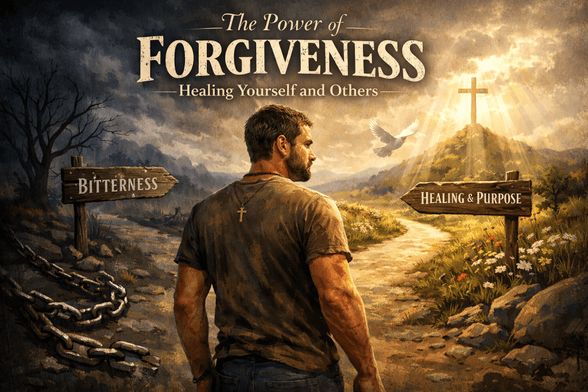
The Root That Wouldn’t Die
2,116 words, 11 minutes read time.
In the heart of Ridgeview, a close-knit town tucked into the southern mountains where the Blue Ridge foothills rose in gentle, forested waves and the air carried the faint scent of pine and woodsmoke year-round, Ethan Carter was the kind of man everyone knew and trusted. Mornings often found him on his wide front porch, coffee steaming in the crisp air, waving to neighbors who sat rocking on theirs, swapping stories about the latest blaze of fall colors on the sugar maples or who was fixing up an old cabin along one of the winding ridge roads. The town moved at its own unhurried pace: kids biking down quiet streets after school, families gathering at the diner on Main Street for Friday night catfish specials and homemade pies, church bells echoing off the valleys every Sunday morning like a gentle call to gather. Porch lights glowed against the evening mist that drifted up from the lower hollows, and folks still waved when they passed on the two-lane roads, knowing most everyone by name. It was the kind of place where community ties ran deep, where a helping hand or a shared meal mattered more than any headline—yet even in such a place, hidden burdens could quietly take root.
At Grace Community Church, Ethan was equally dependable. He arrived early each Sunday, Bible in hand, offering warm handshakes and quiet encouragement to families filing in. He taught the adult Sunday school class on books like James, unpacking passages about faith showing itself in action with clear, straightforward insight. He led the men’s accountability group, sitting with brothers as they shared real struggles—pride, temptation, doubt—and always pointing them toward Scripture without shortcuts or fluff. His technical gifts served the church too: he kept the website updated, smoothed out live-stream issues during services, and set up the online giving portal that steadied the budget through lean seasons.
His wife, Sarah, sat beside him in the pew every week, thankful for the steady man she had married twenty years before. Their two teenage children—now driving, questioning faith, and navigating their own paths—still saw him as the family’s anchor. He prayed with them at night, fixed whatever broke around the house, and provided faithfully from the income his business brought in. On the surface, everything held together.
But Ethan carried a root no one could see.
Fifteen years earlier, at the first church where he had come to faith as a young man fresh out of college with a computer science degree, Ethan had thrown himself into serving. He saw the sanctuary’s outdated sound system, flickering projector, and nonexistent website as clear opportunities to use his gifts. He volunteered to revamp the church site, set up basic live-streaming equipment in an era when that felt innovative for a small congregation, and handled audio mixing so the message came through undistorted. It energized him deeply—removing distractions so people could hear the gospel without hindrance. This was quiet, behind-the-scenes faithfulness, the kind Scripture honors: serving one another as good stewards of God’s varied grace (1 Peter 4:10).
Pastor Mark Reynolds noticed Ethan’s reliability and dedication. One Sunday after the service, Mark pulled him aside in the hallway. “Ethan, you’re one of our trusted guys,” he said. “Chosen for something bigger. God has His hand on you.” Ethan felt truly seen for the first time in a church setting. He pictured stepping further into media and tech ministry—perhaps leading a small team, training volunteers, or expanding digital outreach as the church grew.
Instead, Mark redirected him toward children’s ministry.
“God needs faithful men in the kids’ wing,” Mark explained. “We have a real shortage of male leaders down there. It’s where the kingdom impact happens most—shaping the next generation early. You’re steady, you’re married now, kids on the way soon. This is your spot.”
Ethan trusted Mark’s leadership. He gave it his best effort. For months he showed up faithfully, helped with crafts, led small groups of energetic five-year-olds through simple Bible stories. He was patient, kind, and well-prepared. But inside, it drained him in ways he could not fully articulate. His thoughts kept drifting to troubleshooting the sanctuary soundboard, coding cleaner website templates, finding better ways to connect people digitally. He felt like a square peg forced into a round hole—his God-given technical wiring ignored while the church funneled “trusted” men into visible, relational roles that fit a narrower mold of ministry. When he gently brought up his heart for media and tech service, Mark brushed it aside: “We already have people handling that side. Children’s ministry needs men like you more right now.”
The rejection cut deeper than Ethan let on at the time. He left that church quietly, wounded in a way that felt almost invisible to others. He told himself he had forgiven Mark, that he had moved on, that he had planted new roots at Grace Community. But the root stayed buried, feeding quietly on the memory.
Years later, as Ridgeview businesses thanked him publicly at chamber meetings and Grace Community leaned heavily on his technical expertise, the old wound twisted sharper whenever similar situations arose. When a young man at church approached leadership about helping with media or tech, Ethan felt a quiet pang of resentment rise unbidden. When the church publicly honored volunteers serving in “frontline” ministries like children’s or youth work, he would smile and applaud along with everyone else, but inside he replayed Mark’s words: “This is your spot.” He justified the bitterness as practical wisdom—”I know what happens when churches overlook real gifting”—but it poisoned his prayers. On communion Sundays, as he took the bread and cup in remembrance of Christ’s forgiveness, he felt the sharp hypocrisy of withholding that same forgiveness from Mark in his heart.
For years the double life held firm. At home, Ethan remained present and attentive—helping the kids with homework, leading family devotions, staying up late to push client site updates live before deadlines. At church, he continued exemplary service, teaching on Ephesians 4:31 about putting away all bitterness, wrath, and anger while secretly cherishing the very thing he warned against. In private moments, late at night in his home office with the server fans humming softly and the dark ridge shadows pressing against the window, he would scroll through old church archives, see Mark still leading and thriving, and feel the wound reopen fresh. Joy seeped out of his faith like warmth escaping through a cracked window on a chilly fall evening.
Then came the Wednesday evening Bible study that cracked everything open.
The group had been working steadily through Hebrews chapter 12. Ethan stood at the front, projecting the verses onto the screen with his own reliable setup, teaching with the usual clarity and care. When he read verse 15 aloud—”See to it that no one fails to obtain the grace of God; that no ‘root of bitterness’ springs up and causes trouble, and by it many become defiled”—the words struck him like a physical blow. His voice faltered for the first time anyone could recall. He tried to recover, explaining how bitterness spreads its poison beyond one heart to defile families, churches, entire communities—but the room seemed to shrink around him. Faces blurred. The irony burned hot: here he was, the man who connected Ridgeview’s businesses and kept the church stream running smoothly, warning others about a root he had been feeding for fifteen years, letting it defile his own heart and subtly strain his closest relationships.
He excused himself abruptly, mumbling something about needing air, and slipped into the empty hallway. Leaning against the wall under the harsh fluorescent light, Ethan felt the full weight come crashing down—the dismissed gifts, the forced role that never fit, the years of quiet judgment toward leaders who reminded him even faintly of Mark. He had preached forgiveness while refusing to practice it. He had taught grace while blocking it in his own life. Mark 11:25 echoed clearly in his mind: “Whenever you stand praying, forgive, if you have anything against anyone, so that your Father also who is in heaven may forgive you your trespasses.”
That night Ethan drove home along the winding mountain roads, the ridges black against a starry sky. In the driveway, engine off, he sat in silence and prayed raw prayers—no polished words, just broken confession and surrender. When he finally went inside, Sarah was still awake, reading on the couch. He sat beside her, took her hand, and told her everything: the old church, Pastor Mark’s redirection to children’s ministry, the ignored calling to serve through tech, the bitterness he had nursed like a hidden wound even as God had blessed his gifts in Ridgeview. Tears came—for the original hurt, for the hypocrisy it had bred, for the joy and closeness it had stolen from their marriage and family over the years.
Sarah listened without interruption, her own eyes filling with tears. She felt hurt for him, angry at the damage done, but her love remained steady. They talked deep into the night as the mist lifted outside the windows. The road ahead would not be easy or quick. Ethan stepped back from teaching and leading the men’s group for a season—not out of shame alone, but out of reverence for the holiness of those roles and a desire to walk in integrity. He sought Christian counseling to process the wound properly. He pursued real accountability with a couple of trusted brothers who would ask hard questions without judgment. Most importantly, he began praying specifically for Mark—not with easy feelings at first, but in simple obedience, asking God to bless and heal the man who had once hurt him.
He even drafted a letter to Mark, pouring out the pain honestly while releasing the grudge and owning his own part in letting it fester so long. He never sent it—forgiveness did not require confrontation in this case—but writing it helped loosen the root’s grip.
Slowly, painfully, the bitterness gave way. Ethan returned to serving at Grace, still handling the tech side but now with a lighter heart and freer hands. He began mentoring a couple of younger men interested in web development and digital ministry, encouraging them in ways he had once wished someone had encouraged him. The resentment that had defiled so much quietly yielded to mercy. He never turned his story into a dramatic stage testimony; instead, he shared it quietly, one-on-one or in small accountability settings, with men carrying similar hidden hurts—always pointing them to the same unchanging truth: secret roots thrive in darkness, but God’s light exposes them not to destroy, but to heal.
The double life promises control and safety; it delivers only chains. Confession, though costly and humbling, opens the door to true freedom. And in Christ, that freedom restores what resentment tried so hard to kill forever—joy, intimacy with God, closeness in marriage and family, and authentic service that honors the gifts He has given.
Author’s Note
This story is deeply personal to me.
Years ago I sat across from church elders, pouring out my heart and explaining the technical gifts God had given me. I talked about building websites, improving live streams, and using technology to help the gospel reach farther. Instead of being encouraged, I was gently but firmly pushed into children’s ministry because they “needed more faithful men down there.” The rejection stung deeply.
From that pain and disappointment, I found my voice in this blog.
What I learned through the hurt is something I now say boldly: You don’t need the permission of church elders to do God’s work. And you don’t even have to serve God inside the walls of a church building. Honestly, if someone had told me back then that I would one day be blogging and writing several times a week, speaking directly to men about God and faith, I would have laughed out loud.
Writing The Root That Wouldn’t Die was my way of facing that hidden wound. Ethan’s story is fiction, but the hurt he carries is real—because I’ve carried it too. If you’ve ever been wounded while trying to serve in the church, if you’ve ever felt your gifts were overlooked or redirected, please know you are not alone.
The beautiful truth is that Jesus doesn’t need our titles, our positions, or anyone’s approval to use us. He simply asks for a surrendered heart. What was meant to silence me became the very place where my voice was born.
If this story stirred something in you, I pray it leads you one step closer to releasing whatever root you’ve been carrying. God is faithful to heal what we finally surrender to Him.
Call to Action
If this story struck a chord, don’t just scroll on. Join the brotherhood—men learning to build, not borrow, their strength. Subscribe for more stories like this, drop a comment about where you’re growing, or reach out and tell me what you’re working toward. Let’s grow together.
D. Bryan King
Sources
Disclaimer:
The views and opinions expressed in this post are solely those of the author. The information provided is based on personal research, experience, and understanding of the subject matter at the time of writing. Readers should consult relevant experts or authorities for specific guidance related to their unique situations.
#accountabilityGroup #biblicalForgiveness #bitternessAndResentment #bitternessDefiles #bitternessInChristianity #christianCharacterStory #christianFamilyStory #ChristianFiction #christianFictionShortStory #ChristianHopeStory #ChristianMenStruggles #ChristianRedemptionStory #christianShortStories #ChristianShortStory #ChristianTestimony #churchBetrayal #churchHurt #churchWounds #confessionAndRepentance #dealingWithBitterness #doubleLife #doubleLifeHypocrisy #ephesians431 #exposedSin #faithAndForgiveness #forgivenessAndHealing #forgivenessJourney #forgivenessStory #freedomFromBitterness #godsLight #healingFromChurchHurt #healingFromResentment #hebrews1215 #hiddenRoot #hiddenSin #lettingGoOfHurt #livingADoubleLife #mark1125 #mercyAndGrace #ministryCalling #mountainTownFiction #overcomingUnforgiveness #pastoralHurt #poisonOfBitterness #redemptionThroughConfession #rootOfBitterness #rootOfBitternessStory #secretBitterness #secretSinExposed #secretSins #smallTownChristianFiction #southernMountainStory #spiritualDoubleLife #spiritualHypocrisy #spiritualRestoration #theRootThatWouldntDie #trueRepentance #unforgiveness #unforgivenessConsequences #walkingInTheLight #webDeveloperChristianStory
Bought Back at Any Cost
A Day in the Life
“The Lord said to me, ‘Go again, love a woman who is loved by a lover and is committing adultery, just like the love of the Lord for the children of Israel.’” — Hosea 3:1a
There are days in the life of God’s people when we are forced to confront a love that does not make human sense. Hosea’s story is one of those days. When I read Hosea 3, I do not merely see an Old Testament prophet obeying a difficult command; I see a living parable of the heart of Jesus. God told Hosea to love a woman who had betrayed him, to marry her, to cherish her, and then—after she abandoned him—to buy her back. The Hebrew verb for “love” here, ’ahav, speaks not of fleeting affection but covenant devotion. This was not sentimental romance; it was chosen loyalty in the face of humiliation.
Hosea was righteous. Gomer was unfaithful. Yet the scandal of the story is not her sin; it is his obedience. She wandered. She traded dignity for desire. She was used and eventually sold into slavery. Then came the command that stretches our theology and our emotions: “Go and buy her back.” The price Hosea paid was not merely silver; it was his pride, his wounded heart, his reputation. As one commentator notes, “Hosea’s marriage was a sermon before it was a book.” His life became the message.
When I step into this story, I realize that it is not merely ancient history. It is a mirror. Israel’s idolatry is described as adultery because covenant with God is relational, not mechanical. The Hebrew word berith—covenant—implies binding faithfulness. To chase other gods was not simply theological error; it was personal betrayal. And if I am honest, I have known seasons where my affections were divided. I may not bow to carved idols, but I can give my loyalty to ambition, comfort, approval, or distraction. Hosea’s story forces me to ask: Where have I grown dissatisfied with the faithful love of God?
Yet here is the astonishing truth. God’s love does not collapse when confronted with our unfaithfulness. It pursues. It pays. It restores. The apostle Paul echoes this same heartbeat in Romans 5:8: “But God demonstrates His own love toward us, in that while we were still sinners, Christ died for us.” The Greek word for demonstrates, synistēsin, means to prove decisively. At the cross, Christ did what Hosea foreshadowed. He did not merely invite us back; He purchased us. As 1 Peter 1:18–19 declares, “You were not redeemed with corruptible things, like silver or gold… but with the precious blood of Christ.” The word redeemed, lytroō, carries the image of buying a slave out of bondage. Hosea paid with silver; Jesus paid with His life.
C.S. Lewis once wrote, “Though our feelings come and go, God’s love for us does not.” That is not poetic exaggeration; it is biblical reality. God’s love is not reactive. It is steadfast. It is what the Old Testament repeatedly calls chesed—covenant mercy that refuses to let go. Even when Gomer walked away, Hosea’s love did not evaporate. Even when Israel turned to idols, God did not abandon His redemptive plan. Even when I wander, He remains faithful.
There is something deeply personal in the phrase “Go again.” God did not tell Hosea to love once and be done. He said, “Go again.” That small word exposes the rhythm of divine grace. God’s love is relentless not because we deserve repeated chances, but because His character is faithful. The prophet’s obedience reflects the persistence of the Lord. In the life of Jesus, we see this same persistence. He ate with sinners again. He restored Peter again. He sought the lost again. He did not love selectively; He loved steadfastly.
The pain of betrayal in Hosea is real. God does not minimize the hurt of our rebellion. Idolatry wounds the heart of God because relationship is at stake. But astonishingly, our failure does not cancel His pursuit. As theologian J.I. Packer observed in Knowing God, “There is tremendous relief in knowing that His love to me is utterly realistic.” God sees the worst and still chooses to redeem. That is not naïve affection; it is sovereign grace.
Today, as I reflect on this “day in the life” of God’s redemptive story, I am invited to internalize two truths. First, I am Gomer before I am Hosea. I am the one bought back. My discipleship begins not with heroic obedience but with humbled gratitude. Second, I am called to reflect that relentless love in my own relationships. When forgiveness feels costly, when reconciliation feels humiliating, when loyalty feels undeserved, Hosea’s obedience whispers that covenant love is rarely convenient. It is chosen.
If you would like to explore further how Hosea reveals the heart of God’s pursuing love, The Gospel Coalition offers an insightful overview of the book’s redemptive message at https://www.thegospelcoalition.org/. Their theological reflections highlight how Hosea ultimately points to Christ’s sacrificial redemption.
Relentless love is not sentimental. It is costly, covenantal, and courageous. It follows the wandering spouse, the stubborn nation, and the distracted disciple. It buys back what seems ruined. It restores dignity where shame once ruled. In the life of Jesus, that love walked dusty roads and carried a wooden cross. In my life, that love calls me home again and again.
FEEL FREE TO COMMENT, SUBSCRIBE, AND REPOST, SO OTHERS MAY KNOW
#biblicalForgiveness #ChristianDiscipleship #covenantFaithfulness #GodSPursuingGrace #Hosea31 #redemptionInChrist #relentlessLoveOfGod

Forgiven Without Fragments
As the Day Begins
“You, Lord, are good, and ready to forgive, and abundant in mercy to all those who call upon You.” — Psalm 86:5
As the day begins, we stand before a truth that steadies the soul: God is not reluctant in mercy. Psalm 86:5 reveals the heart of the covenant LORD, whose name in Hebrew, YHWH, speaks of the One who is eternally faithful—“I AM WHO I AM” (Exodus 3:14). David declares that the LORD is “ready to forgive.” The Hebrew word sallach carries the sense of full pardon granted by divine authority. This is not partial dismissal or temporary reprieve; it is decisive forgiveness flowing from God’s goodness. His mercy, described as chesed, reflects loyal love—steadfast, covenantal kindness that does not waver with our moods or merits.
Too often, we forgive in fragments. We forgive, but we remember. We restore, but we restrict. Yet what God forgives, He forgives completely. Scripture consistently affirms this sweeping grace. “As far as the east is from the west, so far has He removed our transgressions from us” (Psalm 103:12). When Jesus the Son healed, He did not leave people in spiritual probation; He declared them whole. The Greek word sozo, often translated “saved,” also means healed and restored. What He heals, He brings into fullness. He does not patch broken souls; He renews them.
There is another promise woven into this morning’s meditation. What God restores, He restores without limiting a person’s future usefulness. Consider Peter, who denied Christ, yet was later entrusted with shepherding the church. Consider Paul, once a persecutor, transformed into an apostle. God’s forgiveness is not an asterisk beside our calling. It is the very doorway into it. When we call upon Him, we are not merely excused; we are renewed and re-commissioned. As you step into this day, remember: your past does not define your potential. His mercy does.
This assurance shapes how we walk forward. In a culture often quick to shame and slow to release, Psalm 86:5 anchors us in divine reality. According to a recent reflection from Christianity Today on the transforming power of grace, believers flourish when they internalize God’s completed forgiveness rather than living under perpetual guilt (see https://www.christianitytoday.com/). The gospel is not an emotional reset button; it is a spiritual resurrection. When you call upon Him this morning, do so with confidence. His mercy is abundant, not rationed.
Triune Prayer
Heavenly Father, You are good and ready to forgive. I come before You not hiding my failures but bringing them into Your light. Thank You that Your mercy is abundant and not scarce. You are the covenant-keeping LORD, whose steadfast love never runs dry. I ask that today You quiet every lingering voice of accusation in my heart. Teach me to receive Your forgiveness fully, without shrinking from the freedom You offer. Let me walk in the confidence of being restored, not merely tolerated.
Jesus the Son, Lamb of God who takes away the sin of the world, thank You for bearing my guilt so I would not carry it into this day. Your sacrifice was complete, not partial. Help me live as one redeemed, not condemned. Where I have doubted my worth or hesitated to serve because of yesterday’s failures, breathe courage into me. Restore my sense of calling and usefulness. As You reinstated Peter, speak life over my future and grant me boldness to witness to Your grace.
Holy Spirit, Spirit of Truth and Comforter, apply this forgiveness to the deepest corners of my heart. Guard me from rehearsing old regrets. Shape my thoughts so they align with God’s promise rather than my insecurity. Lead me today in ways that reflect restored wholeness—patience in speech, compassion in action, faithfulness in witness. Guide me to live in gratitude, knowing that what God heals, He heals completely.
Thought for the Day
When God forgives, do not reopen what He has closed. Walk today as one fully restored, ready to share His mercy with others.
FEEL FREE TO COMMENT, SUBSCRIBE, AND REPOST, SO OTHERS MAY KNOW
#biblicalForgiveness #ChristianSpiritualDisciplines #divineMercy #GodForgivesCompletely #morningDevotional #Psalm865 #restorationInChrist

Splinters of Memory
4,071 words, 22 minutes read time.
The garage smelled of cherry tobacco, cut pine, and old motor oil—a private liturgy Mark Sullivan had perfected over thirty-eight years. At fifty-eight he still moved like the foreman he’d been: deliberate, economical, never wasting motion. He wore the same uniform every day—faded Carhartt bibs, steel-toed boots polished only by wear, a flannel shirt whose sleeves were rolled exactly twice. People at the mill called him “Steady Mark.” Wives of his crew joked he was the kind of husband who remembered anniversaries before the wife did. He kept score in his head: thirty-two years married, zero missed birthdays, zero raised voices that lasted past sundown. He told himself these tallies proved something.
He had also kept a perfect record with his family of origin: thirty years of silence. No letters to Gary. No graveside words for the old man when the heart attack finally came. No Christmas cards returned unopened. Mark had drawn the line in concrete and never looked back.
Except the brain keeps its own ledger.
He sat on the scarred oak workbench that Saturday morning, pipe clenched between his teeth, blueprints for a custom cherry bookcase spread in front of him. The lines refused to stay sharp. Earlier, at the hardware store on Ford Road, a teenage stock boy had knocked over an open can of industrial floor wax. The sharp, chemical bite had rolled across the aisle and straight into Mark’s nostrils—ammonia, pine solvent, something faintly metallic underneath. He’d frozen mid-step, hand on a box of 3-inch deck screws, while the rest of the store kept moving.
Now, in the garage, the scent memory refused to fade.
He wasn’t fifty-eight anymore.
He was fourteen. Kitchen linoleum cold against his shoulder blades. A high, metallic ringing in both ears like a struck tuning fork. Dust motes turning slowly in the single shaft of afternoon light that slanted through the back-door window. His father’s Red Wing boots—size twelve, laces broken and re-knotted a dozen times—stood inches from his face. The toes were scuffed gray from kicking things that didn’t move fast enough.
A weight—not just on his chest, but inside it—made every breath feel borrowed. Something heavy and wrong had landed there and stayed.
Mark’s pipe slipped from his mouth and clattered onto the blueprints. Hot ash scattered across the paper.
“Mark?”
Martha’s voice came soft from the doorway, careful as someone stepping onto thin ice. She held a chipped ceramic mug in both hands—his mug, the one with the faded John Deere logo.
He startled so violently the torn blueprint ripped further in his fists.
“I’m fine,” he said. Too loud. The words cracked like dry lumber.
“I thought you might want coffee.” She didn’t step closer. That was new. Usually she would have crossed the threshold by now, set the mug down, touched his shoulder. Today she stayed framed in the open door, backlit by the pale February light.
“I said I’m fine.”
The door clicked shut. Not slammed—just closed with the quiet precision of someone who knows better than to argue.
Guilt arrived instantly, sour in his throat. He wanted to follow her, to take the mug, to mutter something that would erase the last ninety seconds. But the pressure inside was already climbing, valve stuck, gauge needle trembling past the red line.
He reached for the claw hammer hanging on its pegboard hook. The handle felt foreign, too smooth. His hands shook. He lined up a nail for the new French-cleat tool rack he’d been promising himself for months. The first strike bent the nail at a forty-five-degree angle. He cursed under his breath—short, sharp, the kind of word he never let escape in front of Martha—and yanked at the nail with the claw.
The claw slipped. Gouged a pale trench across the cherry face-frame he’d spent three evenings jointing flat.
That was all it took.
A sound came out of him he didn’t recognize—a low, animal roar that vibrated in his own rib cage. He swung the hammer again, not at the nail, not at the wood. At the workbench itself. The blow landed on the edge, splintering a six-inch section of the top board. He swung again. And again. Each impact sent a white jolt up his forearm, into his shoulder, into his neck. Sawdust exploded upward like smoke.
When the hammer finally dropped, the clatter on the concrete floor sounded obscene in the sudden quiet.
He stood there breathing hard, staring at the wreckage. Four deep crescent gouges marred the bench he’d built with his own hands the summer he turned thirty. The wood was cherry—same species as the bookcase he was supposed to be starting today. Expensive. Irreplaceable in the way only old heartwood can be.
“James 1:20,” he whispered. The verse surfaced automatically, the way a drowning man grabs whatever floats past. Human anger does not produce the righteousness that God desires.
He’d memorized it at twenty-two, during the first year he’d refused to answer Gary’s calls. He’d recited it like a ward against the rage that used to wake him at 3 a.m. with his own teeth clenched so hard his jaw ached for hours. He’d believed the verse was a promise: stay calm, stay steady, and God would make the righteousness grow.
Now the promise felt like a taunt.
He sank onto the old milk crate he used as a stool, elbows on knees, head cradled in callused palms. The garage felt smaller now, the rafters lower, the air thicker with the smell of splintered cherry and scorched tobacco. His pulse still hammered in his ears like distant machinery. He tried to breathe the way the old army medic had taught him once, back when he was twenty and still thought anger could be managed like a bad weld: in through the nose for four, hold for four, out through the mouth for six. It didn’t help. The breath came ragged, shallow, tasting of ash.
The memories weren’t coming in neat paragraphs anymore. They arrived in shards, each one sharper than the last.
First the lamp—green glass base, heavy enough to crack bone. Gary, seventeen and already six-two, had picked it up off the end table like it weighed nothing. “Wake up, quiet boy,” their father had said, voice thick with amusement, cigarette dangling from the corner of his mouth. Mark remembered the exact sound the lamp made when it left Gary’s hand: a low whoosh, like someone swinging a baseball bat too fast. Then the impact—bright white at the temple, then black blooming outward. He remembered waking up in the ER with the side of his head shaved and staples holding the gash together. The doctor had asked how he fell down the stairs. Mark had looked at his father, who stood in the curtained doorway with arms folded, eyes flat. Mark had said, “I tripped.” The lie came so easily it felt like truth.
Another fragment surfaced: not the lamp day, but a summer evening two years earlier. Backyard. Mosquitoes thick. Their father grilling cheap hamburger patties, grease popping on the coals. Gary had Mark in a headlock, grinding knuckles into his scalp—“noogies,” he called them, though these felt more like punishment. Mark had squirmed, said stop, please stop. Their father hadn’t looked up from the grill. “Toughen up,” he’d said. “World don’t care if you cry.” Gary had laughed, let go only when Mark went limp. Later that night Mark had found blood in his hair—small crescent cuts from Gary’s class ring.
And another: Christmas when Mark was ten. The old man had drunk too much spiked eggnog and decided to “teach the boys a lesson about gratitude.” He’d lined them up in the living room, made them recite what they were thankful for. When Mark hesitated—said “family,” because that’s what you’re supposed to say—the old man backhanded him across the mouth. Split lip. Blood on the carpet. Gary had smirked from the couch. “Told you he’s soft.”
Mark lifted his head. His eyes burned, not from smoke but from something hotter. He wanted to drive to Gary’s last known address—some trailer park outside Flint, last he’d heard—and put his fist through the screen door. He wanted to stand over the old man’s grave and spit on the headstone. He wanted to scream until the neighbors called the police. Mostly he wanted someone—anyone—to say it wasn’t his fault. That the boy on the floor hadn’t deserved it. That quiet wasn’t a crime.
He reached for the small leather Bible on the shelf above the pegboard. The cover was cracked, oil-stained, pages swollen from years of damp Michigan winters. He didn’t open it to the New Testament comfort verses he usually leaned on. He went straight to Psalm 55.
My heart is in anguish within me; the terrors of death have fallen upon me. Fear and trembling come upon me, and horror overwhelms me.
The words felt like someone else had written them for him. He read them aloud, voice hoarse.
And I say, “Oh, that I had wings like a dove! I would fly away and be at rest.”
He closed the book too hard. The sound cracked in the quiet garage. Flying away sounded good. Rest sounded impossible.
The anger wasn’t fading. It was settling deeper, like rust into iron. He could feel it in his jaw, in the way his fingers kept curling into fists. He’d spent decades believing if he just worked hard enough, prayed hard enough, stayed steady enough, the past would stay past. Now it was here, sitting on the workbench beside him, breathing the same air.
He stood. Legs unsteady. Walked to the garage door, opened it just enough to see the house lights glowing warm through the kitchen window. Martha was still at the sink—he could see the shape of her shoulders, the slow rhythm of her hands moving over dishes. She hadn’t turned on the radio like she usually did when she was upset. The silence felt deliberate.
He stepped inside.
He didn’t knock. He never knocked when he came in from the garage; the house was too small for that kind of formality. But tonight the kitchen felt like someone else’s territory. Martha stood at the double sink, sleeves pushed up, hands moving mechanically through soapy water. The radio was off. No soft oldies station, no low murmur of talk radio. Just the clink of dishes and the slow drip from the faucet she’d been meaning to have him fix for months.
He stopped three steps inside the door. The linoleum here was the same pale yellow as the kitchen where the lamp had landed. He hadn’t noticed that in years.
Martha didn’t turn right away. She rinsed a plate, set it in the drainer, wiped her hands on the faded dishtowel slung over her shoulder. When she finally faced him, her eyes were dry but red-rimmed, the way they got when she’d been fighting tears and winning.
“You don’t have to say anything,” she said before he could open his mouth. “I already know you’re sorry.”
He swallowed. The words he’d rehearsed on the short walk across the yard felt clumsy now, like tools too big for the job.
“I remembered something today,” he said. His voice came out rough, scraped raw. “Not just one thing. A bunch of them. Like someone kicked over a box in the attic and everything spilled out at once.”
She nodded once, small. Waited.
He told her about the lamp—not the soft version he’d told himself for decades, but the real one: the whoosh, the crack, the blackout, the disgusted look on his father’s face. He told her about the headlock in the backyard, the blood from the class ring, the Christmas slap that left his lip swollen for a week. He told her how Gary had laughed every time, how their father had never once stepped in, how the hospital story had always been “fell down the stairs” because that was easier than the truth.
Martha listened without interrupting. When he finished, the kitchen was so quiet he could hear the refrigerator compressor click on.
“I keep waiting for it to stop,” he said. “The anger. The shaking. I keep thinking if I pray hard enough, quote the right verse, it’ll go quiet again. Like it used to.”
“It’s not going quiet, is it?” she asked gently.
“No.” He looked down at his hands—still flecked with sawdust and a thin smear of blood from where a wood splinter had jabbed his palm during the hammering. “It’s louder now. And I don’t know what to do with it.”
She crossed the small space between them. Didn’t hug him right away—just rested her forehead against his shoulder the way he sometimes did to her when words failed. He smelled the faint lemon of dish soap on her skin, the lavender from the lotion she used at night. Familiar things that should have grounded him. They didn’t.
“I don’t want to be this man,” he whispered. “The one who snaps at you. The one who breaks his own workbench because he can’t break anything else.”
“You’re not just that man,” she said. “But you’re carrying him right now. And that’s okay. You don’t have to fix it tonight.”
He wanted to argue—wanted to say that a good Christian man should be able to lay it down, should be able to forgive seventy times seven, should be able to turn the other cheek even when the first one was still stinging thirty years later. But the words wouldn’t come. They felt like lies.
Instead he let her hold him. Let the silence stretch until it wasn’t comfortable anymore, just necessary.
After a long minute he stepped back. “I’m going back out there,” he said. “Not to fix anything. Just… to sit with it.”
She nodded. Didn’t try to stop him.
Mark returned to the garage the way a man returns to a battlefield after the fighting has paused but not ended. The door closed behind him with a soft thud that echoed longer than it should have. The overhead bulb buzzed faintly; he hadn’t replaced it in two years. The light cast harsh shadows across the splintered workbench—four crescent gouges staring back at him like claw marks from something trapped inside the wood.
He didn’t pick up the hammer. Didn’t sweep the sawdust. Didn’t even sit on the milk crate. He simply stood in the middle of the floor, arms loose at his sides, and let the silence press in.
The Bible still lay open on the shelf where he’d left it, pages splayed to Psalm 55. He didn’t reach for it again. The words about wings and doves and flying away felt mocking now—beautiful, yes, but useless to a man whose feet were nailed to Michigan concrete. He thought about the Savior acquainted with grief, the one who sweat blood in the garden, who asked if the cup could pass. Mark had always liked that image: Jesus asking, not commanding. Weakness laid bare. But tonight even that felt distant. Acquainted with grief didn’t mean the grief went away. It just meant you carried it in company.
He walked to the workbench and ran his fingertips along one of the fresh gouges. The edges were still sharp; tiny slivers caught under his nails. He pressed harder until he felt the sting—small, clean pain that grounded him for a second. The anger hadn’t cooled. It had simply changed temperature: from white-hot blaze to slow, steady red glow, the kind that could burn for years without flaming out.
He thought of Gary—not with forgiveness, not with hatred so pure it blinded him, but with a cold, factual clarity. His brother was out there somewhere, probably still laughing at quiet boys, still throwing things when words failed. Their father was ash in a cemetery plot forty miles away. Neither of them had ever said sorry. Neither ever would. And Mark realized, with a clarity that hurt more than the splinters, that waiting for an apology was like waiting for rain in the Sahara: you could die of thirst before it came.
He looked around the garage—his fortress, his exile, his evidence. Thirty years of building things to prove he wasn’t broken. Tools hung in perfect rows. Lumber stacked by species and length. Blueprints rolled tight. Order everywhere except inside his own skin.
He exhaled, long and ragged. The pipe had gone out; he didn’t relight it. Instead he picked up the torn blueprint from the floor, smoothed it as best he could against the damaged bench, and set a scrap of cherry over the rip to hold it flat. A small, useless gesture. The bookcase would still get built. Life would still go on. But the steadiness he’d worn like armor felt cracked now, and he wasn’t sure he could patch it the way he patched oak with wood filler.
Martha would be waiting inside with coffee he hadn’t drunk and quiet he hadn’t earned. Tomorrow he’d go back to the mill, call out measurements, sign off on shifts, come home to the same routines. The memories wouldn’t vanish. The anger wouldn’t pack itself away. The boy on the linoleum floor would still be there, breathing under his ribs.
Mark turned off the overhead light. Darkness settled, thick and familiar. He stood in it a long minute before opening the door to the yard.
Outside, the February night was sharp with cold. A neighbor’s porch light glowed two houses down. Somewhere far off a dog barked once, then fell silent. Mark stepped onto the concrete stoop and closed the garage door behind him—not locked, just shut.
He didn’t feel healed. He didn’t feel forgiven. He didn’t even feel particularly brave.
He just felt present—raw, heavy, unfinished.
And for the first time in thirty years, that was enough to keep walking toward the house.
Author’s Note
This story is fiction, but it is rooted in my own life in ways that are hard to separate from the page. For decades I’ve known about three distinct stretches of my childhood where memory simply isn’t there—blank spots, empty frames. I’ve carried that knowledge quietly, almost like a fact filed away in a drawer I rarely opened. I didn’t want to look closer. I didn’t want to recollect what might be behind those gaps. Why? I’m not entirely certain. Fear is part of it, I suspect—fear of what the fragments might show, fear of the emotions that would rush in with them, fear that pulling on those threads would unravel more than I could handle. Avoidance felt safer. It let me keep building a life: work, marriage, routines, faith. Steady ground over uncertain ground.
Like Mark Sullivan in the garage, though, the mind doesn’t always honor our no-contact orders with the past. Lately, slowly, pieces have started coming back—not in a flood, not dramatically, but in quiet intrusions. A smell, a sensation, a sudden weight in the chest. They arrive without invitation and leave me unsettled, irritable, raw. Sometimes an unexpected memory surfaces at the wrong moment, triggering a sudden outburst of anger over something minor—a small offense or inconvenience that feels disproportionately huge because it echoes something deeper, undefined.
I fully believe in forgiveness. As a Christian, I hold to the biblical call to forgive as we have been forgiven (Matthew 6:14–15; Ephesians 4:32). But I also believe the full impact of what forgiveness truly is has been watered down by bad theology and time. Today, forgiveness is often reduced to something we “have to do” because the Bible says so—a quick, obligatory step to check off. People say “forgive and forget,” but that isn’t what Scripture teaches. God doesn’t command us to forget; He promises that He will remember our sins no more (Hebrews 8:12), but even in His perfect forgiveness, the cost is never erased from reality.
Look at Jesus in heaven. In Revelation 5:6, John sees “a Lamb standing, as though it had been slain”—the risen, glorified Christ still bearing the marks of the cross. He could have erased those scars. He could have appeared whole, without reminder of the nails, the spear, the agony. But He chose not to. Those wounds remain as eternal testimony to the immense cost of forgiveness. Forgiveness wasn’t cheap for God; it cost the life of His Son. The scars remind us—and remind all creation—that true forgiveness remembers the debt paid, honors the price, and doesn’t pretend the suffering never happened. Jesus forgave us at great personal cost, and He keeps the evidence of that cost visible forever.
Forgiving others means something similar: it’s not about erasing the wrong or pretending it didn’t hurt. It’s about releasing the debt to God’s justice (Romans 12:19), choosing not to demand repayment from the offender, and entrusting the wound to Christ who knows what it costs. But when the offense is shrouded in memory gaps—when you don’t fully know the details of what was done, the “debt” remains vague and undefined. How do you release what you can’t clearly name? How do you absorb a cost that’s still hidden? That makes forgiveness harder, not impossible, but deeply honest work.
A good pastor, a trusted Christian friend, or a solid biblical community can help here—with prayer, Scripture, encouragement to choose forgiveness as an act of obedience and trust in God’s justice, and reminders that forgiveness is first about our heart before God, not necessarily about the offender or reconciliation. It can free us from bitterness even when details are incomplete.
But getting to the memories themselves—safely uncovering and processing what’s been repressed or fragmented—is different. That often requires more than spiritual guidance alone. A trained professional in psychology or trauma-informed therapy (ideally one who respects and integrates faith) can provide tools to navigate the fragments without overwhelming the system, to distinguish past from present, and to handle the physical and emotional fallout that can come with recall. Pastors and friends offer soul care; professionals offer clinical tools for when the mind and body need structured help to integrate what’s surfacing.
There’s also no biblical obligation to tell the person you’ve forgiven them. In some cases, announcing forgiveness can reopen wounds, stir defensiveness, or cause more harm than good—for you, for them, or for any ongoing relationship. Forgiveness can be a quiet, internal act before God, without confrontation or declaration.
The story I wrote here isn’t a direct account of those moments or what might fill the blanks. It’s fiction, shaped and distilled, but it carries the texture of what that slow return feels like: the anger that flares from nowhere, the guilt that follows, the wrestle with faith that doesn’t always comfort as quickly as we’d like. I chose to leave Mark’s struggle unresolved because that reflects where things stand for me. The memories aren’t done surfacing. The questions aren’t answered. The fear isn’t gone. Forgiveness remains a conviction I hold—a costly, Christ-patterned choice—but living it out in the fog of partial knowing is ongoing, unfinished work.
Writing this wasn’t about closure; it was about giving form to the discomfort, about sitting with the splinters instead of pretending they’ve healed over. If any part of this resonates—if you’ve carried your own blanks, wrestled with forgiveness when the offense feels undefined, or felt the past knock when you least expect it—know you’re not alone in the uncertainty.
I’m grateful to anyone who reads this and lingers with its unfinished edges. Thank you for meeting it as it is.
Call to Action
If this story struck a chord, don’t just scroll on. Join the brotherhood—men learning to build, not borrow, their strength. Subscribe for more stories like this, drop a comment about where you’re growing, or reach out and tell me what you’re working toward. Let’s grow together.
D. Bryan King
Sources
Disclaimer:
The views and opinions expressed in this post are solely those of the author. The information provided is based on personal research, experience, and understanding of the subject matter at the time of writing. Readers should consult relevant experts or authorities for specific guidance related to their unique situations.
#autobiographicalShortStory #avoidanceTrauma #BibleAndAnger #biblicalForgiveness #bodyKeepsScoreFiction #brotherTraumaStory #BryanKingFiction #cherryWorkbenchStory #childhoodAbuseFiction #childhoodTraumaFiction #ChristianForgiveness #ChristianTraumaHealing #ChristmasSlapChildhood #costlyForgiveness #debtOfForgiveness #dissociativeAmnesiaStory #eggshellWalkingWife #faithAndTrauma #fatherAbuseMemories #fearOfMemories #forgiveAndForgetMyth #forgivenessAndScars #forgivenessObligationMyth #forgivenessWithoutDetails #garageWorkshopStory #greenLampTrauma #hammerRageFiction #headlockAbuseMemory #healingWithoutClosure #industrialWaxTrigger #James120Anger #JesusScarsRevelation #LambAsSlain #linoleumFloorMemory #memoryGaps #MichiganShortStory #noObligationToTellForgiveness #noContactFamily #pastorVsTherapistTrauma #ProverbsGentleAnswer #Psalm55Fiction #quietBoyAbuse #rawGriefFiction #repressedChildhoodMemories #repressedMemories #resurfacingMemories #Revelation56Lamb #shortStoryTrauma #slowMemoryReturn #spiritualAbuseRecovery #splintersOfMemory #steadyManFacade #suddenAngerOutbursts #traumaRecoveryFiction #traumaTherapyFaith #traumaInformedFaith #unfinishedHealingStory #unresolvedAnger #WestlandMichiganAuthor
Why Grace is the Hidden Strength in Every Relationship
988 words, 5 minutes read time.
“Be kind and compassionate to one another, forgiving each other, just as in Christ God forgave you.” — Ephesians 4:32 (NIV)
When I first read this verse, I’ll admit—I winced. Forgive like Christ forgave me? Be kind and compassionate even when I feel wronged? For a man navigating messy relationships at work, home, and among friends, that sounded exhausting, maybe even impossible. But the truth hit me slowly: grace isn’t a soft option. It’s gritty, relational, and the hidden strength behind every lasting connection.
I remember a morning a few years back when my patience was threadbare. A close friend had betrayed my trust in a project we were leading together. I wanted to shut the door, nurse my anger, and let pride run the show. But Ephesians 4:32 didn’t just sit on the page—it pierced my heart. Grace isn’t optional. It’s the muscle that strengthens men when everything else wants to pull apart.
Understanding Grace in Scripture
Grace is one of those words that sounds simple until you live it. The NIV defines it as God’s unearned favor, the gift we don’t deserve, the power that transforms our hearts. When Paul writes, “Forgiving each other, just as in Christ God forgave you,” he isn’t offering a suggestion—he’s pointing to a standard that changed the early church.
The first Christians were a ragtag collection of people with deep scars, old grudges, and cultural divides that could have torn them apart. Grace was radical. It demanded action. It wasn’t passive; it was costly. And in every one of those messy, complicated relationships, grace acted as the bridge. That same bridge is available to us today.
Colossians 3:13 reinforces it: “Bear with each other and forgive one another if any of you has a grievance against someone. Forgive as the Lord forgave you.” That’s not abstract theology. That’s a daily mandate. Grace in relationships means we act rightly, even when our instincts scream otherwise.
Grace as a Tool in Relationships
Here’s the truth: for men, grace often feels like a weakness. Pride tells us to fight, to hold our ground, to keep score. Scripture flips that instinct. Extending grace doesn’t make you soft; it makes you strong in ways that endure.
I once had a colleague who constantly undermined me at work. Every meeting felt like a battlefield. My first instinct was to hit back, but I leaned into grace instead. I listened more, gave the benefit of the doubt, and chose humility over pride. Months later, that same colleague became one of my closest allies in a project we never would have completed if we hadn’t started from a place of grace.
In marriage, grace takes shape differently but no less powerfully. It’s staying calm when your spouse snaps, choosing to forgive before resentment builds, and showing up even when you feel unappreciated. In friendships, grace often means letting go of the scorecard, offering help when it’s undeserved, and stepping in to restore trust before you feel it’s warranted.
Overcoming Barriers to Grace
Here’s the reality: grace doesn’t come naturally. Pride, past hurts, fear of being taken advantage of, and anger weigh heavily on a man’s heart. I’ve wrestled with all of them. Nights I lay awake thinking about every injustice I’d suffered, every slight I’d endured. Extending grace felt impossible.
But Scripture gives no excuses. Matthew 18:21–35—the parable of the unforgiving servant—reminds us that the mercy we receive from God sets the standard for the mercy we extend to others. Grace isn’t optional; it’s commanded. And in real life, that often means making hard choices again and again, even when feelings lag behind the action.
Practical Steps to Live Out Grace Daily
So how do you cultivate grace in a world that constantly tests it? Here’s what’s worked for me:
I won’t lie: this isn’t easy. But every time I’ve chosen grace over resentment, I’ve discovered that relationships didn’t just survive—they thrived.
Closing Reflection
Grace is messy. It’s inconvenient. It’s counterintuitive. But it is the quiet, unshakable force that holds men together when everything else falls apart. Wherever you are—marriage, family, friendship, work, church—ask yourself: where is grace needed today? Who do you need to forgive, to understand, or to bear with in love? Grace isn’t weakness; it’s the hidden strength that transforms both your relationships and your own heart.
Reflection / Journaling Questions
Call to Action
If this devotional encouraged you, don’t just scroll on. Subscribe for more devotionals, share a comment about what God is teaching you, or reach out and tell me what you’re reflecting on today. Let’s grow in faith together.
D. Bryan King
Sources
Ephesians 4:32, NIV
Colossians 3:13, NIV
Matthew 18:21–35, NIV
Desiring God: Grace in Relationships
Crossway: What Is Grace?
Christianity.com: Biblical Grace Explained
The Navigators: Understanding Grace
Matthew Henry Commentary on Matthew 18
Adam Clarke Commentary on Matthew 18
Ligonier Ministries: Grace
The Gospel Coalition: What is Grace?
Bible Study Tools: Topical Verses on Grace
Disclaimer:
The views and opinions expressed in this post are solely those of the author. The information provided is based on personal research, experience, and understanding of the subject matter at the time of writing. Readers should consult relevant experts or authorities for specific guidance related to their unique situations.
#biblicalForgiveness #biblicalGraceForMen #biblicalGuidanceForMen #biblicalMaleWisdom #biblicalMentorship #biblicalPrinciplesForMen #biblicalReconciliation #ChristCenteredRelationships #ChristianMasculinity #ChristianMenSGrowth #ChristlikeForgiveness #ChristlikePatience #ChristlikeRelationships #conflictResolution #extendingGrace #extendingGraceToOthers #extendingMercy #faithAndRelationships #forgivenessAndLeadership #forgivenessDaily #forgivenessInFriendship #GodlyRelationships #graceAndLeadership #graceAsStrength #graceAtWork #graceInAction #graceInDifficultConversations #graceInFamily #graceInMarriage #graceInRelationships #graceThroughTrials #graceUnderPressure #graceFilledLiving #healthyMaleRelationships #humilityAndGrace #maleFriendship #masculineGrace #menSDevotional #menSRelationshipAdvice #menSSpiritualGrowth #mercyAndCompassion #mercyInRelationships #overcomingPride #patienceInConflict #practicalForgiveness #practicalGrace #reconciliation #relationalDiscipleship #relationalHealing #relationalHumility #relationalIntegrity #relationalPatience #relationalTransformation #relationalWisdom #restoringRelationships #ScriptureOnForgiveness #spiritualGrowthForMen
 Intentional Faith
 Bryan King