 ROllerozxa
 vkc via PeerTube
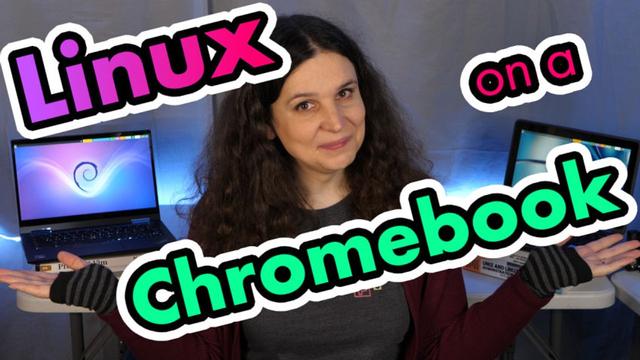
Linux on a Chromebook, my favorite way
If you have some kind of device running #Android with keyboard+mouse input, you too will likely enjoy the changes as you should be able to likewise disable all touch-specific code too! The Android version still has some compiled out code for desktop-y concepts like window handling so your mileage may vary however.
...I'm also not sure how commonplace it is to have an Android device with non-touchscreen input. If you're on Chrome OS our typical recommendation is to install Principia inside of the Crostini Linux container. Or do as I did, flash the bootloader with Coreboot and install regular Linux onto it!
https://voxelmanip.se/2024/09/02/turning-a-chromebook-into-a-chrultrabook/
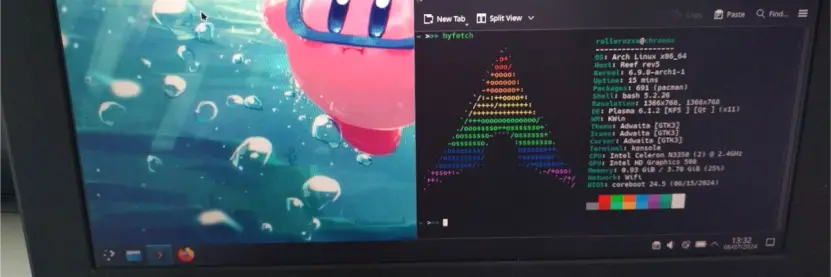
Chromebook is the name of Google’s brand of mostly low-end laptops running Chrome OS, an operating system whose primary functionality is running the Google Chrome browser. When I finished 9th grade and went onto Gymnasiet, I had the option to keep the Chromebook I was given for the past three years at school. Since I had been keeping good care of it for the past years I was using it, why not? I knew that once it gets unlocked I will have access to the containerised Crostini Linux environment, but I was not aware at the time of the ways one can fully install another operating system on it.
Linux on a Chromebook, my favorite way
#Chrultrabook people, I have a #Chromebook and a #Chromebox that run #MrChromebox' #coreboot and I would like to update the firmware.
Currently I use a live USB with #LinuxMint XFCE, as it is easy to use and insecure enough for it to work.
The tools need access to read and write the firmware, which is quite deep.
I would like to enable that support on my main #NixOS system, at least sometimes, but don't know what is missing. Same on vanilla #Fedora btw, doesnt work there either.
The iomem=relaxed option is not enough, do you know what else is needed?
For NixOS and Chromebook support I found this amazing repo, but it is quite complex:

@Monolecte @alainmi11 @louisderrac @scaro @nicolasvivant @Paksat @framaka @jeeynet
Pour beaucoup de Chromebooks, voir aussi le project #ChrUltrabook (https://docs.chrultrabook.com/) pour complètement remplacer ChromeOS par un vrai Linux (et pas juste l'avoir à côté de ChromeOS en OS invité).
Ça fonctionne: https://mamot.fr/@koantig/115400113446190773
Got Alpine BusyBox/Linux working. It's very fast on my poor hardware. Sway and Waybar are using almost completely default settings.
#Chrultrabook #AlpineLinux #BusyBox #Linux #Sway #Chromebook #screenshot

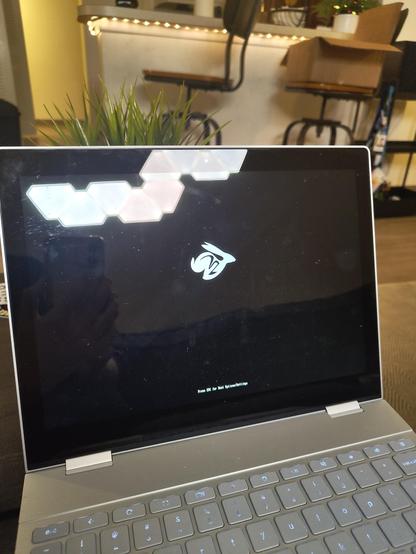
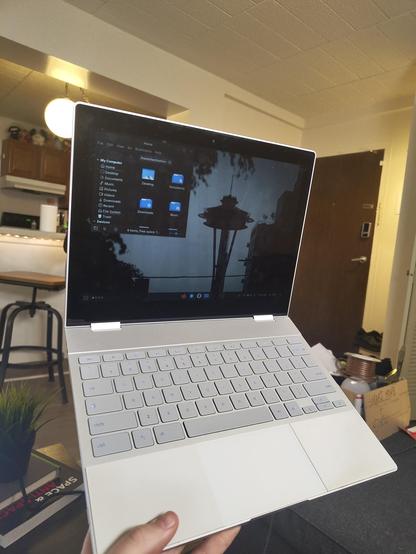
Here's something the fedi will enjoy... I got #linux running on my old chromebook!
This is my first plunge into running/tinkering with Linux, and I was a bit scared (especially flashing custom firmware to run Coreboot) but the process proved easier than expected. Thanks to the #chrultrabook project, Mr Chromebox for the custom firmware, and @vkc for your instructional video; all helped ease my nerves.
 boredsquirrel
 Moses Izumi
 Koantig
 כָּלב
כָּלב 
 BluRaf
 Jack
Jack frox
frox elly
elly