Crown Lands – Apocalypse Review By Owlswald

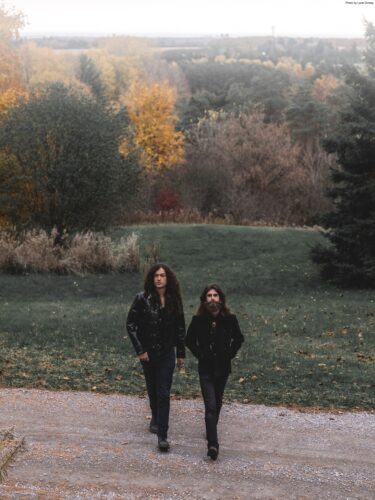
Rush is my all-time favorite band, so their 2015 hiatus, brought on by Neil Peart’s declining health hit me hard. Peart’s passing in 2020 made it permanent, slamming the door on the Rush I grew up loving. That’s why stumbling across Crown Lands’ 2023 sophomore album Fearless—courtesy of this very blog—felt like a hemispherian void had been filled. The dynamic duo from Oshawa, Ontario, tapped into the essence of prime ’70s Rush better than anyone I’ve heard, much like Greta Van Fleet’s revival of the mighty Led Zeppelin. Naturally, when I learned their third LP, Apocalypse, was on the way, I rushed to the promo sump to claim dibs faster than you can say 2112.

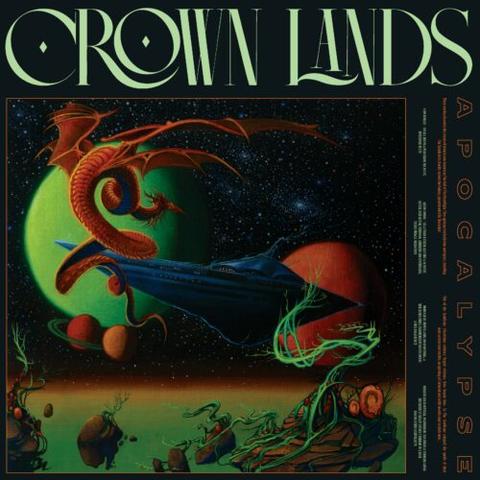
Apocalypse expands the Fearless Chronology that began with “The Oracle” from 2022’s White Buffalo with the same sonic and aesthetic bombast longtime fans expect, while stretching Crown Lands’ sound into territory occupied by other classic rock titans. Taking place a century before the events of Fearless and once again rooted in the spirit of Rush’s “Cygnus X-1” series, Apocalypse often feels like a natural progression of its predecessor even if it doesn’t quite reach the same heights. Through straightforward, radio-friendly anthems, as well as the mammoth self-titled closer, the album’s narrative charts a manipulative, oppressive force that weaponizes fear (“Foot Soldiers of the Syndicate”), then spirals outward into dragons, warriors and interstellar tyrants plunging the world into chaos (“Blackstar”). Amid the destruction, more intimate threads of loss and longing surface in crestfallen ballads (“The Revenant,” “Through the Looking Glass”). Where Fearless opened with its longest track, Apocalypse flips the script, saving its epic for the finale. The 19-minute cut matches the ambition and scope of “The Oracle” and “Starlifter: Fearless Pt. II,” though the record’s bottom-heavy makeup leaves less to uncover in the tracks leading up to it.

It’s unusual to devote an entire paragraph to a single track, but “Apocalypse” earns the word count as its reach accounts for nearly half of the record’s runtime. The piece opens in classic Rush fashion as celestial synths, cascading tom rolls, and shifting syncopation give way to shimmering arpeggios and warm, fluid vocal lines. At first, the track feels poised to deliver on its promise, and as it unfolds, Crown Lands weaves in a myriad of compelling touches, including Pink Floyd’s patented stoner-rock solos and a gorgeous arpeggiated, space-drifting movement with a flute-laden motif that nods to the duo’s Indigenous roots. But the track’s momentum falters at several points, and the songwriting begins to feel choppy as the track progresses. The choral bridge at the six-minute mark is a great idea, yet it’s followed by an overly hectic section where Crown Lands’ instrumental prowess shines but the vocals grate, undercutting what could have become a more transcendent phase. Similarly, the astral section at eleven minutes, with its galactic, vocal harmonies and tribal tom flourishes, is another moment that is abrasive. Although it ends on a high note, “Apocalypse” feels like it needed more time to bake to fully come together.

The unevenness of the self-titled epic would be forgivable if Apocalypse’s remaining tracks consistently picked up the slack. But they don’t. Stronger songs like “Through the Looking Glass” and “The Revenant” rely on Led Zeppelin-esque refrains to cohere into some of their best material to date, while Bowles’ vocal approach primarily hampers “Foot Soldiers of the Syndicate”, “Blackstar,” and “The Fall.” Bowles’ high-register singing—which will no doubt remain as divisive as Geddy Lee’s—can feel forced or strained at times, pulling me out of the otherwise strong songwriting rather than deepening the immersion. Across several key moments, Bowles doesn’t feel fully locked in, leaning instead on playful, almost taunting huffs and puffs (“The Fall”) or siren-like shrills (“Apocalypse”) that never quite find their place. Still, while Crown Lands’ execution isn’t as consistently sharp as Fearless, Apocalypse still offers plenty of quality material for fans to latch onto.

I’ve enjoyed my time with Apocalypse, yet I can’t help but feel somewhat disappointed. Maybe it speaks to the consistency and appeal of Fearless, but this record simply doesn’t resonate in the same way its predecessor did. To their credit, Crown Lands takes risks and pushes into some new territory here, and some of those choices pay off. Nevertheless, Apocalypse lacks the cohesion to keep me coming back, outside of a couple tracks that have burrowed their way into my psyche. It’s a letdown, but one I’m inclined to chalk up to growing pains for now.

Rating: Good
DR: 7 | Format Reviewed: 320 kb/s mp3
Label: InsideOut Music
Websites: crownlands.bandcamp.com | crownlandsmusic.com | facebook.com/crownlandsmusic
Releases Worldwide: May 15th, 2026

#2026 #30 #Apocalypse #CanadianMetal #CrownLands #GretaVanFleet #InsideOutMusic #LedZeppelin #May26 #PinkFloyd #ProgressiveRock #Review #Reviews #Rock #Rush

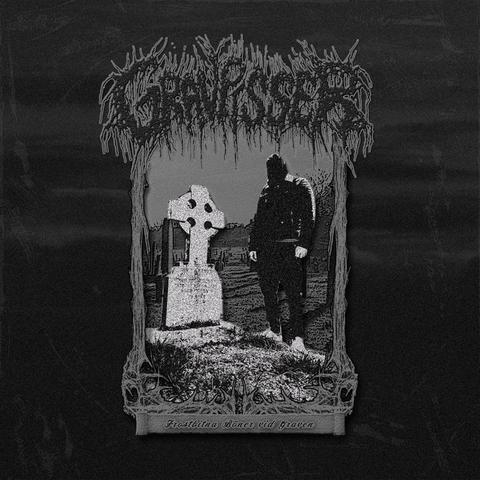
I have one for #BlackMetalMonday this week. It takes a lot for me to like black metal. But GRAVPISSER has something really special going on. Gravpisser is a one man black metal project from Canada, and he has a demo from December 2025 I hadn't heard (I'd heard a couple from 2024-- he put out 4 demos that year). But yeah, this 2025 one is damn great: https://gravpisser.bandcamp.com/album/frostbitna-b-ner-vid-graven

#metal #BlackMetal #Canada #CanadianMetal #CanadianBands #CanadianBlackMetal #Gravpisser

Frostbitna Böner vid Graven, by Gravpisser

2 track album

Gravpisser

Pretty Neat! Here Are Five Canadian Metal Bands Who Don’t Have To Worry About Going Bankrupt From an Emergency Room Visit

https://fed.brid.gy/r/https://thehardtimes.net/blog/pretty-neat-here-are-five-canadian-metal-bands-who-dont-have-to-worry-about-going-bankrupt-from-an-emergency-room-visit/

Stuck in the Filter: February 2026’s Angry Misses By Kenstrosity

Seems like the Filtration system is overburdened once again. Normally, my minions have to scavenge much longer to pick things up this early in the year, but 2026 is proving to be rich in moderately precious metallic ore. That just means I gotta push my team even harder to pull greater loads of filth from the ducts!

As I send them in for yet another round, please enjoy the spoils thus far exploited. BEHOLD!

Kenstrosity’s Tattered Tome

Overtoun // Death Drive Anthropology [February 13th, 2026 – Time to Kill Records]

Chilean progressive death thrash outfit Overtoun is what you get when you mix old school Death and Atheist with the proggier side of Pestilence, then amp the thrash up by a half turn. At a lofty 50 minutes, you’d expect third release Death Drive Anthropology to drag on, but to make that assumption is to criminally underestimate Overtoun’s creativity and versatility. Opening up the throttle in fine form, the one-two punch of “What Unites All (ft. Max Phelps) and “The Final Beat” manages to encompass many of these Chileans’ songwriting and performance skills in a scant 10 minutes. More introspective, nuanced songwriting takes center stage throughout Anthropology’s midsection, balancing smart melodies and minimalist atmosphere with complex guitar layering, proggy structures, and shreddy wizardry (“Dur Khrod,” “Jade, Gold, Obsidian,” “Yurei,” “Weeping”). The three-part “The Waves Suite” suite adds a mystical character to the affair that blends remarkably well with Overtoun’s more overt political messaging and emotional textures, which helps carry the record through its lengthy runtime without causing fatigue. It’s a neat record that’s modestly blemished by a bass presence that begs for more weight and wildness, especially considering the raw talent on hand. Nonetheless, if you’re looking for a creative, thoughtful, and sophisticated entry into the death/thrash progosphere, Death Drive Anthropology makes a strong case.

Andy-War-Hall’s Primordial Pick-Up

The Grand Myth // Of Vultures and Dragons [February 26th, 2026 – Suncrusher Recordings]

I have a grossly limited capacity for seriousness. Yeah, I like my death metal progressive, technical, and thoughtful, much the way Brandon Bordman’s The Grand Myth deliver it on their latest record, Of Vultures and Dragons, but sometimes I just want fun, too. Of Vultures and Dragons, an adaptation of Ethan Pettus’ novel series Primitive War1 in which a rescue team searches a Vietnamese jungle for a missing platoon of Green Berets and fights for their lives against dinosaurs, has fun in spades. Utilizing a many-layered guitar attack (“Symbiotic Death”), shifting and propulsive rhythms (“Through the River Styx”), a wide cast of voice actors for brief narrative bits2 and surprisingly bright tones (“Agony”), The Grand Myth’s approach to progressive death metal isn’t revolutionary, but it’s deeply refreshing and engaging regardless. Though an absolute blast, The Grand Myth doesn’t spew embarrassingly stupid levels of campiness with their sci-fi dinosaur theming like Victorius. Rather, Of Vultures and Dragons can be fairly emotionally effective at times thanks to Bordman’s emotive clean/harsh vocals and elaborate soloing (“Pyre,” “Agony”). Nobody asks about your favorite dinosaur anymore,3 so feed your inner kid with The Grand Myth’s Of Vultures and Dragons now!

Saunders’ Sunken Shards

Puscifer// Normal Isn’t [February 6th, 2026 – Alchemy Recordings]

After losing track of recent offerings, I reacquainted myself with the latest LP from Puscifer, leaving me pleasantly surprised in the aftermath. The project featuring Tool/A Perfect Circle frontman Maynard James Keenan returned for their first hit out since 2020’s Existential Reckoning. Normal Isn’t finds the shape-shifting project embracing its quirky, gothy industrial rock and electronic elements through an angsty filter of guitar-driven arty rock, post-punk, and infectious songcraft. Age should not weary Maynard, as he still sounds angry, cynical, and on point vocally through a mostly engaging, catchy bag of tunes. The dueling vocal melodies with collaborator Carina Round’s ghostly singing work a treat amidst jittery beats, angular riffs and strong electronic overtones. Rhythmically, it is an interesting ride, drummer Gunnar Olsen putting in a top-notch performance, while there is a vaguely progressive edge underlying the hook-centric songwriting. Opener “Thrust” sets the album in motion with sticky hooks, a darkly humorous, unhinged Maynard performance, and a dose of spite. Other key highlights include “Bad Wolf,” “Self Evident,” “A Public Stoning,” and “ImpetuoUs.” Puscifer made a fine return with Normal Isn’t.

Jack Harlon & The Dead Crows // Inexorable Opposites [February 6th, 2026 – Magnetic Eye Records]

You’ve gotta love a sneaky name drop from our trusty commentariat. It has led to many great discoveries over the years. On this occasion, one of our dear commenters enlightened me to Melbourne psych-blues-doomers Jack Harlon & the Dead Crows with fourth LP, Inexorable Opposites. And it didn’t take long absorbing this latest slab of rustic Aussie coolness to be struck by the album’s slow-burning, addictive power, and gritty tones. Boasting an expansive, rugged sound built on layers of distortion and a weighty blend of psych-drenched blues and doom heaviness. Jack Harlon & the Dead Crows features old school, outlaw-driven lyrical content from mastermind and vocalist/guitarist Tim Coutts-Smith, meshing fictional tales of woe and adventure of character Jack Harlon, with relatable real-life struggles. Through the fuzz, thick jammy vibes, and Coutts-Smith distorted, menacing Aussie drawl, catchy songcraft shines through the muck and psych haze. From the tense, stoner-infected grit and catchy hooks of opener “Moss,” through to the stormy outback balladry of closer “To Die,” Inexorable Opposites is a hard-hitting, riffy delight, further evidenced through scorched earth, infectious cuts like “Venomous,” “Seer,” and the trippy, drug-addled “Mt. Macedon.”

Grin Reaper’s Reaped Recluse

Cold Communion // Monuments to Ruin [February 13th, 2026 – Self Released]

Melodic death/doom isn’t a genre I dabble in often, but every now and again, one of its bands thwarts my defenses and wraps their tendrils around my precious listening time. Durham, North Carolina’s Cold Communion is one such band, featuring Barre Gambling (Daylight Dies) on guitar and Tim Rowland (Alchemy of Flesh, Silent Vigil) on everything else. If that sounds like an unfair split, take a spin and reassess, because Gambling’s performance defines Cold Communion’s melancholic character as much as Rowland’s emotive growl. Forgoing any long-form doom epics, Monuments to Ruin’s longest song comes in at five-and-a-half minutes, with the entire album clocking just forty-five. It’s a tidy platter, and both in song composition and mood shares ample common ground with Finnish sadbois Insomnium. Besides Monuments’ superior production, songs like “A Stillness Survival” and “When the Light Breaks” wouldn’t feel out of place on Across the Dark or One for Sorrow. And despite the somber trappings one might expect from doom-adjacency, there’s plenty of lively riffing and solos to find across Monuments to Ruin, adding a touch of boom to the gloom. In the end, Cold Communion doesn’t reinvent the genre or break new ground, but Monuments to Ruin offers a comfy chair by the fireside on a freezing cold day, and I’m perfectly content with that.

Mossgiver // Renewer [February 6th, 2026 – Sij MusicArt]

Atmospheric black metal often contrasts the beautiful with the bestial, typically prioritizing moods over hooks. ‘Twas a delight, then, to unearth Mossgiver’s Renewal, which deftly combines the two. Weaving together hypnotic passages flooded with strings, piano, flute, synths, double bass rolls, and the requisite blackened tremolos,4 Mossgiver’s mastermind Tilen Šimon (Ueldes) delivers the band’s best record to date. Above all, Renewer sounds like a celebration of nature in the vein of Autrest and Cân Bardd, evoking a whispering wind whipping at leaves or sunlight dappling a brook shaded by oaks and maples. Beyond the well-crafted soundtrack for a walk through the woods, Mossgiver etches emotion into the nooks and crannies of Renewer’s five tracks. From rousing string orchestrations (“I Bring the Spring with Me”) to soft-and-heavy tradeoffs pitting clean guitar and pan pipes against distorted guitar and blast beats (“Renewer”), Mossgiver shimmers with a lush backdrop of instrumentation rife with playfulness and pensiveness. The trio of primary songs5 revolve around powerful melodies that evolve over each track’s duration, with assorted instruments coming in and out to push refrains along. Renewer’s brisk thirty-four minutes showcase Mossgiver’s sticky compositions and leave me whistling its melodies for days at a time. Now throw on your hiking boots and get lost in the Moss.

Ossomancer // Banebdjed’s Path [February 28th, 2026 – Esoteric Evocations]

Six-and-a-half years removed from Ossomancer’s debut Artes Magickae, lone wolf and mastermind Kamose returns to tread Banebjed’s Path. Bursting with references to mythology and mysticism, Banebjed’s Path rumbles and shakes with arcane thunder. Although the backdrop and track names might recall the frenzied onslaught of Nile, Ossomancer instead conceives a realm recalling Aeternam, Iotunn, and Naglfar. Despite the scant thirty-four-minute runtime, Banebjed’s Path sprawls across diverse landscapes and textures. Opener “The Ogdoad Arrangement and the Osirian Creation” oscillates between In Flames melodies and a slinky crawl that could pass for a 90s Geddy Lee bass line played over synth injections from Rush’s 80s era. Follow-up track “Sobek – Cosmic Vibrations Devoured” features Kreator-bred riffing, while closing duo “A Sea of Sand, a Silver Star” and “Retraction into Kether” synthesize the ethereal atmospheres of Iotunn with the blackened assault of Naglfar. Through it all, Ossomancer sounds fabulous, as Banebjed’s Path flaunts an enviable DR 8 and a bodacious mix that spotlights its burly bass performance. Ossomancer’s sophomore outing is crammed with meloblack goodies, and though it’s not a long trek, the journey down Banebjed’s Path far transcends its distance.

Tyme’s Danish Dalliance

Ædel Fetich // Ædel Fetich [February 20th, 2026 – Deadbanger Productions]

That blinged-out pink dish-glove-clad hand is what first drew me to Denmark outfit Ædel Fetich’s self-titled debut. Then I clicked play and was taken on one of the more compelling “black” metal rides in recent memory. With roots primarily buried in the soil of the traditional second-wave, Ædel Fetich is rife with moments of rifferous tremolodic speed (“Ridderlig Lider,” “Madras”) and absolutely berserk guitar chaos (“Sort Magi”). There’s a Trhä-like sense of experimentation, and the rawness of the production enhances the oft-changing compositions, which, like weather in the Midwest, often shift on a dime without warning. Luckily, Ædel Fetich’s adept songwriting organically smooths these transitions, which could have easily come off stilted and jarring, but makes drawing direct comparisons to the Ædel Fetich sound difficult, as there’s a spectrum of other influences at play. There are tracks packed with punky punch (“Et Liv Fuld af Fejl,” “Ildtang”) or imbued with folky reverence (“Mit Billede af Dig”) and even some 80s pop—fans of the movie Flashdance shouldn’t have a problem finding the poppy easter egg hiding near the end of “Sort Magi.”6 Far and away the star of the show, however, is singer Skvat, whose performance is filled with as much black metal bravado as it is theatrical exuberance, his arsenal of shrieks, growls, hoots, howls, and operatic baritonations a refreshing treat, akin to if Mike Patton woke up one day deciding to record a Danish black metal album. Bottom line is, I really dig Ædel Fetich and think you will too.

Creeping Ivy’s Ashen Afterthought

Belzebong // The End is High [February 20th, 2026 – Heavy Psych Sounds]

In my humble opinion, lyrics are key to making stoner metal more than novelty music. If you’re referencing reefer in your album art, band name, and song titles, at least keep the reeferisms out of the songs themselves,7 or better yet, avoid vocals altogether. Taking this latter advice to heart is instrumental Polish four-piece Belzebong, who have been at it for almost 20 years now. On The End is High, their fourth full-length, Belzebong deal 35 minutes of fuzzed-out riffery described as “a new sermon for the final days.” While not as highbrow (huh huh) as the instrumental stoner metal of Bongripper, Belzebong are similarly ominous on opener (yes) “Bong & Chain,” which caps its ten-minute burn with creepy, haunting synths. From there, the band settle into material more akin to Bongzilla; sound clips adorn the chill grooves of “420 Horsemen,” “Hempnotized,” and “Reefer Mortis,” which closes things out with some solid Electric Wizard worship. If you instinctively (and understandably) recoil from music with marijuana aesthetics but dig the meditative repetition offered by stoner metal, consider sampling The End is High. It’s not exactly the caricature it advertises itself as.

Baguette’s Bygone Bounty

Sundecay // The Blood Lives Again [February 13th, 2026 – Self Released]

Toronto’s Sundecay has been around for a while. These Canadian doomers spawned sometime prior to 2014, quietly releasing EP material every once in a blue moon. The Blood Lives Again is their first full-length release—their first signs of life since 2018 in general—and the time and care they took to develop their sound and songwriting prowess pays off here in spades. The doom and proto-doom inspirations from Black Sabbath to Saint Vitus are obvious (“Here Comes the Wizard”), complemented by other influences from proto-metal, psychedelic, and progressive music (“Silence Spoken”). The hefty, layered guitars have a nice fuzz without fully landing in stoner territory. Ambitious long-form tracks like “Will Dusk Defy Dawn” flow like water while carrying significant emotional heft. Lastly, a moody, reverb-heavy vocal performance crowns the classic doom trance the band is aiming for. At five tracks and some 43 minutes, The Blood Lives Again is a total vibe and flies by before you’ve even noticed. Fans of the ’70s should take notes!

Temple Balls // Temple Balls [February 13th, 2026 – Frontiers Music]

One of the most authentic ways you can honor rock music tradition is via questionable naming conventions. On an unrelated note, Temple Balls is a Finnish hard rock/glam rock band, and they’re fun as hell! They’re not particularly new around the block, either: the group formed in 2009, and self-titled Temple Balls is already their fifth album since debut Traded Dreams in 2017. 2023’s Avalanche felt like a watershed moment, a welcome surprise that brought some new life and energy to a fairly dated genre of Europeisms and Hanoi Rocks rehashes. Temple Balls proves that Avalanche wasn’t a one-off, continuing their extremely authentic throwback approach. The heavy/power-metal-meets-AOR direction of songwriting (“Flashback Dynamite,” “Soul Survivor”) gives it that extra guitar oomph and energy that melodic music like this requires to be anywhere near competitive. With great all-out vocals from Arde Teronen and gigantic hooks to match, it’s just a damn good time front to back. Though it will sadly be the last time we’ll hear Niko Vuorela’s guitar work on record (R.I.P., and fuck cancer), the self-titled is certainly a worthy final milestone for him—and hopefully, another beginning for his comrades.

ClarkKent’s Enchanting Earworm

Hela // A Reign to Conquer [February 27, 2026 – Ardua Music]

Just as it put a pause on many plans and projects, the COVID pandemic slowed down the output of Spain’s Hela. A Reign to Conquer marks their first record since 2019’s Vegvìsir, which was their third release since 2013. This brief hiatus brought new blood in the form of vocalist Raquel Navarro, though, in truth, the only consistency in Hela’s lineup is the other three members—Tano Giménez on bass, Miguel Fernández (The Holeum) on drums, and Julián Velasco (The Holeum) on guitars. They have a deep bond, first forged in 2009 with The Sand Collector before forming Hela just three years later. Though they brand Hela as melodic doom, and the band does have a little in common with Katatonia, I think it’s more accurate to describe them as dreamy progressive rock. Navarro is a major reason for this, with dreamy croons that guide listeners through breezy soundscapes. She bears a passing resemblance to Maud the Moth, though the music Hela plays is decidedly more metal than our Dolphin friend’s favorite nocturnal insect. Guitarist Velasco plays a hypnotizing mix of atmospheric fuzz, crushing doom, and melodic riffs that add some heft and crunch to the ethereal sound. A Reign to Conquer has plenty of layers to probe, rewarding listeners who bear with it for repeat listens. While my initial spins left me wanting, I’ve since become spellbound. Add to that some gorgeous artwork, and this is a nice addition to anyone’s vinyl collection. Hela yeah!

Spicie Forrest’s Vicious Vittles

A Wilhelm Scream8 // Cheap Heat [February 27th, 2026 – Creator-Destructor Records]

A Wilhelm Scream9 returns after a four-year hiatus with their eighth long player, Cheap Heat. Sounding like the best combination of The Story So Far and Rise Against, A Wilhelm Scream delivers an impressive tour de force so late in their career. Vocalist Nuno Pereira10 is the highlight of Cheap Heat, driving the album with urgency and passion (“Somebody’s Gonna Die,” “Fell Off”), but no one here is a slouch. The rhythm section—bassist Brian J. Robinson, rhythm guitarist Trevor Reilly, and drummer Nicholas Pasquale Angelini—gleefully tosses gas on Pereira’s bonfire (“I Got Tunnel Vision”) and delivers solid grooves (“Poison II”) and searing ragers (“Unsolving the Mystery”) that keep the energy cranked to 11 all through Cheap Heat. Hooks are by far the most common lead duty, and Ben Murray puts on a fucking clinic. Each note that rings out from his axe sounds like it fucking owns the place (“Run,” “Visitor: Unimpressed”). Cheap Heat is a smidge front-loaded with “Midnight Ghost” and “I Got Tunnel Vision” being album highlights, but no song on here is anything short of a barn burner. At a super tight 28 minutes, Cheap Heat hits hard and fast and gets the fuck out of Dodge before you’re even sure what hit you. I didn’t expect a 26-year-old hardcore outfit to knock my teeth out when I queued it up on a whim one morning, but Cheap Heat is proving to be one of my favorite albums of the year.

Lead Injector // Witching Attack [February 20th, 2026 – High Roller Records]

Who doesn’t like the combination of thrash’s unchained aggression and black metal’s cold hate? There’s never been a better pair. Lead Injector hit the ground running on debut LP Witching Attack. From the opening moments of “Siege Upon Heaven” to the closing moments of “Nuclear Antichrist,” Lead Injector is here to do two things: feed high-speed buckshot to God, skeletons, and anything else that gets in their way, and have a Hellripping good time. “Angel Destructor” and “Siege Upon Heaven” barrel pell-mell through searing riffs and blast beats, while groovier tracks like “Evil Executioner” and “Nuclear Antichrist” let black metal’s punk ancestry shine through. Heavy metal influences a la Judas Priest can be found injected into tracks like “Sacrifice This Bitch” and “M.C.C.I.” While nothing about Lead Injector’s sound is particularly new, I’m not sure that’s a bad thing. This debut is a unique and retro spin on a tried-and-true formula that bodes well for a young band. Witching Attack is a killer time that Ash Williams would gladly spin while boomsticking Deadites alongside Lord Arthur’s army.

#APerfectCirlce #AReignToConquer #AWilhelmScream #Aeternam #AlchemyOfFlesh #AlchemyRecordings #AmericanMetal #ArduaMusic #Atheist #AtmosphericBlackMetal #AustralianMetal #Autrest #ÆdelFetich #BanabdjedSPath #Belzebong #BlackMetal #BlackSabbath #BluesRock #Bongripper #Bongzilla #CânBardd #CanadianMetal #CheapHeat #ChileanMetal #ColdCommunion #CreatorDestructorRecords #DanishMetal #DaylightDies #DeadbangerProductions #Death #DeathDoom #DeathDriveAnthropology #DeathMetal #Doom #DoomMetal #ElectricWizard #EsotericEvocations #Europe #FinnishMetal #FrontiersMusic #GermanMetal #GlamRock #HanoiRocks #HardRock #Hardcore #HeavyMetal #HeavyPsychSounds #Hela #Hellripper #HighRollerRecords #InFlames #InexorableOpposites #Insomnium #Iotunn #JackHarlonTheDeadCrows #JudasPriest #Katatonia #LeadInjector #MagneticEyeRecords #MaudTheMoth #MelodicDeathMetal #MelodicDoomMetal #MelodicHardcore #MetallicPunk #MonumentsToRuin #Mossgiver #Naglfar #Nile #NormalIsnT #OfVulturesAndDragons #Ossomancer #Overtoun #Pestilence #PolishMetal #ProgressiveMetal #PsychedelicMetal #PsycheledicRock #Puscifier #Renewer #RiseAgainst #Rush #SaintVitus #SelfRelease #SelfReleased #SijMusicArt #SilentVigil #Sleep #SlovenianMetal #SpanishMetal #StonerMetal #SuncrusherRecordings #Sundecay #TechnicalDeathMetal #TempleBalls #TheBloodLivesAgain #TheEndIsHigh #TheGrandMyth #TheHoleum #TheSandCollector #TheStorySoFar #ThrashMetal #TimeToKillRecords #Tool #Trhä #Victorius #WitchingAttack
Spell – Wretched Heart Review By Steel Druhm

There’s a certain kind of music that sits at the crossroads of 70s rock, Goth, and classic heavy metal. Where once I would have dubbed it retro or throwback metal, since 2010, it’s been easier to tag it Ghost-core for obvious reasons. Canada’s Spell fall into that rotpit, with a sound that has come close to what that Swedish supernatural entity did on their early albums. I liked 2020s Opulent Decay, but felt it was missing a certain x-factor needed to take it to the next level of stickiness. For whatever reason, I slept on their 2022 release Tragic Magic, but I’m here for 5th full-length Wretched Heart. Mostly because the lead single “Lilac” has been stuck deep in my brainpan for the last 2 months, compelling me to grab the promo and get reacquainted with these occult-loving Canucks. Their style still floats between 70s rock and Goth metal, with hooks at a premium, and when they nail their template, you get super-catchy chestnuts of pure rock glory. So, how much nailing can you expect from Wretched Heart?

More than I expected, actually. Since the last time I spent time with Spell, they’ve become much more consistent songsmiths, and over the course of Wretched Heart, you get a fun, hard-charging collection of tunes with enough raw charm to make you believe in magic. Of course, there’s “Lilac” which punches way above its weight with an irrestible blend of Ghost and Unto Others. It’s easily my favorite song so far in 2026, and I’ve been walking around singing the flower-powered chorus constantly, much to the chagrin of Madam X, who thinks I’m turning into a morbid florist. Play this song twice, and it will move into your brain and raise 3 generations of earworms. “Take My Life” is another entertainer with an interestingly weird blend of Goth, hard rock, and edgy emo. The chorus sticks on first exposure, and Cam Mayhem’s vocals at chorus-time pack just the right amount of emo angst to sell things. “Unquiet Graves” is a winning little gem, loaded with an intriguing blend of Goth and punk that checks all the right boxes. You’re treated to a winning chorus again, and the mood recalls the best of early Ghost.

Elsewhere, you’re introduced to “Oubliette,” which carries a strong Dawnbringer vibe and sounds like Chris Black dropped by to do guest vocals. It dials up the darkness and heaviness and really zaps the mind. Another highlight is “Exquisite Corpse.” It’s like Idle Hands / Unto Others had a love child with H.I.M., and that shouldn’t be a good thing, but fuck it all, this song is awesome. The chorus is G-money, and though I suspect it’s about necrophilia, I don’t even care and won’t stop spinning it and singing it in public. No song on Wretched Heart is filler, though opener “Dark Inertia” doesn’t put the band’s best foot forward, and the short, funeral home-appropriate interlude “In Duress” seems tacked on for no good reason. Other than that, it’s an elevator ride to the penthouse with one killer cut after another. At a trim, tidy 41 minutes and with most songs in the 4-minute window, this is an easy-breezy spin, and the good songs are made even better because Spell never step on their own meat by dragging things out needlessly.

I was on the fence with Cam Mayhem’s vocals when last I reviewed them, but I’m sold now. He’s like a cross between Papa Emeritus I-V, Chris Black, and Gabriel Franco (Untoothers). His offbeat delivery suits the songs and provides an identity to what Spell are doing. Everyone in the band is credited with guitar work, and the guitars are a huge part of the Spell experience. They run through 70s prog, hard rock, Goth, and metal, borrowing acorns from each genre and assembling sounds to suit moods adroitly. Some of the stuff here is surprisingly dark and heavy without losing the rocked-out vibe, and that’s a nifty feat. There’s even a healthy bass presence that adds some oomph to the sound. The big ticket is the improved songcraft, which is, at times, nigh impossible to resist.

Wretched Heart is a sizeable step up from what I heard back on Opulent Decay, and it seems Spell have come into their own. With Ghost gone to mainstream success and sleepy radio rock antics and Unto Others dropping the tooth jar last time, Spell are here to fill the gaps in your metal listening needs. If you want semi-dark music loaded with earworms and a cheery, tongue-in-cheek vibe, and you can look past that dayglow abortion of a band photo,1 plant this in your topsoil. Pairs well with summer gardening and corpse defiling.

Rating: 3.5/5.0
DR: 6 | Format Reviewed: 256 kbps mp3
Label: Bad Omen
Websites: spellofficial.bandcamp.com | facebook.com/spellspell | instagram.com/spellofficial
Releases Worldwide: May 1st, 2026

#2026 #35 #BadOmenRecords #CanadianMetal #Ghost #GothicRock #HardRock #HeavyMetal #May26 #Review #Reviews #Spell #UntoOthers #WretchedHeart
selftitled, by Listless

7 track album

Hypnotic Dirge Records
Miserere Luminis – Sidera Review By Grin Reaper

Montreal atmoblack trio Miserere Luminis returns with third album, Sidera, boasting lush atmospheres and enormous feels. Formed back in 2008, Miserere Luminis dropped their eponymous debut in 2009, then disappeared from the studio for fourteen years. The triumvirate stepped out from the shadows and unleashed Ordalie in 2023, heralding a triumphant reemergence and one of the most exquisite album covers I’ve ever laid eyes on. The tunes delivered, too, are replete with more mature compositions than Miserere Luminis and a tighter runtime to boot. With their third album, can Miserere Luminis maintain their trajectory of mounting improvement, or does Sidera fall into dark, merciless obscurity?

Anyone who has supped on Miserere Luminis’ music can confidently sink their teeth into Sidera’s similarly sumptuous sounds with satisfaction. Rich and vibrant textures blanket its fifty-one minutes, eliciting nods to Wolves in the Throne Room and Der Weg einer Freiheit while never losing their own distinct identity. Restrained, controlled paces reign supreme across Sidera, where jangling guitars and implacable drums unfurl at Miserere Luminis’ leisure. Entwined with the traditional guitar, bass, and drum attack, piano and strings impart a classical zest across Sidera’s five tracks. The recipe delivers a potent concoction, flaunting an embarrassment of moments swollen with opulence and grandeur.

Sidera by Miserere Luminis

Sidera presents a complex tangle to unwind, stuffed with stunning passages that twist and meander with a menacing edge. The darkness within the music averts the malice pervading second wave-informed black metal, and instead adopts a contemplative restlessness that churns with forlorn melancholy. “Aux Vras des Vagues & des Vomissures” supplies excellently heart-wrenching pathos, where strings dance and swirl before fading in deference to the despondent bass plucks that close out the song. Follow-up “À la Douleur de l’Aube” resonates with equal poignancy, while opening duo “Les Fleurs de l’Exil” and “De Cris & de Cendres” offer a (relatively) more frantic anguish than what’s heard on subsequent tracks. Miserere Luminis not only channels their woebegone mystique with grace and aplomb, but they do so with an uncanny knack for commanding tension, augmented by Icare’s deft drumming. Neptune’s piano sources another highlight, and his interplay with Icare’s string compositions sizzle with stoic solemnity. Through it all, Annatar’s vocals cut with a raw edge that perfectly embody the stark emotions he conveys.

Though Sidera hypnotizes with its beauty from minute to minute, its entirety lacks the diversity required to support its length. Despite Miserere Luminis’ firm grasp of mood and tension, repeated listens expose the album’s monotonous elegance. After my third spin through Sidera, I couldn’t differentiate any of the tracks. Another fifteen listens on, and I’m not faring much better. To be clear, atmospheric black metal often falls into this dilemma, where the music is oriented to temperaments and feelings rather than carving out singles rife with hooks. There’s nothing intrinsically wrong with this approach, and individual passages drip with gorgeous orchestrations, subtle interplays of dissonance and melody, and tortured vocals. Yet the final impression is that a uniformity persists throughout the album that inhibits breakout moments; because of this, Sidera’s runtime suffers from bloat (the shortest track clocks in at eight-and-a-half minutes). On the other hand, Miserere Luminis resolutely owns their sound, and Sidera’s production wisely puts the spotlight on the strings and piano—classical accompaniment rarely sounds this good in black metal.

It’s impossible to deny Sidera’s power as I marinate in the swaying transitions between guitar and piano or the jazz-informed drumming. Miserere Luminis writes transportive music that seethes with agony and hope, yet lacks a dimension to separate its densely-packed glamor into the highs and lows I long for. Sidera acts as a prime example of an album that will doubtlessly please fans of the genre, but won’t change anyone’s mind about it. Hell, I delighted in my time with Miserere Luminis, even though I doubt I’ll return with regularity. The possibilities introduced on Sidera excite me more than the album itself, and while I recommend a listen if you’re even a casual fan of the genre, I mostly look forward to what Miserere Luminis does next.

Rating: Good!
DR: 7 | Format Reviewed: 320 kbps mp3
Label: Debemur Morti Productions
Websites: Bandcamp | Facebook
Releases Worldwide: March 6th, 2026

#2026 #30 #AtmosphericBlackMetal #BlackMetal #CanadianMetal #DebemurMortiProductions #DerWegEinerFreiheit #Mar26 #MiserereLuminis #Review #Reviews #Sidera #WolvesInTheThroneRoom
Archspire – Too Fast to Die Review By Alekhines Gun

After no less than three albums’ worth of glowing praise from my great predecessor Kronos, it’s safe to say that a new Archspire is a big deal in the hall.1 One blistering offering after another has cemented these lads as among the forerunners of tech-death, pushing BPM and bass-string structural integrity in equal measure. But the human body, alas, has limits, and with previous release Bleed the Future already pushing the speedometer well into the red, one could be forgiven for invoking the oldest of clichés: Where do they go from here? There’s only so much speed, so much scale wankery to be derived from mere flesh and bone. With a bit of a self-referential title in Too Fast to Die, Archspire have made their mission statement clear and concise; will their meteoric rise continue to light up the sky, or will their first independent release see them crash and burn?

Archspire have officially been around long enough to say “Expect the expected.” Too Fast to Die continues the band’s whirlwind musical trajectory, with an emphasis on scorching tempos and arpeggios delivered at string-withering pace. New drummer Spence Moore (formerly of Inferi, among others) plays like the lives of his family depend on it, etching his identity into the music with a smorgasbord of snare fills and delightful rhythmic shifts which somehow manage to maintain a blasting pace without ever smearing together into one double-bass-filled haze. Vocalist Oliver Aleron continues to sound pulled from an alternate universe where Atilla doesn’t suck,2 spitting syllable-heavy diatribes with gleeful abandon and an s-tier talent for phrasing which lets him compliment the intensity rather than overwhelm it. Enough breathing room is given to the bass, letting Jared Smith fill in the cracks with sweeps that rumble and clang under the chords with vibrancy and potent kinetic energy (“Red Goliath”) before disappearing back under the assault. Everything is excellently executed, engaging, and familiar.

Too Fast to Die by Archspire

And yet, there is a clear rumbling of growth and evolution in the Archspire camp. Rather than openly go out of their way to crank all the knobs from 11 to 12, Too Fast to Die puts heavy stock on pathos-riddled melody, with a heavier leaning on atmospheric theatrics and amphitheater-ready harmonies which don’t seek to overwhelm as much as invigorate and inspire. Album highlight “Carrion Ladder” features a midsection with a pair of leads so relatively simple a fledgling guitar student could learn to play them, yet thanks to the band’s compositional mastery, this simplicity isn’t an anticlimactic letdown as much as a genuine moment of appreciable, raw beauty, not to mention it features one of Oliver’s catchiest vocal parts. Such moments are littered throughout the album, with the borderline emotional chug section of “Limb of Leviticus” transitioning into the band’s traditional plucked interludes with melancholy rather than neo-classical sheen. Archspire’s interludes in older albums would have sounded just as appropriate if played by harpsichord as much as guitar, but Too Fast to Die eschews just a touch of that dual identity to place a heavier focus on thematic coherence with massive dividends.

Nevertheless, this is still a death metal record, and any gushing over emotive power and atmospheric bombast shouldn’t frighten away fans. “Liminal Cypher” features an absolutely devastating slamming section, and “Deadbolt the Backward” briefly dispenses with the atmospheres and opts for sudden shifts of waltz time signatures and straightforward brutality akin to Deeds of Flesh covering an Origin song. The most tendinitis-inducing of leads kick down your front door in “Anomalous Descent” only to suddenly shift identities and flirt with the briefest of hardcore stylings while putting an exclamation point on the proceedings with honest-to-goodness gang vocals. Somehow, this works. While Archspire haven’t quite gone prog on us with clean vocals and a litany of guest instruments (thank God), it’s delightful to see them stretching their artistic wings in so many directions and skillsets, despite promotional material perhaps pitching them as a one-trick pony of speed.

I haven’t been as high on Archspire as some of my colleagues. I enjoyed them, but felt such a style could only be mined so much. Too Fast to Die is Archspire commanding me to take those opinions and violate myself with them, track after track after track. This album sees the band embracing their not-so-newfound star status and offering an experience that is riddled with crowd-engaging moments, meticulously engineered pit fodder, and leads of such beauty that you could sing them in the shower, without sacrificing an ounce of the Africanized-bees-on-red-bull songwriting backbone. “Where do they go from here?” I wondered? Well, the answer is “bigger and better”, and if we are entering a new era of grandiosity over raw technique, I’m so here for it. You should be, too.

Rating: 4.0/5.0
DR: NA | Format Reviewed: Yet another stream, come on, guys
Label: Self-release
Website: Album Bandcamp
Releases Worldwide: April 10th, 2026

#2026 #40 #Apr26 #Archspire #Atilla #CanadianMetal #DeedsOfFlesh #Inferi #Origin #Review #Reviews #SelfRelase #Techdeath #TooFastToDie
Onchocerciasis Esophagogastroduodenoscopy – Fugue Gnawed from the Scabbed God Cerebrum Review By Kenstrosity

Hot on the heels of my first encounter with Alice Simard’s work (Luminesce), another notch in her roster dropped into my unsuspecting lap. Canadian brutal slam/goregrind trio Onchocerciasis Esophagogastroduodenoscopy (henceforth referred to simply as OE) spawned seven years ago from a mire of gore, and Fugue Gnawed from the Scabbed God Cerebrum marks their second full expulsion. Mere seconds after slamming that play button, viscous fluids so voluminous as to mismatch the mass of the entities that expel them flood the entirety of my being, overflowing gushingly into the surrounding environs with destructive force. The general public gazes upon this outlandishly fecund release with equal parts disgust and fascination. Despite the grotesque nature of it all, though, I can’t in good conscience call the experience unpleasurable. Quite the opposite, in fact.

Brutal in the same inhuman way as known slammers Epicardiectomy and Organectomy, absurd as a lot of material coming out of the Indonesian and Chinese scenes are, and irreverently creative enough to recall the novel songwriting of Wormhole, Artificial Brain, Unhuman, and Unfathomable Ruination, OE’s style is often a delight and moreso a challenge. Alice (who is here credited under guitars, songwriting, and drum programming), Jesse Agiomamitis (vocals, lyrics1), and the mysterious The Popu (drum programming, guitars, lyrics, songwriting, synth, vocals) shine as a collaborative team, delivering a deceptively wide variety to what is typically an extremely limited stylistic palette. All 33 minutes of Fugue fall neatly in the brutal slamgrind niche, but it’s undeniably one of the wildest executions of the style. That unhinged spirit affords the ballistic percussion a sense of immediate danger that belies its impossible technicality, the monstrously toilet-tastic vocals a sense of vibrant dynamics they absolutely should not have, and the multifaceted guitar work a kaleidoscopic personality that colors the entire record in vivid detail.

Fugue Gnawed from the Scabbed God Cerebrum by Onchocerciasis Esophagogastroduodenoscopy

However, and perhaps even as a consequence of these aforementioned traits, Fugue is a trial in music appreciation. Not for the faint of heart or the frail of ear, Fugue seems to wholly reject the idea of memorability as a virtue. Certainly, in its first half, before “Gutted & Corpsed” shocks me with an almost beautiful shift from relentless assault to thoughtful transitions and subversive intricacies, Fugue is hell-bent on punishing any listener that comes close. Gnashing with serrated teeth crowding a jaw capable of crushing diamond like Nerds candy, “Conquering Divinity” through “Entombed Within the Infinite Panopticon” bullies anyone that approaches with endless slam riffs (but fast), violent scrapes (“The Fallen Lament, Paralytikus Ascends”), fucked-up lead guitar atmospheres (“Severing What Makes Me Human,” “Apotheotic Apotemnophilia”), machine-gun blasts and double-bass abuse (“Entombed Within the Inifinite Panopticon”), and unreal spans of sustained phlegmy gutturals (name a song, any song). The addition of eerie bongs and bells adds to the sinister nature of these initial songs, but only minimally aids their memorability. Yet, they are all counterintuitively enjoyable in the same manner as discovering your first kink.

Thankfully, that first prolonged salvo of abject violence only takes 13 minutes, at which time Fugue shifts. It’s hard to expect creativity and thoughtful detailing to come into play with this kind of extreme fringe music. Undeterred by that reality, OE start integrating more purposeful dissonant flourishes, effervescent leads bordering against—but never quite crossing into—melody, and a downright airy atmosphere that together recall 50% Wormhole, 50% Afterbirth (“Heaven’s Empty Halls”). More Wormhole-isms abound in conjunction with Epicardiectomy madness and Artificial Brain-ed atmosphere as “Hurt Beyond Healing” and “Forged in the Blackest Reaches of Blasphemy” pair high-detail phrasing with terrifying brutalizations. While still escaping the realm of immediacy, memorability, or accessibility, Fugue’s second act shows OE’s greater range as songwriters in such a way as to compel me to revisit with great anticipation, enthusiastic for the deeper details I might uncover.

While far from easy to love, for any number of reasons all associated with the extreme nature of its composition and its over-the-top execution, Fugue Gnawed from the Scabbed God Cerebrum is an album of rare quality in the scene of disgusting, inhuman music. Many will balk at its cartoonish gurgle vox, its total lack of subtlety in the first phase, and the relentlessness of its dense and complex instrumentation. Those who weather that storm will discover something a bit more substantial underneath. I didn’t expect to find that substance myself, but here I am. Join me, if you think you can handle it!

Rating: Good!
DR: 42 | Format Reviewed: 320 kb/s mp3
Label: Stillbirth Records
Websites: officialonchocerciasis.bandcamp.com | facebook.com/OnchoOfficial
Releases Worldwide: April 3rd, 2026

#2026 #30 #Afterbirth #Apr26 #ArtificialBrain #BrutalDeathMetal #CanadianMetal #Epicardiectomy #FugueGnawedFromTheScabbedGodCerebrum #Goregrind #Luminesce #OnchocerciasisEsophagogastroduodenoscopy #Organectomy #Review #Reviews #Slam #StillbirthRecords #TechnicalDeathMetal #UnfathomableRuination #Unhuman #Wormhole

I was gutted when I found out I wouldn't be seeing VILLAIN at #HeavyMetalThunder Festival in Písek last month 😭

#Metal #HeavyMetal #CanadianMetal

https://heavymetalvillain.bandcamp.com/album/villain