MISINFORMATION AND FAKE NEWS: THE ROLE OF SOCIAL MEDIA IN SPREADING FALSE NEWS
Abstract
Globally, in an era where information has been made very accessible and in significantly huge amounts through social media, there has been too much misinformation and fake news. McLeod, generally refers to this problem as information flux (2020). Misinformation and fake news can be spread intentionally or unintentionally, but regardless of the intended intention, the information becomes misleading and as Allcott & Gentzkow note, ought to always be called out when detected (2017). This report analyzes the growing problem of misinformation and fake news in digital communication spaces, specifically focusing on its origins, spread and societal impacts. The problem under study here primarily focuses on understanding how bias, platform algorithms, and high traffic contributes to the development and spread of misinformation.
Introduction
In the past two decades, particularly with the rise of social media platforms as a dominant source of information, the spread of misinformation and fake news has become a significant concern (Pennycook & Rand, 2018). Social media platforms like X, TikTok, Facebook, and Instagram have proven to provide a fast and accessible means of communication that enables all their users to share news and opinions to a global audience (Vosoughi & Aral, 2018). These platforms have on a positive note provides individuals, businesses and government cooperations with a simple and expansive model to reach people. However, this speed and accessibility has also facilitated a rapid spreading of false and misleading information. This is because despite the platforms spreading good news and opportunities, they also amplify unverified claims that often come without the necessary context or any fact-checking regulations (Pennycook & Rand, 2018).
Previous studies exploring communication bias as well as social identity as drivers of misinformation in social media platforms have been analyzed. For example, research by Olan et al., highlights the contribution of social media algorithms in misinformation over truths (2024). Additionally, McWilliams, emphasizes on the essential role of digital literacy amongst citizens in combating misinformation (2019). As Lazer argues, misinformation and fake news are one of the pressing global challenges influencing public opinion, shaping political narratives, swaying elections, influencing societal divisions, and generally undermining democratic processes (2018). The solutions to these problems as declared in the report include creating strict policy interventions, promoting the questioning ability of people and targeting informed citizenship. People indeed need to know how to detect misinformation and fake news in all information they come across to adequately prepare them for the truth. According to Lazer this freedom promotes the questioning ability of citizens, consequently promoting creative and out of the box thinking (2018). This study aims to investigate the means by which misinformation and fake news spreads on social media platforms, identify their impact on societal and political behavior, and assess the efforts made to deal with these issues.
Methodology
The study used a qualitative research method to analyze the role of social media in the spreading of misinformation and fake news. This method approach was effective in efficiently analyzing the spread of misinformation on social media platforms and the perceptions of the users. Data was collected and analyzed from both primary and secondary sources for informative discussion. The primary sources used primarily consisted of data collected three major social media platforms; X, Instagram and Facebook. Secondary data was obtained from scholarly journals and articles to provide a deeper understanding on the problem and possible solutions. The data analyzed in both primary and secondary analysis indicated that misinformation and fake news are mostly spread on X and Facebook. Instagram followed with a smaller but also notable role in the rotation.
Research Objectives
To identify the intellectual and technological factors contributing to fake news belief and sharing.To assess the role of social media literacy in combating misinformation.To understand how social media algorithms prioritize engagement over accuracy hence increasing the spread of misinformation.To evaluate the effectiveness of algorithmic interventions in reducing misinformation spread.Research Questions
How do social media algorithms influence the spread of misinformation?How can social media literacy education reduce exposure to misinformation and fake news?Primary data for this study was collected from three major social media platforms X, Facebook, TikTok covering six months from June to November 2024. The study used these specific platforms due to their widespread global use and their significant role in shaping public opinion in all aspects. The data collection process involved sampling of 300 posts related to politics, immigration and students research, all sampled from the three social media platforms. Notably, these posts were all sourced from verified public accounts, political organizations and media outlets.
The study additionally used keyword tracking and hashtags related to the topics in question such as #fakenews #misinformation #communitynotes and #callingbullshit to follow up on the circulation of fake news and misleading information. All post containing these keywords were analyzed to enable real time tracking of false content on the platforms. The use of data provided by independent fact checking organizations allowed the research to finesse the sample size to 200 posts specifically targeting the study area. As a result, the intended sample size reduced to allow for precise targeting and time conservation.
Data analysis began immediately after the data was grouped to enable the researchidentify key themes and narratives in the spread of misinformation. Each of the selected post was analyzed based on the type of misinformation they represented and the origin. For instance, misinformation from verified accounts was separately analyzed from misinformation from non-verified accounts across all platforms. The role of algorithms, paid promotions and viral sharing was also accessed using the data obtained from the general analysis of the posts and their impact in increasing the reach of misinformation to users addressed. This qualitative analysis was very essential to the study as it allowed for the identification of patterns on how misinformation circulates on social media and the narratives that were most susceptible to being manipulated into fake news.
Survey research was distributed to a sample of 300 social media users who actively engage in discussions online across all platforms using open ended questions. The study aimed at collecting users’ perception of misinformation as well as their ability to differentiate between factual and false news. The credibility of various news sources across all platforms was also analyzed to gain their influence on participants discussions and viral sharing of information. This further allowed the study to understand participants’ views on the effectiveness of existing social media platform initiatives to deal with fake news, such as community notes, content moderation, and user reporting systems. Sampling in this study was limited to individuals with internet access, excluding perceptions of offline populations. This was further limited by the low examination of media literacy levels amongst the study sample. Additionally, presence of social appeal bias amongst the selected study sample may have influenced survey responses.
Results
The study involved 300 participants aged 18–65 from diverse socio-economic and cultural backgrounds. Eligibility for study sample collection required users with an active engagement and with at least two social media platforms. The study’s exclusion criteria primarily considered individuals who had not accessed news digitally in the past year. Additionally, people who did not at least two of the required social media accounts were excluded. The sample had an equal gender distribution and represented urban, suburban, and rural populations. Notably, the majority of misinformation analyzed across all the platforms was related to varied societal differences, public opinions, political narratives and government policies.
This study highlights the critical role of digital literacy in addressing misinformation. Policymakers, educators, and social media companies as proposed in the study findings need to collaborate to implement systemic solutions to the issue. This ultimately allows for more informed and resilient societies that can decipher false news or at least have the resilience to verify facts. Results from the study were found to align with Vosoughi et al. (2018) and Pennycook and Rand (2018) findings on the role of engagement driven algorithms and digital literacy in social media platforms. Notably, there was also some similarities in Mcleod’s article which primarily focuses on helping students analyze availed information and dissect it to detect any misinformation. However, this study uniquely highlights the combined impact of media literacy and algorithmic design.
The study findings indicated that posts containing misinformation were found to be mainly spread through social media algorithms, mainly on Facebook and X, where content was more likely to be shared if it contained political or emotional related claims. Notably, more than 30 per cent of misinformation shared across all platforms came from verified and public figure accounts. These includes celebrity pages, accounts with large followings, news outlets and political influencers. This clearly indicated the role of social media influence in spreading misinformation and false news intentionally or unintentionally.
Verified accounts according to the findings managed a larger traffic reach compared to non-verified accounts which indicated that users had much trust on these sources and were willing to share it without fact checking. Also, misinformation shared by verified political accounts had a much larger reach compared to posts from regular users providing an explanation to how these accounts contributed to the viral spread of false political narratives, especially during key events such as debates and elections. Considering non-verified accounts, the study found out that 65 per cent of false claims came from user generated content, which mainly involved misinterpretation of legitimate news or targeting of user engagements. This was particularly evident on the platform where users are paid monthly for content creation depending on the engagement numbers.
Considering the study research objectives, media literacy emerged as a critical factor in dealing with the spread of misinformation, while algorithms prioritized user engagement over truthfulness. Additionally, the impacts of media literacy in the contribution of misinformation and fake news found out that participants with lower media literacy scores were more likely to believe fake news.
Discussion
Misinformation in Politics
The role of social media in spreading political misinformation in recent years has been particularly concerning according to (Allcott & Gentzkow, 2017). Supporters may at times create false news as a means of scaring opposing teams or even create a narrative that over time appears to be real. For example, in the race leading to the 2024 U.S. elections, thousands of posts as discovered in the study were deliberately faked to create a non-existent narrative amongst the presidential candidates. False polls, population statistics, private life details and manifestos were all used by both party supporters to create the idea of domination in terms of voter numbers. These narratives are as a result of both intentional and non-intentional motives.
According to Friggeri et al., in some cases these misinformation campaigns are deliberately created by malicious actors that include state-sponsored trolls, political operatives, or ideologically motivated groups, while in other instances, the misinformation spreads organically through individuals or communities unknowingly sharing false content (2014). Whichever design by which political misinformation is created or shared, which can have huge effects on public opinion, political behavior and democratic processes.
Algorithms
The study found out that social media algorithms play a significant role in the spread of misinformation and fake news. This has specifically been made possible by prioritization of engagement over authenticity (Epstein, Pennycook & Rand, 2020). In platforms like Facebook and X for example user content generating high engagement attracts more attention amongst the users making it more likely to be shared. This happens regardless of factual analysis, generally creating an environment where false news can spread quickly, especially if they conform to the users existing beliefs. According to a study by Osborne & Pimentel, misinformation spreads faster than accurate information on social media (2022). This calls for all social media platforms to reconsider how their algorithms prioritize and promote content across their global users.
Public Figures and Verified Users
The study also found out that celebrities, politicians and other public figures are the main sources of spreading misinformation. Shu et al., note that this may happen intentionally or unintentionally but with their huge number of followers and societal approval, the information shared through their profile’s accounts for a huge spread (2017). The same applies to accounts verified as legit by these platforms. Generally, misinformation is not only confined to verified sources. Non verified sources also have a huge contribution to the problem and Pierri & Ceri suggests that the solution is for the social media platforms to take a more active role in ensuring that all accounts especially by public figures, are accountable for the accuracy of the content they share (2019). While algorithms and public figures play a significant role in spreading of misinformation and false news, the study also came to a conclusion that the average users themselves contribute to the spread of misinformation by engaging with and sharing without verification. Srivastava et al., suggest that the willingness of users to share content, even without confirming its truthfulness indicates the need for more efforts to educate users on critical thinking and media literacy (2022).
Misinformation in Education
In the article ‘Calling Bullshit: the college class on how not to be duped by news’, James McWilliams addresses misinformation on undergraduate students arguing that they are the most affected group due to their high social media exposure (McLeod, 2020). The article primarily focuses on helping students analyze availed information and dissecting it to detect any misinformation with the aim of helping them mitigate towards the learning goals they intend to acquire in school. The author also notes that exposure misinformation and fake news applies to all people regardless of their age, professional or country. Information flux, as Caldarelli et al., acknowledges, has resulted in increased misinformation especially through social media platforms (2021). X for example has become the number one source of news globally in 2024, surpassing other media means including television and radio (Yousafzai et al., 2024).
It is essential to understand that false news, with all the information flux can be spread intentionally or unintentionally. For example, all social media platforms allow for reposts, where users share any information, they come along with their followers. This can be specifically risky when users share information without proper analysis to ensure that it is true as a result causing a potential wide spread of misinformation. Author McWilliams notes that the digital age has vastly exposed students to gigabytes of academic and social information (2020). Notably, most of the information sources they engage with mainly focus on positivity thereby tending to be biased. Students therefore need to know how to detect misinformation they come across, to adequately prepare them for their intended roles in professions as they prepare to join the workforce. Additionally, the process, referred to as ‘calling bullshit’ by Mcleod promotes the questioning ability of students, in the long run promoting creative and out of the box thinking (2020).
Stereotyping and Societal Disconnection
Policies, stereotypes and ideologies built around false news and misinformation have proven to be very harmful to individuals and society (Caldarelli et al., 2021). The study, when analyzing the impacts of social media platforms in spreading misinformation came across several instances of racism, ideology bias and stereotyping. For instance, there was a huge political mistreatment of immigrants in recently concluded U.S elections where strong, offensive and biased information was used to exert strong control over immigrants (Knauer, 2024). Accountability and verification were not applied in any of these accusations which eventually had all immigrants in the country stereotyped as illegal immigrants. The admission policies projected in this scenario presumably associated immigrants with the rising levels of crime which later escalated to force the government to attribute and incorporate migration policies. According to an article by Russell, at one instance, president elect Donald Trump accused immigrants of causing havoc in certain neighborhoods by allegedly eating cats and dogs (2024). This narrative became a topic of discussion across social media platforms and in traditional media despite their being concerns that this was a completely false narrative. Such misinterpretations can overall lead to stereotyping and societal disconnection.
The politics of immigration have for long dictated unethical and unproved perceptions among citizens especially in developed countries that immigrants cause a rise in crime levels. Beliefs among most Americans for example is that immigrants, especially undocumented immigrants who are referred to as ‘illegal aliens’ are more likely to commit crime compared to natives (Green, 2015). Such perceptions have through social media been amplified to create a bigger stereotyping problem within society. To dissect the misinformation behind these accusations, the study considered McLeod’s research where he argues this is not the case. Immigrants are less likely to commit crime compared to natives because of their uncertainty of accommodation and also because most undocumented immigrants dare not risk crossing with government officials (2020). The misinformation surrounding immigration and crime have caused several negative consequences which include the promotion of local orders that support criminalization of undocumented people, as a result blurring the lines between immigrants’ detention camps and prisons considering the two groups of people are treated under the same circumstances. Generally, misinformation on political mobilization of groups have spread negative attitudes towards immigrants.
Solutions
The study proposes several initiatives to deal with spread of misinformation and false news. X for example has introduced fact checking labels and content moderation known as community notes that have shown some promise but they are far from sufficient (Chuai et al., 2024). These community notes though helpful, are often ignored by users who are already inclined to believe misinformation further presenting a far fetching problem. This as a result calls for media education for users as well as the general public specifically on robust fact-checking processes. Public figures and verified accounts who intentionally spread misinformation on the other hand should be regulated with fines or bans to promote verification of all information.
However, content moderation, while being effective in some cases is inconsistent and had failed to address the root causes of misinformation. Vosoughi & Aral propose that to better mitigate the spread of misinformation, social media platforms should be allotted some level of responsibility to themselves and users (2018). For instance, all platforms should offer greater transparency regarding how their algorithms promote content while also providing users with the ability to customize the types of content they encounter. This calls for a necessity in education and media literacy to promote enhanced fact checking and accountability. Current initiatives by Facebook and Instagram for example are aimed at educating users about media literacy and critical thinking to reduce the spread of misinformation.
Regulations are rules and standards established by governing bodies to guide the behavior of individuals, organizations, and industries within a society (Olan et al., 2024). They basically serve as a framework for ensuring public safety, protecting consumers, preserving the environment while also maintaining fair competition. For social media companies, the study observed that regulations are essential for preventing spread of harmful ideologies, stereotyping, cyber bullying and promoting responsible behavior. These regulations without consideration of ethics to govern individuals’ actions and guide on false news detection are not applicable. This is where media education to the public becomes critical to ensure that all social media actions are conducted with honesty, integrity, and respect for others’ rights and well-being. According to Osborne & Pimentel, ethical application in social media usage builds trust, promotes social cohesion and also upholds the core values that support a just society (2022). Social issues are matters that affect individuals and communities’ well-being and social fabric. Such issues often arise from inequalities, discrimination, poverty, access to resources, and systemic injustices which social media through their huge traffic have managed to positively and negatively amplify. Notably, addressing the role of social media platforms in spreading misinformation on social issues is crucial to creating a more inclusive and equitable society, where everyone has the opportunity to thrive and live a dignified life.
Conclusion
In the past two decades, particularly with the rise of social media platforms as a dominant source of information, the spread of misinformation and fake news has become a significant concern. Social media platforms have proven to provide a fast and accessible means of communication that enables all their users to share news and opinions to a global audience. The results of this study underscore the significant role that social media plays in the spread of political misinformation and its impact on public opinion. The rapid and widespread circulation of false political news on social media platforms pose a threat to democratic processes by undermining public informed decision making and fostering political polarization. While the findings in this study are broadly applicable, further studies should examine populations in regions with varying levels of internet availability and media literacy. Future studies could explore further effects of media literacy programs and examine how regulatory policies on algorithms may influence misinformation spread.
References
Allcott, H., & Gentzkow, M. (2017). Social Media and Fake News in the 2016 Election. Journal of Economic Perspectives, 31(2), 211-236.Caldarelli, G., De Nicola, R., Petrocchi, M., Pratelli, M., & Saracco, F. (2021). Flow of online misinformation during the peak of the COVID-19 pandemic in Italy. EPJ data science, 10(1), 34.Chuai, Y., Tian, H., Pröllochs, N., & Lenzini, G. (2024). Did the Roll-Out of Community Notes Reduce Engagement With Misinformation on X/Twitter?. Proceedings of the ACM on Human-Computer Interaction, 8(CSCW2), 1-52.Epstein, Z., Pennycook, G., & Rand, D. (2020, April). Will the crowd game the algorithm? Using layperson judgments to combat misinformation on social media by downranking distrusted sources. In Proceedings of the 2020 CHI conference on human factors in computing systems (pp. 1-11).Friggeri, A., Galstyan, A., & Gummadi, K. P. (2014). Rumor Cascades. Proceedings of the 23rd International Conference on World Wide Web, 1013-1024.Knauer, N. J. (2024). Big Lies, Drag Shows, and Legal Fictions. Law & Literature, 1-23.Lazer, D. M. J., et al. (2018). The Science of Fake News. Science, 359(6380), 1094-1096.McLeod, J. (2020). Beginning postcolonialism. In Beginning postcolonialism (second edition). Manchester University Press.McWilliams James, 2019. Calling Bullshit: the college class on how not to be duped by news.Pennycook, G., & Rand, D. G. (2018). Fighting misinformation on social media using crowdsourced judgments of news source quality. Proceedings of the National Academy of Sciences, 115(6), 1521-1526.Pierri, F., & Ceri, S. (2019). False news on social media: a data-driven survey. ACM Sigmod Record, 48(2), 18-27.RUSSELL, J. G. (2024). They Eat Humans, Don’t They?. CounterPunch.Vosoughi, S., Roy, D., & Aral, S. (2018). The spread of true and false news online. science, 359(6380), 1146-1151.Yousafzai, S. N., Shahbaz, H., Ali, A., Qamar, A., Nasir, I. M., Tehsin, S., & Damaševičius, R. (2024). X-News dataset for online news categorization. International Journal of Intelligent Computing and Cybernetics, 17(4), 737-758.Zimmer, F., Scheibe, K., Stock, M., & Stock, W. G. (2019). Fake news in social media: Bad algorithms or biased users?. Journal of Information Science Theory and Practice, 7(2), 40-53.Olan, F., Jayawickrama, U., Arakpogun, E. O., Suklan, J., & Liu, S. (2024). Fake news on social media: the impact on society. Information Systems Frontiers, 26(2), 443-458.Srivastava, R., Rathore, J. S., Srivastava, S. K., & Agnihotri, K. (2022). The impact on society of false news spreading on social media with the help of predictive modelling. International Journal of Knowledge and Learning, 15(4), 307-318.Shu, K., Sliva, A., Wang, S., Tang, J., & Liu, H. (2017). Fake news detection on social media: A data mining perspective. ACM SIGKDD explorations newsletter, 19(1), 22-36.Osborne, J., & Pimentel, D. (2022). Science, misinformation, and the role of education. Science, 378(6617), 246-248.#callingbullshit #communitynotes #fakenews #misinformation
 Ross Mounce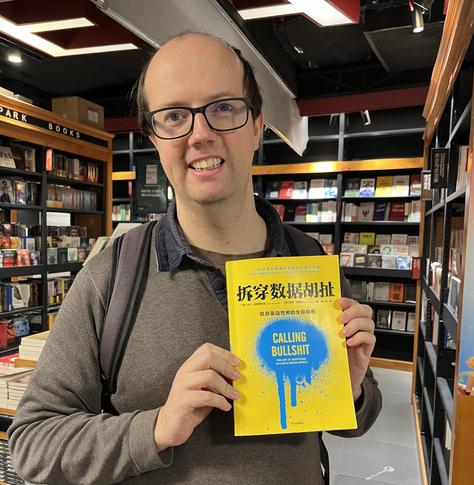
 KOJu SCHOLARY
 Toni Aittoniemi
 Carrot Conspiracy
 Kevin Gamin
 WndlB
WndlB Kevin Dalley
 Teixi
Teixi Abstract Tesseract HAS MOVED
 The Slava 🇺🇦 🇺🇸