SWANSEA: Children’s mental health service based in city wins national award for its work in more than 800 schools

A Swansea-based children’s mental health service has been named School Wellbeing Support Specialists of the Year at a national awards ceremony recognising innovation and excellence in mental health support.

The Exchange programme, delivered by Health is One, picked up the title at the 2026 Global Health and Pharma Mental Health Awards.

The annual awards celebrate organisations across the UK that demonstrate innovation and commitment in mental health support.

The Exchange has been operating for nearly two decades, working with ten local authorities across the UK to deliver counselling and therapeutic support in more than 800 schools.

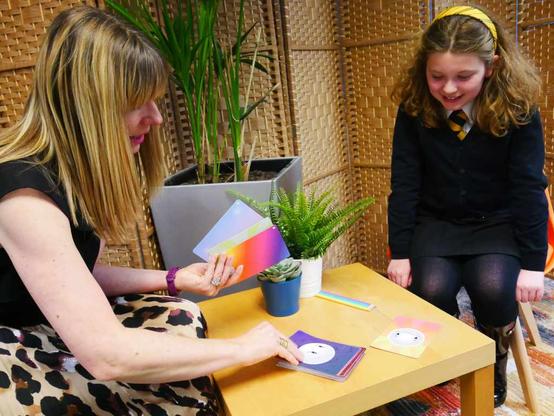
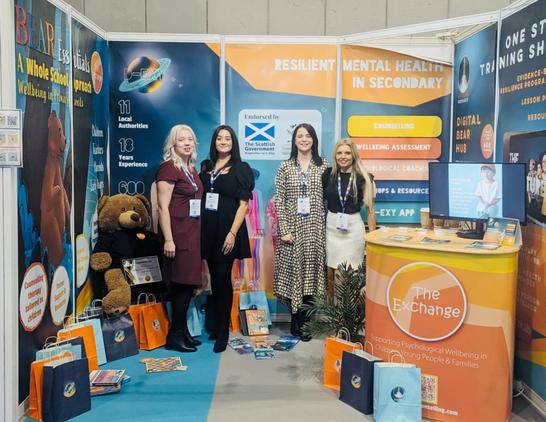
The Exchange team celebrate winning School Wellbeing Support Specialists of the Year at the 2026 GHP Mental Health Awards. Picture: Health is One

It is headquartered in Swansea – making the win a significant recognition for a service rooted in south-west Wales.

The award reflects the service’s approach to embedding counselling within a wider, coordinated response to children’s needs – what the team describes as a “whole-system approach.”

The Exchange works with teachers, families and wider services to identify concerns early and provide practical, age-appropriate support – across home, school, health and community settings.

The therapy offered ranges widely depending on the needs of each child.

It includes one-to-one and group counselling, play-based therapy for younger children, creative approaches for children with additional learning needs, and structured support for young people experiencing anxiety, low mood or difficulties in relationships.

The programme works in close partnership with health services, local authorities and third sector organisations.

This collaborative model is designed to reduce demand on specialist provision and provide more community-based responses to mental health concerns affecting children and young people.

For The Exchange, the award reflects an approach focused on building capacity within schools and strengthening links between universal services and specialist mental health provision.

Emma Davies, Director at Health is One, said the recognition mattered because it reflected what the team knew worked for children in Wales.

“The Exchange functions as part of a whole-system response, working alongside schools, families, local authorities and health services to make sure children receive the right support at the right time,” she said.

She said the team remained committed to delivering services that reflected those priorities. “We are proud that our work is recognised at a national level, and we remain committed to delivering services that genuinely reflect those priorities,” she said.

The Exchange’s recognition comes at a time when children’s mental health services across Wales – and the wider UK – are under increasing pressure, with rising demand for support and long waits for specialist provision in many areas. The Welsh Government previously pledged an extra £9.4m investment in children and young people’s mental health services in recognition of growing demand.

Other Swansea-based programmes have also been recognised for their work in this space, including the Bouncing Back Plus classroom and exercise programme which is delivering wellbeing support to primary school children across the city.

Schools and families seeking more information about The Exchange programme, or wishing to make a referral, can find further details on the Health is One website.

#CAMHS #HealthIsOne #mentalHealth #mentalHealthSupport #Swansea #TheExchange
Swansea man speaks out after years of mental health service failings

Now receiving support in hospital, he is speaking out to raise awareness of what he describes as “deep cracks” in the Welsh mental health system, particularly in services provided by Swansea Bay University Health Board and the Crisis Team in Swansea.

“I first started struggling with my mental health when I was just 13,” he said. “I was referred to CAMHS [Child and Adolescent Mental Health Services], but instead of getting help, I was told it was just behaviour issues — that I didn’t have a mental disorder. They didn’t listen to me or my family.”

He says that for eight years he was passed from service to service with little support, despite clear signs of distress. His mother, whom he describes as his biggest supporter, continued to advocate for him, but says she too was repeatedly dismissed.

“The system failed me and my family. They made us feel like we were exaggerating, like there was nothing wrong. But there was.”

In the last four years alone, he says he has been sectioned under the Mental Health Act eight times and admitted to Ward F at Neath Port Talbot Hospital on multiple occasions — a ward he describes as “unsafe and damaging.”

He alleges that one doctor labelled his actions as “attention-seeking” and “just behavioural,” and describes being forcibly restrained after trying to leave the ward, resulting in bruising. He also claims a staff member once grabbed him by the throat.

“There was no care or compassion. Just control and judgement.”

He also raises concerns about patient confidentiality, saying staff would discuss other patients’ medical information in communal areas where it could be overheard.

Earlier this year, a life-threatening incident led to a turning point — a correct diagnosis and the right medication. Now in hospital and beginning his recovery, he says the experience has left him determined to speak up.

“If services had listened to me and my mum when I was 13, I truly believe none of this would have happened. So much pain, trauma, and danger could have been avoided.”

He added: “I’m not speaking out to shame anyone. I’m speaking out because if we don’t tell the truth, nothing will ever change. I lost nearly ten years of my life to being ignored and not supported.”

“There needs to be proper accountability. We need professionals who listen, who investigate properly, who care. Mental health wards should be places of healing, not fear. Crisis teams should act with urgency and compassion — not make people feel like a burden.”

He says he is now on the road to recovery, with a support plan in place, a team who listens, and treatment that is finally making a difference.

In response, Swansea Bay University Health Board said:

“Strict confidentiality rules mean we are unable to comment on individual patients in our care and therefore cannot comment on the claims being made.

However, we can confirm we have received a formal complaint from the patient, and we will respond to the patient directly in due course.

We actively encourage patients to always let us know if they have any concerns.”

For information on how to raise a concern or complaint with Swansea Bay University Health Board, visit their Complaints and Feedback page.

Related stories from Swansea Bay News

Independent review finds repeated failings in Swansea Bay maternity care
Welsh Government escalates intervention after report highlights unsafe practices and governance concerns.

Swansea man jailed for animal cruelty after CCTV shows dog being hit and dropped
Court sentences 21-year-old for causing unnecessary suffering to Jack Russell Terrier named Casper.

Project offers support to people living with dementia and their carers
Swansea initiative provides vital resources and emotional support for families affected by dementia.

Free school meals to be extended into school holidays
Welsh Government confirms continued support to tackle holiday hunger and improve child wellbeing.

#CAMHS #mentalHealth #NeathPortTalbotHospital #Swansea #SwanseaBayNHS

[17:54] HSE settles and apologises for ‘failings in care’ of girl (17) who took her own life in care of Kerry CAMHS

The HSE has apologised for “failings in care” for a 17-year old girl who took her own life while in the care of the Kerry Child and Adolescent Mental Health Services (CAMHS).

https://www.independent.ie/irish-news/courts/hse-settles-and-apologises-for-failings-in-care-of-girl-17-who-took-her-own-life-in-care-of-kerry-camhs/a1625749404.html

#17_yearold #theKerryChildandAdolescentMentalHealthServices #CAMHS

HSE settles and apologises for ‘failings in care’ of girl (17) who took her own life in care of Kerry CAMHS

The HSE has apologised for “failings in care” for a 17-year old girl who took her own life while in the care of the Kerry Child and Adolescent Mental Health Services (CAMHS).

Irish Independent
Discovered, much to my disgust, that #CAMHS do not deal with #ADHD referrals. Though I know they do test #ASD referrals for ADHD. But instead for kids with ADHD they must go through the HSE psychology services (which we've had a super bad experience with) to then be put on a waiting list which is 6 to 8 YEARS long. So the only real option for kids is the same as for adults, suffer through it or pay a private doctor.
#mastodaoine

Our #MentalHealth system fails children with #DualDiagnosis of #autism and #MentalIllness, #disability, substance use or non-conforming #GenderIdentity.

"#Cork TD & #SocialDemocrats leader #HollyCairns said there are currently 854 young people #waiting for #CAMHS services in Cork... over 300 waiting more than a year."

There is "total #gatekeeping at the mention of #autism or #addiction in addition to mental health issues".

https://www.echolive.ie/corknews/arid-41397205.html

Committee Report: https://data.oireachtas.ie/ie/oireachtas/committee/dail/33/joint_committee_on_children_equality_disability_integration_and_youth/reports/2024/2024-05-14_report-on-camhs-and-dual-diagnosis_en.pdf

300 people waiting over a year for Camhs appointment in Cork 

echolive.ie

CAMHS therapist just told me to "watch some Youtube videos on ASD" with my daughter. I asked which ones and she said to watch some myself first and choose what is suitable. Surely that advice can't be an official NHS policy? Does she not know how much crap there is on youTube??

#CAMHS

*New research*

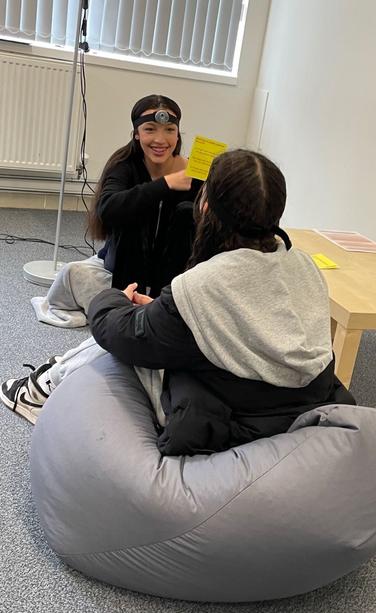
Can we develop new methods to measure parent-adolescent interaction? In this paper we discuss our work developing a novel task utilizing head cams to capture first-person perspectives. This opens the possibility of AI coding, which we are exploring first through coding of facial expressions.

Paper:
https://www.frontiersin.org/articles/10.3389/frcha.2023.1214890/full

News story:
https://www.kcl.ac.uk/news/wearable-headcams-provide-insight-complex-teen-emotions

#AI
#FamilyTherapy
#parenting
#camhs
#adolescence
#MentalHealth

Through each other's eyes: initial results and protocol for the co-design of an observational measure of adolescent-parent interaction using first-person perspective

BackgroundCurrent observational methods to understand adolescent-parent interaction are limited in terms of ecological and content validity. We outline initial results and a protocol for future work from a programme of work to: (1) establish a new method for data capture of adolescent-parent interaction at home using wearable cameras and; (2) develop a new relevant and comprehensive observational micro-coding scheme. In Part 1, we report our completed preliminary work, comprised of an initial scoping review, and public engagement work. In Part 2, we present a protocol for the development of the new measure.MethodsPart 1—We searched Pubmed for existing observational measures of adolescent-parent interaction for the scoping review. We also undertook public engagement work utilising a mobile research van, taken to multiple locations around Bristol, UK to engage with a variety of populations through interactive methods. Part 2—Our protocol describes plans for: (1) A systematic review of the psychometric properties of observational measures of adolescent-parent interaction; (2) Focussed public engagement workshops; (3) Harmonisation of information from existing coding schemes and literature with information from public engagement with adolescents and parents; (4) A pilot study to assess the acceptability and feasibility of the method; (5) Development of a coding scheme in consultation with expert and lay panels, and through real-life application to recorded videos from a pilot ...

Frontiers
MSN

What’s behind the UK’s increase in autism diagnoses?

Experts are undecided about whether there is overdiagnosis or whether more children are autistic

The Guardian

For those interested in ARFID: check out our blog about our recent scoping review on psychological interventions. Co-written with first author Emma Willmott for the UK Association for Child and Adolescent Mental Health (ACAMH) blog.

#ARFID
#EatingDisorders
#CBTworks
#FamilyTherapy
#CAMHS
#MentalHealth

https://www.acamh.org/blog/psychological-interventions-arfid-restrictive-food-intake-disorder/

An Overview of Psychological Interventions for Avoidant Restrictive Food Intake Disorder (ARFID) - ACAMH

Marking its tenth anniversary as a diagnosis, our scoping review summarised 50 studies reporting on psychological interventions and outcomes for Avoidant Restrictive Food Intake Disorder (ARFID). In the absence of clinical guidelines to support clinicians, our review highlights that a range of psychological interventions can be implemented to support children and young people with ARFID. Here, we summarise the existing literature and highlight areas for further research. 

ACAMH