Self-Titled Saturday | Brama (2024, France)

For our next STS 2.0 spotlight, we’re going to take a look at number 0y on The List, submitted by riff. This is the fantastic debut LP of a psychedelic/folk rock power trio that has lyrics in the Occitan language and uses "the hurdy-gurdy as a liturgical organ, the guitar/bass as an exorcised subject and the shamanic voice, mistress of worship."

Want to read more? See the full spotlight on the Fediverse at @1001otheralbums.com or on the blog: https://1001otheralbums.com/2026/06/13/self-titled-saturday-brama-2024-france/

Want to skip straight to the music? Here's the  : https://bramamusic.bandcamp.com/album/brama

Happy listening!

#Brama #PsychedelicRock #FolkRock #IndieRock #Occitan #music #1001OtherAlbums

Self-Titled Saturday | Brama (2024, France)

A spotlight on the debut LP from Occitan psychedelic rock group, Brama.

1001 Other Albums

Self-Titled Saturday | Brama (2024, France)

For our next STS 2.0 spotlight, we’re going to take a look at number 0y[1] on The List, submitted by riff. Here’s a quick rundown:

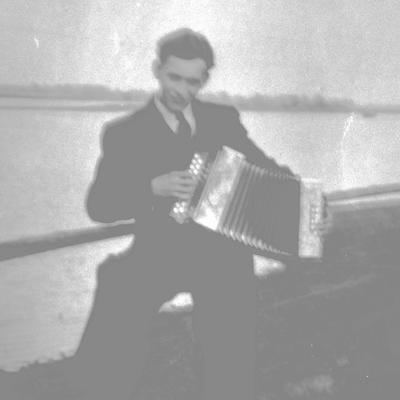
  • Point of origin(s): This group began in 2019 as a psychedelic power trio with Simon Guy (lead vocals, guitar), Paolo Gauthier (drums, vocals), and Baptiste Lherbeil (hurdy-gurdy, vocals). Yes, hurdy-gurdy. The album we look at here is Brama’s debut LP, following their 2022 EP La Glane. Their lyrics are in the Occitan language – continuing their partnership seen on the EP with Dominique Decomps, a professor/translator of Occitan, Decomps wrote or co-wrote the lyrics for nearly all the songs, with the final track using a traditional text.
  • Tasting notes: Translated from their Bandcamp: “Brama’s music draws as much from the violin music of the Massif Central, as from the Pakistani Qawali, the guitar from Mali, the German krautrock and the ritualistic rock riff full of fuzz. Always sunny and hypnotic, Brama invites you into a ceremony at the crossroads of a tarantella and a psychedelic rock’n’roll mass. The hurdy-gurdy as a liturgical organ, the guitar/bass as an exorcised subject and the shamanic voice, mistress of worship.” The Quietus review of this album compared them to Mdou Moctar “in the way they revitalise hoary rock tropes through a combination of local flair, blistering musicianship and infectious enthusiasm”,[2] and I’d have to agree.
  • Standout track: “S’enraija”, but, also, all of them rock.
  • Where are they now?: Brama is now a quartet, with Amandine Pauvert at the hurdy-gurdy helm and Antony Miranda on bass.
  • Websites: Bandcamp, Discogs (has links to their socials)

Happy listening!

  • We use 0 followed by a letter to denote albums on The List that weren’t in Discogs at the time of adding (or at least I couldn’t find them). I’ve since found this one on Discogs, but the entry is currently separate from the already established page for the group. ↩︎
  • https://thequietus.com/quietus-reviews/quietus-international/french-music-reviews-jac-berrocal-aluk-todolo-brama/ ↩︎
  • #Brama #folkRock #hurdygurdy #indieRock #Occitan #psychedelicRock
    New Lublin Gate, Zamość, Poland

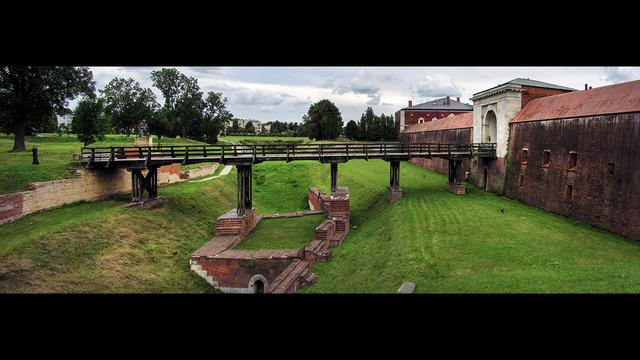
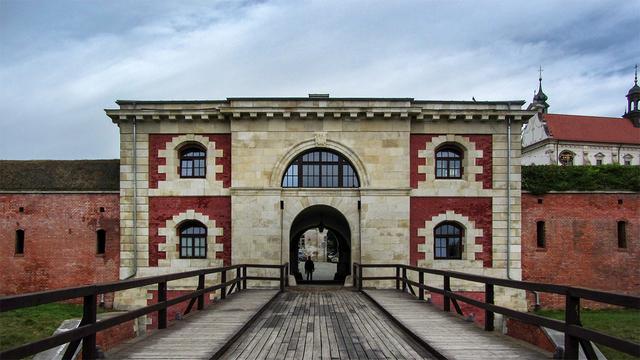
    The New Lublin Gate was constructed between 1821 and 1822 during a general modernization of the city’s fortifications in the period of the Congress Kingdom of Poland. It was one of two new gates built on the sites of former fortifications, aiming to improve communication and access to the city, especially from the directions of Lublin and Krasnystaw. The gate was located in the curtain wall between bastions number V and VI on the northern defensive line. The design is attributed to military engineer Jan Mallet-Malletski, responsible for the modernization of the Zamość fortress.

    The New Lublin Gate is distinguished by its classical monumental façade made of brick and stone. Its characteristic features include the Doric entablature crowning the façade and massive stone-and-brick frames around the arched passage with a powerful keystone. The façade also shows bas-reliefs of oak branches symbolizing courage and bravery, along with traces of the initials of Tsar Alexander I, who was also King of Poland. A wooden bridge, resting on the remains of a ravelin and earthwork, leads to the gate; this section of the curtain wall connecting the gate and the ravelin was reconstructed between 2007 and 2009.

    Following the fortress’s decommissioning in 1866, the gate was bricked up and adapted for various purposes, including warehouses and guardhouses; in the postwar years, some of the rooms served as a restaurant and gallery. The New Lublin Gate remains an important historical and architectural landmark in Zamość, testifying to the city’s military and urban transformations in the 19th century.

    #Zamosc #brama #gate #citygate #mury #walls #defensivewalls #architektura #architecture #Poland #Polska #photography #fotografia #bastion #fortifications
    The Szczebrzeska Gate, Zamość, Poland

    Also known as the Florian Gate, it was built in the early 17th century, probably between 1603 and 1605. The design is attributed to architect Bernardo Morando, who was the author of the entire Renaissance concept of the city of Zamość, and the construction was completed by the master mason Błażej Gocman.

    The gate was one of the three main city gates and was located on the southern line of the city’s defensive walls, leading along the old road towards Szczebrzeszyn and Lublin. The structure was built on a rectangular plan, made of brick and sandstone, forming a two-story body covered with a hipped roof. Characteristic for the gate are Mannerist and Rococo decorative elements, including the attics and stone sculptures of St. Florian and St. Michael the Archangel, added in the 18th century during a renovation carried out by Jan and Jakub Maucher.

    The Szczebrzeska Gate served as a strategic entrance to the city and an important element of the fortifications, connecting the outer suburbs with the center of Zamość. During the partitions, it was transformed in the Classical style, yet it retained its charm and functionality.

    #Zamosc #brama #gate #citygate #mury #walls #defensivewalls #archotektura #architecture #Poland #Polska #photography #fotografia #fortifications

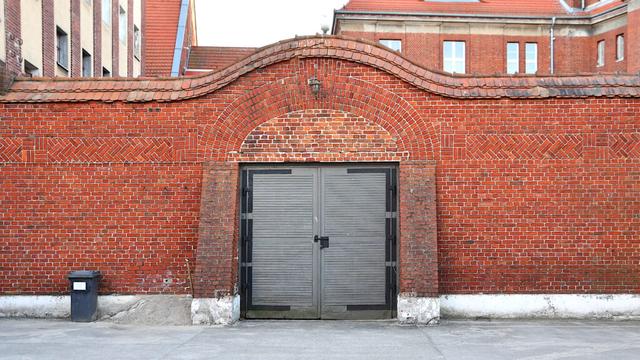
    Dawne więzienie w Kołobrzegu

    Ta piękna ceglana brama znajduje się na tyłach neogotyckiego gmachu kołobrzeskiej policji przy ul. Kilińskiego. Kompleks sądowo-więzienny powstał na początku XX wieku i przetrwał dwie wojny światowe.

    #2026 #brama #cegła #Kołobrzeg #neogotyk #policja #zabytek #zachodniopomorskie
    The Gate of Dawn, Vilnius, Lithuania

    "Lithuania! My country! You are like health,
    How precious you must be, only he can tell
    Who has lost you. I see your beauty now
    In all its glory and describe it, because I long for you.

    Holy Virgin, guardian of radiant Częstochowa,
    You who shine through the Gate of Dawn,
    You who watch over steadfast Nowogród and its people!
    As you once healed me in childhood, so miraculous—
    When in your care, from my grieving mother’s arms,
    I opened my long-closed eyes
    And was able to step to your temple’s door,
    To offer thanks to God for life restored—
    So also may you restore us,
    Miraculously, to our homeland’s bosom.
    Meanwhile, may you carry my soul from the gloom of longing
    To those forested hills, those evergreen meadows
    Spread wide where the blue Neman flows;
    To those vast fields painted in varied grain colors,
    A landscape gilded in wheat, silvered with rye,
    Where amber is the buckwheat and white as snow,
    Where red clover blooms like a maiden’s blush,
    And where green furrows entwine as ribbons, within which
    Wild pear trees may sometimes be seen."

    Sir Thaddeus - invocation
    Adam Mickiewicz

    #wilno #vilnius #miasto #city #ulica #street #brama #gate #litwa #lithuania #lietuva #ostrabrama #gateofdawn #poezja #poetry #architektura #sacralarchitecture #architecture
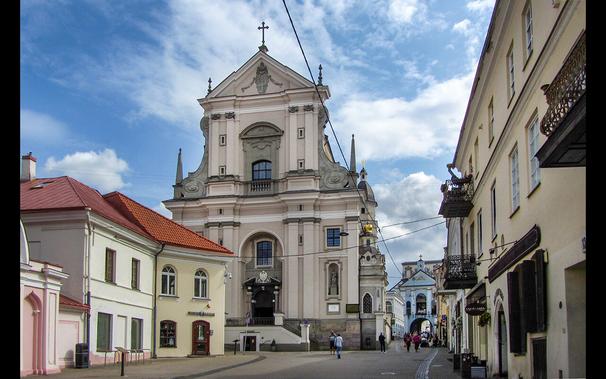
    Church of St. Theresa, Vilnius, Lithuania

    This baroque architectural gem was erected by the Discalced Carmelites between 1635 and 1650, funded by Stefan Pac. It stands on Aušros Vartu Street, right beside the famous Gate of Dawn. The façade design is attributed to Constantino Tencalla. The unified interior, rebuilt after a fire in 1760, represents the late baroque style with rococo decorations and frescoes depicting the life of its patron saint. The main altar illustrates the ecstasy of St. Theresa. Notably, the church served as a temporary resting place for the heart of Józef Piłsudski - Chief of State 1918–1922 and later as Marshal of Poland, playing a key role in restoring Poland’s sovereignty after World War I.

    The Gate of Dawn visible in the background, built between 1503 and 1514, is the only surviving city gate in Vilnius. It houses a chapel with the miraculous icon of Our Lady of the Gate of Dawn, one of the most important pilgrimage sites in Lithuania and a symbol of Vilnius. The icon draws pilgrims from around the globe, making the Gate of Dawn a spiritual center for both Poles and Lithuanians.

    #wilno #vilnius #miasto #city #ulica #street #brama #gate #kosciol #church #litwa #lithuania #lietuva #architektura #architecture #photo #photography #sacralarchitecture
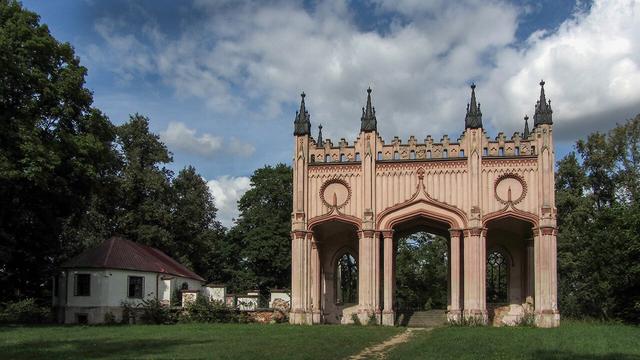
    Ruins of Pac’s Palace, Dowspuda, Poland

    Ludwig Michał Pac (1778-1835), general, fought alongside Napoleon, distinguished himself in the 1812 campaign. After Napoleon’s defeat, he went to England, where he learned modern agriculture. He used his knowledge in the country, including on the Dowspuda estate. He took part in the November Uprising of 1830. After its fall, he emigrated, and his estate was confiscated.

    The construction of the palace began in 1820. The design was prepared by the Italian architect Piotr Bosio. Count Pac, dissatisfied with the design, entrusted the execution of new plans to another Italian architect - Henryk Marconi. It is not known what part of the design of the completed palace was the work of Bosio and what part was Marconi.

    In 1823, the construction was completed. Work on the interiors was underway. A landscape park was established around the palace according to the design of the English gardener John Heiton.

    For Pac’s participation in the November Uprising in 1830, the Russian government confiscated the Dowspuda estate. By a decree of 16 March 1836, the tsar granted it to General Sulima. The palace began to be systematically devastated. The lessee of the estate, Stefan Horoczko, led to its destruction within a few years. The end of the building came when its last lessee decided to sell the ruins as building material for barracks in Suwałki.

    #pac #palac #palacpaca #dowspuda #ruiny #budowla #budynek #brama #historia #polska #palace #ruins #building #gate #poland #history #photography #fotografia
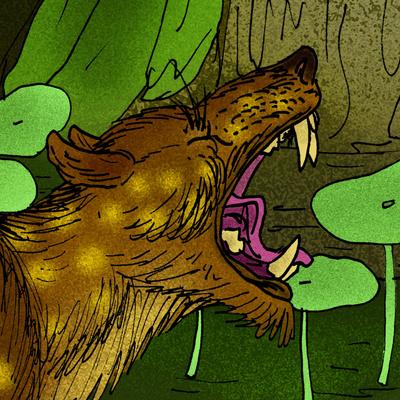
    Stanton's Seafood Cookbook Atlantic Pomfret, Brama brama #pomfret #brama #Omnomnomicon #work_in_progress #seafood #sciart
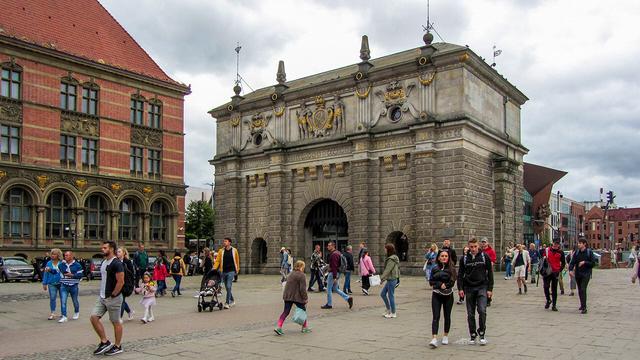
    The Upland Gate, Gdansk, Poland

    The Renaissance Upland Gate, located at Bogusławski Street, inaugurating the Royal Route, is the most representative entrance gate to Gdańsk. Built in the 16th century as part of the city fortifications, it took its current shape in 1588, after reconstruction led by Willem van den Blocke. In the attic, you can admire the bas-reliefs of the coats of arms of Poland, Gdańsk and Royal Prussia. The Latin inscription above the main entrance reads: “Justice and piety are the two foundations of all kingdoms”.

    #gdansk #brama #gate #citygate #architecture #polska #poland #city #miasto #street #ulica #deptak #architektura #historia #history