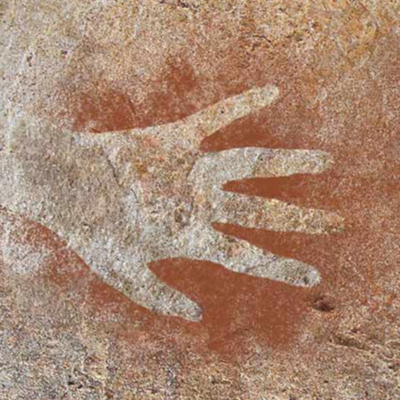
Hands tell a longer story of human growth than textbooks admit. New research shows metacarpal bones keep thickening well into late adolescence, reshaping how anthropologists define maturity. #BioAnth #HumanEvolution #Osteology https://www.anthropology.net/p/when-bones-keep-growing-what-adolescent
When Bones Keep Growing: What Adolescent Hands Reveal About Human Development

Why the skeleton refuses to follow the neat timelines in our textbooks

Anthropology.net

#PrimatePost 🦧😠
Capuchin monkeys recognise unfair rewards and do not shy out from showing their disappointment! If you haven't seen such reaction, do yourself a favour and watch this video 👇

🧪 #science #BioAnth #primates #primatology

youtu.be/-KSryJXDpZo?...
https://youtu.be/-KSryJXDpZo?si=7BKwWcCTcDRfO671

Capuchin monkey fairness experiment

YouTube

Together with @bjorn I'm facilitating a panel on #OpenScience in #BioAnth on 10 April!

We will hear from Dr. Siân Halcrow, Dr. Sam Leggett, Dr. Krystal Tsosie and Dr. Trudy Turner and their vision (and challenges) regarding Open Science!

Registration: https://bioanth.org/meetings-and-webinars/aabas-monthly-webinar-series/

AABA Webinar Series

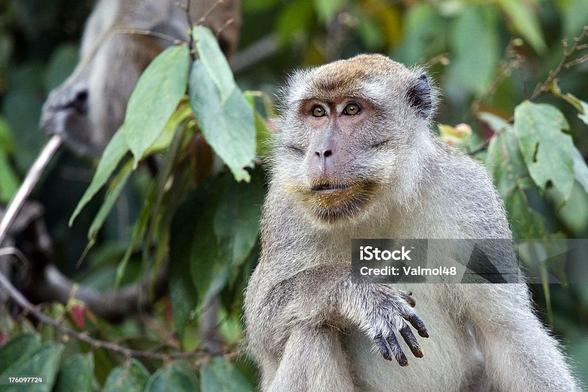
Recently, a population of long-tailed macaques (Macaca fascicularis) 🐒 started using stone tools to open oysters! 🦪 Unusual but not unique. The unique part is that they acquired this behaviour following the Covid19 lockdown!

The macaques, usually relying on tourists for part of their diet, found themselves in need of a new resource...and a way to exploit it!

This tells us how quick technological advances can emerge in primates!

https://doi.org/10.1002/ajp.23580

#science #primates #BioAnth #BioArch

Cool stuff anthropologists do! While we often have little fossil material to work with, we have creativity to spare...

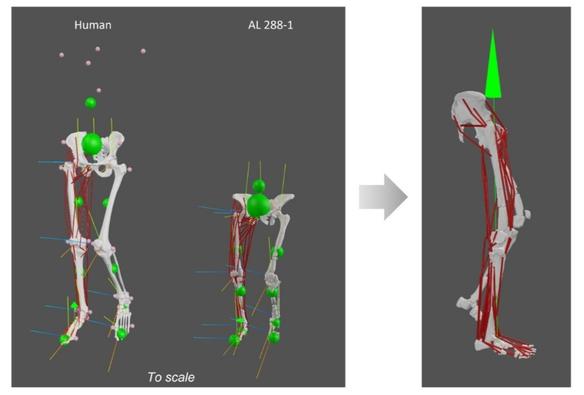
We can model the way hominin walked/ran by estimating muscles and their functioning via simulations! By "we" I mean Dr Ashleigh Wiseman and her colleagues: that's what she does in her #NewPaper.

https://peerj.com/articles/16821/

#science #VirtualAnth #BioAnth #PaleoAnth #bones

Static versus dynamic muscle modelling in extinct species: a biomechanical case study of the Australopithecus afarensis pelvis and lower extremity

The force a muscle generates is dependent on muscle structure, in which fibre length, pennation angle and tendon slack length all influence force production. Muscles are not preserved in the fossil record and these parameters must be estimated when constructing a musculoskeletal model. Here, we test the capability of digitally reconstructed muscles of the Australopithecus afarensis model (specimen AL 288-1) to maintain an upright, single-support limb posture. Our aim was to ascertain the influence that different architectural estimation methods have on muscle specialisation and on the subsequent inferences that can be extrapolated about limb function. Parameters were estimated for 36 muscles in the pelvis and lower limb and seven different musculoskeletal models of AL 288-1 were produced. These parameters represented either a ‘static’ Hill-type muscle model (n = 4 variants) which only incorporated force, or instead a ‘dynamic’ Hill-type muscle model with an elastic tendon and fibres that could vary force-length-velocity properties (n = 3 variants). Each muscle’s fibre length, pennation angle, tendon slack length and maximal isometric force were calculated based upon different input variables. Static (inverse) simulations were computed in which the vertical and mediolateral ground reaction forces (GRF) were incrementally increased until limb collapse (simulation failure). All AL 288-1 variants produced somewhat similar simulated muscle activation patterns, but the maximum vertical GRF that could be exerted on a single limb was not consistent between models. Three of the four static-muscle models were unable to support >1.8 times body weight and produced models that under-performed. The dynamic-muscle models were stronger. Comparative results with a human model imply that similar muscle group activations between species are needed to sustain single-limb support at maximally applied GRFs in terms of the simplified static simulations (e.g., same walking pose) used here. This approach demonstrated the range of outputs that can be generated for a model of an extinct individual. Despite mostly comparable outputs, the models diverged mostly in terms of strength.

PeerJ

166 / No raw data, no science: another possible source of the #reproducibility crisis https://doi.org/10.1186/s13041-020-0552-2

167 / #Ethics in biological anthropology https://doi.org/10.1002/ajpa.23367

168 / How to build up big #TeamScience a practical guide for large-scale collaborations https://doi.org/10.1098/rsos.230235

From: https://nerdculture.de/@hbaum/110503528579541746

#OpenScience #TIR #OpenData #BioAnth

168 / 169 😬

No raw data, no science: another possible source of the reproducibility crisis - Molecular Brain

A reproducibility crisis is a situation where many scientific studies cannot be reproduced. Inappropriate practices of science, such as HARKing, p-hacking, and selective reporting of positive results, have been suggested as causes of irreproducibility. In this editorial, I propose that a lack of raw data or data fabrication is another possible cause of irreproducibility.As an Editor-in-Chief of Molecular Brain, I have handled 180 manuscripts since early 2017 and have made 41 editorial decisions categorized as “Revise before review,” requesting that the authors provide raw data. Surprisingly, among those 41 manuscripts, 21 were withdrawn without providing raw data, indicating that requiring raw data drove away more than half of the manuscripts. I rejected 19 out of the remaining 20 manuscripts because of insufficient raw data. Thus, more than 97% of the 41 manuscripts did not present the raw data supporting their results when requested by an editor, suggesting a possibility that the raw data did not exist from the beginning, at least in some portions of these cases.Considering that any scientific study should be based on raw data, and that data storage space should no longer be a challenge, journals, in principle, should try to have their authors publicize raw data in a public database or journal site upon the publication of the paper to increase reproducibility of the published results and to increase public trust in science.

BioMed Central

Bonjour !

Excited to be joining Mastodon so here’s my #introduction 👋

Master's student examining the causes and implications of orangutan flange plasticity at the University of Cambridge 🎓 #BioAnth

So, expect a lot of papers being posted about great ape behaviour, ecology and conservation 🦧 #primatology

As someone who finds new ways to be anxious daily, you'll also see me tooting about:
#AI
#ClimateChange
#ExtinctionRisks

Looking forward to meeting new people on this community !

103 / Biological anthropology must reassess museum collections for a more ethical future https://www.nature.com/articles/s41559-023-02036-6.epdf?sharing_token=r_6ck70MbGx0QmfYrL8Z9NRgN0jAjWel9jnR3ZoTv0NoIKXgxotLewzW4mL7Sy5bzFcBDIUAiipIiWQEysM-_oB2BsTXU0dKf2J89O7foyLtd2ZahBlc02p4UJU9xHvzbm5yU1mHDaVSvz1gP-BpeOzTmxRC02FAWCh_qejk3co%3D

"Human remains are more than a scientific resource, and professional ethical standards need to be formalized in a manner that clearly defines what it means to treat these individuals and their descendants with care and respect."

#BioAnth

Biological anthropology must reassess museum collections for a more ethical future - Nature Ecology & Evolution

With growing attention on the remains of people held by museums and universities around the world, we outline ethical considerations that researchers working with human remains in anthropology must bear in mind.

Nature
@LangurLover never too late to read some good stuff! Lots of crossover both from the #BioAnth and #SocAnth side. I will be posting #MedAnthro #PublicHealth takes for sure. Nice to meet you!