Registration OPEN for Practical Palaeoproteomics Summer School Copenhagen! 🦴πŸ§ͺ πŸ—“οΈ Aug 12–21, 2026 πŸ“ Copenhagen (In-person + 3-day remote option) πŸŽ“ 6 ECTS credits ⏳ Deadline: April 1st Apply here: phdcourses.ku.dk/detailkursus... #Palaeoproteomics #BioArch #Archaeology #Proteomics #PhDLife

Graduate School of health and ...
Graduate School of health and Medical Sciences

14/14
The Verdict. βœ… Whether you look at the Mean Squared Error (MSE) of their facial grids or the Posterior Probability of their shared ancestry, the conclusion is inescapable: This isn't just a family resemblance. It's a biological recursion. One mother, two auntsβ€”three versions of the same magnificent genetic code. Data doesn't lie; the geometry of love is written in the bone. πŸ§¬πŸ“ #Genealogy #DataScience #FamilyHistory #BioArch

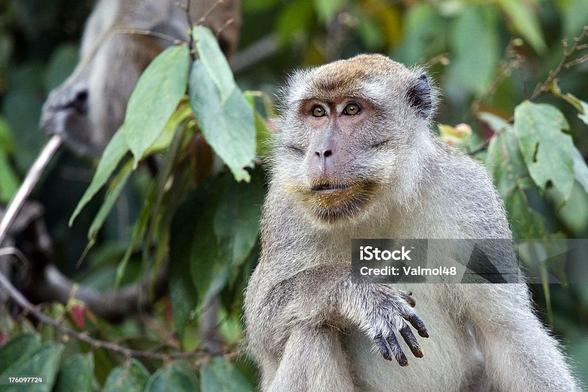
Recently, a population of long-tailed macaques (Macaca fascicularis) πŸ’ started using stone tools to open oysters! πŸ¦ͺ Unusual but not unique. The unique part is that they acquired this behaviour following the Covid19 lockdown!

The macaques, usually relying on tourists for part of their diet, found themselves in need of a new resource...and a way to exploit it!

This tells us how quick technological advances can emerge in primates!

https://doi.org/10.1002/ajp.23580

#science #primates #BioAnth #BioArch

So here's a random poll that I'd like to throw out there for all the #bioarch #osteoarch folks I know about human teeth:

When I had my tooth pulled today, the dentist told me that it took longer than expected because said M3 had three roots not two. I had forgotten about this until then, but IIRC the same was true of at least one of my other M3s when they were pulled back in the day.

So here's the thing I want to know: the dentist *also* told me having three roots in an M3 is pretty rare. Naturally that got my attention, and so now I'm curious: archaeologically, how rare is it to find an M3 with three roots? Like, is that a thing that actually happens pretty often, or is it very unusual to see one in the archaeological record?

And so I've decided to try to find out the answer to this question in the most UNscientific way possible: a social media poll of personal experiences from #archaeologist folks here on the fediverse!πŸ˜…

I find M3s with three roots ALL THE TIME, my dude!
0%
I see M3s with three roots fairly often
0%
Every once in a while I see an M3 with three roots
0%
I rarely, if ever, find an M3 with three roots
0%
Poll ended at .