 PPC Land
ICYMI: Nexxen and ADvolution bring influencer fandom data to political DSP targeting: Nexxen and ADvolution have partnered to make influencer fandom audience segments available inside Nexxen DSP for programmatic political campaign targeting. https://ppc.land/nexxen-and-advolution-bring-influencer-fandom-data-to-political-dsp-targeting/ #InfluencerMarketing #PoliticalCampaign #ProgrammaticAds #AudienceSegmentation #DSP

ICYMI: Intentsify hits 20% revenue growth and goes global with 700+ B2B audience segments: Intentsify reports 20% YOY revenue growth in Q1 2026, launches 700+ pre-built B2B audience segments in The Trade Desk and DV360, and expands to 90+ countries. https://ppc.land/intentsify-hits-20-revenue-growth-and-goes-global-with-700-b2b-audience-segments/ #Intentsify #RevenueGrowth #B2BMarketing #AudienceSegmentation #DigitalMarketing
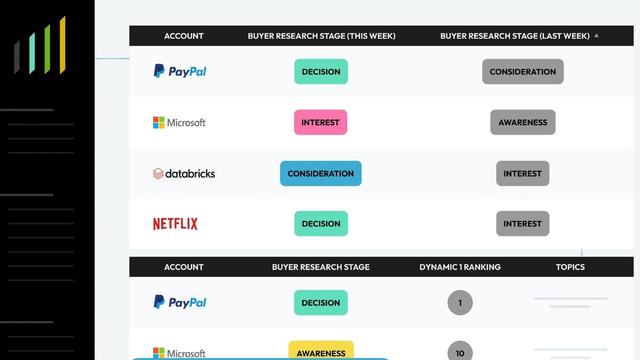
Intentsify hits 20% revenue growth and goes global with 700+ B2B audience segments: Intentsify reports 20% YOY revenue growth in Q1 2026, launches 700+ pre-built B2B audience segments in The Trade Desk and DV360, and expands to 90+ countries. https://ppc.land/intentsify-hits-20-revenue-growth-and-goes-global-with-700-b2b-audience-segments/ #Intentsify #RevenueGrowth #B2BMarketing #GlobalExpansion #AudienceSegmentation
FYI: NIQ and Adsquare make real CPG purchase data available for programmatic ads: NIQ and Adsquare today announced a collaboration making real CPG purchase-based GeoPurchase audience segments available for programmatic and DOOH campaigns. https://ppc.land/niq-and-adsquare-make-real-cpg-purchase-data-available-for-programmatic-ads/ #ProgrammaticAds #CPG #DigitalMarketing #DOOH #AudienceSegmentation
ICYMI: NIQ and Adsquare make real CPG purchase data available for programmatic ads: NIQ and Adsquare today announced a collaboration making real CPG purchase-based GeoPurchase audience segments available for programmatic and DOOH campaigns. https://ppc.land/niq-and-adsquare-make-real-cpg-purchase-data-available-for-programmatic-ads/ #CPG #ProgrammaticAds #Advertising #DigitalMarketing #AudienceSegmentation
FYI: Cognitiv's AudienceGPT targets stale audience data with real-time AI: Cognitiv launched AudienceGPT on March 26, 2026, a deep learning tool that replaces static audience segments with dynamic, real-time consumer journey profiles. https://ppc.land/cognitivs-audiencegpt-targets-stale-audience-data-with-real-time-ai/ #AI #DeepLearning #AudienceSegmentation #DataAnalytics #RealTimeMarketing

 BlueCyberSerpent
Your BlueSky Feed Is Porn You Didn’t Ask For Because Your Friends Are Gooners With a Severe Porn Addiction
A common complaint I see people make on Bluesky is: why am I being served so much porn or things I am not interested in? They will incorrectly believe that the algorithm is broken. It’s not broken. You didn’t know the people you knew as well as you thought you did. Porn addiction is a thing, and porn addiction is especially common with weebs. You’re seeing deranged shit because people you follow have porn addictions and are into deranged shit. So, though you may not be consuming porn, people in your network are. That activity kicks into your feeds.
The issue I have with that is that it essentially normalizes being sex pests in a space on the Internet. That sets the expectation that it is good—attractive, even—to act like that elsewhere. That expectation alienates relationships. Bluesky creates a cultural space that offers an unrealistic, bizarre representation of social relationships, which isolates and alienates the users who stay on there consuming erotica and porn like they do.
So, user repos in Bluesky have a property for likes. Bluesky’s underlying AT Protocol stores likes as first-class structured records in each user’s AT Protocol repository. In the AT Protocol lexicon, a like is an app.bsky.feed.like record type. Unlike a simple boolean flag on a post, it is its own record with a creation timestamp and a subject field that holds a strong reference to the liked record.
That strong reference is composed of an AT-URI and a CID. The AT-URI identifies the exact record in the network by DID, collection, and record key. The CID is a cryptographic content identifier that uniquely identifies the exact content of that liked record.
These like records exist under the app.bsky.feed.like namespace in the user’s repo. Bluesky’s repo model is built so that these repos are hosted on a user’s Personal Data Server and are publicly readable through the AT Protocol APIs. Because of that, the like record and its fields can be fetched, indexed, and used by any client or service that can query the protocol.
The protocol exposes operations like getLikes. This returns all of the like records tied to a particular subject’s AT-URI and CID. It also exposes getActorLikes. This returns all of the subject references a given actor has liked. Those API calls return structured like objects with timestamps and subject references directly from the public repository data.
Various feeds hosted by different PDSs use the likes property to construct the feeds that you see. Since the likes of people you follow are included in your social graph, along with your own likes, you’re going to get served the porn they are consuming. Because likes are public and anyone can write an algorithm to see everyone’s likes, you can clearly see just how much porn people are consuming.
Honestly, what started to turn my stomach about the people on Bluesky is how they behave across different contexts. If you look through the records of the posts they interact with, you’ll see them engaging with political posts in the replies like a normal person. Then, when you look through their AT Protocol records, you see hours and hours of them interacting with every kind of porn imaginable. I am not exaggerating. Hours of likes for porn posts within 1–10 minutes of each other. Am I sex-negative? A prude? No, this site is filled with furry, gay bara porn, lol. You can have a drink without being an alcoholic. The problem with these people is like people who can’t have one drink without drinking the whole fucking day; they can’t consume porn in healthy ways.
I think people assume that their feed is customized for them and based on their likes. No—feeds are generalized based on what everyone likes and then served to your subgraph. It’s not just about who you follow; it’s about who they follow. So if you follow someone who follows a lot of people with porn addictions, you will see porn. Bluesky isn’t weighting the algorithm to do this. Basically, it’s the people in your social network with furry, hentai, or trans porn addictions who are driving it.
BlueSky’s Solution To Moderating Is Moderating Without Moderating via Social Proximity
I have noticed a lot of people are confused about why some posts don’t show up on threads, though they are not labeled by the moderation layer. Bluesky has begun using what it calls social neighborhoods (or network proximity) as a ranking signal for replies in threads. Replies from people who are closer to you in the social graph, accounts you follow, interact with, or share mutual connections with, are prioritized and shown more prominently. Replies from accounts that are farther away in that network are down-ranked. They are pushed far down the thread or placed behind “hidden replies.”
Each person gets their own unique view of a thread based on their social graph. It creates the impression that replies from distant users simply don’t exist. This is true even though they’re still technically public and viewable if you expand the thread or adjust filters. Bluesky is explicitly using features of subgraphs to moderate without moderating. Their reasoning is that if you can’t see each other, you can’t harass each other. Ergo, there is nothing to moderate.
Bluesky mentions that here:
https://bsky.social/about/blog/10-31-2025-building-healthier-social-media-update
As a digression, I’m not going to lie: I really enjoyed working on software built on the AT protocol, but their fucking users are so goddamn weird. It’s sort of like enjoying building houses, but hating every single person who moves into them. But, you don’t have to deal with them because you’re just the contractor. That is how I feel about Bluesky. I hate the people. I really like the protocol and infrastructure.
I sort of am a sadist who does enjoy drama, so I do get schadenfreude from people with social media addictions and parasocial fixations who reply to random people on Bluesky, because they don’t realize their replies are disconnected from the author’s thread unless that person is within their network. They aren’t part of the conversation they think they are. They’re algorithmically isolated from everyone else. Their replies aren’t viewable from the author’s thread because of how Bluesky handles social neighborhoods.
Bluesky’s idea of social neighborhoods is about grouping users into overlapping clusters based on real interaction patterns rather than just the follow graph. Unlike Twitter, it does not treat the network as one big public square. Instead, it models networks of “social neighborhoods” made up of people you follow, people who follow you, people you frequently interact with, and people who are closely connected to those groups. They’re soft, probabilistic groupings rather than strict labels.
Everyone does not see the same replies. Bluesky is being a bit vague with “hidden.” Hidden means your reply is still anchored to the thread and can be expanded. There is another way Bluesky can handle this. Bluesky uses social neighborhoods to judge contextual relevance. Replies from people inside or near your social neighborhood are more likely to be shown inline with a thread, expanded by default, or served in feeds. Replies from outside your neighborhood are still public and still indexed, but they’re treated as lower-context contributions.
Basically, if you reply to a thread, you will see it anchored to the conversation, and everyone will see it in search results, as a hashtag, or from your profile, but it will not be accessible via the thread of the person you were replying to. It is like shadow-banning people from threads unless they are strongly networked.
Because people have not been working with the AT Protocol like I have, they assume they are shadow-banned across the entire Bluesky app view. No—everyone is automatically shadow-banned from everyone else unless they are within the same social neighborhood. In other words, you are not part of the conversation you think you are joining because you are not part of their social group.
Your replies will appear in profiles, hashtag feeds, or search results without being visually anchored to the full thread. Discovery impressions are neighborhood-agnostic: they serve content because it matches a query, tag, or activity stream. Once the reply is shown, the app then decides whether it’s worth pulling in the rest of the conversation for you. If the original author and most participants fall outside your neighborhood, Bluesky often chooses not to expand that context automatically.
Bluesky really is trying to avoid having to moderate, so this is their solution. Instead of banning or issuing takedown labels to DIDs, the system lets replies exist everywhere, but not in that particular instance of the thread.
I find this ironic because a large reason why many people are staying on Bluesky and not moving to the fediverse—thank God, because I do not want them there—is discoverability, virality, and engagement.
In case anyone is asking how I know so much about how these algorithms work: I was a consultant on a lot of these types of algorithms, so I certainly hope I’d know how they work, lol. No, you get no more details about the work I’ve done. I have no hand in the algorithm Bluesky is using, but I have proposed and implemented that type of algorithm before.
I have an interest in noetics and the noosphere. A large amount of my ontological work is an extension of my attempts to model domains that have no spatial or temporal coordinates. The question is how do you generalize a metric space that has no physically, spatial properties. I went to school to try to formalize those ideas. Turns out they’re rather useful for digital social networks, too. The ontological analog to spatial distance, when you have no space, is a graph of similarities.
This can be modeled by representing each item as a node in a weighted graph, where edges are weighted by dissimilarity rather than similarity. Highly similar items are connected by low-weight edges, while less similar items are connected by higher-weight edges. Distances in the graph, computed using standard shortest-path algorithms, then correspond to degrees of similarity. Closely related items are separated by short path lengths, while increasingly dissimilar items require longer paths through the graph. It turns out that attempts to generalize metric spaces for noetic domains—to model noetic/psychic spaces—are actually pretty useful for social media algorithms, lol.

The Virulent Infection of BlueSky by Extremely Online, Brain-Rotten Zombies from X Continues
So, it appears a new migration from Twitter to Bluesky is underway. It appears to be some of the most virulent former 4chan users possible. Yep, I got off Bluesky just in time, lol. I’ve been keeping tabs on a particularly virulent and toxic subgraph on Twitter for years. It pretty much stayed off Bluesky because they couldn’t act like abusive dumpster fires there. Welp, looks like they’re becoming more active on Bluesky. It’s not looking good over there.
That they are on the move says something. It’s sort of like how the US is suddenly a place that is hospitable to measles. It was all but eradicated here.
My husband likes to say that you can tell where not to be by where I am looking from somewhere else. I like fires. So if I am observing your platform or community from a distance, you probably don’t want to be there.
Edit:
I had originally posted the above on a now-defunct federated blog. It got blasted to Mastodon. Someone replied and asked what I think is causing this. I debated actually answering, then decided that I’ve had enough of the dumpster fire that is social media. I decided not to wade through social media tech discourse into what will mostly likely be an Internet argument with a complete stranger. I am a techie dragon, and I engage with things to learn how they work so I can tinker with them. I only engaged with tech discourse to get my hands on how the tech works. There’s nothing in it for me to be part of larger conversations. Arguing with random strangers on social media is not an epistemically useful format. I do think I should answer, though. Just on my blog.
I treat social media like I do an addictive substance. I do not believe in abstinence, but I do believe in harm-reduction paradigms, so when I see everyone overdosing on social media, I pull back and shut down a lot of accounts. The Fediverse instance where the first part of this blog post was posted has been taken down, moved to this blog, and this section appended to it.
I often use the word weeb pejoratively. Here, I am using it categorically. There really isn’t an “official” name outside of otaku or weeb culture. I am at the fringes and intersections of it as a furry. My husband is a millennial weeb. With that being said—
The migration is in large part because Bluesky is capturing the otaku/weeb niche of X. X hosted networks that were ecosystems of “anime fans.” These included anime and manga artists, doujin and hentai artists, VTuber fans, NSFW illustrators, fandom shitposters, niche fetish communities, and other chronically and extremely online content creators and influencers. That culture relied heavily on timelines, informal networks, and discovery through reposts, replies, and algorithmic amplification.
Elon Musk pretty much destabilized X’s ecosystems and social networks from multiple directions at once. Algorithm changes made reach inconsistent. Moderation created anxiety and uncertainty about what would get suppressed or unintentionally “viral”. Bots, engagement farming, and blue-check reply spam actively poisoned fandom conversations.
Bluesky is the memetic and cultural progeny of early imageboard cultures. I conducted a phylogenetic analysis of the memetics, which you can check out here:
Bluesky is a competitor of X for otaku and fandom communities. Bluesky has a lot of the aspects of old Twitter dynamics around which fandom culture evolved. Recently, Bluesky introduced something big in those communities: going live. Since X is no longer habitable for weebs, they are moving to Bluesky.
For example, the AT protocol already has PinkSea:
And, of course, there is WAFRN:
I cope and deal with issues via personal, private sublimation and not so much exhibitionism of my art or consumption of art. So, while I do make comic books and do a shit ton of weeby art, it’s for the purpose of sublimation, so I’m not too interested in being a part of a community. That’s a large reason I am not active in those spaces. I’m quite cynical, in general, so I am suspicious of any community — and I mean any community, at all. Honestly, I am mildly contemptuous of mass participation or any sense of belonging. So, my art stays private, because it is created for me – and just me.

 Reddit Tech VN Bot
Việc phân khúc đối tượng không chính xác? Nguyên nhân có thể là do dữ liệu người dùng không hoạt động. Bằng cách loại bỏ các tài khoản không hoạt động trước khi xây dựng phân khúc, độ chính xác và hiệu quả của chiến dịch đã được cải thiện đáng kể. Phân tích dữ liệu cũng trở nên đáng tin cậy hơn.
#Marketing #DataAnalysis #DataQuality #AudienceSegmentation #SaaS #PhanTichDuLieu #ChatLuongDuLieu #PhanKhucDoiTuong
https://www.reddit.com/r/SaaS/comments/1qcirmu/improved_audience_segmentation_accura