🌿🩟 New paper out !
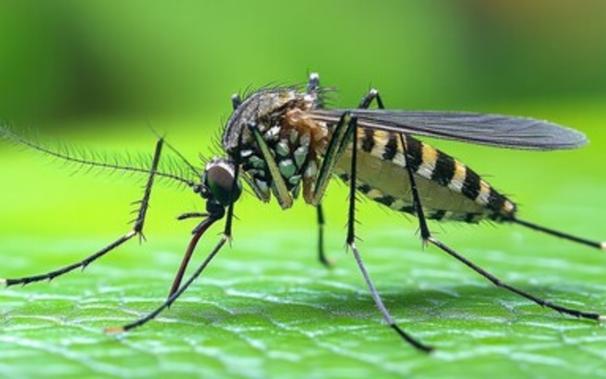
We investigated how urban vegetation and other environmental factors shape the presence and abundance of Aedes albopictus in Montpellier — the second greenest city in France. đŸ§Ș 🌐
🔗 https://doi.org/10.1371/journal.pone.0335793

#UrbanEcology #Mosquitoes #AedesAlbopictus #PublicHealth #UrbanGreening #Dengue #VectorBiology

'Comparison of the standard and boosted sterile insect techniques for the suppression of Aedes albopictus populations under semi-field conditions' - an article published in #ParasiteJournal by @EDPSciences on #ScienceOpen 📄🔓🔎 https://www.scienceopen.com/document?vid=ed3e2637-5671-4548-8091-01f5de76163e

#SterileInsectTechnique #AedesAlbopictus #VectorControl #PublicHealth

Comparison of the standard and boosted sterile insect techniques for the suppression of <i>Aedes albopictus</i> populations under semi-field conditions <span class="so-article-trans-title" dir="auto"> Translated title: Comparaison des techniques des insectes stĂ©riles standard et renforcĂ©e pour supprimer des populations d’ <i>Aedes albopictus</i> en conditions semi-naturelles </span>

<p xmlns:xsi="http://www.w3.org/2001/XMLSchema-instance" class="first" dir="auto" id="d8076361e269">Innovative control tools are needed against <i>Aedes</i> mosquitoes. The boosted sterile insect technique (bSIT) consists of treating sterile males with a biocide prior to their release to contaminate larval habitats. We compared the efficacy of SIT and boosted SIT to prevent the emergence of adult <i>Aedes albopictus</i> in large cages. We tested two sterile-to-fertile male ratios: 5:1 (SIT5) and 1:1 (SIT1), with and without pyriproxyfen enhancement (bSIT or SIT). The eggs were collected in ovitraps and the immature stages were monitored until adult emergence or up to 15 days after hatching to estimate the relative risk ( <i>RR</i>) of adult emergence compared to the control category. The concentration of pyriproxyfen in the ovitrap water did not change when sterile males were released with females or alone ( <i>χ</i> <sup>2</sup> = 0.99, <i>df</i> = 1, <i>p</i> = 0.547). This concentration was higher when the sterile-to-fertile male ratio was increased from 1:1 to 5:1: <i>χ</i> <sup>2</sup> = 18.8, <i>df</i> = 1, <i>p</i> = 0.006. All four treatment categories were effective in suppressing mosquito populations. With a relative risk <i>RR</i> = 0.194 95% CI [0.128; 0.275], SIT5 was the most effective. Boosted SIT was not as effective as SIT. However, bSIT1 ( <i>RR</i> = 0.418 [0.351; 0.492]) and bSIT5 ( <i>RR</i> = 0.512 [0.431; 0.596]) were equally effective. Boosted males directly vectored pyriproxyfen to breeding sites. Boosted SIT was more effective than SIT alone with a low sterile-to-fertile male ratio. Under operational conditions, it could be initially deployed to suppress the target population and then switched to standard SIT. </p><p xmlns:xsi="http://www.w3.org/2001/XMLSchema-instance" class="first" dir="auto" id="d8076361e314">Des outils innovants sont nĂ©cessaires pour lutter contre les moustiques <i>Aedes</i>. La technique de l’insecte stĂ©rile renforcĂ©e (TIS-R) consiste Ă  traiter les mĂąles stĂ©riles avec un biocide avant leur lĂącher afin de contaminer les gĂźtes larvaires. Nous avons comparĂ© l’efficacitĂ© de la TIS et de la TIS-R pour prĂ©venir l’émergence d’ <i>Aedes albopictus</i> adultes dans de grandes cages. Nous avons utilisĂ© deux ratios entre mĂąles stĂ©riles et fertiles : 5:1 (TIS5) ou 1:1 (TIS1), traitĂ©s ou non par du pyriproxyfĂšne (TIS-R5 et TIS-R1). Les Ɠufs ont Ă©tĂ© collectĂ©s dans des piĂšges Ă  oviposition et les stades immatures ont Ă©tĂ© surveillĂ©s jusqu’à l’émergence des adultes ou jusqu’à 15 jours aprĂšs l’éclosion afin d’estimer le risque relatif ( <i>RR</i>) d’émergence des adultes par rapport Ă  la catĂ©gorie tĂ©moin. La concentration de pyriproxyfĂšne dans l’eau des piĂšges Ă  oviposition n’a pas changĂ© lorsque les mĂąles stĂ©riles Ă©taient lĂąchĂ©s avec les femelles, ou seuls ( <i>χ</i> <sup>2</sup> = 0,99, <i>df</i> = 1, <i>p</i> = 0,547). Cette concentration Ă©tait plus Ă©levĂ©e lorsque le rapport entre mĂąles stĂ©riles et fertiles passait de 1 Ă  5 : <i>χ</i> <sup>2</sup> = 18.8, <i>df</i> = 1, <i>p</i> = 0,006. Les quatre traitements ont permis de supprimer les populations de moustiques. La TIS-R5 s'est avĂ©rĂ©e la plus efficace : <i>RR</i> = 0,194 [0,128; 0,275]. La TIS-R n’était pas aussi efficace que la TIS. Cependant, la TIS-R1 ( <i>RR</i> = 0,418 [0,351; 0,492]) et la TIS-R5 ( <i>RR</i> = 0,512 [0,431; 0,596]) Ă©taient d’efficacitĂ© similaire. Les mĂąles traitĂ©s ont directement transmis le pyriproxyfĂšne aux gĂźtes larvaires. La TIS renforcĂ©e s’est avĂ©rĂ©e plus efficace que la TIS standard avec un ratio entre mĂąles stĂ©riles et fertiles peu Ă©levĂ©. En conditions opĂ©rationnelles, elle pourrait ĂȘtre utilisĂ©e en dĂ©but de lutte pour supprimer la population cible, puis remplacĂ©e par la TIS standard. </p>

ScienceOpen

#Chikungunya : forte hausse des cas autochtones en métropole, #SantépubliqueFrance appelle à la vigilance face aux moustiques tigres
L’implantation du #moustiquetigre
dans 81 dĂ©partements mĂ©tropolitains inquiĂšte les autoritĂ©s, qui redoutent une propagation accrue du chikungunya et d’autres maladies vectorielles cet automne.

#LeMonde #Aedesalbopictus #biogeographie
#geomedizin #geomedicine #publichealth #geographischeMedizin #SantePublique

https://www.lemonde.fr/planete/article/2025/09/17/chikungunya-forte-hausse-des-cas-autochtones-en-metropole-sante-publique-france-appelle-a-la-vigilance-face-aux-moustiques-tigres_6641594_3244.html

Chikungunya : forte hausse des cas autochtones en mĂ©tropole, SantĂ© publique France appelle Ă  la vigilance face aux moustiques tigres

L’implantation du moustique tigre dans 81 dĂ©partements mĂ©tropolitains inquiĂšte les autoritĂ©s, qui redoutent une propagation accrue du chikungunya et d’autres maladies vectorielles cet automne.

Le Monde

#Chikungunya : des foyers plus nombreux et de plus en plus importants en France métropolitaine
EpidĂ©mie Ă  La RĂ©union, fortes chaleurs, expansion du #moustiquetigre vers le nord : l’étĂ© 2025 offre des conditions exceptionnelles Ă  la transmission du virus tropical. #LeMonde #Aedesalbopictus #biogeographie
#geomedizin #geomedicine #publichealth #geographischeMedizin #SantePublique #DelphineRoucaute

@geography

https://www.lemonde.fr/planete/article/2025/09/10/une-annee-record-pour-le-chikungunya-en-france-metropolitaine_6640318_3244.html

Chikungunya : des foyers plus nombreux et de plus en plus importants en France mĂ©tropolitaine

EpidĂ©mie Ă  La RĂ©union, fortes chaleurs, expansion du moustique-tigre vers le nord : l’étĂ© 2025 offre des conditions exceptionnelles Ă  la transmission du virus tropical.

Le Monde

DeuxiÚme opération de démoustication - Mairie du 11Úme

https://mairie11.paris.fr/pages/une-operation-menee-de-demoustication-menee-par-l-ars-dans-le-11e-32314

À la suite de la premiĂšre opĂ©ration de #dĂ©moustication dans la nuit du 10 au 11 septembre, et conformĂ©ment Ă  son protocole relatif Ă  la prĂ©sence d’un cas autochtone [ de #chikungunya ], l’Agence RĂ©gionale de SantĂ© organise une deuxiĂšme opĂ©ration sur le mĂȘme secteur, dans la nuit du mercredi 17 au jeudi 18 septembre, entre 2h et 5h du matin.

Interdiction de sortie ou d’ouvrir ses fenĂȘtres dans ce laps de temps, ainsi qu'une heure aprĂšs l'opĂ©ration.

#AgenceRégionaledeSanté #ARS #Paris11Úme #Paris20Úme #PÚreLachaise #MoustiqueTigre #AedesAlbopictus #moustique #insecticide #pyréthrinoïde #antipoison #AlerteSanté #OLC8FW4V9

Une deuxiĂšme opĂ©ration de dĂ©moustication menĂ©e par l'ARS dans le mĂȘme secteur du 11e !

La présence du moustique tigre a été signalée dans un quartier du 11e. Parce que ce dernier est vecteur de maladies telles que la dengue ou le chikungunya, il est primordial de procéder à une seconde opération de démoustication.

Oltre 7.000 Contagiati dal Virus Chikungunya, Trasmesso dalle Zanzare. Allarme in Cina, una nuova ondata epidemica sta mettendo in allerta le autoritĂ  sanitarie cinesi. Nella provincia meridionale del Guangdong, un'aggressiva epidemia di Chikungunya, una malattia virale trasmessa dalle zanzare, ha giĂ  fatto registrare oltre 7.000 casi, riportando alla mente le drastiche misure...

#Aedesaegypti #Aedesalbopictus #chikungunya #Covid19 #epidemia #Guangdong #zanzaratigre

https://scienzamagia.eu/sociale-collettivita/oltre-7-000-contagiati-dal-virus-chikungunya-trasmesso-dalle-zanzare/

Source: Viruses, https://www.mdpi.com/1999-4915/16/10/1606

Abstract
Usutu virus (USUV) is an emerging mosquito-transmitted flavivirus with increasing incidence of human infection and geographic expansion, thus posing a potential threat to public health. In this study, we established a comprehensive spatiotemporal database encompassing USUV infections in vectors, animals, and humans worldwide by an extensive literature search. Based on this database, we characterized the geographic distribution and epidemiological features of USUV infections. By employing boosted regression tree (BRT) models, we projected the distributions of three main vectors (Culex pipiens, Aedes albopictus, and Culiseta longiareolata) and three main hosts (Turdus merula, Passer domesticus, and Ardea cinerea) to obtain the mosquito index and bird index. These indices were further incorporated as predictors into the USUV infection models. Through an ensemble learning model, we achieved a decent model performance, with an area under the curve (AUC) of 0.992. The mosquito index contributed significantly, with relative contributions estimated at 25.51%. Our estimations revealed a potential exposure area for USUV spanning 1.80 million km2 globally with approximately 1.04 billion people at risk. This can guide future surveillance efforts for USUV infections, especially for countries located within high-risk areas and those that have not yet conducted surveillance activities.

____

https://etidioh.wordpress.com/2024/10/12/epidemiology-and-ecology-of-usutu-virus-infection-and-its-global-risk-distribution/

#abstract #AEDESALBOPICTUS #ARBOVIRUS #culexPipiens #FLAVIVIRUS #mosquitoes #research #USUTUVIRUS

Epidemiology and Ecology of Usutu Virus Infection and Its Global Risk Distribution

Usutu virus (USUV) is an emerging mosquito-transmitted flavivirus with increasing incidence of human infection and geographic expansion, thus posing a potential threat to public health. In this study, we established a comprehensive spatiotemporal database encompassing USUV infections in vectors, animals, and humans worldwide by an extensive literature search. Based on this database, we characterized the geographic distribution and epidemiological features of USUV infections. By employing boosted regression tree (BRT) models, we projected the distributions of three main vectors (Culex pipiens, Aedes albopictus, and Culiseta longiareolata) and three main hosts (Turdus merula, Passer domesticus, and Ardea cinerea) to obtain the mosquito index and bird index. These indices were further incorporated as predictors into the USUV infection models. Through an ensemble learning model, we achieved a decent model performance, with an area under the curve (AUC) of 0.992. The mosquito index contributed significantly, with relative contributions estimated at 25.51%. Our estimations revealed a potential exposure area for USUV spanning 1.80 million km2 globally with approximately 1.04 billion people at risk. This can guide future surveillance efforts for USUV infections, especially for countries located within high-risk areas and those that have not yet conducted surveillance activities.

MDPI
Control de enfermedades transmitidas por mosquitos Aedes en America Latina y Caribe: retos y lecciones aprendidas https://higieneambiental.com/mosquitos-aedes-america-latina #aedesalbopictus #controldeplagas #desinsectaciĂłn #aedesaegypti #mosquitos #dengue
Control de enfermedades transmitidas por mosquitos Aedes en America Latina y Caribe: retos y lecciones aprendidas | Higiene Ambiental


"Ausbreitung der TigermĂŒcke soll verhindert werden"
https://ooe.orf.at/stories/3233128/

"Das Land [Oberösterreich will] verhindern, dass die Larven hier ĂŒberwintern können. Denn die Eier ĂŒberstehen auch frostige Temperaturen – sie kleben an Gartenmöbeln, Blumentopfuntersetzern, VogeltrĂ€nken und Gießkannen – ĂŒberall dort wo sich einmal Wasser gesammelt hat. Die Eier ĂŒberleben auch dann, wenn das BehĂ€ltnis lĂ€ngst ausgetrocknet ist. Die LandessanitĂ€tsdirektion bittet daher GĂ€rten und Balkone vor dem Winter gelsenfeindlich zu machen und sĂ€mtliche BehĂ€lter zu reinigen."

Das wird sicher ein großer Erfolg. đŸ€Š

Wir sollten uns lieber informieren, wie das dort, wo Dengue&Co schon lĂ€nger "normal" sind, gemacht wird. Dann können wir rechtzeitig gegen die Maßnahmen demonstrieren, Ă€h, oder so.

Im Ernst, ich war vor einer Ewigkeit in Singapur, und sehr beeindruckt von den dortigen Anti-Dengue-Maßnahmen.

#osterreich #oberosterreich #tigermĂŒcke #tigergelse #AedesAlbopictus #blumentopf #gelsenfeindlich #gartenmöbel #dengue

Tiere und Umwelt: Ausbreitung der TigermĂŒcke soll verhindert werden

In der kalten Jahreszeit denken wir eher selten daran: Gelsen. Beim Land allerdings laufen derzeit BemĂŒhungen, das Ausbreiten neuer, gefĂ€hrlicher Gelsenarten zu verhindern – indem ihnen das Überwintern unmöglich gemacht wird. Jede und jeder kann dabei auch helfen.

ORF.at