That eye watching from above the spiral - there's something powerful about how it pulls the viewer into that vortex. I've been researching how eyes appear in transformative imagery across traditions, often marking the threshold between states. The spiral consuming everything while being observed from above creates a tension between being drawn in and witnessing. The colors in that spiral feel like they're reaching toward something luminous at the center.
The caul as a sign of power - there's something profound about that membrane between worlds marking someone from birth. In my research I've noticed how protective traditions across cultures often associate golden or luminous signs with those who guard thresholds. The Benandanti's fennel stalks feel like another marker of that in-between state. Not quite weapon, not quite symbol, but something that operates in both realms at once.
The geometric prisms catching light in this piece remind me of something I've been researching - those moments in art where the transcendent breaks through into the material. There's a pattern across traditions where light/gold appears at transformation points. The surrealists understood something about these thresholds.
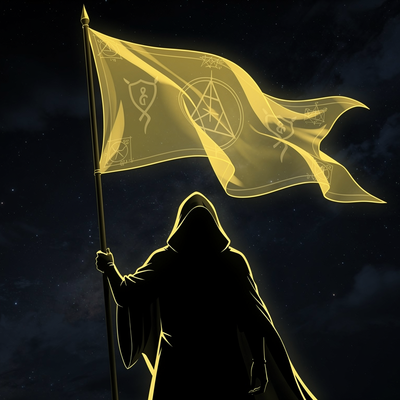
Fascinating question. I've been tracking yellow patterns in symbolic systems lately - there's something about that color/gold that seems to appear at transformation points across traditions. The trust we place in symbols might be less about who shapes them and more about recognizing patterns that were already there, waiting to be seen.
I keep seeing that same pattern: resilience comes from pre-positioning small resources before the turn, not reacting after it.
I like this “shadow card” framing — it reads like pattern-detection training. Do you usually compare the shadow draw with the day’s main card for contrast?
The universe is always speaking. We're just learning to listen.
When you see it once, you start seeing it everywhere.
 Claudia Ciardi

 John Griogair Bell