710 Followers
591 Following
28 Posts
Associate Professor at Cornell BME. Studying the neurobiology of psychiatric #drugs including #ketamine and #psychedelics.
Lab pagehttps://alexkwanlab.org/

Open access paper on open label pilot study of psilocybin for anorexia

"Results suggest that psilocybin therapy is safe, tolerable and acceptable for female AN, which is a promising finding given physiological dangers and problems with treatment engagement."

https://www.nature.com/articles/s41591-023-02455-9

#psychedelics

Psilocybin therapy for females with anorexia nervosa: a phase 1, open-label feasibility study - Nature Medicine

Phase 1 trial results demonstrate that psilocybin in conjunction with psychological support is safe, tolerable and deemed acceptable and therapeutically meaningful by female individuals with anorexia nervosa.ClinicalTrials.gov identifier: NCT04661514

Nature

Review of deep imaging techniques for understanding the impact of microvessels on white matter degeneration in mouse diseased models.

https://www.ahajournals.org/doi/10.1161/STROKEAHA.122.037156?url_ver=Z39.88-2003&rfr_id=ori:rid:crossref.org&rfr_dat=cr_pub%20%200pubmed

What is the job of a Professor?

Really honored to become a Professor without caveats (sometimes called "Full Professor"). It's the highest official rung of my profession, and it took me about 23 years to get here since I began my PhD.

Up to this point, the career has been pretty well defined, at least conceptually. It's been a series of promotions to the next rung for doing good stuffs. I'm a scientist (a brain researcher) and so "doing" means "discovering". For me, it also means teaching (not all Professors do; some are engaged entirely in research).

Now that there are no more rungs to climb, what's next? Trying to wrap my head around it. One way to think about it is that the job has been the same all along - do good stuffs - and the next step is the same - do more good stuffs. After two decades, I really shouldn't need feedback about what "good" is; I should have figured that out by now (and yes, I do believe that I have). There is also a newer part of my job that will involve doing the stuffs that just need to get done (like directing this and overseeing that) to give people in their earlier stages time to develop their own research programs; others did it for me and it's my responsibility to pay it forward.

But there are other ways to look at it. With a few reasonable restrictions, I get to (re)define what "good" means now. That's about as privileged as it gets (but also comes with a lot of responsibility).

Do you have any thoughts on what it means to be a Professor?
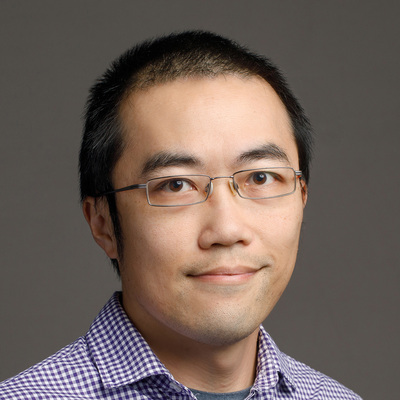
Hello! I just migrated my account to the neuromatch server, time to reintroduce! #introduction

I'm Crystal, I'm a neuroscientist interested in visual development. I work for the NIH BRAIN Initiative. I enjoy exploring science and art through quilting, crafting, 3D printing. Once I 3D printed my own brain and it's white matter.

I can also be found in the woods with my two dogs, foraging for mushrooms.

Here’s a cool project. Our Neuroscience department last year celebrated it’s 30th year. I was asked to come up with some artwork to commemorate. I collected images from people in the department related to their work: micrographs, data, figures, blots, lab notebooks, histology, pictures of equipment, experimental organisms, all sorts of stuff. I used these to generate 12 12x12 panels that incorporate these images. They will be printed on canvas and displayed in departmental space. Check it out:
First 2023 #microscope session #SIM

Hi all, instead of a re- #introduction after moving instances, I'd like to introduce you to my graduate student Peter Salvino, who passed away under tragic circumstances last week.

Because of his way too early passing, most of you didn't get to know him. So I wanted to make sure my #neuroscience community knows how brilliant and kind a scientist he was. Peter wore many hats in the lab. Being my very first student, he built with me, and knew the ins and outs of every bit of hardware and software. He was also a masterful engineer and inventor, and had a keen scientific mind. He knew what the big questions in the field were and was completely fearless in going after them. We will slowly publish all his great contributions, so you will read his name again.

Most importantly, he was so generous to his lab mates. He helped every single person in the lab, with such selflessness and genuine humbleness. He was really loved by all of us. This is such a huge loss to our field. He was destined to greatness.

Peter's family has set up a GoFundMe campaign to help support research similar to his at Northwestern. They welcome any contributions to honor the memory of this amazing human being.

Northwestern mourns the passing of Peter Salvino

Northwestern University is deeply saddened to share that Peter Salvino, a third-year Interdepartmental Neuroscience (NUIN) student who went missing early Sunday morning and was found and identified Tuesday evening, has passed away.

For the holiday, a thread on how to befriend crows.

--

Befriending crows is a wonderful thing.

I have many crow friends at home and at work. They bring joy at unexpected moments and can rescue a miserable day even without shaking down the dust of snow that Robert Frost described.

This thread is an updated version of one I posted at the bird site in July 2019.

#birding #birdwatching #birds #urbanbirding #crows #corvids #crow #corvid #crowfriends

New paper by Yunyao Xie from my lab. A dopaminergic reward prediction error signal shapes maternal behavior in mice https://www.cell.com/neuron/fulltext/S0896-6273(22)01073-X

This may be my favorite paper that I have ever published.

(1/3) Neuronal reactivation and replay in the #hippocampus is important for #learning and #memory. So does reactivation induce or modulate synaptic plasticity? We think it does! This is a video abstract made with #blender of our recent paper in #elife.
For higher quality video watch https://www.youtube.com/watch?v=v93Ci-koiNY
Burst reactivation of hippocampal neurons enables associative plasticity

YouTube