
Per Pippin Aspaas

@AspaasPer
72 Followers
64 Following
34 Posts
PhD, Open Science advocate. History of Science; Eighteenth-Century Studies; Neo-Latin. Head of Library Research and Publishing Support, UiT in Tromsø. Moving from Twitter to open-source based Mastodon on 4 Dec 2023.
Professional webpagehttps://uit.no/ansatte/per.pippin.aspaas
Languages (everyday use)nor, lat, eng, fre, ger, swe, dan

#Elsevier finally (after 25 years) retracted the primary study concluding that #glyphosate is safe for humans. Glyphosate is the active ingredient in the #Roundup herbicide, manufactured by #Monsanto.
https://www.sciencedirect.com/science/article/pii/S0273230099913715

h/t @civodul.
https://fediscience.org/@civodul@toot.aquilenet.fr/115661046263238211

Among the grounds for the retraction:
* "The article's conclusions…are solely based on unpublished studies from Monsanto."
* "Employees of Monsanto may have contributed to the writing of the article without proper acknowledgment as co-authors."
* "The authors may have received [undisclosed] financial compensation from Monsanto for their work on this article."

Remember that in 2020, the #Trump #EPA "relied almost entirely on #Monsanto studies" to conclude that Roundup was safe.
https://x.com/petersuber/status/1224039859272212480

In 2016, Monsanto made a show of sharing its research on glyphosate with the public. But instead of making it #OpenAccess, it put print copies in a room in Brussels, required registration to use the room, and then closed the room after two months.
https://web.archive.org/web/20190119214350/https://plus.google.com/+PeterSuber/posts/ioy1fVqaLy1

Two questions for follow up studies:
1. Why did Elsevier's 𝘙𝘦𝘨𝘶𝘭𝘢𝘵𝘰𝘳𝘺 𝘛𝘰𝘹𝘪𝘤𝘰𝘭𝘰𝘨𝘺 𝘢𝘯𝘥 𝘗𝘩𝘢𝘳𝘮𝘢𝘤𝘰𝘭𝘰𝘨𝘺 need 25 years to retract this piece of Monsanto advertising?
2. What harm did the article cause during the last 25 years?

#Retractions

@kalisz79

https://x.com/RnaudBertrand/status/1991352574390227129

"In a normal world, this should be an immense scandal in Europe.

Le Monde has a long article (https://lemonde.fr/international/article/2025/11/19/nicolas-guillou-juge-francais-de-la-cpi-sanctionne-par-les-etats-unis-face-aux-attaques-les-magistrats-de-la-cour-tiendront_6654016_3210.html) describing the hellish life of Nicolas Guillou, a French judge at the ICC in The Hague, due to U.S. sanctions punishing him for authorizing arrest warrants against Netanyahu and Gallant for war crimes in Gaza.

Guillou's daily existence has been transformed into a Kafkaesque nightmare. He cannot: open or maintain accounts with Google, Amazon, Apple, or any US company; make hotel reservations (Expedia canceled his booking in France hours after he made it); conduct online commerce, since he can't know if the packaging is American; use any major credit card (Visa, Mastercard, Amex are all American); access normal banking services, even with non-American banks, as banks worldwide close sanctioned accounts; conduct virtually any financial transaction.

He describes it as being "economically banned across most of the planet," including in his own country, France, and where he works, the Netherlands.

That's the real shocking aspect of this: the Americans are:
- punishing a European citizen
- for doing his job in Europe
- applying laws Europe officially supports
- at an institution based in Europe
- that Europe helped create and fund

and Europe is not only doing essentially nothing to protect him, they're actively enforcing America's sanctions against their own citizen - European banks closing his accounts, European companies refusing him service, European institutions standing by while Washington destroys a European judge's life on European soil.

Again, in a normal world, European leaders and citizens should be absolutely outraged about this. But we've so normalized the hollowing out of European sovereignty that the sight of a European citizen being economically executed on European soil for upholding European law is treated, at best, as an unfortunate technical complication in transatlantic relations."

Thank you, @flavoursofopen ,
for sharing your thoughts on different meanings of Community- / Academic- / Scholar-led publishing in English and German contexts. I will certainly bear this in mind this when trying to translate activities taking place in various linguistic and institutional contexts into my native Norwegian context.

https://hcommons.social/@flavoursofopen/115582197577791794

Toby Steiner (@[email protected])

Attached: 1 image A really interesting presentation by @[email protected] at #Munin2025 just now, with a lovely shoutout to German colleague Marcel Wrzesinski, who has edited a collection of topical guidance around academic-led publishing

hcommons.social
Frisch gebloggt: Was heißt eigentlich „nachhaltig“ im Forschungsdatenmanagement?
In einem intensiven Workshop & vielen Diskussionen haben wir in der AG Greening DH Empfehlungen erarbeitet. Ein Anfang ist gemacht und jetzt seid Ihr dran.
Feedback willkommen!
🔗https://dhdhi.hypotheses.org/11573
#GreeningDH #OpenScience #Forschungsdaten #datamanagement
FAIR und grün: Empfehlungen für einen ressourcenschonenden Umgang mit Forschungsdaten

Wie lässt sich der Umgang mit Forschungsdaten ökologisch nachhaltiger gestalten – ohne die FAIR- und CARE-Prinzipien aus dem Blick zu verlieren? In einem Workshop und einer offenen Arbeitsphase haben wir Empfehlungen entwickelt, die zeigen, wie sich Ressourcenschonung konkret in Datenmanagementplänen umsetzen lässt.

Digital Humanities am DHIP

Today, the editors of Mathematical Logic Quarterly collectively resigned. They have founded a new #DiamondOpenAccess journal, the (English-language) ZML: Zeitschrift für Mathematische Logik und Grundlagen der Mathematik

#OpenAccess #EditorsWalkOut

https://blog.tib.eu/2025/04/07/mlq-walk-out/

Further resignation of an editorial board: Mathematical Logic Quarterly - TIB-Blog

There has been an increasing number of resignations by editors of scholarly journals in recent years. In many cases, the editors have criticised the publisher’s excessive influence, especially when the publisher’s presumed goals clash with those of the editors. Today, almost the entire editorial board of yet another journal, MLQ: Mathematical Logic Quarterly, has announced […]

TIB-Blog

Et universitet i Frankrike viser vei. Penger de tidligere betalte til storforlaget Wiley, brukes nå på ulike tiltak for å styrke åpen vitenskap, deriblant støtte til tidsskrifter som utgis med Diamant åpen tilgang. Noe å tenke på, også i Norge?

https://www.khrono.no/hva-skal-vi-bruke-wiley-pengene-til/958340

Hva skal vi bruke Wiley-pengene til?

At Sikt-forhandlingene med forlagsgiganten Wiley strandet, fører til mange, mange millioner i reduserte kostnader. Hva skal de innsparte millionene brukes til? Finnes det modeller vi kan lære av? Det gjør det.

Khrono.no

📢 Schweizer Hochschulen setzen Deal mit Wiley aus

Ohne Einigung endeten die Verhandlungen zwischen swissuniversities & #Wiley. Folge: Kein Open-Access-Publizieren & eingeschränkter Zugang zu neuen Artikeln. Grund sind laut swissuniversities zu hohe Preise pro Artikel. Forschende an Schweizer Hochschulen sollen Alternativen zu Wiley wählen & auf Green Open Access setzen.
🗞️ Mehr Infos in unserer News: https://open-access.network/services/news/artikel/kein-deal-mit-wiley

#OpenAccess #Wissenschaft #GreenOA #Schweiz

Kein Deal mit Wiley

Schweizer Hochschulen setzen Verhandlungen aus

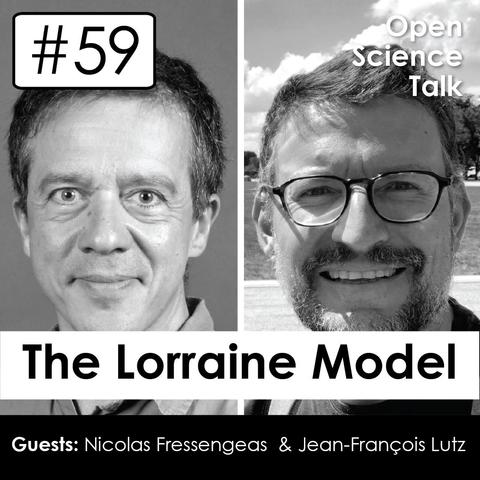
!!! From "Big Deals" to #OpenScience !!!

The Université de Lorraine cancelled Springer (2017) & Wiley (2023) – and reinvests the savings in Open Science.

€500,000 is spent annually on infrastructures, support services and scholar-led Diamond OA – guided by a broad, representative committee.

🎧 Hear more in this #podcast with @fresseng and https://mastodon.social/@jflutz

#scholarled #DiamondOA #UniLorraine #AcademicPublishing #OpenAccess #scholcomm

https://doi.org/10.7557/19.8074

The Lorraine Model | Open Science Talk

My latest publication, on the benefits of #openscience to researchers in the #humanities

(Ironically, I submitted this to a journal that is not #openaccess by default. LOGOS, the journal of the world publishing community does, however, authorize authors to share their papers immediately in #greenopenaccess via their institutional repository, which I did.)

https://hdl.handle.net/10037/36285

Munin: Two Highly Unexpected Emails and a Tap on the Shoulder: A personal account of the benefits of open access in the humanities

R.I.P. THOMAS HYLLAND ERIKSEN (1962–2024)

I recommend this podcast interview, recorded in Budapest on 27 April 2019.

At breathtaking speed, the late anthropologist shares his inspiring perspectives on everything from social theory to gardening, predicting who the next Norwegian prime minister will be and giving his Hungarian interlocutor a lesson in Hungarian history along the way.

"It's diversity that makes us human and it's important to build bridges"

https://music.amazon.co.uk/podcasts/e314e8f9-16bc-443a-8e64-5c50f67fa689/episodes/621260e1-7116-4807-937f-23959ee9f5cd/the-nordic-podcast-%C3%A9szak-podcast-005-%E2%80%93-thomas-hylland-eriksen

Amazon Music Library