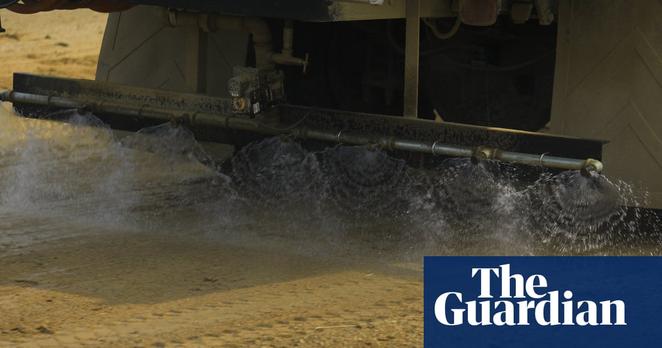
#Elsevier finally (after 25 years) retracted the primary study concluding that #glyphosate is safe for humans. Glyphosate is the active ingredient in the #Roundup herbicide, manufactured by #Monsanto.
https://www.sciencedirect.com/science/article/pii/S0273230099913715

h/t @civodul.
https://fediscience.org/@civodul@toot.aquilenet.fr/115661046263238211

Among the grounds for the retraction:
* "The article's conclusions…are solely based on unpublished studies from Monsanto."
* "Employees of Monsanto may have contributed to the writing of the article without proper acknowledgment as co-authors."
* "The authors may have received [undisclosed] financial compensation from Monsanto for their work on this article."

Remember that in 2020, the #Trump #EPA "relied almost entirely on #Monsanto studies" to conclude that Roundup was safe.
https://x.com/petersuber/status/1224039859272212480

In 2016, Monsanto made a show of sharing its research on glyphosate with the public. But instead of making it #OpenAccess, it put print copies in a room in Brussels, required registration to use the room, and then closed the room after two months.
https://web.archive.org/web/20190119214350/https://plus.google.com/+PeterSuber/posts/ioy1fVqaLy1

Two questions for follow up studies:
1. Why did Elsevier's 𝘙𝘦𝘨𝘶𝘭𝘢𝘵𝘰𝘳𝘺 𝘛𝘰𝘹𝘪𝘤𝘰𝘭𝘰𝘨𝘺 𝘢𝘯𝘥 𝘗𝘩𝘢𝘳𝘮𝘢𝘤𝘰𝘭𝘰𝘨𝘺 need 25 years to retract this piece of Monsanto advertising?
2. What harm did the article cause during the last 25 years?

#Retractions

Update. Watch this division within the #Trump admin:
https://www.nytimes.com/2026/01/02/climate/glyphosate-roundup-retracted-study.html

1. The Trump #EPA still considers #glyphosate to be safe for humans. "An EPA spokesman…said the agency was aware of the article’s #retraction [and] said the EPA’s assessment of glyphosate’s risks had not relied solely on the study."

2. But the Make America Healthy Again [#MAHA] movement led by #RFKJr wants to ban glyphosate. RFKJr "once served as co-counsel in a lawsuit against #Monsanto over exposure to #Roundup."

#Medicine #USPol #USPolitics

A Study Is Retracted, Renewing Concerns About the Weedkiller Roundup

Problems with a 25-year-old landmark paper on the safety of Roundup’s active ingredient, glyphosate, have led to calls for the E.P.A. to reassess the widely used chemical.

The New York Times

Update. #Trump decided to support #glyphosate and force #RFKJr (who built his career opposing it) to bow.
https://www.nytimes.com/2026/02/18/us/politics/trump-boost-weedkiller.html

PS: On the minus side, we'll have more glyphosate ruining our #health and poisoning our #environment. On the plus side, we'll have more #MAHA acolytes denouncing Trump and RFKJr. The Times article quotes a good number of them.

#Medicine #RepublicanSchism #USPol #USPolitics

Trump’s Order Aims to Boost Ingredient Used in Roundup

An executive order aimed at ramping up production of glyphosate set off alarms among supporters of Health Secretary Robert F. Kennedy Jr.

The New York Times
@petersuber #Trump is doing all the worse possible things in all fields... What about allowing thalidomide for pregnant women and Freon use?
@petersuber
Anytime anyone tries to claim that Roundup is safe, ask them to take a drink. See how fast they backtrack. Bayer and Monsanto both have historically lied about how their products work and what the "unintended consequences" of their use is.
@petersuber @civodul More on this story at https://www.theguardian.com/us-news/2025/dec/05/monsanto-roundup-safety-study-retracted and https://retractionwatch.com/2025/12/04/glyphosate-safety-article-retracted-elsevier-monsanto-ghostwriting/#more-133515. What I do not understand is why editors of the journal did not proactively start an investigation after the 2017 revelations about Monsanto's practices. What is also interesting is what was the publication culture at the authors' institutions that allowed accepting ghostwriting. Has that culture change since, or is this type of ghostwriting still accepted in some scientific circles?
Science journal retracts study on safety of Monsanto’s Roundup: ‘Serious ethical concerns’

Paper published in 2000 found glyphosate was not harmful, while internal emails later revealed company’s influence

The Guardian
@petersuber @civodul It is good though to read in our (independent) university magazine that the editor will now scrutinize all articles in the journal that have Monsanto involvement: https://dub.uu.nl/nl/nieuws/onderzoek-naar-glyfosaat-van-voormalig-uu-hoogleraar-teruggetrokken (sorry in Dutch). The university board points at codes of confuct that should be upheld.
Onderzoek naar glyfosaat van voormalig UU-hoogleraar teruggetrokken

Een invloedrijk onderzoek naar de kankerverwekkende effecten van glyfosaat van de inmiddels overleden UU-hoogleraar Robert Kroes is teruggetrokken. Uit e-mails bleek dat fabrikant Monsanto meeschreef aan het artikel en vrijwel zeker ook betaalde aan de hoogleraar. De conclusie van het onderzoek was dat glyfosaat niet kankerverwekkend zou zijn.

DUB
My mom got herself a bottle of herbicide "to make it easier on us to prune the front yard", unaware that what she bought was a bottle of glyphosate (which is still not banned in my country, although it absolutely should). After she read the instructions she was obviously appalled, and now we have no idea of how to dispose of the bottle safely without accidentally poisoning something.
@csolisr Check with a local pharmacy. While they probably can’t do anything for you directly, they often handle hazardous chemicals which need special disposal (expired drugs), so they should be able to point you in the right direction.