 mcc
mccReading via mastodon translate a thread by a French poster about recent actions by Macron and partway through got slapped in the face with the discovery that "I'll eat my hat" is an idiom in France as well as America ("Bon, je mange mon chapeau, et c'est pas très bon.")
Is this… how universal is this? Do they eat hats in Germany? Russia? What percentage of earth has a local-language idiom for eating hats?
Census from responses:
Eat hats: English, French, Norwegian, Swedish, Danish*, Icelandic, Hungarian, Finnish, Estonian*, Hebrew
Do not eat hats: German, Russian, Spanish, Italian, Polish, Yiddish, Mandarin Chinese
Contradictory data re: hat-eating: Dutch
* Hat may optionally be "old"
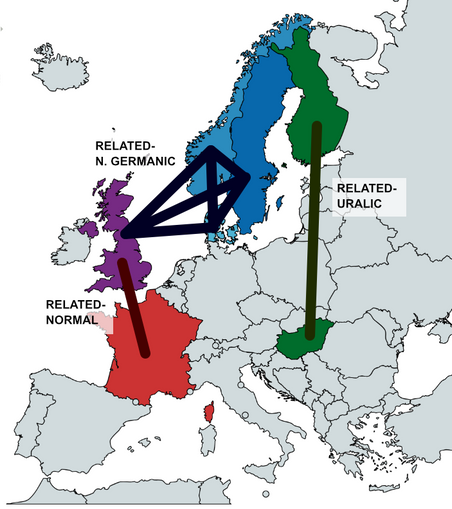
Provisional unified theory of hat-eating (highlighted countries eat hats to express an unlikely event has occured)
The major outstanding question here is whether they eat hats in Estonia*. Is this a universal feature of Uralic languages
* Update: YES
I was supposed to be doing my taxes this morning
It can be dangerous to draw inferences from raw decontextualized data but at this moment, with data from Norway now incorporated, it certainly seems plausible that Scandinavia was ground zero for hat-eating and the trend spread along language affinities from there
Now, you may ask: But then why did hat-eating not catch on among the West Germanic language group? One tentative explanation jumps immediately to mind
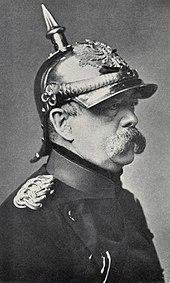
This is probably not how etymology actually works
A curveball to my theory! I've just been informed modern Hebrew has an "I will eat my hat" idiom. Now seeking data: Does Yiddish have a "I will eat my hat"?
 nev
nev e. hashman 🇵🇸
 Riley S. Faelan
@mcc Modern Hebrew has been built through a close contact of hundreds of various languages, each with idioms of their own, though, so one should be particularly cautious about placing it into any wider patterns.
@riley Well, I guess that's why I'm curious about Yiddish. If Yiddish *doesn't* have the "eat my hat" idiom, then due to the (in a certain sense) youth of colloquial Hebrew could we specifically identify a donor culture (England?) Hebrew picked it up from?
@mcc I don't think it can be done even like that. Yiddish is pretty much a Germanic language, just with archaic grammar — for having split quite early — and some Hebrew vocabulary remaining. It's not really a branch of Hebrew. Semitic languages' grammars have a fairly distinct pattern that just isn't there in Yiddish, except perhaps some phonotactics quirks.
And modern Hebrew was built by people from all around the world who, early on, spoke various other languages as their native languages, and may have experienced recent migration in their family histories as well. It picked up idioms from all around the world, and it's pretty much impossible to trace the paths of anything that is not particularly unique or didn't get spread by, say, some particularly popular newspaper.
On a completely unrelated note, when I look at your map, what I think of is fur hats. Most of the colourful countries are (or, well, used to be) routinely cold in the winter, and have had rich tradition of catching little furry animals and making their skins into hats. Hungary may be a geographic outlier, but it does have a history of fur hats well into the centuries when furry animals of the sorts liked by hatters became scarce in the more Western parts of Europe.
However, if this was the pattern, Northern Russia should be colourful.
@riley thank you for the insights
 PernilleMsarup
@mcc is there a reference to hat eating in the Old Testament? Because that might throw your model a bit sideways.
 Anke
Anke@mcc In Germany it's "Ich fresse einen Besen!", to "I eat a broom!"
(sidenote: "eat" has two translations, "essen" and "fressen", and "fressen" is mostly used for animals)
(sidenote: "eat" has two translations, "essen" and "fressen", and "fressen" is mostly used for animals)
 Bjørn Stærk
@mcc incidentally, with a different meaning, Norwegians also swallow camels. it means accepting a painful compromise in politics.
I mean, explain that, etymologists.
@bjoernstaerk @mcc we do that in DK too, probably a biblical reference
 Risa Spirelli
@mcc i *do* know the german sentence "dann ess ich meinen hut" but only from erika fuchs' translations of classic scrooge mc duck comics so this rather confirms the assumption it's not a typical german phrase
 Friedrich Delgado ✔️🎀
@mcc Germans eat brooms ("Ich fress einen Besen.).
From my childhood I remember a translated Donald Duck comic where either Donald or Scrooge (German name is Dagobert Duck) made a bet to actually eat their hat and since the strip actually featured an image of the character eating a hat the translator (Erika Fuchs) didn't have a choice in the matter. Otherwise I'm certain she would have picked the idiomatic german phrase.
 Rachel Greenham
@mcc um, we don't eat hats when angered, we eat hats when embarrassed by being proven confidently wrong about something. As in, "If Apple don't release the M4-series Mac Studios at WWDC today, I'll eat my hat…”
@StrangeNoises No no you are of course correct
 Gabriel N
@mcc I do wonder about what are those hats made off and the regional material variations, among other things.
 Cat 🐈🥗 (D.Burch)
 Lulu 🍉 לולו
@mcc the problem is that language use and countries or geographical territories do not match neatly.
 Nicole
@mcc I appreciate that French and English are related - normal
 HazelxDust
@mcc this kinda stuff tends to be areal, not genetic. The presence in Finnish and Hungarian makes me think the French is the original, but that's just a hunch.
EDIT: no, the Finnish is more likely from the Swedish. I'd still bet on the French being the original though.
 Jeff Robot 🤖
@mcc — Estonians do eat hats, but on a different occasion. Specifically when they believe that something’s impossible e.g., “I’ll eat my [old] hat if Estonians land on the dark side of the moon.” We’re one confident nation 😅
https://sõnaveeb.ee/search/unif/dlall/dsall/oma%20mütsi%20ära%20sööma/1
@boxyrobot ah, that's the same as the English expression— my "shame and anguish" comment was just me being cutesy.
The "old" is a bit of a surprise, not sure I've seen that in other variants of the espression
 Jeremy Bornstein
@mcc
i wonder if they eat the old hat because they still need the new hat, dammit.
i wonder if they eat the old hat because they still need the new hat, dammit.
 RinostarGames
@mcc What if you wear a green hat to signify your partner cheated on you? (Mandarin Chinese)
@mcc your map has "normal" instead of "Norman", which I at first did not question
 Ehproque has moved
@mcc Spaniards don't eat our hats, and I'm struggling to think of an equivalent saying.
@ehproque My knowledge of Spanish is limited but I don't think I've ever heard an analogous idiom from ES-419 either
 Simon Zerafa
All of those hat eating languages have an Old Norse ancestor 🙂
@simonzerafa The vikings did it!!!
 Emile Dingemans
@mcc It is a common expression in Dutch to eat your hat (or shoe) in case of an unlikely event. Apparently it spread from English to the Dutch language around 1954. Examples suggest it appeared through comics and by literally translated citations in Dutch newspapers. https://www.ensie.nl/woordenboek-van-populair-taalgebruik/als-dit-of-dat-gebeurt-eet-ik-mijn-hoed-op

@mcc You definitely eat your hat in Hebrew.
 uncannyvallie
@mcc In Germany, you may eat a broom instead
 наб
наб@mcc the polish also do not eat their hats (the expression is used, exquisitely rarely, but only as a calque from english)
 Lukas
Lukas@mcc in Germany we eat broom sticks for some reason 🤷♂️
 zhenech
@mcc no, we (Germans) eat brooms 🤷♀️
 "Mediocre Bunny" Evelyn
 Dag Ågren ↙︎↙︎↙︎
@mcc In Swedish, you definitely eat hats.
 Floating Point Error
@mcc certainly not in Russia. I can't even recall the Russian version for it 🤔
 Shar(yna)Tran/Shark(aeopteryx)
@Sharksonaplane @aartaka I mean maybe I am stereotyping here but I assumed it was just because Russian hats are so dense and furry. How could you possibly eat a Russian hat. American hats are much more tractable
@aartaka @mcc @Sharksonaplane But if you eat a Russian ushanka-style hat, you floss at the same time.
@Sharksonaplane @mcc as a paranoid Russian emigre... I'm in this picture and I don't like it 😅
Aw cmon, i clicked on that content warning fully expecting to see:
Do you know why, in Russia, we do not eat our hat? Because in Russia, hat eat *you*.
 Chip Collier
@mcc ... a tagent, but worth mentioning perhaps, Germans occasionally think they spider when not eating brooms.
Also, in the US as well as Germany you can feel touched, but in Germany its quite negative.
Also, in the US as well as Germany you can feel touched, but in Germany its quite negative.
 Nameless Blob
@mcc We do eat hats in Hungary as well. I think the idiom simply got translated and spread across some of the world.
 Howard Chu @ Symas
@namelessblob @mcc i'll make a wild-ass guess that this all traces back to North America due to French & English/American fur trappers wearing animal skin hats