 mcc
mccReading via mastodon translate a thread by a French poster about recent actions by Macron and partway through got slapped in the face with the discovery that "I'll eat my hat" is an idiom in France as well as America ("Bon, je mange mon chapeau, et c'est pas très bon.")
Is this… how universal is this? Do they eat hats in Germany? Russia? What percentage of earth has a local-language idiom for eating hats?
Census from responses:
Eat hats: English, French, Norwegian, Swedish, Danish*, Icelandic, Hungarian, Finnish, Estonian*, Hebrew
Do not eat hats: German, Russian, Spanish, Italian, Polish, Yiddish, Mandarin Chinese
Contradictory data re: hat-eating: Dutch
* Hat may optionally be "old"
Provisional unified theory of hat-eating (highlighted countries eat hats to express an unlikely event has occured)
The major outstanding question here is whether they eat hats in Estonia*. Is this a universal feature of Uralic languages
* Update: YES
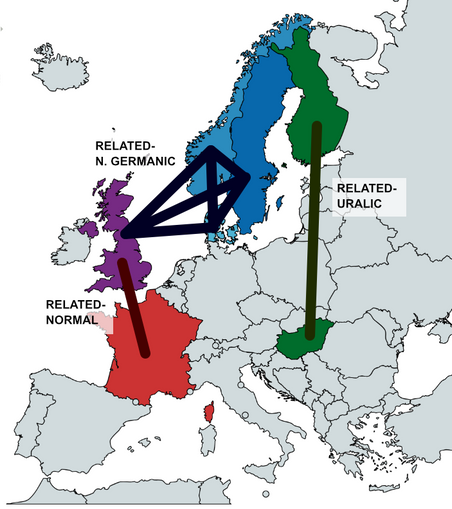
I was supposed to be doing my taxes this morning
It can be dangerous to draw inferences from raw decontextualized data but at this moment, with data from Norway now incorporated, it certainly seems plausible that Scandinavia was ground zero for hat-eating and the trend spread along language affinities from there
Now, you may ask: But then why did hat-eating not catch on among the West Germanic language group? One tentative explanation jumps immediately to mind
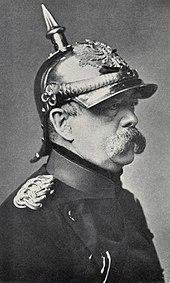
This is probably not how etymology actually works
A curveball to my theory! I've just been informed modern Hebrew has an "I will eat my hat" idiom. Now seeking data: Does Yiddish have a "I will eat my hat"?
 Riley S. Faelan
@mcc Modern Hebrew has been built through a close contact of hundreds of various languages, each with idioms of their own, though, so one should be particularly cautious about placing it into any wider patterns.
@riley Well, I guess that's why I'm curious about Yiddish. If Yiddish *doesn't* have the "eat my hat" idiom, then due to the (in a certain sense) youth of colloquial Hebrew could we specifically identify a donor culture (England?) Hebrew picked it up from?
@mcc I don't think it can be done even like that. Yiddish is pretty much a Germanic language, just with archaic grammar — for having split quite early — and some Hebrew vocabulary remaining. It's not really a branch of Hebrew. Semitic languages' grammars have a fairly distinct pattern that just isn't there in Yiddish, except perhaps some phonotactics quirks.
And modern Hebrew was built by people from all around the world who, early on, spoke various other languages as their native languages, and may have experienced recent migration in their family histories as well. It picked up idioms from all around the world, and it's pretty much impossible to trace the paths of anything that is not particularly unique or didn't get spread by, say, some particularly popular newspaper.
On a completely unrelated note, when I look at your map, what I think of is fur hats. Most of the colourful countries are (or, well, used to be) routinely cold in the winter, and have had rich tradition of catching little furry animals and making their skins into hats. Hungary may be a geographic outlier, but it does have a history of fur hats well into the centuries when furry animals of the sorts liked by hatters became scarce in the more Western parts of Europe.
However, if this was the pattern, Northern Russia should be colourful.