 Mikko Kolkkala
Niklas Wahlberg
@ UniTurku
#Phylogeny of Nymphalidae butterflies
#päiväntiedekuva #pinterest
http://pinterest.com/pin/503629170803815712/
Niklas Wahlberg
@ UniTurku
#Phylogeny of Nymphalidae butterflies
#päiväntiedekuva #pinterest
http://pinterest.com/pin/503629170803815712/
"You are here"
#TreeOfLife #eukaryote #phylogeny
Image credits: https://www.sciencenews.org/article/tree-life-gets-makeover#&gid=1&pid=1
Wow!
The (Simplified...) Cartoon Guide to Vertebrate Evolution
http://albertonykus.deviantart.com/art/The-Cartoon-Guide-to-Vertebrate-Evolution-551603446
(C) @albertonykus
I used to study these fascinating #ants.
#slavemakers #inquilines #SocialParasites #Formicoxenini (now #Crematogastrini) #phylogeny
A Guide to Rodent Phylogeny
https://albertonykus.deviantart.com/art/A-Guide-to-Rodent-Phylogeny-713227506
The complete phylogeny of #pangolins
https://academic.oup.com/jhered/advance-article-abstract/doi/10.1093/jhered/esx097/4622594
Ultraconserved elements (UCEs) resolve the phylogeny of Australasian smurf-weevils
Van Dam et al. 2017 http://journals.plos.org/plosone/article?id=10.1371%2Fjournal.pone.0188044

Weevils (Curculionoidea) comprise one of the most diverse groups of organisms on earth. There is hardly a vascular plant or plant part without its own species of weevil feeding on it and weevil species diversity is greater than the number of fishes, birds, reptiles, amphibians and mammals combined. Here, we employ ultraconserved elements (UCEs) designed for beetles and a novel partitioning strategy of loci to help resolve phylogenetic relationships within the radiation of Australasian smurf-weevils (Eupholini). Despite being emblematic of the New Guinea fauna, no previous phylogenetic studies have been conducted on the Eupholini. In addition to a comprehensive collection of fresh specimens, we supplement our taxon sampling with museum specimens, and this study is the first target enrichment phylogenomic dataset incorporating beetle specimens from museum collections. We use both concatenated and species tree analyses to examine the relationships and taxonomy of this group. For species tree analyses we present a novel partitioning strategy to better model the molecular evolutionary process in UCEs. We found that the current taxonomy is problematic, largely grouping species on the basis of similar color patterns. Finally, our results show that most loci required multiple partitions for nucleotide rate substitution, suggesting that single partitions may not be the optimal partitioning strategy to accommodate rate heterogeneity for UCE loci.
Mamba phylogeny & venomics
https://sciencedirect.com/science/article/pii/S1874391917303032
#Chalcidoid #wasps: unprecedented diversity of life histories, and #evolutionary success stories
https://sciencedirect.com/science/article/abs/pii/S1055790317303366
An #evolutionary tree of #dog breeds
http://sci-news.com/biology/evolution-dog-breeds-04823.html
@ scinewscom #phylogeny
Parker et al. 2017
The #phylogeny of #angiosperms
@ PlantGateway
http://plantgateway.com/poster/ Byng et al. 2018 (open access)

THE GLOBAL FLORA The phylogeny of angiosperms poster: a visual summary of APG IV family relationships and floral diversity James W. Byng, Erik F. Smets, Rogier van Vugt, Ehoarn Bidault, Christopher Davidson, Greg Kenicer, Mark W. Chase & Maarten J.M. … Read More
The great diversity of extant #beetles
https://www.nature.com/articles/s41467-017-02644-4
#phylogeny Zhang et al. 2018 (open access)

The phylogeny of beetles, which represent ~25% of known extant animal species, has been a challenge to resolve. Here, Zhang et al. infer a time-calibrated phylogeny for Coleoptera based on 95 protein-coding genes in 373 species and suggest an association between the hyperdiversification of beetles and the rise of angiosperms.
Molecular #phylogeny of #Formica #ants!
Parasitic colony founding is likely to be an intermediary step between free-living hosts and slave-maker parasites

This phylogenetic tree provides a solid backbone for future evolutionary studies in the Formica genus and slave-making behaviour.
Here's a more comprehensive phylogeny [by me]. Social parasite ants are so cool!
#SocialParasitism #workerless #inquiline #slavemaker #ants #phylogeny #EvolutionaryTree #TreeOfLife #Formicoxenus #Leptothorax #Harpagoxenus #Temnothorax
#Butterflies are merely a small, recently evolved line of day-flying #moths. Saying there are two categories of #Lepidoptera is like saying there are trees and there are maples.
https://www.amnh.org/explore/news-blogs/on-exhibit-posts/moths-photo-exhibition

By far the largest and oldest group in the order Lepidoptera, moths are usually overshadowed by their flashier cousins, the butterflies. But they are finally getting their due in Winged Tapestries: Moths at Large, a photo exhibition now open at the Museum.
Birds are dinosaurs, humans are monkeys, and mammals are fishes
#Phylogeny @ Biolojical
The deepest splits in the tree correspond very well with distribution patterns across #Gondwana-derived landmasses
#cichlids #phylogeny #vicariance
https://www.nature.com/articles/s41467-018-05479-9
Photo credits: Wolfgang Gessl

Lake Tanganyika’s cichlid radiation is the main source of East African cichlid diversity. Irisarri et al. resolve its phylogenetic backbone using anchored phylogenomics and identify trans-lineage hybridization prior to major speciation bursts and adaptive loci underlying ecological innovations.
"To explore the origins of the Lake #Malawi radiation in greater detail, we obtained 24 additional #Astatotilapia whole-genome sequences from outside Lake Malawi"
Malinsky et al. 2018 http://feeds.nature.com/~r/natecolevol/rss/current/~3/VMLQCBYIJGo/s41559-018-0717-x (OA)
Four hundred shades of brown
Relationships within satyrine butterflies have been notoriously difficult to resolve using both morphology and Sanger sequencing methods, and this is particularly true for the mainly Neotropical subtribe Euptychiina, which contains about 400 described species. Known larvae of Euptychiina feed on gra …
Researchers have learned where arrow worms wiggle on the Tree of Life
https://oist.jp/news-center/press-releases/bizarre-%E2%80%9Cbristle-jaw%E2%80%9D-creatures-finally-placed-tree-life Credit: Photo: Zatelmar (Wikimedia)
Finally: a *published* #phylogeny of the #ant genus #Temnothorax
@ mmprebus
https://ncbi.nlm.nih.gov/pubmed/29237395 (open access)
Temnothorax is corroborated as a natural group, and the notion that many of the historical subgeneric and species group concepts are artificial is reinforced. The strict form of Emery's Rule, in which a socially parasitic species is sister to its host species, is not well supported in Temnothorax.
Unfortunately, two very interesting social parasite species - workerless inquiline #Temnothorax #minutissimus and slavemaker T. #duloticus - seem to be missing from this study
https://ncbi.nlm.nih.gov/pmc/articles/PMC5729518/
#phylogeny #ants #parasitism #SocialParasitism #workerless #inquiline #slavemaker

Temnothorax (Formicidae: Myrmicinae) is a diverse genus of ants found in a broad spectrum of ecosystems across the northern hemisphere. These diminutive ants have long served as models for social insect behavior, leading to discoveries about social learning ...
T. duloticus might be even closer to T. curvispinosus than T. minutissimus, but I couldn't fully resolve that.
#Temnothorax #Cardiocondylini (#Formicoxenus group) #ants #phylogeny #socialparasitism
Birds are dinosaurs, whales are artiodactyls, butterflies are moths, and - a new one - horseshoe crabs are arachnids
https://academic.oup.com/sysbio/advance-article-abstract/doi/10.1093/sysbio/syz011/5319972
#Cetartiodactyla #phylogeny #genebank #mitochondrial #DNA
hhttps://www.sciencedirect.com/science/article/pii/S1055790318302720 ($)
I once came up with an idea of this mammalian #phylogeny game (note the mirror!), and designers at the science center #Heureka made it real just beautifully (note the mirror!)
"Zombie-Ant Fungi Emerged from Non-manipulating, Beetle-Infecting Ancestors"
Araújo & Hughes 2019 https://www.sciencedirect.com/science/article/pii/S0960982219311649 ($) #Ophiocordyceps #phylogeny
#Owlflies are derived #antlions
https://resjournals.onlinelibrary.wiley.com/doi/10.1111/syen.12334 (£)
Calibrating #cichlid #evolution
#phylogeny #biogeography #Gondwana #ContinentalDrift #vicariance / #MarineDispersal #FreshWaterFish #IslandHopping #MeltingPot #Tanganyika #Congo #Lamprologus
Schedel et al. 2019 https://bmcecolevol.biomedcentral.com/articles/10.1186/s12862-019-1417-0 #OpenAccess

Background Cichlids are a prime model system in evolutionary research and several of the most prominent examples of adaptive radiations are found in the East African Lakes Tanganyika, Malawi and Victoria, all part of the East African cichlid radiation (EAR). In the past, great effort has been invested in reconstructing the evolutionary and biogeographic history of cichlids (Teleostei: Cichlidae). In this study, we present new divergence age estimates for the major cichlid lineages with the main focus on the EAR based on a dataset encompassing representative taxa of almost all recognized cichlid tribes and ten mitochondrial protein genes. We have thoroughly re-evaluated both fossil and geological calibration points, and we included the recently described fossil †Tugenchromis pickfordi in the cichlid divergence age estimates. Results Our results estimate the origin of the EAR to Late Eocene/Early Oligocene (28.71 Ma; 95% HPD: 24.43–33.15 Ma). More importantly divergence ages of the most recent common ancestor (MRCA) of several Tanganyika cichlid tribes were estimated to be substantially older than the oldest estimated maximum age of the Lake Tanganyika: Trematocarini (16.13 Ma, 95% HPD: 11.89–20.46 Ma), Bathybatini (20.62 Ma, 95% HPD: 16.88–25.34 Ma), Lamprologini (15.27 Ma; 95% HPD: 12.23–18.49 Ma). The divergence age of the crown haplochromine H-lineage is estimated to 22.8 Ma (95% HPD: 14.40–26.32 Ma) and of the Lake Malawi radiation to 4.07 Ma (95% HDP: 2.93–5.26 Ma). In addition, we recovered a novel lineage within the Lamprologini tribe encompassing only Lamprologus of the lower and central Congo drainage with its divergence estimated to the Late Miocene or early Pliocene. Furthermore we recovered two novel mitochondrial haplotype lineages within the Haplochromini tribe: ‘Orthochromis’ indermauri and ‘Haplochormis’ vanheusdeni. Conclusions Divergence time estimates of the MRCA of several Tanganyika cichlid tribes predate the age of the extant Lake Tanganyika basin, and hence are in line with the recently formulated “Melting-Pot Tanganyika” hypothesis. The radiation of the ‘Lower Congo Lamprologus clade’ might be linked with the Pliocene origin of the modern lower Congo rapids as has been shown for other Lower Congo cichlid assemblages. Finally, the age of origin of the Lake Malawi cichlid flock agrees well with the oldest age estimate for lacustrine conditions in Lake Malawi.
Despite the genetic distance and reciprocal #monophyly, these candidate species are not acoustically or morphologically diagnosable from each other
#Adenomera #frogs #phylogeny Cassini et al. 2020 https://journals.plos.org/plosone/article?id=10.1371/journal.pone.0229324 (OA)

Taxonomists always have had intense discussions about how species should be delimited and recently many studies have used integrative approaches by combining molecular, morphological, and bioacoustic data. Although these studies are paramount for understanding species diversity, few of them actually formalize species delimitations to the final step of nomenclatural acts. Historically, the Neotropical frog genus Adenomera has been considered as a difficult taxonomic group because it comprises many morphologically similar species exhibiting high levels of intraspecific polymorphism. A recent work using molecular data shed light on the phylogenetic relationships within the genus and identified several lineages that may correspond to undescribed species but did not delimit species boundaries. In the Atlantic Forest, a clade formed by A. marmorata and two putative species (Adenomera sp. J and Adenomera sp. K) were identified. In this paper, we combine morphological, acoustic, and molecular data in order to evaluate species limits within this Atlantic Forest Adenomera clade. We provide a redescription of A. marmorata and restrict its type locality to the Tijuca Massif, in the Municipality of Rio de Janeiro, Brazil. Our results do not support A. marmorata and the two candidate species as diagnosable distinct species. Therefore A. marmorata corresponds to a species with pronounced morphological and acoustic variation in the genus and a complex phylogeographic structure.
#Phylogeny of ACE2-receptors (SARS-CoV-2 recognizes and attacks ACE2-receptors of human cells) Li et al. 2020
https://ncbi.nlm.nih.gov/pubmed/32087334'
#SarsCov2 #reseptors #bats #pangolines #civets
#hevosenkenkäyökkö #malaijinmuurahaiskäpy #naamaripalmunäätä
At the end of December 2019, a novel coronavirus, 2019-nCoV, caused an outbreak of pneumonia spreading from Wuhan, Hubei province, to the whole country of China, which has posed great threats to public health and attracted enormous attention around the world. To date, there are no clinically approve …
The complete #phylogeny of #pangolins
https://academic.oup.com/jhered/advance-article-abstract/doi/10.1093/jhered/esx097/4622594
Some diversity of the eukaryotic tree of life
Faktorová et al. 2020
https://www.nature.com/articles/s41592-020-0796-x (£) #phylogeny #eukaryotes #tumalliset #eukaryootit #aitotumaiset
Rhinos!
#Hyrachuys #Cadurcotherium #Allacerops #Paraceratherium #Menoceras #Teleoceras #Rhinocerotidae #phylogeny
@maijakarala.bsky.social
https://planeetanihmeet.wordpress.com/2020/04/11/sarvikuonojen-pitka-tarina/
"Despite having a fossil history spanning over 20 million years, the #thylacine is often presented in both scientific literature and popular culture as an evolutionary singleton"
https://peerj.com/articles/7457/ Rovinsky et al. 2019

The thylacine is popularly used as a classic example of convergent evolution between placental and marsupial mammals. Despite having a fossil history spanning over 20 million years and known since the 1960s, the thylacine is often presented in both scientific literature and popular culture as an evolutionary singleton unique in its morphological and ecological adaptations within the Australian ecosystem. Here, we synthesise and critically evaluate the current state of published knowledge regarding the known fossil record of Thylacinidae prior to the appearance of the modern species. We also present phylogenetic analyses and body mass estimates of the thylacinids to reveal trends in the evolution of hypercarnivory and ecological shifts within the family. We find support that Mutpuracinus archibaldi occupies an uncertain position outside of Thylacinidae, and consider Nimbacinus richi to likely be synonymous with N. dicksoni. The Thylacinidae were small-bodied (< ~8 kg) unspecialised faunivores until after the ~15–14 Ma middle Miocene climatic transition (MMCT). After the MMCT they dramatically increase in size and develop adaptations to a hypercarnivorous diet, potentially in response to the aridification of the Australian environment and the concomitant radiation of dasyurids. This fossil history of the thylacinids provides a foundation for understanding the ecology of the modern thylacine. It provides a framework for future studies of the evolution of hypercarnivory, cursoriality, morphological and ecological disparity, and convergence within mammalian carnivores.
A phylogeny of pangolins and a pangolin of phylogenies
https://academic.oup.com/jhered/article/109/4/347/4622594 Gaubert et al. 2018
https://github.com/hCoV-2019/pangolin
@ AineToole
All European species of butterflies
Wiemers et al. 2020 https://zookeys.pensoft.net/article/50878

With the aim of supporting ecological analyses in butterflies, the third most species-rich superfamily of Lepidoptera, this paper presents the first time-calibrated phylogeny of all 496 extant butterfly species in Europe, including 18 very localised endemics for which no public DNA sequences had been available previously. It is based on a concatenated alignment of the mitochondrial gene COI and up to eleven nuclear gene fragments, using Bayesian inferences of phylogeny. To avoid analytical biases that could result from our region-focussed sampling, our European tree was grafted upon a global genus-level backbone butterfly phylogeny for analyses. In addition to a consensus tree, the posterior distribution of trees and the fully concatenated alignment are provided for future analyses. Altogether a complete phylogenetic framework of European butterflies for use by the ecological and evolutionary communities is presented.
A well-resolved #Cucurbitaceae #phylogeny
(#Kurkkukasvit sis. mm. #vesimeloni)
Guo et al. 2020 https://www.cell.com/molecular-plant/fulltext/S1674-2052(20)30146-5
Roguz et al. 2020 (OA) https://www.frontiersin.org/articles/10.3389/fpls.2020.569811/full

Floral color plays a key role as visual signaling and is therefore of great importance in shaping plant-pollinator interactions. Iris (Iridaceae), a genus comprising over 300 species and named after the Greek goddess of the colorful rainbow, is famous for its dazzling palette of flower colors and patterns, which vary considerably both within and among species. Despite the large variation of flower color in Iris, little is known about the phylogenetic and ecological contexts of floral color. Here, we seek to resolve the evolution of flower color in the genus Iris in a macroevolutionary framework. We used a phylogenetic analysis to reconstruct the ancestral state of flower color and other pollination-related traits (e.g., the presence of nectar and mating system), and also tracked the evolution of color variation. We further explored weather floral trait transitions are better explained by environmental or pollinator-mediated selection. Our study revealed that the most recent common ancestor likely had monomorphic, purple flowers, with a crest and a spot on the fall. The flowers were likely insect-pollinated, nectar-rewarding, and self-compatible. The diversity of floral traits we see in modern irises, likely represents a trade-off between conflicting selection pressures. Whether shifts in these flower traits result from abiotic or biotic selective agents or are maintained by neutral processes without any selection remains an open question. Our analysis serves as a starting ...
Flowering #plant #phylogeny encompassing all currently recognized families
Ramírez-Barahona, @ hsauquet_rbgsyd & @ AngiosSusana 2020 https://www.nature.com/articles/s41559-020-1241-3 (£)

A new study of the divergence time of angiosperm families shows that although most angiosperm families originated during the middle Cretaceous (~100–90 million years ago), the diversification of families into extant diversity was delayed until the Palaeocene (~66–56 million years ago), this time lag being geographically heterogeneous, and longer in tropical than in temperate and arid biomes.
❤️ monniset
Alexandrou et al. 2011 https://www.researchgate.net/publication/49732083_Competition_and_phylogeny_determine_community_structure_in_Mullerian_co-mimics ($)
Manta and devil rays!
Hosegood et al. 2020 https://onlinelibrary.wiley.com/doi/full/10.1111/mec.15683 (OA)
The evolution of social parasitism in #Formica #ants revealed by a global #phylogeny!
@ mareklborowiec et al. 2020 https://www.biorxiv.org/content/10.1101/2020.12.17.423324v1
Paths to STARFISHDOM!
(#Cantabrigiaster #fezouataensis gen. et sp. nov.)
@ AFossilHunter & @ InvertebratePal 2021 https://royalsocietypublishing.org/doi/10.1098/rsbl.2020.0809
Akvaariokalojen fylogeniaa, mukana myös akvaarioharrastaja ja muita varsieväisiä
@ Tupandactyl
Hello fellow bilaterian opisthokonts!
Moi kaikki kaksikylkiset peräsiimaiset lajitoverini!
...kaikki varmaan huomasivat peilin, kun mainitsin sen kahdesti...
Pientä oivaltamisen iloa ajattelin, kun etenee nisäkkäiden sukupuupelissä isoihin ihmiapinoihin.
Kas! Vain sukupuu puuttuu.


 Oskar Hagen
 Kenneth
 Sahi Holopainen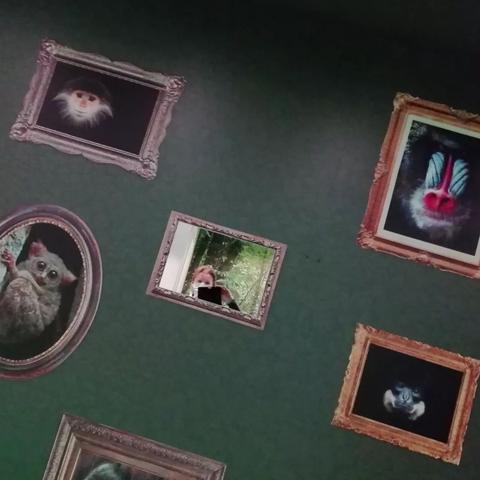
 Barry Goldman