
Snake Venomics: Fundamentals, Recent Updates, and a Look to the Next Decade
Venomic research, powered by techniques adapted from proteomics, transcriptomics, and genomics, seeks to unravel the diversity and complexity of venom through which knowledge can be applied in the treatment of envenoming, biodiscovery, and conservation. ...
Lethal weapon: Using
#museum #venomics to understand the role of venom in elapid
#snake diversification
by Damien Esquerré
#ASH56TSV
Researchers reveal the venomous secrets of European snakes
Not only in the tropics do snake bites lead to dangerous envenoming—bites from European venomous snakes can also cause severe physical damage. But their venom also contains active substances that could be used against bacterial pathogens in the future.
The latest paper from my lab was published!
My former PhD student Jeff Cole did an amazing job combining field work, transcriptomics, proteomics, and analyses of molecular evolution to explore the origins of inhibitory cysteine knot (ICK) toxins in wandering spiders (Ctenidae), the family that includes the infamous Brazilian Wandering Spider _Phoneutria nigriventer_.
https://www.mdpi.com/2072-6651/15/2/112
#spiders #spider #venom #venomics #evolution #EvolutionaryBiology #genomics #OpenAccess #OpenScience

Killer Knots: Molecular Evolution of Inhibitor Cystine Knot Toxins in Wandering Spiders (Araneae: Ctenidae)
Venom expressed by the nearly 50,000 species of spiders on Earth largely remains an untapped reservoir of a diverse array of biomolecules with potential for pharmacological and agricultural applications. A large fraction of the noxious components of spider venoms are a functionally diverse family of structurally related polypeptides with an inhibitor cystine knot (ICK) motif. The cysteine-rich nature of these toxins makes structural elucidation difficult, and most studies have focused on venom components from the small handful of medically relevant spider species such as the highly aggressive Brazilian wandering spider Phoneutria nigriventer. To alleviate difficulties associated with the study of ICK toxins in spiders, we devised a comprehensive approach to explore the evolutionary patterns that have shaped ICK functional diversification using venom gland transcriptomes and proteomes from phylogenetically distinct lineages of wandering spiders and their close relatives. We identified 626 unique ICK toxins belonging to seven topological elaborations. Phylogenetic tests of episodic diversification revealed distinct regions between cysteine residues that demonstrated differential evidence of positive or negative selection, which may have structural implications towards the specificity and efficacy of these toxins. Increased taxon sampling and whole genome sequencing will provide invaluable insights to further understand the evolutionary processes that have given rise to this diverse class of toxins.

 🐦🔥nemo™🐦⬛ 🇺🇦🍉
 Janne Torkkola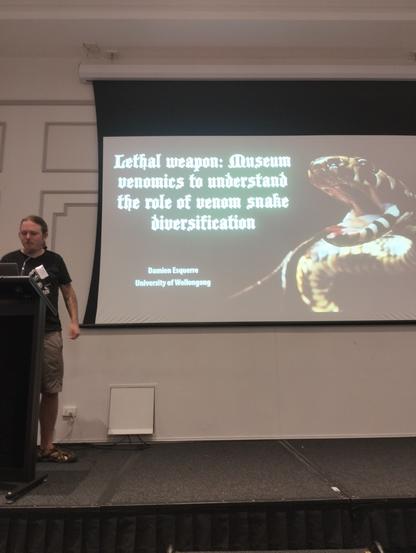
 Mikko Kolkkala
 Mikko Kolkkala
 CellBioNews
 Michael Brewer