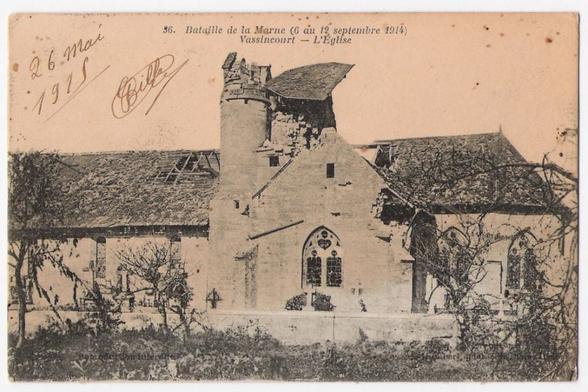
First Battle of the Marne – Vassincourt

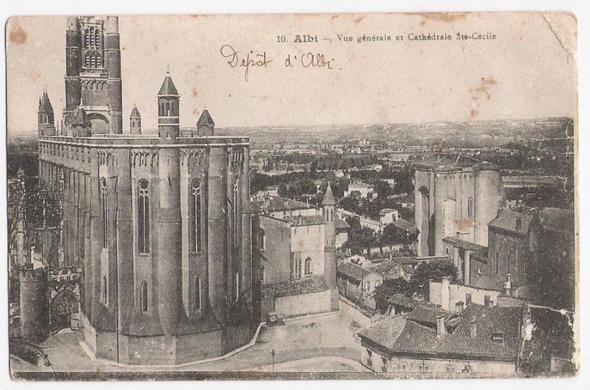
Of all the postcards I inherited from my grandfather, I find the ones depicting locations from the First World War the most fascinating. We are so used to being surrounded by images nowadays that we forget it was not always the case. Those postcards most likely served an important illustrative

Liminal Web
First Battle of the Marne – Vassincourt

Of all the postcards I inherited from my grandfather, I find the ones depicting locations from the First World War the most fascinating. We are so used to being surrounded by images nowadays that we forget it was not always the case. Those postcards most likely served an important illustrative

Liminal Web

UK revives WW1 war manual to prepare Brits for conflict with schools and rations plan

https://fed.brid.gy/r/https://www.manchestereveningnews.co.uk/news/uk-news/uk-revives-ww1-war-manual-33755249

Today In Labor History April 9, 1930: The IWW organized the 1700-member crew of the Leviathan, the world’s largest ship. Originally a German passenger ship, the U.S. seized it in 1917, during World War I, when it was docked in New York harbor. The U.S. subsequently used it to transport its troops to Europe. In September, 1918, the Leviathan left New Jersey, filled with men dying from Influenza. Dozens perished from the flu on the passage over.

#workingclass #LaborHistory #IWW #WorldWarOne #pandemic #flu #influenza #union #mutiny #strike

In which you'll see the Place de la Bastille in 1916 and also hear from a mysterious "Merle" who was fighting at the front during that time.

https://davidbilla.net/bastille-july-column-circa-1916/

#France #Bastille #WorldWarOne #Postcards

Bastille – July Column – circa 1916

This is the Place de la Bastille in Paris, about 100 years ago. And this is what it looked like 90 years later: The postcard shows the building that stood before the Opera Bastille was constructed. The July Column, on the other hand, hasn’t changed much since its construction

Liminal Web

Today in Labor History February 8, 1919: A General Strike occurred in Butte, Montana against a wage cut. Inspired by the Seattle General Strike, members of the IWW and the Metal and Mine Workers Union, Local 800, organized Soldiers’, Sailors’ and Workers Councils to lead the strike. Streetcar workers joined in, shutting down transportation for 5 days. Soldiers, returning from World War I, joined the pickets. Montana’s governor called in the National Guard. They bayoneted 9 workers. The workers ultimately called off the strike out of fear that there would be fatalities.

#workingclass #LaborHistory #butte #generalstrike #seattle #IWW #nationalguard #wwi #bayonet #montana #mining #worldwarone

In honor of Black History Month, a short biography of Ben Fletcher (April 13, 1890 – 1949), Wobbly and revolutionary. Fletcher joined the Industrial Workers of the World (IWW) in 1912 and became secretary of the IWW District Council in 1913. He also co-founded the interracial Local 8 in 1913. Also in 1913, he led a successful strike of over 10,000 dockers. At that time, roughly one-third of the dockers on the Philadelphia waterfront were black. Another 33% were Irish. And about 33% were Polish and Lithuanian. Prior to the IWW organizing drive, the employers routinely pitted black workers against white, and Polish against Irish. The IWW was one of the only unions of the era that organized workers into the same locals, regardless of race or ethnicity. And its main leader in Philadelphia was an African American, Ben Fletcher.

By 1916, thanks in large part to Fletcher’s organizing skill, all but two of Philadelphia’s docks were controlled by the IWW. And the IWW maintained control of the Philly waterfront for about a decade. After the 1913 strike, Fletcher travelled up and down the east coast organizing dockers. However, he was nearly lynched in Norfolk, Virginia in 1917. At that time, roughly 10% of the IWW’s 1 million members were African American. Most had been rejected from other unions because of their skin color. In 1918, the state arrested him for treason, sentencing him to ten years, for the crime of organizing workers during wartime. He served three years. Fletcher supposedly said to Big Bill Haywood after the trial that the judge had been using “very ungrammatical language. . . His sentences are much too long.”

#workingclass #LaborHistory #IWW #benfletcher #union #strike #philadelphia #longshore #docker #waterfront #worldwarone #prison #antiwar #freespeech #racism #blackhistorymonth #BlackMastodon