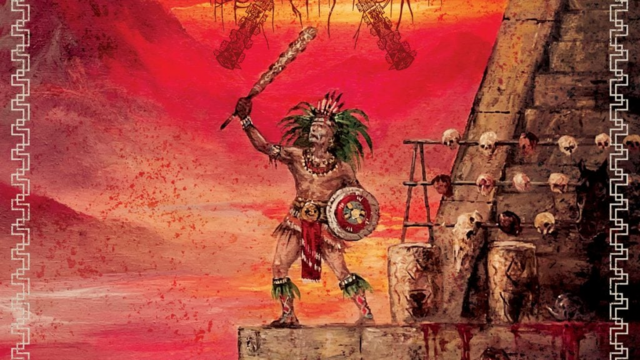
AMG’s Unsigned Band Rodeö: Kalaveraztekah – Nikan Axkan
By Dolphin Whisperer
“AMG’s Unsigned Band Rodeö” is a time-honored tradition to showcase the most underground of the underground—the unsigned and unpromoted. This collective review treatment continues to exist to unite our writers in boot or bolster of the bands who remind us that, for better or worse, the metal underground exists as an important part of the global metal scene. The Rodeö rides on.”
The Rodeö is full of surprises. Today’s potential riff trap hails from the arid lands of Aguascalientes, Mexico, known most famously for its array of hot springs and National Museum of Death. Yes, in death Kalaveraztekah revels, and not just in a death metal groove indebted to the jagged scrawl of Morbid Angel or the destructive howl of early Behemoth. With a healthy inclusion of pre-Hispanic, indigenous instrumentation alongside their chunky and pinch-addled drive, Nikan Axkan churns and tumbles through chants and thunderous drum roll to shine a light on the Mexica culture and history of sacrifice and spirit world. To excavate the wonders that the adventurous Kalaveraztekah holds hidden in the underground, we’ve assembled a crack Rodeö crew, including an appearance from The Man, The Myth, The AMG Himself. Surely that means that everyone followed the word count, right? – Dolphin Whisperer
Kalaveraztekah // Nikan Axkan [May 2nd, 2025]
AMG Himself: Kalaveraztekah’s Nikan Axkan represents hopes and dreams that I have harbored for years. When will we finally get the seminal piece of Aztec-influenced extreme metal that will whet my appetite for both death metal and Mesoamerican history?1 With aplomb, these astonishingly unsigned Aguascalientes-ites2 do the fine job of balancing two equally vital parts of a single sound. Kalaveraztekah hits like a ton of bricks, dealing in death metal that’s neither old nor school, it’s just brutal and grindy, tempered only by peyote-fueled excursions into the netherworld. The core of their sound is brutal Mexican death metal replete with blasts and machine gun kicks, neck-damaging riffing, pig-squealing guitars, brutal growls (and occasionally less-brutal screamies) synced with the snare, and an intensity that I associate with writing reviews of bands like Vomitory or Crypta. It’s got the riffs and intensity with just a touch of melody, and I bask in its brutality and shreddy, squealy solos. Kalaveraztekah’s particular innovation in this sphere is the successful inclusion of traditional folk elements from the indigenous people located throughout Mexico, but which is today used almost exclusively for the Mexica people of Tenochtitlan (which is modern-day Mexico City).3 Kalaveraztekah’s focus on “Aztec Cosmogony” lends itself perfectly to the second part of their unique sound: dreamy folk soundscapes that they adapt seamlessly—and convincingly—when they shift gear. Driven by reverb-soaked soundscapes, Spanish guitars,4 and what I assume is a tlapitzalli (flute), the band lends atmosphere and dynamics that are necessary to offset a style of death metal that at times can risk monotony. And when they meet, these two sounds crash into each other like storm fronts, creating something beautiful and terrible to behold, simultaneously brutal and thoughtful, grindy and melodic, atmospheric and immediate. I fuckin’ love this shit.
Next up on my befolkened death metal bucketlist: the Olmecs! 4.0/5.0
Dear Hollow: What’s great about Kalaveraztekah is their ability to channel their heritage into an homage to the Mexica that sounds ancient, cosmic, and brutal. Featuring a blend not unlike the formidable shaman-themed Hell:on, the lethal fusion of cutthroat death metal and folk instruments offers balance: wild guitar solos, haunting flutes, terrifying death whistles, and ritualistic drums shine amid the no-frills Sulphur Aeon-esque riffs. While similarities to other Mexico-based Aztec- or Mayan-themed groups are unavoidable, Pre-Hispanic folk instrumentation is not mere novelty like it is for Ocelotl or Eunoë, nor is it an atmospheric saturation of bloody sacrifice in the manner of Aztlan or Cemican – rather, Kalaveraztekah uses ritualistic and ceremonial elements to amplify the cyclical cosmic grandiosity of the Five Suns in an album of both creation and devastation. Nikan Axkan offers riffs galore (“Tlazolteotl,” “Xiuhtekuhtli Weweteotl”), haunting overtures with spoken word that recall sacrificial ecstasy and the vast rotting realms of the gods (“Yowaltecuhtli,” “Illwikatl Meztli”), and just enough techy flavors of soaring intensity and dissonant menace to warrant diversity and complexity (“Xolotl Axolotl,” “Xiuhmolpili”). While the album is a tad overlong at nearly fifty minutes, Kalaveraztekah’s approach straddles the line between violently visceral and gloriously colossal – truly “el amanecer del nuevo sol” indeed. 4.0/5.0
Iceberg: I love it when an album requires me to do some research to unwrap its mysteries. Before I came across Nikan Axlan I had precious little knowledge of Aztec mythology. But now, thanks to Aguascalientes natives Kalaveraztekah, I can confidently tell my Xolotls from my Axolotls. Kalaveraztekah’s sonic template skews more groove than death metal, but the inclusion of a host of traditional instruments keeps the music refreshing and thoroughly unnerving. The tribal drums and wind instruments maintain a constant otherworldly atmosphere, and the extraneous vocal additions are excellent (the frantic spoken word of “Yowaltekuhtli” and the Wilhelm screams of “Xolotl Axolotl”). Kalaveraztekah aren’t content to sit in any one corner with their instruments either. The trebly blues tone of “Yowaltekuhtli” feels ripped from a Los Lonely Boys album, and the sweeping neoclassical riff that forms the backbone of “Xiuhmolpilli” screams symphodeath BOMBAST.5 The biggest drawback for me here is that in leaning so far into the groove metal style, the BPM goes stale in its mid-paced swagger. Given everything else that Kalaveraztekah unleashes on Nikan Axkan, I’m left wondering what this band would sound like if they really stepped on the gas and hit that NOS button (although the opening riff of “Wewekyotl” gets pretty damn close). That quibble aside, Nikan Axkan is a compelling and replayable record, and a great trip into the dark, bizarre world of Aztec mythology. I highly recommend this album for those looking for some tasty groove metal with a bit of strange on the side. 3.5/5.0
Alekhines Gun: Move over Tzompantli, there’s a new band in town. Channeling the instrumental flourishes of Nechochwen filtered through something adjacent to The Zenith Passage in production,6 Kalaveraztekah have presented a slab of agave scented folky melodic death so meticulously constructed and well produced that I’m actually stunned it’s an independent release. From the triumphant flourishes dotting the leads in “Yowaltekuhtli” to the thunderous tribal percussion-laced breakdowns in “Xiuhtekuhtli Weweteotl”, Nikan Axkan never wants for a variety of gripping moments. A sense of propulsion flows through the album, rendering the occasional interludes atmospheric rather than momentum-killing. Songs like “Xolotl Axolotl” feature heaps of skronk and tawngy tech only to instantly be offset by indigenous instruments and melodic atmospherics in equal measure. True, each individual track feels a bit long in the tooth and seem as though they could benefit from some editing, and I wish the bottom end didn’t sound so artificial. Nevertheless, every time I found myself thinking such thoughts I was suddenly blown away by some excellent new riff or lovely melody from wood instruments or percussion, slotting neatly into the album’s reasonable runtime. Nikan Axhan is an album with a remarkably matured and well-executed vision, and has been a gripping, engaging listen with each spin. Support this album. 3.5/5.0
Thyme: Most bands continually seek ways to bring originality into their work. For Aguascalientes, Mexico, five-piece death metal outfit Kalaveraztekah, that originality comes in the form of heaving helpings of Mesoamerican folk instrumentation, expertly woven into the deathly fabric of their sophomore album Nikan Azkan. Right off the bat, I felt transported to the middle of a Mexican rainforest as tribal drums and folkish guitar lines cede their delicate grip to Behemoth-like death riffs and a hellish vocal attack that rivals Nergal’s (“Nikan Axkan (El Aquí y El Ahora)”). When Nikan Azkan isn’t channeling Demigod levels of viciousness, its hybrid form of folk death conjures Roots-era Sepultura with sludgily dirty riffs, primitive death chants, and a plethora of indigenous instruments ranging from ocarinas to Aztec death whistles (“Xiuhtekuhtli Weweteotl (El Fuego Ancestral),” “Wewekoyotl (El Coyote Viejo)”). Kalaveraztekah brings loads of atmosphere to Nikan Axkan, especially on “Yowaltekuhtli (Un Sueño En La Oscuridad),” with its haunting instrumentation—the guitar work is top notch here—and the desperate, breathless pleas of the narrator conjuring tons of dramatic tension. On repeated spins, the magic within Nikan Axkan continues to unravel. While the meshing of Kalaveraztekah’s death metal—standard as it may be—with its folk-forward instrumentation tends to blur tracks together, enjoyment didn’t dissipate the more I listened. Fans of what Tzompantli are doing would be hard-pressed to miss this, and I suggest they don’t. 3.0/5.0
#AngryMetalGuySUnsignedBandRodeo #AngryMetalGuySUnsignedBandRodeo2025 #Aztec #Behemoth #Crypta #DeathMetal #FolkMetal #GrooveMetal #HellOn #IndependentRelease #Kalaveraztekah #LosLonelyBoys #May25 #MexicanMetal #MorbidAngel #Nechochwen #NikanAxkan #ProgressiveDeathMetal #Review #Reviews #SelfRelease #Sepultura #SulphurAeon #Tzompantli #Vomitory
 Sociedad Noticias

 Periodistas Unidos
 charring auh
 Angry Metal Guy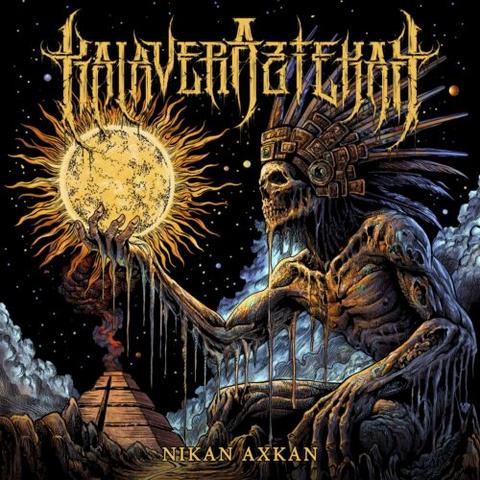


 KEXP 🎶 #NowPlaying Bot
 Unescostamps
 Daniele Neander Mancini

 🤘 The Metal Dog 🤘