https://doi.org/10.1111/jipb.13932
@wileyplantsci
#PlantSci #JIPB #PlantSci #CropSci #botany
Abstract Genic codominant multiallelic markers are essential to identify the genetic variation, population diversity and evolutionary history of a species. Soybean (Glycine max) is a major legume crop having importance in both a protein-rich pulse as well as a high recovery oilseed crop. To date, no genome-wide genic SSR markers have been elucidated in this crop of high importance. This article aims to identify and validate regulatory gene-derived SSR markers in soybean. The coding sequences of Glycine max were downloaded from PlantTFDB and used for the identification, followed by the localization of SSRs by using a Perl 5 script (MISA, MIcroSAtellite identification tool). The flanking primers to SSRs were designed and chromosomal distribution and Gene ontology searches were performed using BLAST2GO. Twenty random SSR markers were validated to check cross-species transferability and genetic diversity study was performed. A set of 1138 simple sequence repeat markers from transcription factor coding genes were designed and designated as TF-derived SSR markers. They were anchored on 20 G. max chromosomes, and the SSR motif frequency was one per 4.64 kb. Trinucleotide repeats were found abundant and tetra, as well as pentanucleotide frequency, was least in soybean. Gene Ontology search revealed the diverse role of SSR-containing TFs in soybean. Eight soybean accessions were analyzed for identified twenty candidates for genic SSR diversification, and a principal co-ordinate analysis, a genic dissimilarity-based unweighted neighbour-joining tree, was constructed. Our findings will serve as a potential functional marker resource for marker-assisted selection and genomic characterization of soybean.
⏱️It's about time!⏰
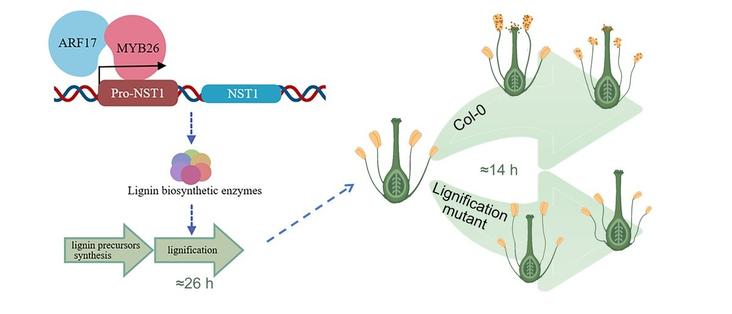
Xue et al. reveal the regulatory mechanism behind the rapid #lignification process that ensures timely #anther dehiscence in #Arabidopsis.
https://doi.org/10.1111/jipb.13715
@wileyplantsci
#JIPB #PlantScience #plant #reproduction #TranscriptionFactor #endothecium #botany
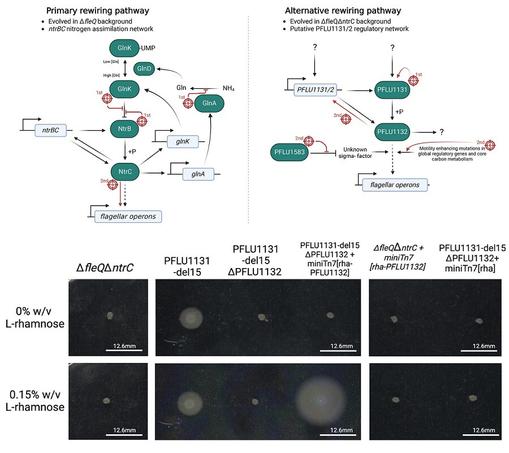
Changes to gene regulatory network connections, known as rewiring, facilitate novel interactions and innovation of transcription factors. This study reveals three key properties that facilitate transcription factor innovation and evolvability: high activation, high expression, and pre-existing low-level affinity for novel target genes.
1st weekly digest of #GeneRegulation papers:
🧬#TranscriptionFactor atlas of differentiation https://www.sciencedirect.com/science/article/pii/S0092867422014702
🧬 #TFbinding directed heterochromatin (#ZFP462) https://www.nature.com/articles/s41556-022-01051-2
🧬#3Dgenome organisation of nuclear speckles & splicing https://www.biorxiv.org/content/10.1101/2023.01.04.522632v1
🧬 Nuclear partitioning by charge blocks (#MED1, #PolII) https://www.sciencedirect.com/science/article/pii/S0092867422015264
🧬 Transient loss of #Polycomb induces an #epigenetic cancer fate https://www.biorxiv.org/content/10.1101/2023.01.04.522799v1
🧬 RGT: a toolbox for NGS analysis https://www.biorxiv.org/content/10.1101/2022.12.31.522372v1