Alterations of gene regulatory networks (GRNs) in specific #CellTypes can cause disease. This study presents HCNetlas, a compilation of cell-type-specific #GRNs across healthy human tissues that can be used to uncover associations between #DiseaseGenes & cell types #plosbiology https://plos.io/4jIwg7P
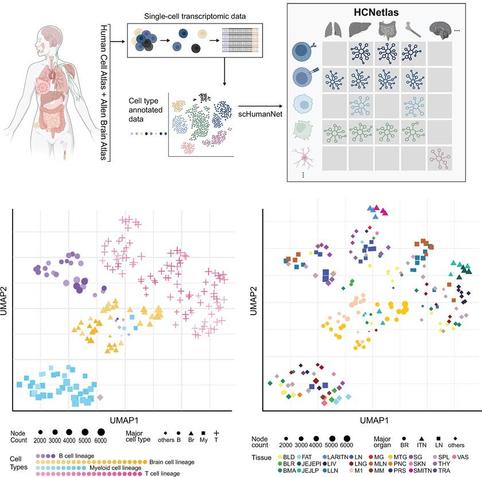
HCNetlas: A reference database of human cell type-specific gene networks to aid disease genetic analyses

Alterations of gene regulatory networks in specific cell types can cause disease. These authors create HCNetlas (Human Cell Network Atlas), a compilation of cell-type-specific gene networks across a range of healthy tissues that can be used to uncover associations between disease genes and specific cell types.

🌿 🧬 Exciting breakthrough in systems biology! Introducing a new algorithm that revolutionizes the inference of #GRNs from time series data. It identifies communities of like-behaving genes in transcriptomic datasets.

https://doi.org/10.1093/insilicoplants/diad018 from Maleana Khoury, Kenneth Berenhaut, Katherine Moore, Edward Allen, Alexandria Harkey, Joëlle Mühlemann, Courtney N Craven, Jiayi Xu, Suchi Jain, David John, James Norris & Gloria Muday

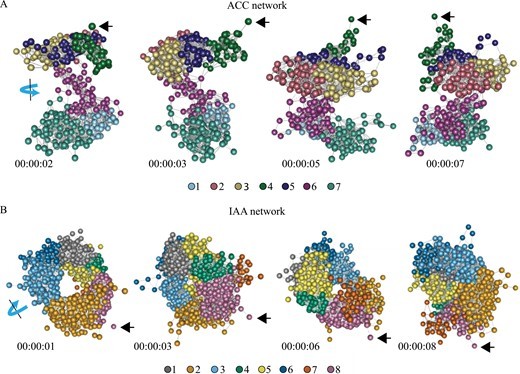
Informative community structure revealed using Arabidopsis time series transcriptome data via partitioned local depth

Abstract. Transcriptome studies that provide temporal information about transcript abundance facilitate identification of gene regulatory networks (GRNs). Infer

OUP Academic
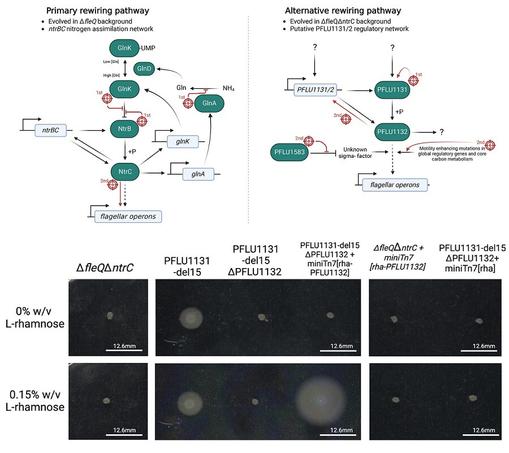
Rewiring of Gene Regulatory Networks #GRNs facilitates novel #TranscriptionFactor interactions & innovation. @MicrobialMatts @PierceinScience @TaylorLabGroup reveal three key TF properties that speed this process: high activation, high expression, and pre-existing low-level affinity for novel target genes #PLOSBiology https://plos.io/405beXL
Evolutionary innovation through transcription factor rewiring in microbes is shaped by levels of transcription factor activity, expression, and existing connectivit

Changes to gene regulatory network connections, known as rewiring, facilitate novel interactions and innovation of transcription factors. This study reveals three key properties that facilitate transcription factor innovation and evolvability: high activation, high expression, and pre-existing low-level affinity for novel target genes.