 Ron Beavis ❌
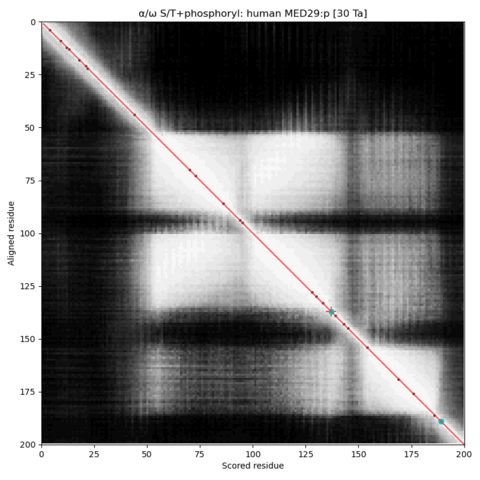
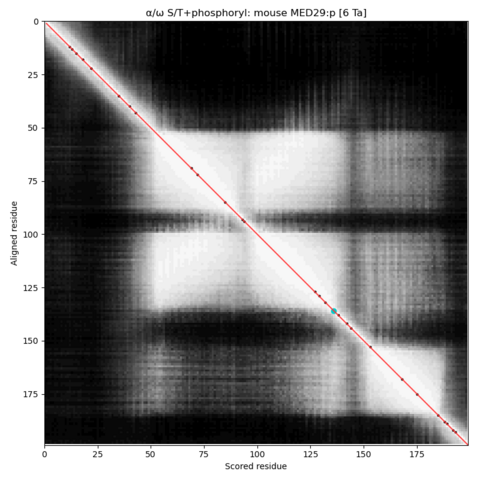
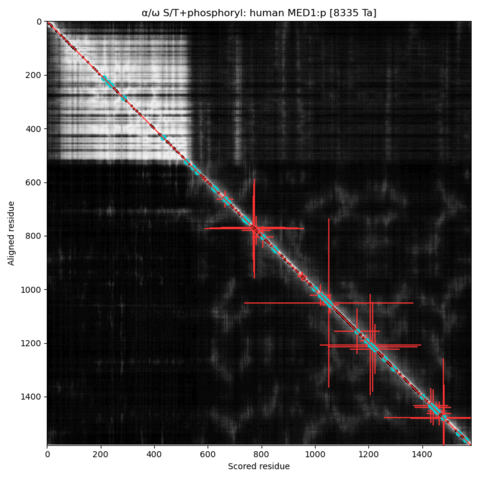
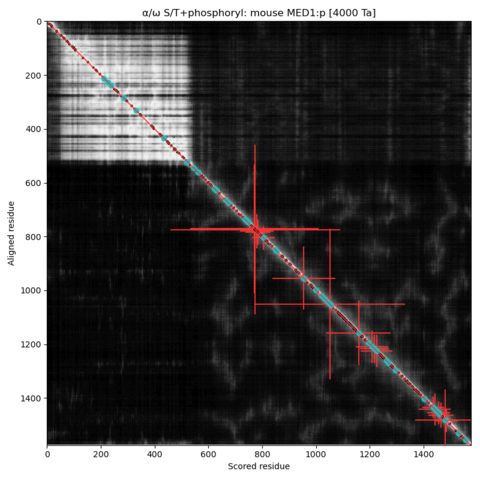
α⧸ω ST phosphorylation diagrams for human & mouse mediator complex subunit 29 (#MED29:p, aka #MED2:p). Unlike #MED1:p, this sequence does not use phosphorylation, even though its only has a few, scattered helical domains. Much of the information about this gene is buried in the 'zines under the subunit's older (but salacious) name "Intersex-like, IXL" (e.g., Kuuselo, 2007 https://pubmed.ncbi.nlm.nih.gov/17332321/) #proteomics #mediator

Intersex-like (IXL) is a cell survival regulator in pancreatic cancer with 19q13 amplification - PubMed
Pancreatic cancer is a highly aggressive disease characterized by poor prognosis and vast genetic instability. Recent microarray-based, genome-wide surveys have identified multiple recurrent copy number aberrations in pancreatic cancer; however, the target genes are, for the most part, unknown. Here …
 Gene Regulation