The Perfect among the Imperfect
https://youtu.be/CGw–ZXxT_E
“‘Dear Lord God, I wish to preach in your honor. I wish to speak about you, glorify you, praise your name. Although I can’t do this well of myself, I pray that you may make it good.’”[1]
Introduction
Our lives are filled with incongruity and dissonance. What should be, isn’t; what is, shouldn’t be. Daily we experience discrepancies in what we thought we’d get done and what we did get done. Sometimes those discrepancies are okay because we were able to do more than we expected; at other times, those incongruities make us feel like we’ve failed to live up to our self-idealized potential. We find ourselves saying one thing and then doing another. We make vows to ourselves, only to break them the next moment. Finding personal alignment between our outer and inner natures seems to be the hardest thing to do; I’m not surprised that, as a discipline of our discipleship, aligning ourselves is a daily deed, a process always in process.
Sometimes, though, the incongruity and dissonance aren’t relegated to our own personal experience in the world but lives outside of us in the world. We see things that shouldn’t be and things could be. We see things that are and the way it should be. We want to do something to rectify the discrepancy between what we see and we want to see, but then we freeze because we realize we cannot rectify the issue in the way we imagine we should. So, rather than try we quit before we’ve even started. Our hearts burn with desire, but the flesh is bogged down with woulds and coulds and shoulds. If I had x, I would… If I had y, I could… I should… but I won’t because … and on and on the excuses go forever letting our minds off the hook of even trying. We seem to be plagued by the idea of perfectionism that plagues humanity. Perfectionism is not always doing everything perfect but believing that when one does something it has to be perfect and, thus, if it can’t be done perfectly than why try…I might as well quit now. In this space, nothing ever gets done, our dreams whither, and our desire fizzles out.
While we might feel that perfectionism is a noble trait, indicative of someone who tries to excel and do well, it’s rather a sign that we are convinced that we don’t need God in the things we do (whether small or big). It’s a symptom of our autonomy that convinces us we need no help at all. And in this state we miss that God meets us directly in the process of working through and with the dissonance and incongruities.
Haggai 1:15b-2:9
The book of Haggai is made up of four divine reports given to the people of Judah still awaiting the rebuilding of the second temple and the restoration of Jerusalem and Judah.[2] In 539 BCE, God’s people had been liberated from the rule of Babylon by Cyrus II the king of Persia.[3] In 538 BCE, Cyrus II declared to the people that God had commanded him to rebuild the temple and (thus) restore Jerusalem.[4] The people to whom Haggai speak have been waiting for the temple to be rebuilt for 18 years (it’s now 520 BCE); they have seen Cyrus’s rule be handed over to Darius I.[5] In the absence of action, Haggai comes to exhort the Judeans to rebuild the temple and to consider[6] what a fitting location for God’s presence is.[7] (vv.1:15-2:1).
What type of encouragement is the prophet Haggai to bring to God’s people? Through Haggai, God exhorts God’s people not to be consumed by fear and continue to cling to the promises God has made. God exhorts them to faith even when everything seems to be going in the wrong direction. In the prompting of the divine Spirit, Haggai says to both the leader and high priest of Judah as well as the remnant of the people,[8]
Who is left among you that saw this house in its former glory? How does it look to you now? Is it not in your sight as nothing? Yet now take courage, O Zerubbabel, says God; take courage, O Joshua, son of Jehozadak, the high priest; take courage, all you people of the land, says God; work, for I am with you, says God of hosts, according to the promise that I made you when you came out of Egypt. My spirit abides among you; do not fear. (vv.3-5)
What is the fear that is plaguing the people? Why does God swoop in to comfort these afflicted few? Because they are troubled by the dissonance between what they want to do—build a grand and wonderful temple, fit for a king—and what they can do—not that.[9] These few being addressed by Haggai have neither wealth nor power, neither strength nor might to build the second temple like the first one was built, planned by David and completed by David’s son, Solomon. At that time, Israel and Judah were at a high of power and presence and could provide such splendor for their God;[10] here, in 520 BCE, those who are left are but a meager group of people comprising a poor province of Persia.[11]
What God intends to do through Haggai is to not only exhort the people toward comfort but to also exhort them to depend on God and God alone to make God’s dwelling rich and kingly. Haggai tells us more,
For thus says God of hosts: Once again, in a little while, I will shake the heavens and the earth and the sea and the dry land; and I will shake all the nations, so that the treasure of all nations shall come, and I will fill this house with splendor, says God of hosts. The silver is mine, and the gold is mine, says God of hosts. The latter splendor of this house shall be greater than the former, says God of hosts; and in this place I will give prosperity, says God of hosts (vv.6-9)
God will dwell with the faithful who love God in whatever temple they can build. God by God’s self, by God’s own power and might, will make that humble house a castle fit for a king. It is not up to the people to expend energy and resources they don’t have; rather, they are to do what they can and God will show up because God is already among them. This God in whom the people believe, whom they follow and trust, and whose promises are the very life breath of their existence (corporately and individually) is the same God who flung the stars, the moon, and the sun into the sky when there was yet nothing. It is this same God who will shake the nations and will cause all the wealth of these nations to flow into God’s domain.[12] In other words, God will—through the people and their humility and solidarity—be glorified; God will glorify God’s self through God’s people even in their meek and humble estate. And maybe even especially because of their meek and humble estate. In other, other words, the people should build from faith working itself out in love and not be concerned with silver or gold because God will take care of God’s own glory because God can and God will. [13]
Conclusion
Haggai’s words to a people long ago are words to us, today. Haggai addresses the incongruity and dissonance in our lives[14] and exhorts and encourages us to do what we can, as we can, in any way, shape, or form we can.
This isn’t about “God helping those who help themselves.” It’s about God being and dwelling among those who depend on God from day to day to day. According to Haggai, being the wealthiest, strongest, most powerful, or mightiest person isn’t a sure-fire way to bring God glory. Rather, according to Haggai, it’s about the humility of knowing our own human limits and what we can and cannot do and being faithful in the things we can do which is a faithfulness to God. In this humble action, God meets us because God is with those who are dependent on God, those who are doing what they can to bring God glory in the world. It’s not about having fancy ministries or flashy events for God, it’s about walking humble with God, loving righteousness and mercy, and seeking divine justice in the world for the wellbeing of the neighbor.
And, for us Christians, it’s about our dependence on the one who died for us, the one who loved us so much that he shrugged off his mighty and powerful status and became like us. We get lost in our desires to bring God glory according to the standards of the kingdom of humanity. We forget that Jesus came to show us a humbler and simpler way of dependence on God who always shows up, even in the presence of death.
Beloved, we do not need to be perfect to bring God glory; we just need to be who we are as we are, leaning on our beloved, Christ, and watch as the Holy Spirit works through us. Therein is God glorified, there in is perfect done.
[1] LW 54:157-158; Table Talk 1590.
[2] Ehud Ben Zvi, “Haggai,” 1243. The four reports, altogether, “address the restoration of the Temple, Judah, and Jerusalem in the Persian period.”
[3] Ehud Ben Zvi, “Haggai,” The Jewish Study Bible Jewish Publication Society Tanakh Translation, eds. Adele Berlin and Marc Zvi Brettler (Oxford: OUP, 2004), 1243. “The rebellion of Judah against the Babylonian empire led to the fall of Jerusalem (586 BCE), the destruction of the Temple, a severe decrease in population due to death and deportation, and the end of monarchy in Judah. The Babylonian empire fell at the hands of a Persian dynasty (the Achaemenid dynasty) in 539. As a result, the Babylonian province of Judah became the Persian or Achaemenid province of Yehud. According to 2 Chronicles 36.22-23, the Persian conqueror of Babylon, Cyrus II (reigned 559-530) issued a proclamation in his first year after the conquest of Babylon (538) that stated, ‘The Lord, God of Heaven, has given me all the kingdoms of the earth and He has commanded me to build Him a Temple in Jerusalem, which is in Judah. Whoever is among you of his entire people, may the Lord be with him, and let him go up [to Jerusalem, to build the Temple]’ (cf. Ezra 1. 1-4).”
[4] Ehud Ben Zvi, “Haggai,” 1243. See quote in fn 3.”
[5] Ehud Ben Zvi, “Haggai,” 1243. Book is made of four reports all related to Haggai and occur in the second year of Darius (520) and “specifically, the first day of the sixth month, the twenty-first day of the seventh month, and the twenty -fourth day of the ninth month.”
[6] Ehud Ben Zvi, “Haggai,” 1244. “The divine message reported here does not deal with the construction of the temple per se, but with the question of whether the new Temple is an appropriate Temple for the Lord.”
[7] Ehud Ben Zvi, “Haggai,” 1243. “The book of Haggai is set about eighteen years later, in the second year of Persian king Darius I, that is, 520 BCE, and clearly implies that the Temple was still not rebuilt at that time. The book contains reports of theologically based exhortation to undertake the work of reconstruction and discusses the central role of the Temple in the life of the community.”
[8] Ehud Ben Zvi, “Haggai,” 1244. “The divine message here is addressed to both the two leaders and all the people. It is set on the 21st of Tishri, about a month since the leaders and the people took action, and in the last day of a festival, Sukkot.”
[9] Ehud Ben Zvi, “Haggai,” 1244. “…it was the Lord who answered these questions and legitimized the readership’s Temple. Still the text recognizes the incongruity and maintains that in the future it will be rectified. At that time the wealth of the world would flow to the house of the Lor d of all (vv. 7-8).”
[10] Ehud Ben Zvi, “Haggai,” 1244. “Can this temple be appropriate? May they expect such a temple to be pleasing to the Lord, even if it has not received the type of legitimating sign seen at the completion of the first Temple (1 kings 8.10-11)? Would the Lord be with them in such a case?”
[11] Ehud Ben Zvi, “Haggai,” 1244. “The underlying issue is the plain incongruity between the expected glory of the house of a king who is sovereign over all and the absolute lack of splendor or a relatively small temple of a minor, poor province (cf. Ezra 3.12-13).”
[12] Ehud Ben Zvi, “Haggai,” 1244. “Here the text assumes common, ancient Near Eastern concepts, namely that the wealth of a dominion should flow to the house of the ruler of the dominion, and that the manifestation of the glory of a king relates to the wealth flowing to him form the different nations and places under his dominion.”
[13] Ehud Ben Zvi, “Haggai,” 1244. “The expression silver is Mine and gold is Mine was taken by the Rabbis as teaching that gaining silver or gold is not an appropriate goal for mortals. Instead they stressed that Torah and good deeds are such goals.”
[14] Ehud Ben Zvi, “Haggai,” 1244.
#Dissonance #EhudBenZvi #GodSDwelling #Haggai #HolySpirit #Jesus #Perfection #Perfectionism #SecondTemple #Temple
 Spirituality & Religious Studies
 H.Cumaili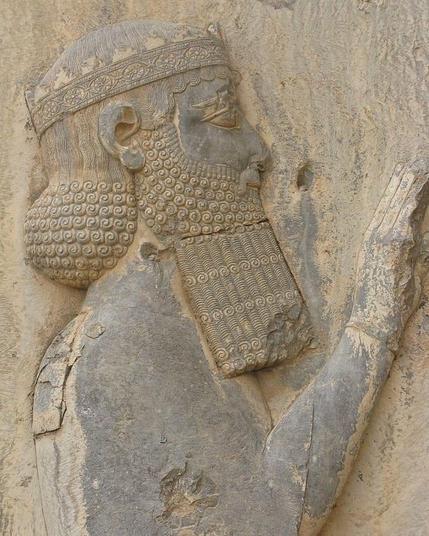
 Israel News | Israel Hayom - www.israelhayom.com
 LaurenRELarkin.com
 Neil Thurogood

 Karen B. Jones ☑️
 Ramesh #NotGoingBack
 km
km
 pdb
pdb