US's Climate.gov Site, Taken Down by Trump, Relaunched by Nonprofit as Climate.us
https://arstechnica.com/science/2026/06/uss-climate-gov-site-taken-down-by-trump-relaunched-by-nonprofit/
Climate.us has restored everything the Trump administration pulled when it took down climate.gov — decades of scientific resources now available again.
#climatechange #scientificdata #openscience

Climate.us has restored everything the Trump administration pulled when it took down climate.gov — decades of scientific resources now available again. #climatechange #scientificdata #openscience

https://arstechnica.com/science/2026/06/uss-climate-gov-site-taken-down-by-trump-relaunched-by-nonprofit/?utm_source=flipboard&utm_medium=activitypub

Posted into FLIPBOARD EXCHANGE FEED 🗞️ @flipboard-exchange-feed-Econopass

US's climate.gov site, taken down by Trump, relaunched by nonprofit

Climate.us has now restored everything taken down by the government.

Ars Technica

🧩Got a data management question that spans more than one discipline?

Simply contact any helpdesk in the Geo-Chem-Life Science Helpdesk Cluster. Ten NFDI consortia work together behind the scenes to forward your request to the right experts and provide coordinated support.

🔗Find out how it works here: https://www.nfdi.de/geo-chem-life-science-helpdesk-cluster/?lang=en

#NFDI #ResearchDataManagement #ResearchData #FAIRData #Helpdesk #OpenScience #ResearchSupport #ScientificData #FAIRPrinciples #NFDI4Biodiversity #RDM

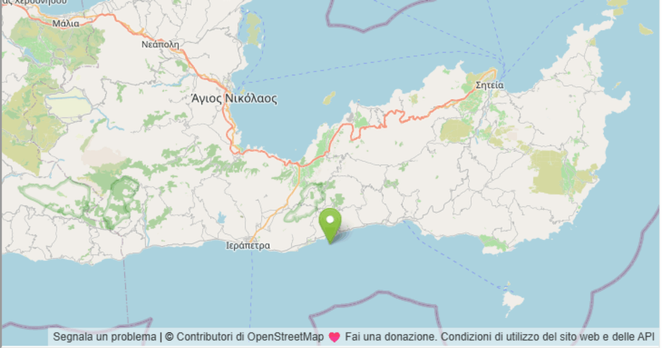
Il Fatto Quotidiano: Terremoto nell’isola di Creta: scossa di magnitudo 5.8 a 15 km di profondità vicino a Lerapetra

Questa mattina un terremoto di magnitudo 5.8 ha colpito l’isola di Creta, in Grecia. Come riporta l’Ingv, Istituto nazionale di geofisica e vulcanologia, la prima scossa è stata registrata alle 6:18 di mattina (5:18 in Italia) vicino alla città costiera di Lerapetra. Al momento non si segnalano vittime o danni.
Il sisma si è verificato a una profondità di 15 chilometri, motivo per cui, essendo relativamente superficiale, è stato avvertito con maggiore intensità. Successivamente sono state registrate scosse di minore entità.
Solo un mese fa, a marzo, un altro terremoto di magnitudo 5.3 aveva colpito la Grecia nord-occidentale senza causare danni significativi.
Secondo uno studio pubblicato a novembre sulla rivista Scientific Data, nel Paese sono state registrate più di 2.000 tracce di faglie sismiche attive. L’arcipelago, meta turistica molto popolare, è stato colpito da numerose scosse sismiche nel 2025, tra cui un terremoto di magnitudo 5.3 nel giugno dello scorso anno, che ha danneggiato i monasteri sul Monte Athos.
L'articolo Terremoto nell’isola di Creta: scossa di magnitudo 5.8 a 15 km di profondità vicino a Lerapetra proviene da Il Fatto Quotidiano.

Earthquake in the island of Crete: magnitude 5.8 quake at a depth of 15 km near Lerapetra

This morning, a magnitude 5.8 earthquake struck the island of Crete, in Greece. According to the Italian National Institute of Geophysics and Volcanology (INGV), the first tremor was recorded at 6:18 a.m. (5:18 a.m. in Italy) near the coastal town of Lerapetra. At this time, there are no reports of casualties or damage.

The earthquake occurred at a depth of 15 kilometers, which is why, being relatively shallow, it was felt with greater intensity. Subsequent smaller tremors were also recorded.

Just one month ago, in March, another earthquake of magnitude 5.3 struck northwestern Greece without causing significant damage.

According to a study published in November in the journal Scientific Data, more than 2,000 seismic fault traces have been recorded in the country. The archipelago, a very popular tourist destination, has been affected by numerous seismic shocks in 2025, including a magnitude 5.3 earthquake in June of last year, which damaged the monasteries on Mount Athos.

Article: Earthquake on the island of Crete: Magnitude 5.8 tremor at 15 km depth near Lerapetra – from Il Fatto Quotidiano.

#Lerapetra #Greece #Volcanology #first #Italy #15kilometers #ScientificData #MountAthos #IlFattoQuotidiano

https://www.ilfattoquotidiano.it/2026/04/24/terremoto-creta-magnitudo-lerapetra-news/8365102/

Terremoto sull’isola di Creta: scossa di magnitudo 5.8 a 15 km di profondità vicino a Lerapetra

Le prime scosse registrate alle 6:18 ora locale, vicino alla città di Lerapetra. Al momento non si segnalano vittime o danni

Il Fatto Quotidiano
Scientific production on data repositories and open science published in the Web of Science database: Methodi Ordinatio and content analysis – InfoDoc MicroVeille

When it comes to key scientific data, being open isn’t enough — they need to be FAIR (Findable, Accessible, Interoperable, and Reusable).

Watch the full walkthrough on what FAIR data are and how to publish them here:
https://www.youtube.com/watch?v=RC14Ty0D4w0

#scientificdata
#openscience
#fairdata
#datamanagement
#opendata

A new preprint on @arxiv_cs argues that centralized scientific databases are too vulnerable to politics, funding cuts, and cyberattacks. The authors propose a Global Federated Architecture (GFA) — a hybrid model that combines the resilience of federated systems with the transparency of decentralized technologies to safeguard open science data as a global public good.

👉 https://arxiv.org/abs/2509.19206

#openaccess #database #datasharing #scientificdata #accessibility #openscience

A decentralized future for the open-science databases

Continuous and reliable access to curated biological data repositories is indispensable for accelerating rigorous scientific inquiry and fostering reproducible research. Centralized repositories, though widely used, are vulnerable to single points of failure arising from cyberattacks, technical faults, natural disasters, or funding and political uncertainties. This can lead to widespread data unavailability, data loss, integrity compromises, and substantial delays in critical research, ultimately impeding scientific progress. Centralizing essential scientific resources in a single geopolitical or institutional hub is inherently dangerous, as any disruption can paralyze diverse ongoing research. The rapid acceleration of data generation, combined with an increasingly volatile global landscape, necessitates a critical re-evaluation of the sustainability of centralized models. Implementing federated and decentralized architectures presents a compelling and future-oriented pathway to substantially strengthen the resilience of scientific data infrastructures, thereby mitigating vulnerabilities and ensuring the long-term integrity of data. Here, we examine the structural limitations of centralized repositories, evaluate federated and decentralized models, and propose a hybrid framework for resilient, FAIR, and sustainable scientific data stewardship. Such an approach offers a significant reduction in exposure to governance instability, infrastructural fragility, and funding volatility, and also fosters fairness and global accessibility. The future of open science depends on integrating these complementary approaches to establish a globally distributed, economically sustainable, and institutionally robust infrastructure that safeguards scientific data as a public good, further ensuring continued accessibility, interoperability, and preservation for generations to come.

arXiv.org
#ScientificData Coronavirus research topics, tracking twenty years of research www.nature.com/articles/s41... "More than eight hundred thousand articles from July 2002 to May 2024. It aggregates and organises global research related to Coronaviruses into thematic clusters."

🚨🌍 NEW ARTICLE 🌍🚨

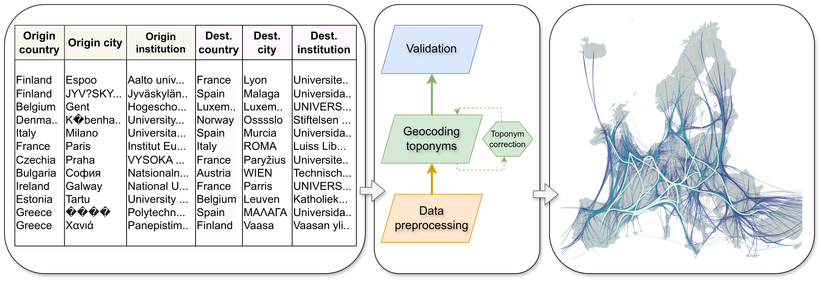
We geocoded the #mobility of over 2 million #Erasmus students across #Europe from 2014 to 2022 with @miladmzdh Oula Inkeröinen & Olle Järv. The data descriptor article is published in #ScientificData, and is an output from the #MobiTwin project.

https://doi.org/10.1038/s41597-025-04789-0

@digigeolab

#GIScience #Geospatial #GIS #MobiTwin #OpenData #OpenScience