Serhii Nazarovets

560 Followers
274 Following
610 Posts
Ph.D. in Social Communication. My research interests: Bibliometrics, Scientometrics, Scholarly Communication, and Library Science.
LocationKyiv, Ukraine
Bloghttps://panbibliotekar.blogspot.com
ORCIDhttps://orcid.org/0000-0002-5067-4498
ResearchGatehttps://www.researchgate.net/profile/Serhii-Nazarovets

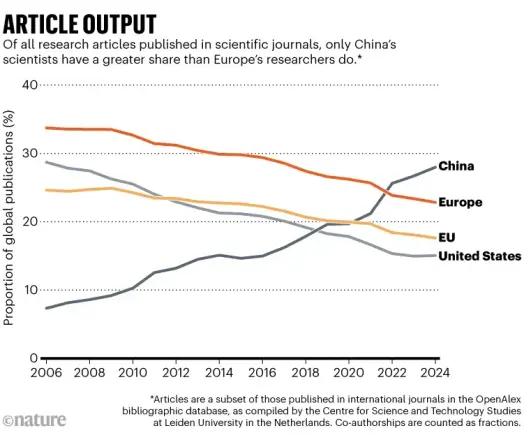
A new paper by Ioannidis & Baas highlights an uncomfortable shift: most scientific publications today come from countries that are not full democracies and have limited press freedom. In 2006, about two-thirds of global science was produced in full democracies. In 2024 – only 22%.

https://doi.org/10.1186/s41073-026-00190-6

Even more striking – 78% of publications come from countries with problematic press freedom, and there is no link between democracy and scientific productivity.

#SciencePolicy #Democracy

An interesting study on humour in scientific talks (531 presentations, 870 jokes):

67% of jokes failed.
Only ~9% got real laughter.

Men joke slightly more, and native English speakers are more likely to succeed.

πŸ™‚ https://doi.org/10.1098/rspb.2025.3000

O yes... Joking in a foreign language is hard, and even in your own, it only works if the audience truly gets it.

#AcademicHumor #ConferenceLife #AcademicLife #ResearchCulture #ScholarlyCommunication

We evaluate science mostly through papers. But researchers report that up to 75% of project effort is data work β€” collecting, cleaning, documenting, and preparing datasets. A reminder that research outputs β‰  research work.

New paper in Research Evaluation: https://doi.org/10.1093/reseval/rvag008

#ResponsibleMetrics #OpenScience #DataCitation #ResearchEvaluation

Most research evaluation still rewards papers, not the work that makes them possible. Yet researchers say up to 75% of a project can be data work: collecting, cleaning, curating, documenting.

 https://doi.org/10.1093/reseval/rvag008

Maybe it's time to stop pretending that publications alone represent research.

#OpenScience #ResearchEvaluation #DataCitation #ResponsibleMetrics #Scientometrics

New paper in Research Evaluation explores how researchers actually cite data. Key insight: data citations are far more complex than simple indicators of data reuse.

 https://doi.org/10.1093/reseval/rvag008

They reflect scientific practice, community norms, attribution, and even reputation-building. A timely reminder: metrics alone cannot capture the real value of data work.

#OpenScience #DataCitation #ResearchEvaluation #ResponsibleMetrics #Scientometrics

Where do bibliometricians come from? πŸ€” A new international study suggests a simple answer: mostly from academic libraries. Around 60% of people doing bibliometric work at universities are based there.

 https://doi.org/10.1177/01655515261417634

The catch? Over 70% say they never had formal training in bibliometrics. People simply grow into the role while working with databases, indicators and research analytics.

#bibliometrics #scientometrics #researchmetrics #responsiblemetrics #openscience

Rare earth elements are at the core of today’s technological and geopolitical competition – from EVs to defence systems. #Ukraine is increasingly part of this landscape.

πŸ“Š Ukraine has strong scientific expertise, but it is concentrated in fundamental research, with limited capacity in processing, technology, and patents.

https://www.tandfonline.com/doi/full/10.1080/14631377.2026.2634631

πŸ’¬ Ukraine has a rare window of opportunity. The question is: quarry or strategic actor?

#RareEarths #CriticalMaterials #Geopolitics #Innovation #EU

A real case of how administrative interpretation can block international research collaboration. A Ukrainian researcher was deemed ineligible because a municipal (public) university was not considered β€œstate” 🀯 under a specific interpretation.

This raises important questions about consistency and transparency in international funding schemes.

More details: πŸ‘‰ https://www.linkedin.com/posts/nazarovets_nwo-nrfu-researchpolicy-activity-7432388975899852800-19Un/

#OpenScience #ResearchPolicy #HigherEducation #NWO #NRFU #Science #Transparency #ScholarlyCommunication

The Lancet has published a short editorial on the state of Ukraine’s health system after four years of war. A few numbers worth noting:

Over 47,000 civilian casualties.
2,591 attacks on health infrastructure.
359 health workers killed.
68% of Ukrainians report a decline in health.
Among health workers: 81% burnout, 69% anxiety, 61% depression, and only 17% have access to psychosocial support.

πŸ‘‰ https://www.thelancet.com/journals/lancet/article/PIIS0140-6736(26)00355-7/

#Ukraine #HealthSystem #WarImpact #PublicHealth #HealthWorkers #Resilience

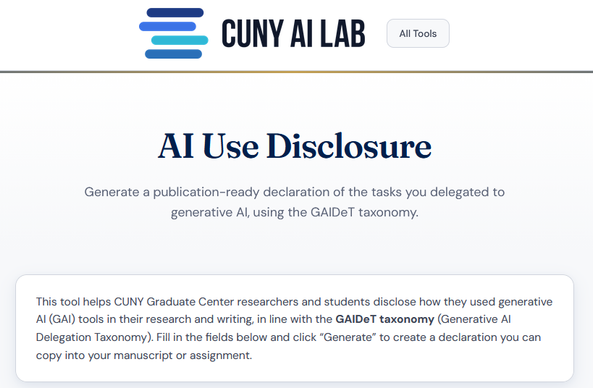
Virginia Tech published something many universities still lack: Practical guidance on how to use AI responsibly in research - step by step, across the entire research lifecycle.

πŸ”— https://www.research.vt.edu/research-support/forms-guidance/sirc/considerations-responsible-ethical-use-ai.html

Not abstract principles. Concrete prompts. Clear warnings about IP, confidentiality, hallucinations, and dual-use risks. #AI should support thinking β€” not replace it.

#ResponsibleAI #ResearchIntegrity #OpenScience #AIinResearch #AIinScience #AIethics #universities

Considerations for the Responsible and Ethical Use of AI