 Charlotte Aten
It's a bit unfortunate that #Lua is a much more common word in Portuguese than #Python is in English. I see that there is the #LuaLang hashtag, and I'm sure it gets more use than #PythonLang (relative to the popularity of each programming language).
 Joseph Nuthalapati
I was completely unaware of this project until today. CPython is getting a JIT (just-in-time) compiler!
Python 3.15’s JIT is now back on track | Ken Jin’s Blog
https://fidget-spinner.github.io/posts/jit-on-track.html
 Blain Smith
Just got finished setting up sqlc tooling for a monorepo with Go and Python. Now it will generate code for each language based on a single set of *.sql files with query statements. Python support is just beta, but these queries are not complicated.
#GoLang #Python #PythonLang #sqlc #CodeGen
#GoLang #Python #PythonLang #sqlc #CodeGen
 Albert Vilella, PhD.
@tommytang.bsky.social On #ComputerLanguages for #Bioinformatics
There is an era of #Bioinformaticians who learned #R #RLang back when #Python #PythonLang wasn't very good at statistics/plotting. More recently, the trend has shifted towards the latter.

 lambdageek
Trying to do some data science on the crates.io bulk DB dump.
The following two crates are "fun" for python:

 Todd A. Jacobs | Rubyist
#RubyLang is an extremely capable programming language. I've always wondered why 99% of the code for #LLM and #AI / #ML is done in #PythonLang and (for no obvious good reason) #JavaScript, #TypeScript, or #ECMAscript.
The on-ramp for Python may be easier, but it's overall less consistent and IMHO more obscure and less capable for introspection, DSLs, and for metaprogramming, so why is its ecosystem bigger for AI/ML? I wish someone would explain that in a non hand-wavey way.
 M. H. Neifer
"Rust usage for Python extensions surged 22% in one year as developers choose memory safety and C-level performance over traditional approaches."
https://thenewstack.io/rust-pythons-new-performance-engine/
#rustlanguage #rustlang #rust #pythonlanguage #pythonlang #python

 Nube Colectiva
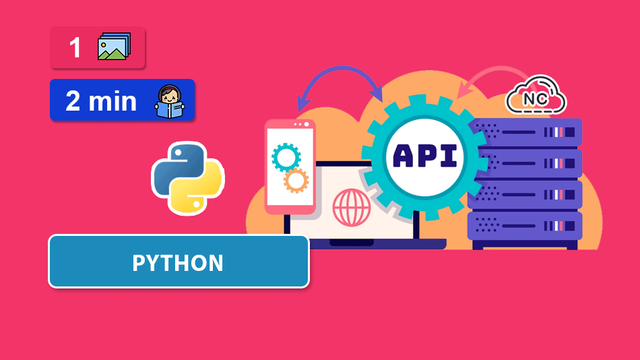
Como Leer Una API con Python.
👉 https://blog.nubecolectiva.com/como-leer-una-api-con-python/
#programming #coding #programación #webdevelopment #devs #softwaredevelopment #pythonlang #api

 :: Asta ::
getting back into Python is weird because like every time I do there's a new fresh hotness to theoretically end all hotnessess re: package installation
and then the next time I get back in people are like, "that was such horseshit, this is the thing"
"wheel is bad, but poetry: so good!"
"poetry is shit, something something else is good (I dunno I kinda don't remember the name for this one)"
"we don't need that old one, we have WHEEL!"
motherfuckers
(yes, these are real things)
#techPosting #pythonLang #pythonPackaging
and then the next time I get back in people are like, "that was such horseshit, this is the thing"
"wheel is bad, but poetry: so good!"
"poetry is shit, something something else is good (I dunno I kinda don't remember the name for this one)"
"we don't need that old one, we have WHEEL!"
motherfuckers
(yes, these are real things)
#techPosting #pythonLang #pythonPackaging
 WetHat💦
Python at the Speed of Julia - Glass Notebook
The article explores various methods and tools that can be utilized to enhance Python’s execution speed without sacrificing its simplicity and readability.
#Python #JuliaLang #PythonLang #performance #programming #CompSci #ComputerScience
https://glassnotebook.io/r/dxJTYbJBmPR1X3NQUfwXB/99_python_at_the_speed_of_julia.jl