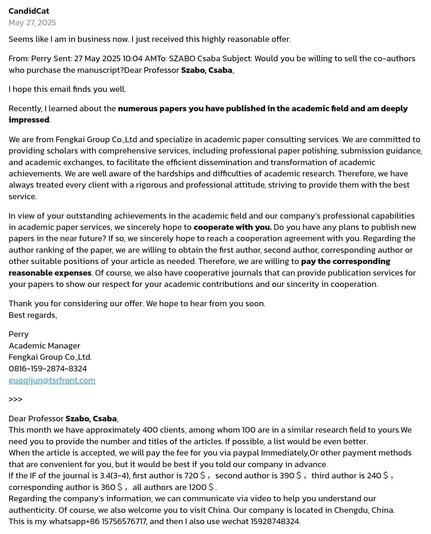
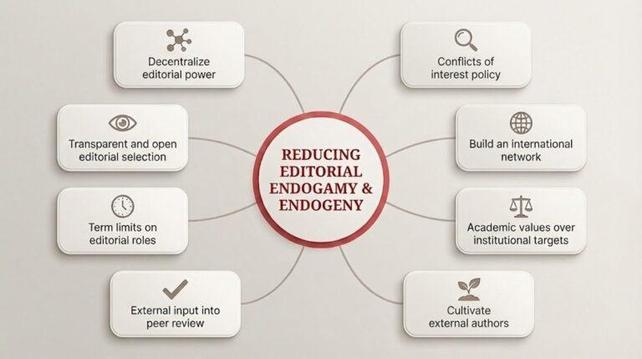
@marcell_o @ChrisMayLA6
Here's a tentative explanation :
(1) Academics are trained to think that publishing our research in certain journals is seen by other academics as "more impactful" and "better". So, when we have some result to publish we tend to submit it to specific, "high reputation" journals.
(2) A lot of these journals (for example: "Nature" or "Cell") belong to for-profit editors like Nature Publishing group, Elsevier etc.
(3) The for-profit editors set up a very profitable system where authors / their university pay to publish AND pay to access the articles, the public also pays to read, while authors provide not only the contents but also the added value of publication - peer-reviewing - for free.
(4) By the way, this has been originally setup by Robert Maxwell, who is, guess what??, the father of Ghislaine Maxwell (source]
(5) Many researchers do not seem to realise that this is an exploitative system based on smokes and mirrors (the quality of an article is unrelated to the "reputation" of the journal it's published in, and that "reputation" is not quantifiable anyway) so they keep publishing in these journals and some of them still use the journal names for hiring and promotion.
(6) Some journals are non-profit and propose good alternatives to the for-profit system (e.g. "eLife"); however many researchers avoid publishing there because they think it won't be useful to their CV. Some universities or funding organisations say that they do not care about the reputation system (DORA agreements) but the researchers still seem fixated on it.
(7) Some other journals are also non-profit (society journals like Journal of Neuroscience) but they still somehow make huge profits and their CEO / employees get paid a lot, so they don't actually seem that different to the for-profit..
(8) in summary, researchers want to publish in the for-profit journals because they think that these journals have better reputation and they increase our chances of getting jobs and funding. Many researchers believe in this "reputation" story and are either not aware of the exploitative aspects or do not really care about it. Alternatives are not perfect and have been mostly neglected...
Disclaimer: this is just my point of view for the field of #Neuroscience
What to do about it? That's probably for another post.. But personally I try not to publish in for-profit journals, and I prioritize reviewing for non-profit ones.
#AcademicChatter #PublicationEthics #Elsevier #Maxwell
 Jan R. Boehnke
 Serhii Nazarovets

 Matt Hodgkinson
 Laborjournal
 El Duvelle