#CFP

C21MP / MOCReN Collaborative Research Challenge: Algorithmic Intervention on Music Platforms

Practice-based research challenge on algorithmic recommendation systems, streaming platforms, and “algorithmized selves”. Invites playful and reflexive interventions into Spotify, YouTube, TikTok, SoundCloud and related platforms.

Deadline: 24/07/2026

https://www.c21mp.org/front-page/get-involved/research-challenges/c21mp-mocren-collaborative-research-challenge/

#MusicTech #PlatformStudies #DigitalMusicology #MusicResearch #AI

✨ new project ✨ "k-platforms: codeveloping tools and methods for studying digital platforms and cultures in South Korea" with @lbngr Chamee Yang & June Jeon: https://jonathangray.org/2026/04/16/k-platforms
#kakao #naver #apps #southkorea #platformstudies #internetstudies
k-platforms: co-developing tools and methods for studying digital platforms and cultures in South Korea

What are Korean platforms? What are their histories? How do they compare to platforms elsewhere? How can we do research with and about them? I’m part of a new project on Korean platforms, together Liliana Bounegru, Chamee Yang (Seoul National University) and June Jeon (KAIST).

Jonathan W. Y. Gray

There will be a book on the #Atari #8bit computers from Pawel Grabarczyk in the #PlatformStudies series this autumn:

https://www.penguinrandomhouse.com/books/830569/at-the-end-of-the-rainbow-by-pawel-grabarczyk/

At the End of the Rainbow by Pawel Grabarczyk: 9780262054690 | PenguinRandomHouse.com: Books

Buy At the End of the Rainbow by Pawel Grabarczyk from Penguin Random House

PenguinRandomhouse.com

📄 Neue Ausgabe in unser Working Paper Series da: No. 39 beschäftigt sich mit der Plattformisierung der Drohnenkriegsführung im Ukrainekrieg

🎤 Hendrik Bender und Max Kanderske: The Amazon of Drone Warfare
🔗 Open Access: https://lnkd.in/e9xCEYUT

#SFB1187 #WorkingPaper #MedienderKooperation #OpenAccess #Platforms #DroneWarfare #Ukraine #PlatformStudies #FPVDrone #Gamification

#HelloESR #Introduction Hello from “Blood and Data Flows: Exploring MenstruTech,” a French ANR-funded research project led by @moossye .

We study menstrual cycle tracking apps from the perspective of user practices as well as their back-end infrastructures. We are currently wrapping up a year-long investigation with app designers and with scientists who conduct research using the data these platforms generate. Our work is grounded in #Feminist and #Queer #STS, and examines how data derived from gendered bodily experiences circulate—and how knowledge is produced from them.

Oh, and btw, we also monitor how conservative and neo-fascist movements weaponize digital technologies against minorities… because we enjoy keeping things light and optimistic.

#FeministSTS #QueerStudies #DigitalHealth #DataStudies #CriticalData #PlatformStudies #GenderAndTechnology #ReproductiveHealth #QualitativeResearch

My new book is out with Bloomsbury: LiveJournal and Russian Disinformation: The Rise of Epistemic Sabotage. It uses LiveJournal as an early case of how platform affordances were weaponized and develops a framework (“epistemic sabotage”) for knowledge-system destabilization. If you want access without the academic price tag, please request it through your library. https://www.bloomsbury.com/us/livejournal-and-russian-disinformation-9781666954555/ #disinformation #platformstudies #mediastudies #libraries #digitalhumanities #Bookstodon

Strong Evaluation in a Flat World: Resisting the Neutrality of Platforms

https://social.trom.tf/display/dbc8dc44-2068-8d0d-266c-7e1280384879

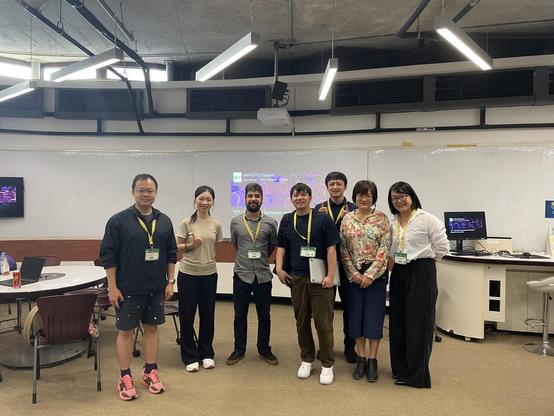
🌐 Thanks to everyone who joined our #IAMCR2025 panel on #GenerativeAI #Governance at Nanyang Technological University Singapore!

Papers covered:
• Worker-led AI & Hollywood strikes
• Platform ordering in generative AI
• Data annotation labour in China
• Comparing GenAI patents in China, US and EU

Some are included in a forthcoming Information, Communication & Society special issue I’m co-editing with Fabian Ferrari. Let’s keep the discussion going!

#PlatformStudies #DigitalLabour #GenAI

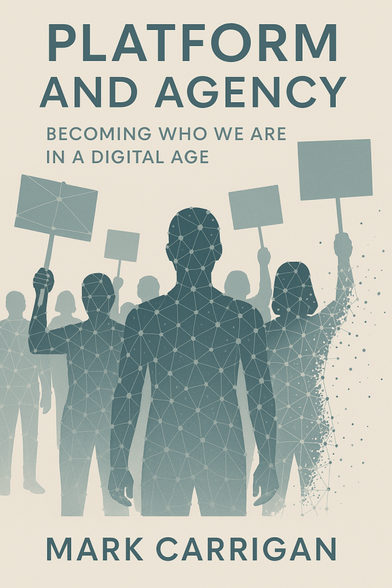
Platform and Agency: Becoming Who We Are

Well I’m a bit dismayed that it’s £145 and hardback only (at least initially) but still nice to see this being trailed for an October release:

This book examines how digital platforms are reconfiguring the parameters of agency and reflexivity in contemporary social life. Drawing on Margaret Archer’s social realist framework, it moves beyond treating platforms merely as tools or environments to conceptualize them as distinct sociotechnical structures with emergent properties and powers that shape human action without determining it.

The book develops the concept of platform and agency to explore the temporal dimensions of sociotechnical change, tracing how platforms condition personal and collective reflexivity through mechanisms of distraction, cultural abundance, and multiplying communication channels. While affirming the analytical distinction between structure, culture and agency, it demonstrates how platforms constitute a fourth dimension necessary for understanding contemporary social morphogenesis. Through the conceptual pairing of psychobiography and personal morphogenesis, the book offers a nuanced account of how individuals become who they are within platformized lifeworlds. Rather than announcing an epochal break with previous social forms, the analysis illuminates the accumulating consequences of platform mediation across biographical timescales.

This book will interest researchers and graduate students in social theory, philosophy of technology, digital sociology, platform studies, media and communication studies, critical data studies, internet studies, surveillance studies, sociology of knowledge, digital anthropology, and social informatics.

#BecomingWhoWeAre #personalMorphogenesis #PlatformAndAgency #platformStudies #realistSocialTheory #reflexivity

Platform and Agency: Becoming Who We Are

This book examines how digital platforms are reconfiguring the parameters of agency and reflexivity in contemporary social life. Drawing on Margaret Archer's social realist framework, it moves beyond treating platforms merely as tools or environments to conceptualize them as distinct sociotechnical structures with emergent properties and powers that shape human action without determining it. The book develops the concept of platform and agency to explore the temporal dimensions of sociotechnical

Routledge & CRC Press

After 16 years and 7 months I’ve finished Platform and Agency

I’ll do one more read through when it gets back from my proof reader, but the book I started in September 2008 with my PhD is now finished 👇

The virtue of the detraditionalisation thesis lay in its insistence on a meta-process, a change which exceeds empirical trends which can be measured. It provides, as Lundby (2009: 141) puts it, “a meta approach that makes it possible to integrate very different results of surveys and qualitative investigations into an overall coherent understanding”. The problems with the detraditionalisation thesis arose from the grandiose poetics which left it captivated by its own pronouncements about epochal change. For this reason I believe we ought to be as cautious as we can be about declaring an outcome to sociotechnical change, without dispensing with the recognition that there will be an outcome. If anything the vast investment in LLMs and the data infrastructure which supports them, intersecting with a post-pandemic political economy which appears to be leaving neoliberalism behind, heralds an intensification of change rather than a diminution (Tooze 2021, Varoufakis 2023). It’s possible this might be leading towards a perpetual polycrisis, a social order unable to stabilise itself amidst an accelerating climate catastrophe. But even this doom loop, suggested by Seymour’s (2024) notion of disaster nationalism, represents a social order of sorts, even if it’s an apocalyptic one. 

It is difficult to incorporate this horizon of crisis into our frame of reference without subordinating our analysis of the interaction phase through which it is being generated. However by  approaching platformisation through the concepts of psychobiography and personal morphogenesis, I have argued that we can avoid both grandiose (and premature) pronouncements about a ‘digital age’ and dismissive rejections of the reality of genuine change. The analysis I’ve offered of distracted people and fragile movements explores how platforms reconfigure rather than replace human agency. By examining how reflexivity operates within platformised contexts, tracing its biographical unfolding rather than proclaiming wholesale transformation, we gain a more textured understanding of contemporary social life. This has meant breaking with an account of agency premised, as Savage (2021: 191) puts it,  “on this ontological temporal difference between past, enduring structures, and a contemporary contingent agency that breaks from them”. Unless we can surrender this baggage, we are left with a meta-process defined through the falling away of the past, operationalising ‘tradition’ as that which is experiencing a decline and thus squeezing out continuities through definitional fiat. The problem is not an epochal horizon, as much as ontological assumptions which lead to the epistemic mistakes of pronouncing epochal change in a grandiose and premature manner. A realist conception of the platform can acknowledge its emerging status as a condition of our social existence, while remaining clear that is we who must decide what to make of it.

#biography #criticalRealism #epochalTheorising #personalMorphogenesis #PlatformAndAgency #platformStudies #socialChange #socialRealism