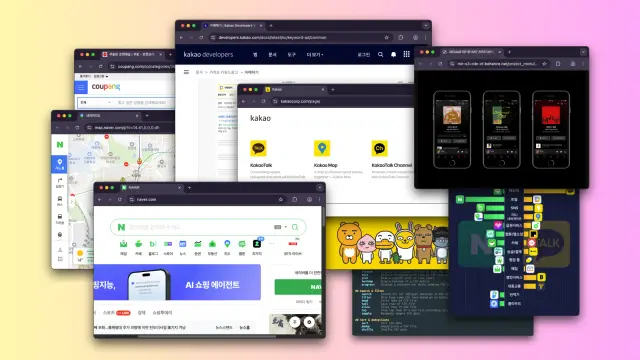
📄 Neue Ausgabe in unser Working Paper Series da: No. 39 beschĂ€ftigt sich mit der Plattformisierung der DrohnenkriegsfĂŒhrung im Ukrainekrieg

đŸŽ€ Hendrik Bender und Max Kanderske: The Amazon of Drone Warfare
🔗 Open Access: https://lnkd.in/e9xCEYUT

#SFB1187 #WorkingPaper #MedienderKooperation #OpenAccess #Platforms #DroneWarfare #Ukraine #PlatformStudies #FPVDrone #Gamification

#HelloESR #Introduction Hello from “Blood and Data Flows: Exploring MenstruTech,” a French ANR-funded research project led by @moossye .

We study menstrual cycle tracking apps from the perspective of user practices as well as their back-end infrastructures. We are currently wrapping up a year-long investigation with app designers and with scientists who conduct research using the data these platforms generate. Our work is grounded in #Feminist and #Queer #STS, and examines how data derived from gendered bodily experiences circulate—and how knowledge is produced from them.

Oh, and btw, we also monitor how conservative and neo-fascist movements weaponize digital technologies against minorities
 because we enjoy keeping things light and optimistic.

#FeministSTS #QueerStudies #DigitalHealth #DataStudies #CriticalData #PlatformStudies #GenderAndTechnology #ReproductiveHealth #QualitativeResearch

My new book is out with Bloomsbury: LiveJournal and Russian Disinformation: The Rise of Epistemic Sabotage. It uses LiveJournal as an early case of how platform affordances were weaponized and develops a framework (“epistemic sabotage”) for knowledge-system destabilization. If you want access without the academic price tag, please request it through your library. https://www.bloomsbury.com/us/livejournal-and-russian-disinformation-9781666954555/ #disinformation #platformstudies #mediastudies #libraries #digitalhumanities #Bookstodon

Strong Evaluation in a Flat World: Resisting the Neutrality of Platforms

https://social.trom.tf/display/dbc8dc44-2068-8d0d-266c-7e1280384879

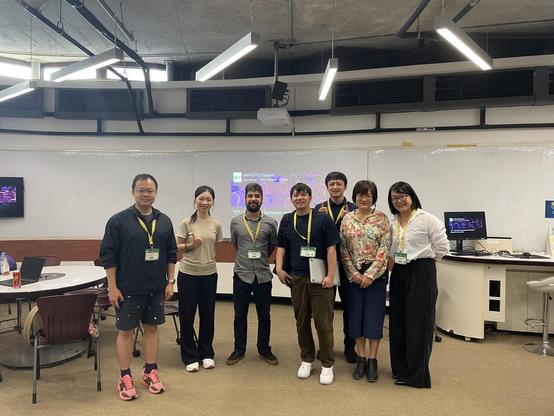
🌐 Thanks to everyone who joined our #IAMCR2025 panel on #GenerativeAI #Governance at Nanyang Technological University Singapore!

Papers covered:
‱ Worker-led AI & Hollywood strikes
‱ Platform ordering in generative AI
‱ Data annotation labour in China
‱ Comparing GenAI patents in China, US and EU

Some are included in a forthcoming Information, Communication & Society special issue I’m co-editing with Fabian Ferrari. Let’s keep the discussion going!

#PlatformStudies #DigitalLabour #GenAI

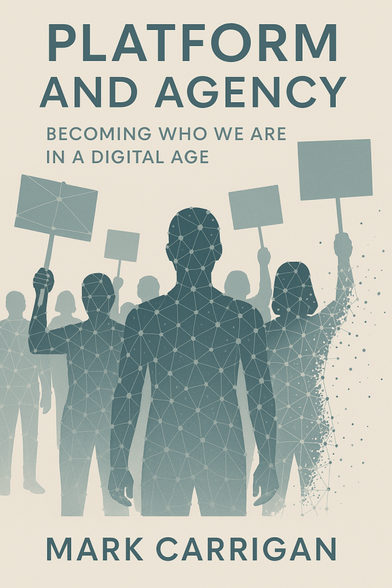
Platform and Agency: Becoming Who We Are

Well I’m a bit dismayed that it’s £145 and hardback only (at least initially) but still nice to see this being trailed for an October release:

This book examines how digital platforms are reconfiguring the parameters of agency and reflexivity in contemporary social life. Drawing on Margaret Archer’s social realist framework, it moves beyond treating platforms merely as tools or environments to conceptualize them as distinct sociotechnical structures with emergent properties and powers that shape human action without determining it.

The book develops the concept of platform and agency to explore the temporal dimensions of sociotechnical change, tracing how platforms condition personal and collective reflexivity through mechanisms of distraction, cultural abundance, and multiplying communication channels. While affirming the analytical distinction between structure, culture and agency, it demonstrates how platforms constitute a fourth dimension necessary for understanding contemporary social morphogenesis. Through the conceptual pairing of psychobiography and personal morphogenesis, the book offers a nuanced account of how individuals become who they are within platformized lifeworlds. Rather than announcing an epochal break with previous social forms, the analysis illuminates the accumulating consequences of platform mediation across biographical timescales.

This book will interest researchers and graduate students in social theory, philosophy of technology, digital sociology, platform studies, media and communication studies, critical data studies, internet studies, surveillance studies, sociology of knowledge, digital anthropology, and social informatics.

#BecomingWhoWeAre #personalMorphogenesis #PlatformAndAgency #platformStudies #realistSocialTheory #reflexivity

Platform and Agency: Becoming Who We Are

This book examines how digital platforms are reconfiguring the parameters of agency and reflexivity in contemporary social life. Drawing on Margaret Archer's social realist framework, it moves beyond treating platforms merely as tools or environments to conceptualize them as distinct sociotechnical structures with emergent properties and powers that shape human action without determining it. The book develops the concept of platform and agency to explore the temporal dimensions of sociotechnical

Routledge & CRC Press

After 16 years and 7 months I’ve finished Platform and Agency

I’ll do one more read through when it gets back from my proof reader, but the book I started in September 2008 with my PhD is now finished 👇

The virtue of the detraditionalisation thesis lay in its insistence on a meta-process, a change which exceeds empirical trends which can be measured. It provides, as Lundby (2009: 141) puts it, “a meta approach that makes it possible to integrate very different results of surveys and qualitative investigations into an overall coherent understanding”. The problems with the detraditionalisation thesis arose from the grandiose poetics which left it captivated by its own pronouncements about epochal change. For this reason I believe we ought to be as cautious as we can be about declaring an outcome to sociotechnical change, without dispensing with the recognition that there will be an outcome. If anything the vast investment in LLMs and the data infrastructure which supports them, intersecting with a post-pandemic political economy which appears to be leaving neoliberalism behind, heralds an intensification of change rather than a diminution (Tooze 2021, Varoufakis 2023). It’s possible this might be leading towards a perpetual polycrisis, a social order unable to stabilise itself amidst an accelerating climate catastrophe. But even this doom loop, suggested by Seymour’s (2024) notion of disaster nationalism, represents a social order of sorts, even if it’s an apocalyptic one. 

It is difficult to incorporate this horizon of crisis into our frame of reference without subordinating our analysis of the interaction phase through which it is being generated. However by  approaching platformisation through the concepts of psychobiography and personal morphogenesis, I have argued that we can avoid both grandiose (and premature) pronouncements about a ‘digital age’ and dismissive rejections of the reality of genuine change. The analysis I’ve offered of distracted people and fragile movements explores how platforms reconfigure rather than replace human agency. By examining how reflexivity operates within platformised contexts, tracing its biographical unfolding rather than proclaiming wholesale transformation, we gain a more textured understanding of contemporary social life. This has meant breaking with an account of agency premised, as Savage (2021: 191) puts it,  “on this ontological temporal difference between past, enduring structures, and a contemporary contingent agency that breaks from them”. Unless we can surrender this baggage, we are left with a meta-process defined through the falling away of the past, operationalising ‘tradition’ as that which is experiencing a decline and thus squeezing out continuities through definitional fiat. The problem is not an epochal horizon, as much as ontological assumptions which lead to the epistemic mistakes of pronouncing epochal change in a grandiose and premature manner. A realist conception of the platform can acknowledge its emerging status as a condition of our social existence, while remaining clear that is we who must decide what to make of it.

#biography #criticalRealism #epochalTheorising #personalMorphogenesis #PlatformAndAgency #platformStudies #socialChange #socialRealism

Using reasoning models to support theory-building

If you’ve not tried this, I highly recommend it. I’ve barely scratched the surface but this was GPT o1’s response to the question: “Should the category of ‘platform’ be a central category of sociological analysis, analogous to ‘structure’ and ‘agency’?”

Whether “platform” should join “structure” and “agency” as a central, standalone category of sociological analysis is a matter of ongoing debate. On one hand, it’s clear that digital platforms—like Facebook, Twitter/X, YouTube, TikTok, Uber, Airbnb, Amazon—are not merely new media formats or corporate business models. They also shape social action in distinctive ways, influencing how we work, communicate, organize politically, and even form identities. On the other hand, there is a question as to whether “platform” points to something so fundamentally novel that it requires its own theoretical category, or whether it is best seen as a specific kind of social structure (or socio-technical assemblage) that still fits under the older rubrics of “structure” and “agency.”

Below are some considerations that help clarify why sociologists are increasingly turning to “platform” as a key concept—and whether it rises to the level of “structure” or “agency.”

1. Platforms as Socio-Technical Infrastructures

Argument for treating “platform” as a central concept:
Platforms operate as socio-technical infrastructures, facilitating (and constraining) social life in a way that is both material and symbolic. Like highways, railroads, or electrical grids, they have become embedded in everyday life, shaping and enabling certain forms of interaction. But unlike most traditional infrastructures, platforms often incorporate algorithmic decision-making, extract user data, and self-update at scale. This makes them active participants in social ordering rather than merely passive channels for human action.

If we look at “structure” in classical sociological terms (e.g., Durkheim, Parsons, Giddens), it often refers to stable patterns of social relations, institutions, norms, and resources. Yet platforms are dynamic systems: they morph through updates, policies, and algorithmic tweaking. Their affordances can rapidly shift, creating novel patterns of inclusion and exclusion. Hence, some scholars argue that “platform” highlights these new dynamics more precisely than the broad term “structure” does.

2. Platforms as Gateways to Agency

Argument for integration under existing categories (structure/agency):
From another perspective, the key insight of the structure–agency debate is precisely that social life involves ongoing interplay between broad social forces (structure) and individual or collective capacities to act (agency). Platforms, in this sense, can be interpreted as a new kind of social structure—one that is digitally mediated but still shapes and is shaped by human agency. Users can creatively engage with platforms, but their choices are funneled through interface designs, algorithmic rules, business models, and terms of service.

  • Structure: The platform’s architecture, algorithms, data policies, and ownership models.
  • Agency: The creative actions of individuals and groups using, resisting, or repurposing platform functions.

This reading suggests that platforms do not require a separate conceptual status but rather exemplify how digital infrastructures function as a powerful structural force, simultaneously enabling and constraining user agency.

3. Platforms and Power

Why “platform” might matter in its own right:
Digital platforms raise distinct questions about power and governance. They sit at the intersection of markets, states, and everyday life. For instance, data extraction, targeted advertising, and algorithmic curation introduce new forms of social control—often privatized, proprietary, and opaque. The notion of “platform governance” or “platform capitalism” points to logics that are different from classic state regulation or older capitalist enterprises.

  • Datafication and Surveillance: Platforms collect and monetize user data, shaping surveillance practices in ways that produce new structural asymmetries (platform owners vs. users).
  • Algorithmic Governance: Automated systems decide visibility, relevance, or even credibility of information. This shapes cultural production and public discourse.
  • Monopolistic Power: Many platforms function as near-monopolies or oligopolies, reshaping labor (e.g., gig economy), media (e.g., news distribution), and personal relationships (social networking).

From this vantage, “platform” captures a constellation of power relations, economic models, and technical logics that may not be neatly encompassed by the more generic category of “structure.”

4. Platforms as Relational, Not Merely Technological

Scholars in platform studies emphasize that platforms are relational—they connect different user groups, advertisers, developers, governments, and so on, often under terms set unilaterally by the platform owner. These shifting relational ties create a meta-structure that is neither purely technological nor purely social. Some consider it akin to an institutional form or “platform institutionalism,” with rules and norms that differ substantially from, say, a family unit, a workplace, or a nation-state.

If we maintain a classic sociological approach, we can see this as a novel set of “structural” relations: hierarchy (platform owners) vs. participants (end-users, third-party developers, advertisers), each with differing degrees of power and knowledge. Yet the concept of “platform” helps us foreground how these new forms of relationality and governance are emergent and deeply intertwined with digital technology.

5. Should “Platform” Be Elevated to a Core Category?

The Case For

  • Novelty of Platform Power: The specific economic, algorithmic, and infrastructural logics of platforms (e.g., data extraction, network effects, lock-in, proprietary algorithms) represent a qualitative transformation of social organization and power.
  • Core of the Digital Age: As social life, politics, and culture become “platformized,” the phenomenon is central enough to demand explicit theorization distinct from standard social structures.
  • Hybrid Social–Technical Assemblages: Platforms complicate the long-standing sociological binaries of macro/micro or structure/agency, because they operate at multiple levels simultaneously: from user interface design (micro) to global data flows (macro).
  • The Case Against

  • Platforms as a Sub-Case of Structure: Ultimately, platforms are structures—albeit new, technologically driven ones. They belong within existing frameworks of sociological analysis (structure vs. agency, macro vs. micro, etc.).
  • Risk of Overemphasis: Declaring “platform” a brand-new category might fragment sociological theory or overshadow the fact that many “platform effects” replicate old inequalities or power struggles.
  • Existing Theoretical Tools: Concepts like field, network, institution, and discourse (Bourdieu, Latour, Goffman, Foucault) can be extended to analyze how platforms shape power, knowledge, and social interaction without the need for a separate fundamental category.
  • 6. Conclusion: An Evolving Consensus

    While it remains open whether “platform” will endure as a sociological category on par with “structure” or “agency,” there is little doubt that it has become central to empirical studies of digital society. Much like “institution” or “field” in earlier sociological writing, “platform” captures a specific way that social relations are organized and governed.

    • Analytically, it can be productive to treat “platform” as a key concept—one that highlights the socio-technical and economic specificities of digital media environments.
    • Theoretically, whether it becomes a foundational category alongside “structure” and “agency” depends on how well it can integrate with, or transform, our broader frameworks of sociological thought.

    In practice, many sociologists today do treat “platform” as a near-axiomatic concept, precisely because so much of contemporary social life—including labor, culture, politics, and personal relationships—runs through platform infrastructures. At the same time, some argue that we should tread cautiously, applying “platform” as a lens to analyze new social forms without prematurely elevating it to the status of an all-encompassing category.

    In short, there is no settled answer—but there is a clear imperative to study platforms and to refine our theoretical tools in light of the profound reorganization of social life that platforms are bringing about. Whether that means adding “platform” to the triumvirate of “structure” and “agency” is an ongoing, generative debate in contemporary sociology.

    #GPTO1 #platformStudies #reasoningModels

    ENACTING PLATFORMS: FEMINIST TECHNOSCIENCE AND THE UNREAL ENGINE

    James MalazitaAn analysis of the game engine Unreal through feminist, race, and queer theories of technology and media, as well as a critique of the platform studies framework itself.In this first scholarly book on the Unreal game engine, James Malazita explores one of the major contemporary game development platforms through feminist, race, and queer theories of technology and media, revealing how Unreal produces, and is produced by, broader intersections of power. Enacting Platforms takes a no

    TheVideoGameLibrary
    TOO MUCH FUN: THE FIVE LIVES OF THE COMMODORE 64 COMPUTER

    "Too Much Fun" explores the surprising history of the Commodore 64, the best-selling, fun-filled computer of the '80s.

    TheVideoGameLibrary