 Will 🇯🇵
‘Listen like you might be wrong.’
Congratulations to the Harvard Class of ‘26.

‘Listen like you might be wrong.’
Congratulations to the Harvard Class of ‘26.
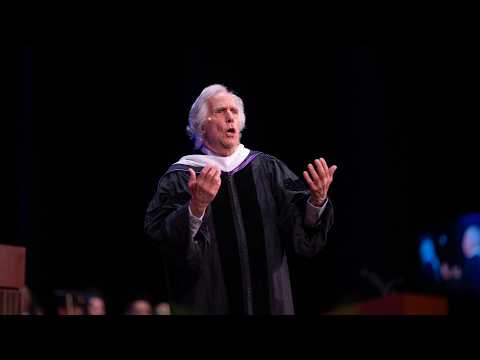
Henry Winkler Delivers Commencement Address to Emerson College 2026 Graduates
Love to hear a dyslexic who succeeded talk about the importance of persistence in the face of ableism.
https://www.youtube.com/watch?v=Ui0gxIzyhkM #Oratory #Empathy
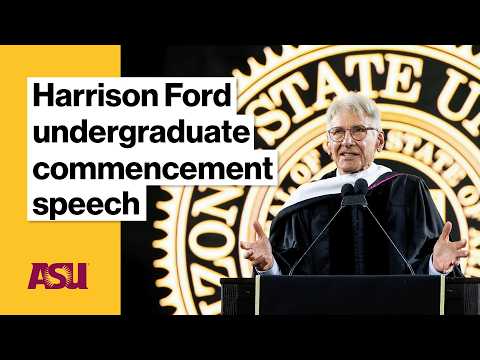
Harrison Ford undergraduate commencement address: Arizona State University (ASU)
“Give me the liberty to know, to utter, and to argue freely according to conscience, above all liberties”*…
Today we have Substack and social media and blogs. In the old days, we “spoke” in person…
Speaker’s Corner, in Hyde Park in London, is a fabled site of on-going, open public speeches and debate. As Amelia Soth reminds us, that tradition also has a long history in the U.S…
There is nothing in American civic life today like Chicago’s old “Bughouse Square.” From the 1890s to the mid-1960s, it was a hotspot for soapbox speakers: radicals, evangelists, cranks, poets, philosophers, and eccentrics. Anyone with a perspective outside the mainstream gathered there nightly to declaim from their improvised podiums. The ethos, as one newspaper put it, was “free speech and the louder the better.” People actually came to listen, too, in crowds.
Bughouse Square (properly named Washington Square Park) might be the most famous free-speech center, but the practice of soapboxing stretched from sea to shining sea. New York City had its own crew of “peripatetic philosophers.” Hubert Harrison, known as the “Black Socrates,” delivered his critiques of capital right in front of the New York Stock Exchange. Then there was Portia Willis, the “suffrage beauty,” who drew in crowds with her looks and kept them with her wits.
As Mary Anne Trasciatti writes in “Athens or Anarchy? Soapbox Oratory and the Early Twentieth-Century American City,” the soapbox was a particularly democratic mode of public address. Even if you couldn’t get your cause into a meeting hall or a newspaper column, you could still hop on a box, lift your head a few inches above the crowd, and start talking. But that doesn’t mean just anyone could be a successful soapboxer. You had to be a good speaker to keep the crowds listening.
People tried all kinds of tricks to get attention. One soapboxer (wonderfully named Lowlife McCormick) would perform a Houdini-like escape from a straitjacket, which he would then declare to be a metaphor for the bonds of wage labor. Another would catch the crowd’s attention by shouting “I’ve been robbed! I’ve been robbed!” Once he had their ears, he’d finish up with “…by the capitalist system!” A really good soapboxer could draw in so many listeners as to render the streets impassable. One photo shows anarchist Alexander Berkman completely surrounded by a sea of hats.
But the attention soapboxing attracted wasn’t always positive. The 1910s saw a series of vicious “free speech fights” kick off in cities like Spokane, San Diego, and Fresno. Grace L. Miller lays out the history of perhaps the most violent of these struggles in “The I.W.W. Free Speech Fight: San Diego, 1912.” Things started to heat up when a deputy sheriff drove his car into a crowd of people listening to a socialist speaker. One listener reacted by slashing the sheriff’s tire. Within two days, the city passed an ordinance banning street speaking.
In response, the I.W.W. (the Industrial Workers of the World, or the “Wobblies”) urged supporters to ride the rails to San Diego and fight for their right to soapbox:
Come on the cushions; ride up on top;
stick to the brake beams; let nothing stop.
Come in great numbers; this we beseech;
Help San Diego to win free speech.
Soapboxers descended on the town en masse. Each would step up on the box, say a word or two, and then get yanked off by the police and carried to jail. There’s even an old Wobbly joke about a speaker who starts his speech with the traditional salutation—“Fellow friends and workers”—and then, when he realizes no one’s coming to arrest him, panics and shouts “Where are the cops?!”
The Wobblies’ goal was to overwhelm the court system with free-speech cases until the city was forced to give up prosecuting soapboxers. Soon the jail was overflowing. But instead of following the legal process, the city discharged the arrestees right into the waiting arms of a vigilante gang, who drove the Wobblies to the county line and viciously beat them with axe handles.
It’s not exactly clear who the vigilantes were, but the gang may have been composed of some of the city’s most prominent citizens. A newspaper editor who was run out of town for his sympathy to the free-speechers wrote of them (as quoted by Miller): “The chamber of commerce and the real estate board are well represented. The press and public utility corporations, as well as members of the Grand Jury are known to belong.”
Yet the vigilantes went too far, and labor organizations called on the state government to intervene. The commissioner sent to investigate declared that the abuses he saw weren’t taking place in Tsarist Russia. At great personal cost, the Wobblies had put the concept of free speech to the test, and won…
When public oratory was a defining feature of civic life: “The Golden Age of the American Soapbox,” from @amelia-soth.bsky.social in @jstordaily.bsky.social.
* John Milton, Areopagitica: A Speech for the Liberty of Unlicens’d Printing, to the Parliament of England
###
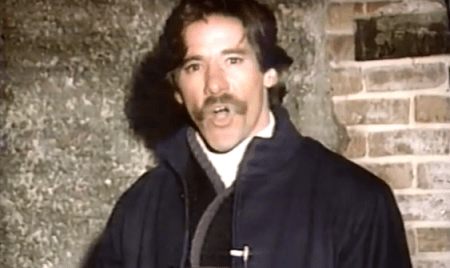
As we speak up, we might ponder another Chicago-related phenomenon, recalling that it was on this date in 1986 that Geraldo Rivera made a “shocking discovery”:
Notorious and “most wanted” gangster, Al Capone, began his life of crime in Chicago in 1919 and had his headquarters set up at the Lexington Hotel until his arrest in 1931.
Years later, renovations were being made at the hotel when a team of workers discovered a shooting-range and series of connected tunnels that led to taverns and brothels making for an easy escape should there be a police raid. Rumors were spread that Capone had a secret vault hidden under the hotel as well.
In 1985, news reporter Geraldo Rivera had been fired from ABC after he criticized the network for canceling his report made about an alleged relationship between John F. Kennedy and Marilyn Monroe. It seemed like a good time for Rivera to scoop a new story to repair his reputation.
It was on this day [that] a live, two-hour, syndicated TV special, The Mystery of Al Capone’s Vault aired. After lots of backstory, the time finally came to reveal what was in that vault. It turned out to be empty. After the show, Rivera was quoted as saying “Seems like we struck out.”
– source
#AlCapone #AlCaponeSVault #BughouseSquare #Chicago #culture #FreeSpeech #freedomOfSpeech #GeraldoRivera #history #oratory #politics #soapbox #SpeakersCorner #Wobblies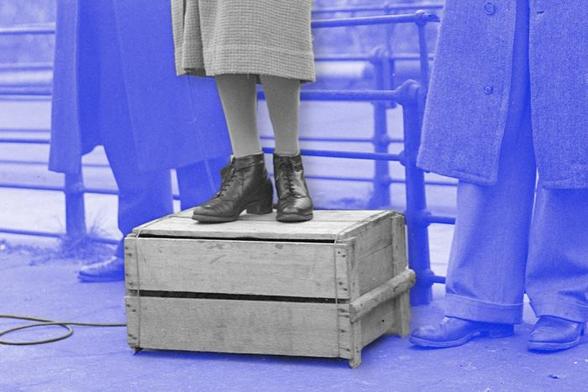
A quotation from Lyman Beecher
Eloquence is logic on fire.Lyman Beecher (1775-1863) American minister, preacher, abolitionist
(Attributed)
More about this quote: wist.info/beecher-lyman/83457/
#quote #quotes #quotation #qotd #lymanbeecher #eloquence #oratory #preaching #publicspeaking #speaking

Eloquence is logic on fire. This phrase is widely attributed to Beecher, but I cannot find a primary source. It is possible the overall phrase is from a combination of different Beecher comments about Theodore Weld (1803-1895), one of the founders of the American abolitionist movement. Beecher one time described…
William Shakespeare (1564-1616) English dramatist and poet
Merchant of Venice, Act 3, sc. 2, l. 77ff (3.2.77-79) (1597)
More about this quote: wist.info/shakespeare-william/…
#quote #quotes #quotation #qotd #shakespeare #williamshakespeare #merchantofvenice #court #evil #lawyer #legalsystem #oratory #plea #presentation #voice

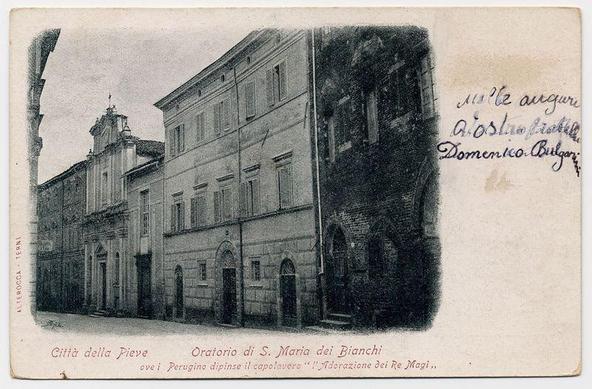
Città della Pieve - Oratorio di S. Maria dei Bianchi. All'interno L'adorazione dei Magi del Perugino
#Città #European #Tuscany #Italy #Oratory #SaintMary #Perugino #TheAdorationofMagi #Umbria #Perugia #CittadellaPieve #photography #FerroCandilera
 Megan Lynch (she/her)
 Megan Lynch (she/her)
 (Roughly) Daily
 WIST Quotations
 Nikolas Kozloff has moved
 Amy Serrat
 Ferro Candilera
 Drew
Drew