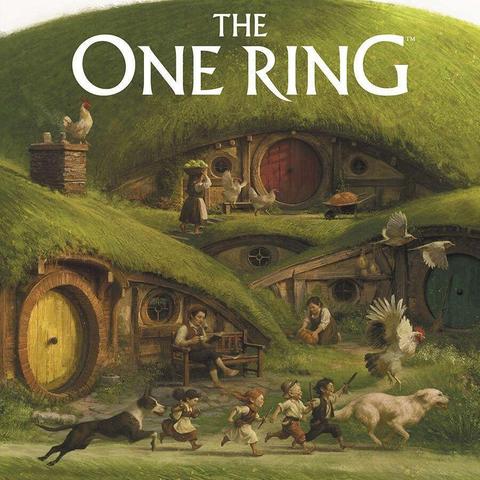
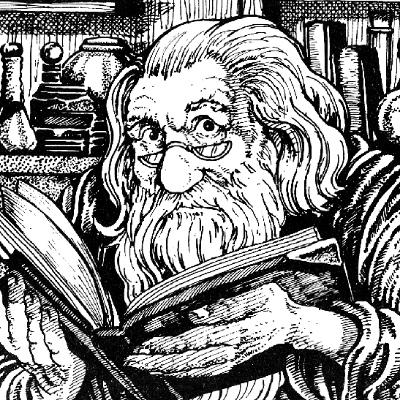
Free League Publishing's Hobbit Tales brings five Shire adventures to The One Ring as a standalone PDF. Play as Bilbo, Paladin Took, the Brandybucks - Hobbits whose descendants will go on to do extraordinary things, the Shire willing. #TheOneRingRPG #TTRPG #MiddleEarth #RPG
https://www.tabletopsentinel.com/news/fantasy/rpg-pdf-spotlight-the-one-ring-hobbit-tales?utm_source=mastodon

T.A.E.’s Book Review – The Lord of the Rings: The Return of the King by J.R.R. Tolkien

The Return of the King is not merely the conclusion to an epic adventure; it is the moral and emotional reckoning of the whole Lord of the Rings cycle. If The Fellowship of the Ring is the formation of trust and The Two Towers the testing of endurance, then The Return of the King is the book of restoration, sacrifice, and hard-won grace. Its grandeur lies not only in the fall of Sauron, but in the way Tolkien insists that history is changed less by splendour than by fidelity: by the hobbits who keep going, by kings who learn humility, and by ordinary acts of loyalty performed under impossible pressure.

One of the book’s great achievements is its doubleness of scale. It moves constantly between the immense and the intimate: the fate of kingdoms and the labor of carrying a friend. That tension is captured in one of the novel’s most moving lines, when Sam tells Frodo, “I cannot carry it for you, but I can carry you.” The sentence is simple, almost plainspoken, yet it expresses the book’s deepest ethic. Power is not defined as domination or even heroic self-sufficiency; it is defined as service. In Tolkien’s moral universe, the true antidote to despair is not brute force but companionship.

This ethic matters because The Return of the King is saturated with the experience of exhaustion. Frodo’s journey into Mordor is one of the bleakest and most psychologically severe passages in modern fantasy. Tolkien refuses the cheap consolations of heroic triumph. Instead, he renders will as something worn thin by hunger, fear, and spiritual contamination. Frodo does not conquer evil by becoming stronger in any conventional sense. He survives by enduring beyond what endurance should reasonably allow. That makes the ending both devastating and honest: victory arrives, but not without wound, fracture, and loss. The writer understands that some victories do not restore innocence; they only prevent final ruin.

Aragorn’s story offers a different but related form of heroism. He is the rightful king, yet Tolkien delays the full meaning of that kingship until the very end. Aragorn is never interesting because he claims power; he is interesting because he can bear it. His authority is rooted in healing, memory, and restraint. The return of the king is therefore not a mere political restoration but a moral one. Kingship in this allegory is legitimized by service to the vulnerable, not by spectacle. The heir of Isildur becomes a true ruler only when he embodies the virtues the age has forgotten.

The book also deepens the tragic dignity of the older characters, especially Denethor and Théoden. Théoden’s arc is perhaps the most moving example of Tolkien’s ability to combine epic romance with existential melancholy. He awakens from spiritual paralysis, rides with splendour into battle, and dies in a blaze of courage. His famous cry, “Forth, and fear no darkness!” distills the nobility associated with rightful resistance: not denial of death, but refusal to let death define the meaning of the moment. Denethor, by contrast, becomes a warning about what happens when grief hardens into nihilism and stewardship becomes possessiveness. Together they form a tragic pair: one who opens himself to courage, one who collapses into despair.

Stylistically, Tolkien is often at his best in this final volume. The prose can be elevated, ceremonial, and richly cadenced, but it can also turn suddenly lyrical. He repeatedly uses song, lament, and archaic diction to give the narrative a sense of remembered antiquity, as though the story were already becoming legend even as it unfolds. Some readers find this manner too formal, but the formality is part of the design. Tolkien is not trying to mimic modern realism; he is creating the texture of myth. The language enlarges events so they feel worthy of remembrance.

At the same time, the book’s emotional force comes from its insistence that even mythic greatness cannot erase smallness. The Scouring of the Shire is crucial here. After the cosmic struggle against Sauron, Tolkien brings the hobbits home only to show that evil also operates in petty bureaucratic, industrial, and domestic forms. This sequence is often underestimated, but it is one of the book’s most sophisticated gestures. It says that the defeat of a tyrant abroad does not automatically heal the corruption of a place, and that freedom must be defended at the local level as well as the epic one. The hobbits’ return reveals that heroism is incomplete unless it reaches home.

Perhaps the most haunting aspect of The Return of the King is its ending. It gives the reader triumph, but not uncomplicated closure. Frodo cannot remain in the world he saved; the wound he bears places him beyond ordinary restoration. That choice gives the ending a profoundly elegiac quality. The book understands that survival and belonging are not always the same thing. Its final movement toward departure is sad, beautiful, and spiritually honest. The world is healed, but the healers are changed.

As a work of literature, then, The Return of the King stands as one of the great endings in modern fiction because it does not simply resolve plot. It resolves a moral argument. It asks what kind of strength the world truly needs, and answers: humility, mercy, endurance, and love. In that sense, Tolkien’s final volume is not only the culmination of an epic; it is a meditation on the nature of hope itself—hope not as optimism, but as the courage to continue when one’s strength has nearly vanished.

#BookReviews #fantasy #JRRTolkien #LiteraryCriticism #MiddleEarth #Tolkien

T.A.E.’s Book Review – The Lord of the Rings: The Two Towers by J.R.R. Tolkien

The Two Towers is the most structurally daring volume in The Lord of the Rings. It is not merely the middle book of a trilogy; it is the point at which Tolkien splits his epic into two simultaneous moral laboratories. One half follows Frodo and Sam into the desolation of Mordor’s shadow; the other turns outward into war, history, and the fate of kingdoms. That division gives the novel a remarkable tension: it is at once intimate and monumental, devotional and political. Tolkien makes us feel that the world is breaking apart, and then insists that meaning still survives in the fractured pieces.

What is most striking is how the book deepens the theme of endurance. The heroes in The Two Towers do not conquer through glamour or force of personality. They persist. Frodo’s journey becomes increasingly inward, marked less by action than by burden, vigilance, and temptation. Sam, often treated as comic relief in lesser hands, emerges here as one of the author’s great moral figures: faithful, practical, and quietly heroic. His loyalty is not sentimental but active, a daily discipline of carrying on when hope has thinned almost to nothing. In Tolkien’s world, that is not a small virtue; it is the virtue that resists darkness.

By contrast, the Rohan and Isengard narrative expands the novel’s historical dimension. Tolkien uses the kingship of Théoden, the menace of Saruman, and the awakening of the Ents to show that the struggle against evil is not only personal but civilizational. The chapter titles themselves—such as “The Riders of Rohan,” “Treebeard,” and “The Voice of Saruman”—signal this widening scale. Each suggests a different mode of power: mounted nobility, ancient natural wisdom, and rhetorical corruption. Saruman is especially fascinating because he represents evil as manipulation of language. He does not simply command armies; he distorts speech, hierarchy, and perception. Tolkien repeatedly reminds us that words can heal, preserve, or poison.

One of the book’s most memorable moments comes in Gandalf’s return: “I am Gandalf the White.” The line is brief, but its force is immense. It announces not just resurrection, but transformation. Gandalf is no longer merely a guide; he becomes a figure of restored authority, one who has passed through death into a deeper kind of service. The author uses this moment to suggest that true power is inseparable from sacrifice. The same is true of the Ents. Their famous awakening is slow, almost comically deliberate, yet when it comes, it feels like the voice of the world itself answering violence with ancient patience. Their cry, “We come,” is one of the book’s most elemental statements: nature, history, and justice are not dead, only delayed.

Stylistically, Tolkien is at his best in this volume when he balances grandeur with attentiveness. He writes battle, landscape, and lament in a way that makes the reader feel the weight of time. Even the most action-driven sequences are haunted by elegy. Consider the emotional atmosphere created by Théoden’s court, where age, loss, and duty intermingle. The Riders of Rohan are not just warriors; they are heirs to a fading order. He loves such civilizations on the brink because they allow him to dramatize dignity under pressure. Again and again, the book asks what remains worth defending when ruin seems inevitable. The answer is never wealth or power. It is fellowship, memory, courage, and the stubborn good will of ordinary labor.

If The Fellowship of the Ring is about departure and The Return of the King is about fulfillment, The Two Towers is the book of trial. Its genius lies in making trial itself meaningful. The novel refuses easy consolation, but it never collapses into despair. Instead, it argues that hope is not a mood; it is a form of fidelity. That is why the book endures so powerfully. Beneath its swords, councils, and ancient songs, it offers a stern and beautiful moral vision: in a broken world, the smallest acts of loyalty may carry the largest weight.

Tolkien’s middle volume is therefore not transitional in the thin sense of “between.” It is the hinge on which the whole epic turns. It enlarges the world, deepens the darkness, and clarifies the stakes. And in doing so, it shows why Middle-earth continues to matter: it treats heroism not as spectacle, but as perseverance under unbearable strain.

#BookReviews #fantasy #JRRTolkien #LiteraryCriticism #MiddleEarth #Tolkien

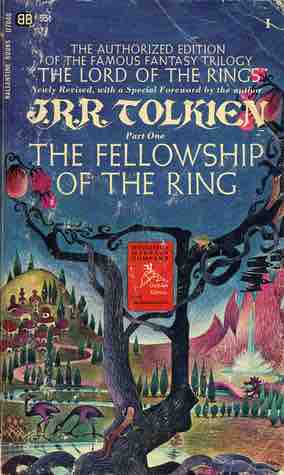
T.A.E.’s Book Review – The Lord of the Rings: The Fellowship of the Ring by J.R.R. Tolkien

J.R.R. Tolkien’s The Fellowship of the Ring is not merely the opening movement of an epic fantasy; it is a profound meditation on inheritance, corruption, fellowship, and the fragile moral burden of power. The novel begins in apparent pastoral ease—Hobbiton’s meals, routines, and domestic comforts—but it steadily reveals that such peace is never simple innocence. It is a cultivated moral order, one that can be preserved only through vigilance, sacrifice, and humility. The book’s deepest achievement is that it makes the epic feel intimate: the fate of the world rests not with kings at first, but with a quiet hobbit whose life is defined by ordinary habits. In that contrast lies much of Tolkien’s genius.

At the level of plot, the novel is deceptively linear: a ring is discovered, identified as dangerous, and then carried away under increasing threat. Yet Tolkien enriches this simplicity by embedding it in a mythic structure that feels ancient, as though the story has been remembered rather than invented. The Ring itself is the novel’s central symbol, not just an object of power but a moral pressure-point. Its inscription, “One Ring to rule them all,” condenses the logic of domination into a single chilling formula. Power here is never neutral; it is always possessive, reductive, and corrupting. The Ring does not merely tempt characters—it exposes what is already latent within them.

One of the novel’s most striking features is its treatment of character as moral drama. Frodo is not heroic in the traditional martial sense, and the author carefully resists turning him into a conventional chosen one. His greatness lies in endurance rather than triumph. Gandalf, too, is compelling precisely because his wisdom is paired with limitation: he does not solve the problem through force, and in fact insists that force is part of the danger. His warning that “all we have to decide is what to do with the time that is given us” captures the ethical pulse of the book. In Tolkien’s world, history is made less by destiny than by the quality of choices made under pressure.

The Fellowship itself is one of the novel’s most subtle achievements. It is not a sentimental team assembled for convenience, but a deliberately unstable alliance among races, temperaments, and histories. Aragorn, Boromir, Legolas, Gimli, Gandalf, Frodo, Sam, Merry, and Pippin are bound together by necessity, yet the narrative never hides the strain of that bond. The fellowship is an ideal, but it is also a test. Boromir’s tragic weakness is especially important because it reveals how noble intentions can be bent by the desire to save one’s own people through disastrous means. His fall is not a simple moral collapse; it is one of the novel’s clearest studies in how fear can masquerade as duty.

Stylistically, Tolkien’s prose is elevated, deliberate, and often hymn-like. He writes with a rhythm that gives the story ceremonial weight, and his landscapes are not passive backgrounds but moral and emotional environments. Rivendell, the Shire, Moria, and Lothlórien each possess a distinct spiritual atmosphere. The Shire embodies continuity and humble pleasure; Moria is memory turned to ruin; Lothlórien feels suspended outside ordinary time. His descriptive power lies in making place feel metaphysical. When he writes of the “deep places of the world,” the phrase does more than locate geography—it suggests historical and moral depth, a sense that visible reality is layered over older griefs and glories.

The book is also rich in linguistic artistry. Tolkien’s love of names, songs, and archaic forms gives the novel an almost philological texture. Even the famous line “All that is gold does not glitter” shows how the novel constantly revises surface appearances. Its wisdom is often proverbial, but never flat; it sounds inherited, as if spoken across centuries. This is part of the novel’s extraordinary secondary-world realism: Middle-earth feels alive because its languages, myths, and songs imply long histories beyond the page.

What makes The Fellowship of the Ring enduring is that it treats goodness not as innocence, but as resistance. The novel is saturated with loss, and yet it is never nihilistic. It understands that beauty can survive only if it is guarded, and that friendship can become a moral force stronger than spectacle or conquest. Even the smallest acts of loyalty—especially Sam’s devotion to Frodo—carry epic significance. Tolkien thus redefines heroism away from domination and toward burden-bearing.

As the first volume of the trilogy, The Fellowship of the Ring is both complete and anticipatory. It gives us not resolution but formation: a world under threat, a fellowship under strain, and a hero beginning to discover the cost of his calling. Its grandeur lies in the marriage of myth and moral seriousness. Few novels have so successfully made silence, memory, landscape, and ordinary courage feel sacred. It remains a landmark of modern literature because it asks an ancient question with fresh force: what is a person to do when the world’s salvation depends not on power, but on the refusal to use it.

#BookReviews #fantasy #JRRTolkien #LiteraryCriticism #MiddleEarth #Tolkien
Ah, the epic tale of Tolkien's masterpiece—reduced to a #CAPTCHA struggle. 🎭 Because clearly, the true hero of Middle-earth was #JavaScript all along, saving us from the dark lord of ad blockers. 🕵️‍♂️✨
https://www.theculturist.io/p/the-unsung-hero-of-the-lord-of-the #Tolkien #MiddleEarth #AdBlockers #HackerNews #ngated
The Unsung Hero of The Lord of the Rings

Tolkien's secret to resisting evil

The Culturist

Q: Why Didn’t Dwarves Obsess Over Returning To The Ered Lindon?

ANSWER: I received this question from a reader in May 2025 (slightly reformatted to improve readability):

I have been re-reading information on the Dwarves, in particular Durin’s Folk. Like a bolt out of the blue this one thing has struck me.

Why didn’t the Dwarves obsess over returning to their halls in the Grey Mountains as […]

https://middle-earth.xenite.org/why-didnt-dwarves-obsess-over-returning-to-the-grey-mountains/

"Shire! Baggins!"

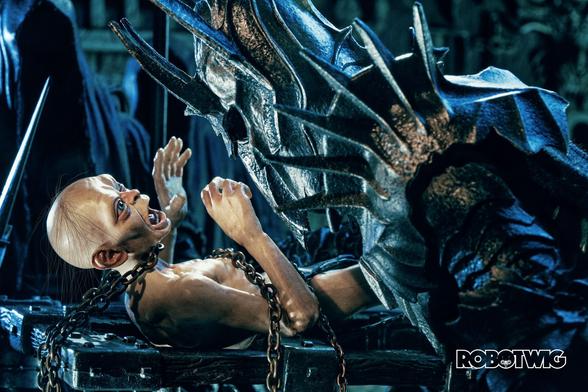
One year ago today I posted this miniature Lord of the Rings scene I created using real figures, lighting and miniature sets

#lotr #gollum #lordoftherings #sauron #middleearth #fantasy #movies #photography #miniatures #creativephotography #visualart #toyphotography #photographicart #hobbit #tolkien

Earth Birth

Our planet has much global warming
Perhaps we should think of transforming
New places of worth
Perhaps middle Earth
They tell me that it’s hobbit forming

#funny #comedy #humour #humor #laugh #silly #verse #poetry #poem #limerick #planet #middleearth #hobbit

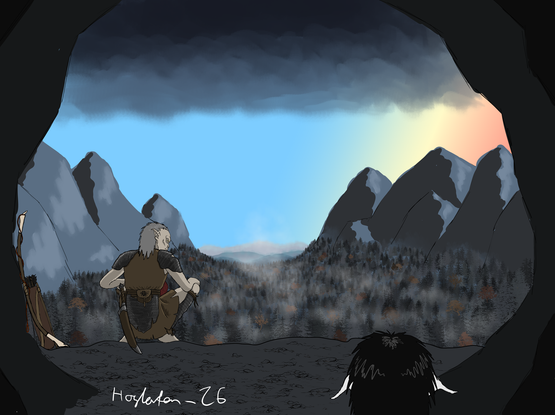
View from an Orc stronghold in the White Mountains. The mist in the distance marks the river that in a far distant future will make up the western border of Gondor.

#tolkien #fanart #fanfic #webcomic #orcs #middleearth

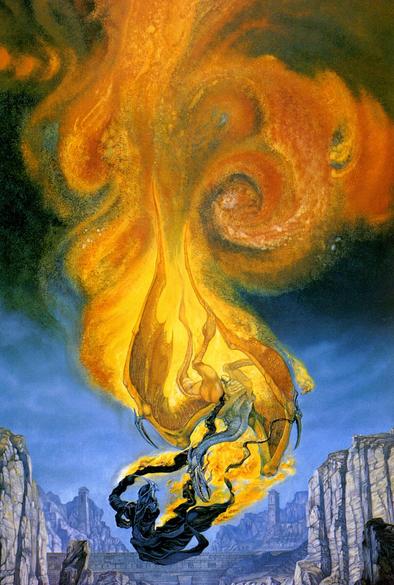
« Sauron Defeated », 1992

by Roger Garland (British artist, 1950-2017)
Original oil painting, 46x30cm
First published in "Garlands of Fantasy - The Art of Linda & Roger Garland", Paper Tiger, 1995

#vintagefantasyart #fantasyart #fantasyillustration #RogerGarland #LindaGarland #jrrtolkien #middleearth #lotr #sauron