20-Oct-2025
Did marine life in the palaeocene use a #compass?
Based on a sophisticated method, an international team has succeeded in mapping #magnetic domains in giant fossilised magnetic #microparticles: these may have served as compasses for ancient organisms

https://www.eurekalert.org/news-releases/1102450

#science #nanoworld #evolution #astrobiology #magnetotactic #microbiology

Did marine life in the palaeocene use a compass?

Some ancient marine organisms produced mysterious magnetic particles of unusually large size, which can now be found as fossils in marine sediments. An international team has succeeded in mapping the magnetic domains on one of such ‘giant magnetofossils’ using a sophisticated method at the Diamond X-ray source. Their analysis shows that these particles could have allowed these organisms to sense tiny variations in both the direction and intensity of the Earth’s magnetic field, enabling them to geolocate themselves and navigate across the ocean. The method offers a powerful tool for magnetically testing whether putative biological iron oxide particles in Mars samples have a biogenic origin.

EurekAlert!

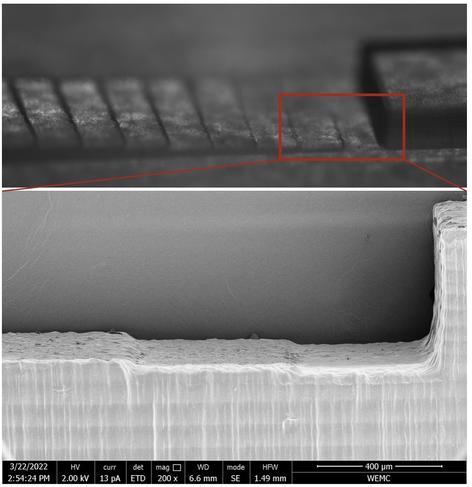
Do you know those annoying layer lines on #3Dprinted parts? In resin #3Dprinters, they are as small as 25 microns… And we can make #microfluidics molds with these printers. Does this mean we can reach 25 microns features in Z?

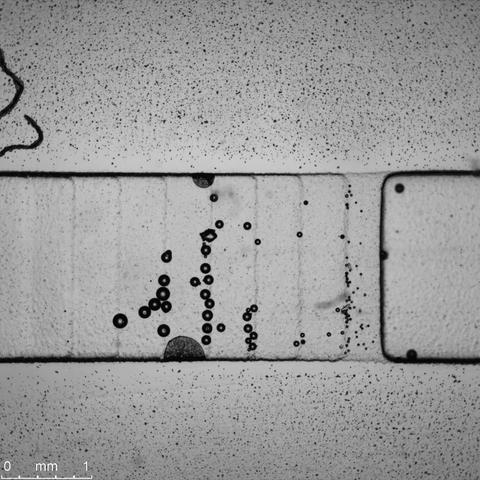
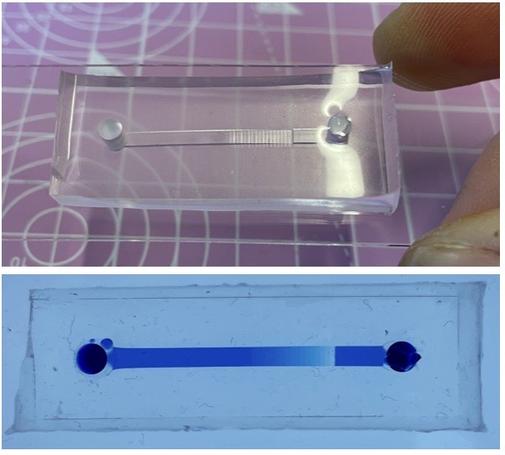
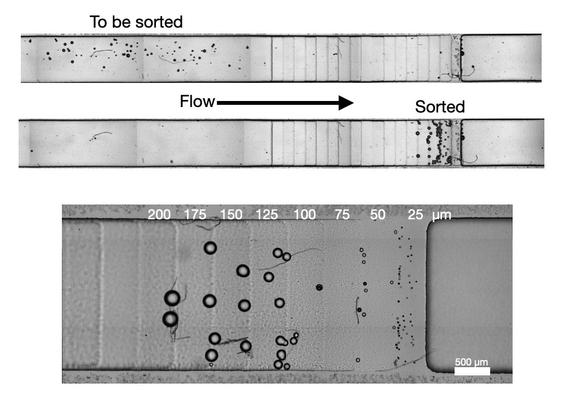
YES! We can make a mold for a “staircase” microfluidic device. Now we have steps of 25um on the height of the channel. This #microfluidic does not only filter #microparticles, but also size-sort them. Particles of different sizes will be blocked on different steps.

Can you use standard #3Dprinters to make #microfluidics for separating #microparticles down to 25 micrometers? Spoiler alert: YES we can on a “staircase microfluidic device”
But why and how? Paper here: https://chemrxiv.org/engage/chemrxiv/article-details/63fb0342937392db3d1126e6 1/12

#Microparticles, from tens to hundreds of micrometers, are everywhere: parasite eggs in urine, #microplastics in water, #plankton, etc. You need to filter or centrifuge quite some litres of liquids to detect them. Not nice if you are in the field. 2/12

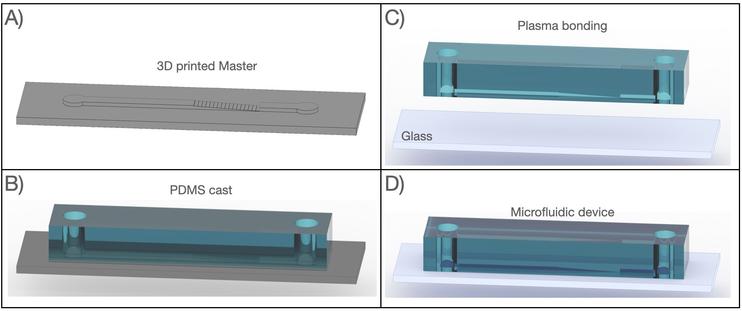
Step-by-step : A microfluidic (PDMS) staircase device for size sorting microparticles down to 25 µm using a 3D-printed mold

Microparticles are ubiquitous and span from living matter to microplastics to inorganic materials. Their detection and identification must be more accessible and time efficient. Microfluidic devices can filter microparticles from liquids, but fabricating microfluidics with lateral resolutions of a few tens of microns is complex, lengthy, and outside the reach of most scientists researching microparticles. In this article, we show how to use height features in a channel instead of relying on lateral elements for separating particles. The height features can be as small as 25 µm, along the Z axis, using consumer-grade 3D printers. We show the potential of such microfluidic devices for size-sorting parasite eggs such as Schistosoma haematobium, microplastics, and zooplankton.

ChemRxiv
This device captures microplastic pollution from car tyres

Meet the award-winning startup that created a device which collects harmful microplastics released from your car tyres.

euronews