From the article:

Police officers who use excessive force on protesters are not entitled to qualified immunity and cannot use excessive force to prompt compliance, a federal appeals court ruled on Sept. 17.

Matthew Locke sued Hubbard County Sheriff Cory Aukes, Chief Deputy Scott Parks and Hubbard County after the sheriff and his deputy used pain compliance techniques on Locke in an attempt to remove him from a protest. According to Locke’s suit, the techniques amounted to an excessive use of force.

The 8th Circuit Court of Appeals decided 2-1 to reverse the decision of U.S. District Judge Wilhelmina Wright, who dismissed the case on the grounds that pain compliance techniques are not prohibited by any existing case law.

The appeals court deemed the techniques excessive and reversed the district court’s ruling, returning the case to the district court, where it will now go into discovery.

https://unicornriot.ninja/2025/federal-court-ruling-limits-police-qualified-immunity-in-line-3-excessive-force-case/

#acab #Line3

Federal Court Ruling Limits Police Qualified Immunity in Line 3 Excessive Force Case - UNICORN RIOT

Police officers who use excessive force on protesters are not entitled to qualified immunity and cannot use excessive force to prompt compliance, a federal appeals court ruled on Sept. 17.

UNICORN RIOT

US appeals court overturns Line 3 pipeline protester conviction due to prosecutorial misconduct. #ClimateJustice #Line3 #Environment

https://www.theguardian.com/environment/2025/aug/18/mylene-vialard-pipeline-protester-conviction-overturned

US pipeline protester’s obstruction conviction overturned by appeals court

New trial for Mylene Vialard after Minnesota judges find ‘pervasive’ prosecutorial misconduct in Line 3 protest case

The Guardian

#WildRice and the #Ojibwe

by Jessica Milgroom

"Wild rice is a food of great historical, spiritual, and cultural importance for Ojibwe people. After colonization disrupted their traditional food system, however, they could no longer depend on stores of wild rice for food all year round. In the late 1950s and early 1960s, this traditional staple was appropriated by white entrepreneurs and marketed as a gourmet commodity. Native and non-Native people alike began to harvest rice to sell it for cash, threatening the health of the natural stands of the crop. This lucrative market paved the way for domestication of the plant, and farmers began cultivating it in paddies in the late 1960s. In the twenty-first century, many Ojibwe and other Native people are fighting to sustain the hand-harvested wild rice tradition and to protect wild rice beds.

"Ojibwe people arrived in present-day Minnesota in the 1600s after a long migration from the east coast of the United States that lasted many centuries. Together with their #Anishinaabe kin, the Potawatomi and Odawa, they followed a vision that told them to search for their homeland in a place 'where the food floats on water.' The Ojibwe recognized this as the wild rice they found growing around Lake Superior (Gichigami), and they settled on the sacred site of what is known today as Madeline Island (#Mooningwaanekaaning).

"In the Ojibwe language, wild rice (Zizania palustris) is called manoomin, which is related by analogy to a word (minomin) meaning 'good berry.'” It is a highly nutritious wild grain that is gathered from lakes and waterways by canoe in late August and early September, during the wild rice moon (manoominike giizis).

"Before contact with Europeans and as late as the early twentieth century, Ojibwe people depended on wild rice as a crucial part of their diet, together with berries, fish, meat, vegetables, and maple sugar. They moved their camps throughout the year, depending on the activities of seasonal food gathering. In autumn, families moved to a location close to a lake with a promising stand of wild rice and stayed there for the duration of the season.

[...]

RESTORATION AND REGULATION

"As far back as the 1930s, the health of wild rice beds has been a serious concern. In 1939 Minnesota passed a law outlawing mechanized harvest and limiting how and when wild rice could be harvested. Since then, it has enacted other protective policies, including limiting the number of hours in the day during which it is permissible to rice and limiting the length of the canoe used for ricing. In the 1990s, wild rice was identified as an endangered food. The plant is sensitive to water levels altered by dams as well as road construction, pollution, poor harvesting practices, invasive species, genetic engineering (genetic contamination of the wild rice from the paddies), and climate change.

"In response to these threats, Ojibwe and other Native people organized. For example, in 1994, the Fond du Lac and Bois Forte bands developed a '#WildRiceRestorationPlan for the St. Louis River Watershed' designed to restore lost stands of the crop and manage its harvest. In the same decade, the company Native Harvest (part of the White Earth Land Recovery Project) began to sell hand-harvested wild rice, and multiple bands formed reservation wild-rice committees to manage harvests.

"In the 2020s, Ojibwe people continue to defend and protect this vital plant and the cultural, health, and spiritual importance that it holds. Individuals as well as tribes organize ricing camps to teach traditional practices of ricing, parching, and finishing. Others are actively fighting against the Enbridge #Line3 #OilPipeline replacement project that would cross wild rice habitat, or collaborating in a movement for Native food sovereignty."

https://www3.mnhs.org/mnopedia/search/index/thing/wild-rice-and-ojibwe

#SolarPunkSunday #FoodSovereignty #WaterIsLife #FoodIsLife #NativeAmericanFoodSovereignty #FoodSovereignty #Foodsecurity #TraditionalFoods #IndigenousPeoplesDay #IndigenousFood

Wild Rice and the Ojibwe | MNopedia

Wild rice is a food of great historical, spiritual, and cultural importance for Ojibwe people. After colonization disrupted their traditional food system, however, they could no longer depend on stores of wild rice for food all year round. In the late 1950s and early 1960s, this traditional staple was appropriated by white entrepreneurs and marketed as a gourmet commodity. Native and non-Native people alike began to harvest rice to sell it for cash, threatening the health of the natural stands of the crop. This lucrative market paved the way for domestication of the plant, and farmers began cultivating it in paddies in the late 1960s. In the twenty-first century, many Ojibwe and other Native people are fighting to sustain the hand-harvested wild rice tradition and to protect wild rice beds.

Resistance to Line 3 Pipeline Seeks to Save Sacred Manoomin - UNICORN RIOT

Fon du Lac Reservation, MN – Indigenous-led resistance to the proposed Line 3 pipeline, one of the largest proposed infrastructure projects in North American history, has dozens gathering on private land in Northern Minnesota, dedicating their time and energy to defending the natural resources of the area, water and manoomin (wild rice). Line 3 is a […]

UNICORN RIOT

Pressure Builds to Protect #Manoomin (#WildRice)

"Laws aren’t always enough. We’re seeing a loss of wild rice all over #Minnesota. Threats from #ClimateChange, threats from pollution, threats from landowners that are ripping out wild rice stocks."

By Wabigonikwe, Contributor June 13, 2025, via @UnicornRiot

Excerpt: "Wild rice, often known by its #Objiwe name, manoomin, has been a means of sustenance for #DakotaLakota and Ojibwe peoples since time immemorial. It is the reason that Ojibwe people migrated to this region, 'the land where food grows on water' – without it, people’s health and wellbeing would suffer from not being able to live their way of life and not getting essential nutrients from the rice. (More on the importance of wild rice in UR’s 2017 report, Resistance to Line 3 Pipeline Seeks to Save Sacred Manoomin.)"

[...]

"Activists fear that legislators will use this time to review policies as an opportunity to take back provisions on the wild rice sulfate standard, a law put in place in 1973 limiting the amount of sulfate that mining companies pollute into wild rice waters."

https://unicornriot.ninja/2025/pressure-builds-to-protect-manoomin-wild-rice/

#Line3 #Line3Resistance #WaterIsLife #TraditionalFoods #TraditionalFarming #Sustenance #Mining #Pipelines #IndigenousPeoplesDay #IndigenousFood

Pressure Builds to Protect Manoomin (Wild Rice) - UNICORN RIOT

Activists have been showing up to meetings since the start of the 2025 MN legislative session in attempts to create legal protections for wild rice. 

UNICORN RIOT
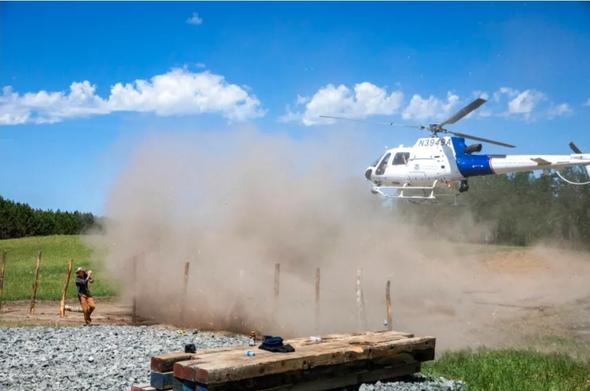
TIL from The Heat Will Kill You First and @nomoredeaths that the low-altitude rotor wash attack the CBP helicopter did to us up in northern Minnesota, covering us in choking dust and dirt, is because they do that -- they call it 'dusting' -- literally every day to migrants near the southern border, explicitly to scatter them and pick off individuals when they're isolated from the group. These motherfucking pigs
#Line3 #BorderViolence
https://www.twincities.com/2021/06/09/border-protection-helicopter-team-under-investigation-for-rotor-washing-line-3-protesters/
Border Protection helicopter team under investigation for rotor washing Line 3 protesters

Video taken by an MPR News reporter appears to show the helicopter performing the low-flying maneuver repeatedly for extended periods of time.

Twin Cities

[Thread] The next installment from #KleeBenally 's book, #NoSpiritualSurrender.

“In a report released in 2021 by the Indigenous Environmental Network, they calculated that Indigenous resistance to twenty fossil fuel projects has ‘stopped or delayed’ carbon emissions equivalent to approximately 25% of ‘US’ and ‘Canada’s’ overall emissions. While non-profit climate activists who wrote the report reveal the power of #DirectAction, they also assign their campaigns more credit than is due. Particularly by citing significant losses such as #DAPL and #Line3 project in their reports, this statistic tends towards a deluded climate optimism that we view as a path fraught with peril and death. Again, if we’re not being honest with and about the failings of our movements, what does shifting tactics, and more importantly adjusting our overall strategies, toward the end of yet more changing statistics matter? we’re not convinced about making this a numbers game to celebrate the disrupting of 25% of an industry, when we’ve lost over 98% of the battle in a war with such high stakes. Particularly when those activist campaigns have spent hundreds of millions of dollars with thousands of our relatives jailed and dragged through racist court systems.”

Page 138

#IndigenousAnarchy
#Ecosystem #DefendTheSacred
#CorporateColonialism #NoDAPL #CriminalizingDissent #WaterIsLife #ClimateDefenders

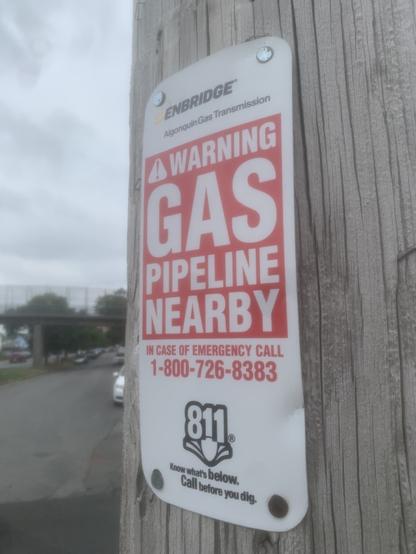
There’s an #Enbridge #gas #pipeline maybe a block from where I live that seems to be running along the highway. This is the same company from so-called Canada that brought us the Dakota Access Pipeline that lead to the encampment protests at Standing Rock and Line 3 which lead to the largest inland oil spill in the so-called US.

This seems to be part of the Atlantic Bridge Project whose purpose is to move fracked gas from Pennsylvania to Northern New England and Canada.

They recently sent everyone a brochure with numbers to call in case of emergency.

Fuck Enbridge

#DakotaAccessPipeline #NoDAPL #StandingRock #Line3 #oil #fracking #frackedgas #oilspill #climate #climatechange #naturalgas #FuckEnbridge #somerville #massachusetts
Winona LaDuke on Enbridge's Line 3 pipeline #Line3 #waterprotectors #pipelines #Indigenous

YouTube

‘They #criminalize us’: how #felony charges are weaponized against #PipelineProtesters

Twenty states have passed laws that criminalize protesting, including on infrastructure including #pipelines. In #Minnesota, at least 66 felony theft charges against #Line3 protesters remain open

Alexandria Herr for Floodlight
Thu 10 Feb 2022

"Last summer [2021] Sabine von Mering, a professor of German at Brandeis University, drove more than 1,500 miles from Boston to Minneapolis to protest against the replacement of the Line 3 #OilPipeline that stretches from #Canada’s #TarSands down to Minnesota.

"Along with another protester, she locked herself to a semi-truck in the middle of a roadway, according to a filed court brief, as a means of #peaceful #resistance. But when she was arrested, she was charged with a serious crime: felony theft, which carries up to five years in prison.

"'It’s very scary that they criminalize us like that, and to face jail time,' said Von Mering, 54, of her June arrest. 'But what can I do? I feel responsible to my kids and #FutureGenerations.'

"The felony charges come as more than a dozen states have passed laws to criminalize #FossilFuel protests, and as the federal government has ramped up its own tactics for surveilling and penalizing protesters.

"Von Mering is one of nearly 900 protesters who were arrested in Minnesota for protesting against the pipeline’s construction, with the vast majority of arrests taking place during the summer of 2021, and one of dozens facing felony charges. Construction on the Line 3 pipeline was finalized in October 2021 and carries 760,000 barrels of oil per day across northern Minnesota. But its construction for years has stoked fierce protests and legal challenges, led by #Indigenous activists in northern Minnesota who worried about potential impacts of oil spills and the pipeline’s threat to #treaty rights to gather wild rice. While most of the arrests have led to misdemeanor or gross misdemeanor charges for crimes including 'disturbing the peace' and 'trespassing', felony charges like Von Mering’s mean protesters are facing years of jail time.

"Legal advocates say that in Minnesota the elevated charges are a novel tactic to challenge protest actions against pipeline construction. They see them as furthering evidence of close ties between Minnesota’s government and the #FossilFuelIndustry. It follows reporting by the Guardian that the Canadian pipeline company #Enbridge, which is building Line 3, reimbursed Minnesota’s #police department $2.4m for time spent arresting protesters and on equipment including ballistic helmets. Experts say the reimbursement strategy for arrests is a new technique in both Minnesota and across the US, and there’s concern it can be replicated.

"'I do a lot of representation for people in political protests and I’ve never seen anything like that,' said Jordan Kushner, a defense attorney representing clients charged in relation to Line 3 protests.

"Two of Kushner’s clients were charged with felony 'aiding attempted suicide' charges for crawling inside a pipe. The charge is for someone who 'intentionally advises, encourages, or assists another who attempts but fails to take the other’s own life', according to Minnesota law and carries up to a seven-year sentence. Authorities alleged that the protesters were endangering their lives by remaining inside the pipeline."

Read more:
https://www.theguardian.com/us-news/2022/feb/10/felony-charges-pipeline-protesters-line-3

#StopEnbridge #NoLine3 #Protestors #ClimateActivists #Fascism #WaterIsLife #ACAB #IndigenousNews

‘They criminalize us’: how felony charges are weaponized against pipeline protesters

Twenty states have passed laws that criminalize protesting, including on infrastructure including pipelines. In Minnesota, at least 66 felony theft charges against Line 3 protesters remain open

The Guardian