Adnkronos - ultimoratop: Totti-show con Toni... in telecronaca: alle Maldive è 'amarcord' Mondiali 2006

(Adnkronos) - L'ex capitano della Roma dà spettacolo anche in vacanza

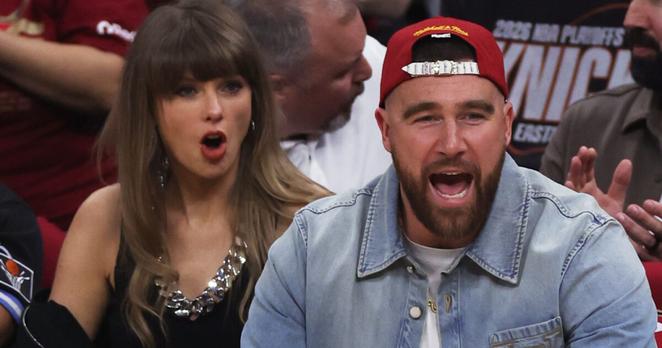
“No plus ones, come solo and unaccompanied”: Taylor Swift’s strict etiquette for her wedding to Travis Kelce is causing a crisis among friends and family.

There’s “drama” among Taylor Swift and her future husband Travis Kelce’s friends and family due to a specific request made by the superstar to the guests at the most anticipated wedding of the moment, with Dua Lipa already ready for the altar in Palermo next week, which will take place on July 3rd.

According to the Daily Mail, some guests are considering not attending due to the problematic etiquette rule that would require single women to attend alone. “What am I supposed to do? I’m shy, I don’t know many people, and I’m not friends with Gigi or Bella Hadid,” a wedding guest of the year told the British tabloid, noting that Taylor, repeatedly abandoned by subsequent boyfriends but sporadically single herself, had discriminated against her compared to other happily coupled guests like Selena Gomez, who was admitted to participate with her husband Benny Blanco.

The ban on a “plus one” is in line with what is indicated in the Bible of North American etiquette. In her famous manual on social etiquette, which a century ago codified the rules of American behavior, Emily Post established that only spouses, official boyfriends, and cohabiting partners can be invited to a wedding. The singer and the athlete, both 36 years old, announced their engagement last August after two years of a relationship between tours, games, and training: “Your English teacher and the gym teacher are getting married,” the couple communicated through their respective social media profiles. The location of the wedding is still shrouded in mystery.

It is unclear, in particular, what reason the billionaire Taylor had to renounce her most iconic residences: the megavilla on the Atlantic in Rhode Island and the neoclassical mansion in Nashville, two of the pearls of her vast real estate empire. Among the most credible hypotheses for the New York wedding is the Waldorf Astoria, recently renovated by the Skidmore, Owings & Merrill architecture studio for the Chinese insurance giant Dajia.

The legendary Art Deco hotel boasts a history imbued with charm: this is where John and Jackie Kennedy departed for their honeymoon, and it is always here that Grace Kelly and Prince Rainier of Monaco announced their engagement. Historical references of this caliber can only seduce Taylor Swift.

Everything is still top secret, the Daily Mail wrote, and the high-profile guests – for her, the Hadid sisters, Emma Stone, Lena Dunham, Zoe Kravitz, for him, the football royalty – will only find out where to go on the morning of the scheduled happy event.

Rumors continue to circulate about the designer who will sign the wedding dress: among the most quoted candidates are the British designers Sarah Burton and Stella McCartney. The look would be inspired by the dress worn by Elizabeth Taylor in 1950, on the occasion of her wedding to Conrad Hilton. The legendary diva with violet eyes has, in fact, inspired the title of one of the songs contained in Taylor Swift’s latest album, “The Life of a Showgirl.”

“No +1, come alone and unaccompanied”: The rigid etiquette of Taylor Swift for her wedding with Travis Kelce is putting friends and family in crisis. – *Il Fatto Quotidiano*.

#TaylorSwift’s #TravisKelce #TaylorSwift #DuaLipa #Palermo #theDailyMail #BellaHadid #British #Taylor #SelenaGomez #BennyBlanco #Bible #NorthAmerican #American #EmilyPost #English #Atlantic #RhodeIsland #Nashville #NewYork #WaldorfAstoria #Chinese #Dajia #ArtDeco #JackieKennedy #GraceKelly #PrinceRainier #Monaco #Hadid #EmmaStone #LenaDunham #ZoeKravitz #SarahBurton #StellaMcCartney #ElizabethTaylor #ConradHilton #TheLifeofaShowgirl

https://www.ilfattoquotidiano.it/2026/05/28/niente-1-venite-soli-e-non-accompagnati-il-rigido-galateo-di-taylor-swift-per-il-matrimonio-con-travis-kelce-mette-in-crisi-amici-e-parenti/8401544/

“Niente +1, venite soli e non accompagnati”: il rigido galateo di Taylor Swift per il matrimonio…

Il divieto del "plus one" sarebbe del resto in linea con quanto indicato nella Bibbia del galateo nordamericano

Il Fatto Quotidiano

And now, Emily Post, on farts:

"Good housekeeping demands that you fold your farts neatly after usage."

This was Emily Post, on farts.

#farts #EmilyPost #housekeeping #etiquette

Manners are a sensitive awareness of the feelings of others. If you have that awareness, you have good manners, no matter what fork you use.
-- Emily Post

#Wisdom #Quotes #EmilyPost #Manners

#Photography #Panorama #Panopainting #Triathlon #Runners #StPetersburg #Florida

Manners are a sensitive awareness of the feelings of others. If you have that awareness, you have good manners, no matter what fork you use.
-- Emily Post

#Wisdom #Quotes #EmilyPost #Manners

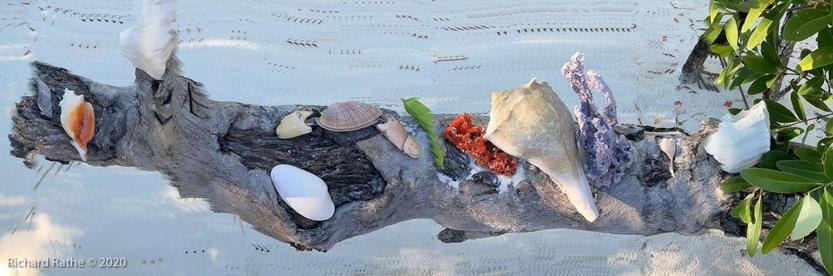
#Photography #Panorama #Panopainting #Seashells #Everglades #Florida

Manners are a sensitive awareness of the feelings of others. If you have that awareness, you have good manners, no matter what fork you use.
-- Emily Post

#Wisdom #Quotes #EmilyPost #Manners

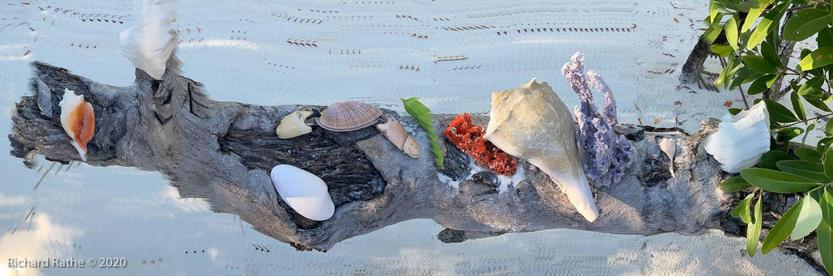
#Photography #Panorama #Panopainting #Seashells #Everglades #Florida

Manners are a sensitive awareness of the feelings of others. If you have that awareness, you have good manners, no matter what fork you use.
-- Emily Post

#Wisdom #Quotes #EmilyPost #Manners

#Photography #Panorama #Sunset #Florida

Manners are a sensitive awareness of the feelings of others. If you have that awareness, you have good manners, no matter what fork you use.
-- Emily Post

#Wisdom #Quotes #EmilyPost #Manners

#Photography #Panorama #Panopainting #Kayaks #Everglades #Florida

Opinion – Infrastructure’s diminishing returns since the Golden Gate – The Washington Post

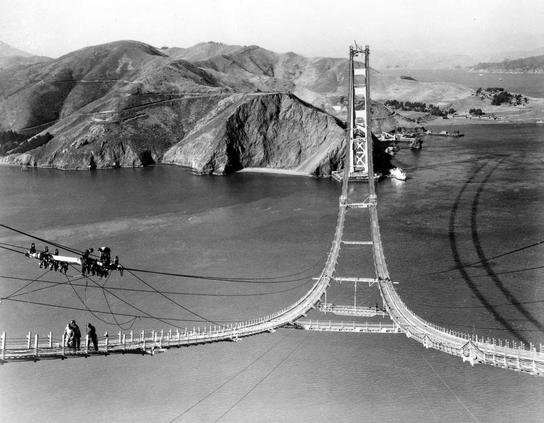
Workers complete the catwalks for San Francisco’s Golden Gate Bridge in October 1935. (AP)

Opinion

By Megan McArdle

In 1916, Emily Post published her book about driving across America. Yes, that Emily Post, the society maven who invented the modern etiquette column. Before she started telling us all how to behave, she wrote “By Motor to the Golden Gate,” which is still worth reading more than a hundred years later. Not just because Post is a delightful writer with a keen ear for the telling vignette, but because her book sheds light on an issue that’s on everyone’s minds these days: infrastructure, and why we can’t seem to build it any more.

Post was born at the beginning of America’s “special century,” the period between 1870 and 1970 when we traded muscle power for motor power, moved from farms to cities and built most of our public infrastructure. In 1916, much of that infrastructure was still in the future. The rail network was largely built out, cities had made enormous strides in water treatment and electrification was well underway. But outside cities, telephone networks were still primitive and paved roads scarce. Unfortunately the rural areas were where most people still lived. 1920, when America crossed the 50 percent urbanization mark, lay four years and one world war away.

So motoring across the country meant navigating dirt roads that threw up dust when it was dry and dissolved into mud puddles when it rained, forcing the traveler to hole up in a hotel for days or weeks until the road could be dried out and repaired. In the sparsely populated West, Post had to do some patching herself, using barrel staves to plug ruts that ran deeper than the 10-inch clearance of her car’s undercarriage.

Post downplayed these frustrations with well-bred WASP understatement. But you can imagine how grueling it must have been to pick up those barrel staves and lay them down in a rut over and over, or to sit in an open car that was barely inching through the desert. You can also imagine how good it must have felt to get back onto a paved road.

Hold onto that thought, because it’s relevant to something else that comes through in her writing — the incredible optimism and wild ambition that runs through Post’s America. The Midwest, particularly, seems to be in the middle of a youthful growth spurt, with cities springing up out of the prairie full of vim and vigor and plans for the future.

That sense of optimism, or rather, our longing for it, is at the heart of the Republican nostalgia politics I tweaked in last week’s column. And the Democratic nostalgia politics I could have tweaked, because it’s also a powerful force. Where Republicans yearn for the bygone days of tariffs and factory jobs and nuclear families, many Democrats long to reenact the welfare state expansions and titanic infrastructure projects of the 20th century — down to branding climate policy as a “Green New Deal.” But really both those groups are asking why we can’t recapture the spirit of an age when America felt young and hopeful and capable of doing extraordinary things.

It’s a great question. But after following Emily Post across America, I think the answer is that we already did them.

There’s an old joke about an engineer who finds a colleague banging his head against a brick wall.

“Why are you doing that?” he asks.

“Because it feels so good when I stop.”

It feels really good when you can stop running across a frozen yard in your nightshirt and just pad down the hall to an indoor toilet; when you exchange sooty kerosene lamps for clean electric lights; when you trade jolting over dirt and cobblestones for gliding over smooth macadam. But those are one-time transitions, and once they’re over, you’ll never feel that same sweet relief again.

You can try to relive that excitement by installing a second bathroom, developing a more advanced power grid or constructinga bigger highway. But the more infrastructure you build, the more the marginal utility of new infrastructure declines.

Think of it this way: If your house has no bathroom, installing one is a no-brainer. If you have two bathrooms already, well, is having a third place to powder your nose really worth the hassle and expense of construction? Something similar is true of big public projects. When the Golden Gate Bridge was built in the 1930s, it turned a long ferry ride into a quick drive. Widening the bridge, or building another nearby, might make traffic move faster. But not as much as moving from a ferry to a bridge.

Continue/Read Original Article Here: Opinion | Infrastructure’s diminishing returns since the Golden Gate – The Washington Post


#18701970Era #democrats #drivingAmerica #emilyPost #goldenGate #infrastructure #meganMcardle #nostalgiaPolitics #opinion #optimism #republicans #theWashingtonPost #wildAmbition

"Always behave the way you want your children to behave." ~ #EmilyPost

Manners are a sensitive awareness of the feelings of others. If you have that awareness, you have good manners, no matter what fork you use.
-- Emily Post

#Wisdom #Quotes #EmilyPost #Manners

#Photography #Panorama #Panopainting #Books