 Johan Larsson
Version 8.0.0 of my R package eulerr is out and on CRAN! 🚀 Its backend has been completely rewritten in Rust (via the eunoia crate), and brings square and rectangle shapes, faster fitting, efficient handling of large combinations, fewer dependencies, label placement algorithms to avoid overlaps, plot composition with `+`, `/`, and `|`, suppor for complements, and much more.

 Data Science
Sometimes (often) one ends up needing to run older versions of R using older versions of packages. Evercran might be just the tool to help with that: https://github.com/r-hub/evercran#readme #RStats #docker #Cran #Rcheology
 エミリーSEレクト
はじめてのR 第5回Rの基本操作 (全10回)
#CRAN #r2.com #Rエディタ #Rコンソール #Rのメニュー #インストール #エディタ #オンラインセミナー #コマンド #コンソール #データアナリスト #データ分析 #パッケージ #みんなのデータ分析 #分析ツール #基本操作 #機械学習 #演習 #無料 #統計 #統計分析 #統計解析 #統計解析ソフトR #R言語基礎・入門 #R言語基礎・入門 #CRAN #r2.com #Rエディタ #Rコンソール #Rのメニュー...

 KillBait
Descubren en Escocia un crannog neolítico con más de 5.000 años de antigüedad
📰 Título original: Hallan en una isla artificial escocesa una estructura de madera más antigua que Stonehenge y una calzada de piedra
🤖 IA: Es clickbait ⚠️
👥 Usuarios: Es clickbait ⚠️
Ver resumen IA completo: https://es.killbait.com/descubren-en-escocia-un-crannog-neolitico-con-mas-de-5-000-anos-de-antiguedad.html?utm_source=masto_es&utm_medium=social&utm_campaign=killbait.masto_es
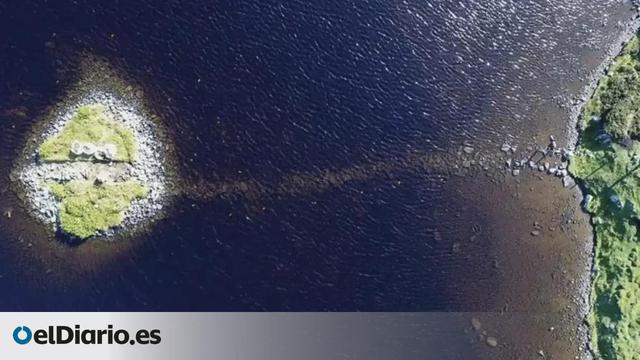
Descubren en Escocia un crannog neolítico con más de 5.000 años de antigüedad
Un equipo de investigación liderado por la Universidad de Southampton, en colaboración con la Universidad de Reading, ha descubierto en las Hébridas Exteriores de Escocia un crannog neolítico, una isla artificial construida con madera, que data entre el 3500 y el 3300 a.C., lo que la hace más antigua que algunas fases de Stonehenge. La estructura, de unos 23 metros de diámetro, estaba cubierta por varias capas añadidas posteriormente durante la Edad del Bronce Media y la Edad del Hierro. Además, los arqueólogos localizaron una calzada de piedra sumergida que conectaba la isla con la orilla, lo que indica un acceso organizado al lugar. Los hallazgos incluyen cientos de fragmentos de cerámica neolítica arrojados deliberadamente al lago, probablemente vinculados a reuniones comunitarias y actividades rituales. Este descubrimiento sugiere que las comunidades neolíticas no se limitaban a construir tumbas o monumentos ceremoniales, sino que también modificaban el entorno acuático para usos cotidianos y sociales. La investigación también ha desarrollado nuevas técnicas de estereofotogrametría para documentar áreas de agua poco profundas, integrando imágenes submarinas con registros de drones y trabajos terrestres, permitiendo reconstruir modelos tridimensionales precisos del yacimiento. Este hallazgo abre la posibilidad de que otras islas artificiales de Escocia tengan orígenes mucho más antiguos de lo estimado hasta ahora, cambiando la percepción sobre la cronología y función de los crannogs en la prehistoria escocesa.
 NJ Talingting
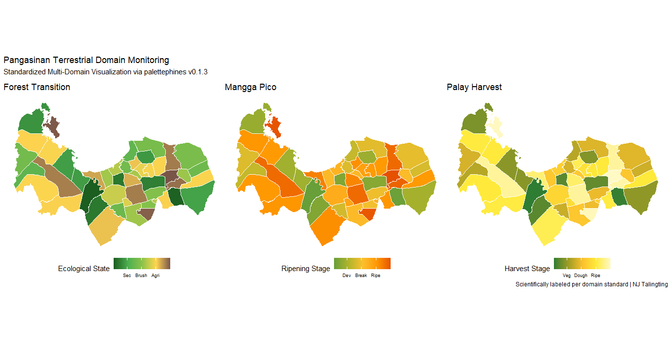
Sharing #Philippines beauty via my latest package {palettephines} on CRAN. These palettes anchor to BBCH & Reef Health standards.
3 years in public office taught me that viz must be both statistically and culturally relevant to my people.
Not a replacement for LISA/Moran’s I in EDA, but a domain-specific layer.
Vignette: https://pinasr.r-universe.dev/articles/palettephines/palettephines-intro.html
 Jan van der Laan
Just uploaded a new version of the #rstats #terminalgraphics package to #CRAN. #terminalgraphics allows for plots or other graphical output directly in the terminal (for terminals supporting either #Sixel or Kitty's #TerminalGraphicsProtocol).
 SMT
SMTFor segfault lovers
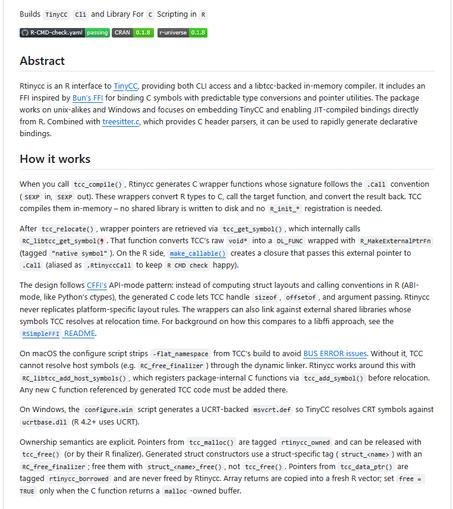
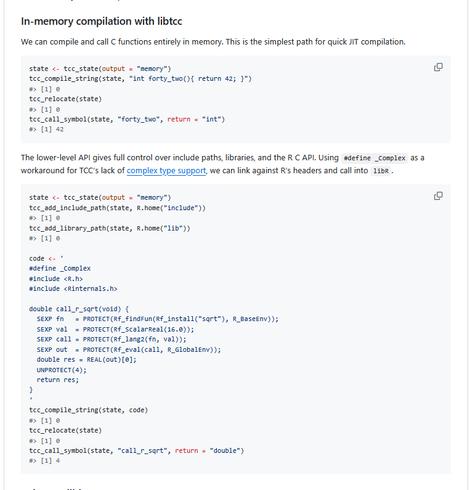
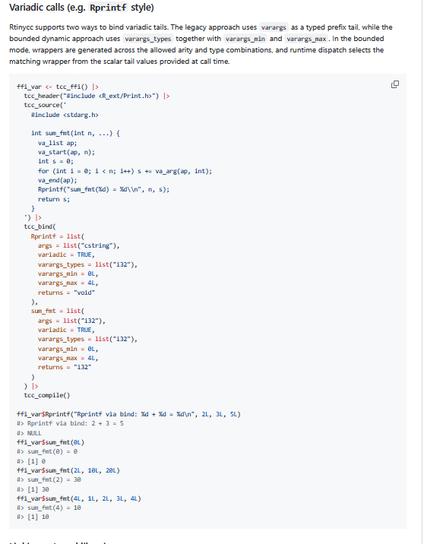
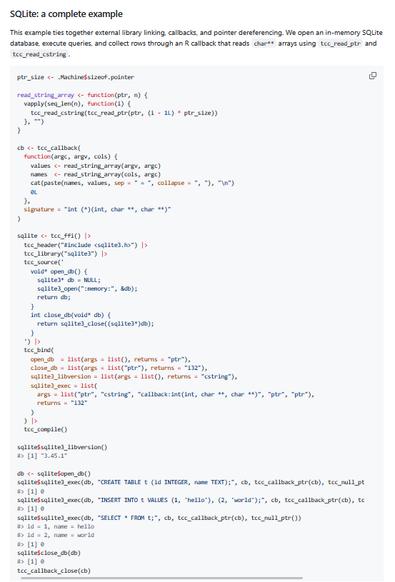
#CRAN Release of Rtinycc v0.1.8 For 'C' Scripting in #RStats
Binding to libctcc and a declarative C FFI framework including thread safe R callbacks in C Code
The package remove the R2C code transformation work to a coming downstream work
github.com/sounkou-bioi...
 Fonti Kar
📮You've got mail! 💌
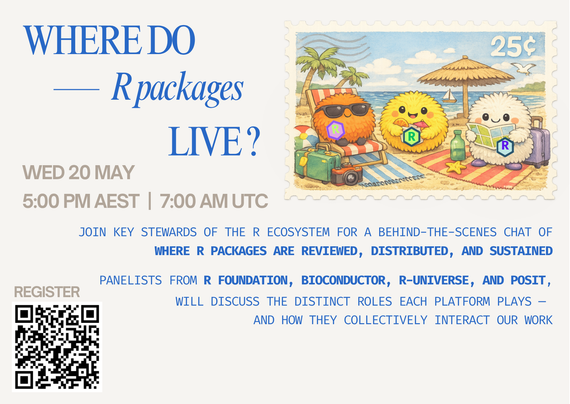
We are thrilled to invite you to "Where do R packages live?" a discussion with folks from the #R foundation, #CRAN #Bioconductor #R-universe and @Posit
Let's learn from our panel about the ins-and-outs of where you might want to create a home for your R software 📦
Register today!
📆 Wed 20 May 2026
⏰ 5:00 PM AEST | 7:00 AM UTC
🔗 statsoc.org.au/event-6653060
Looking forward to nerdy chats with @visnut Stevie P. @jeroenooms and Valerie B.

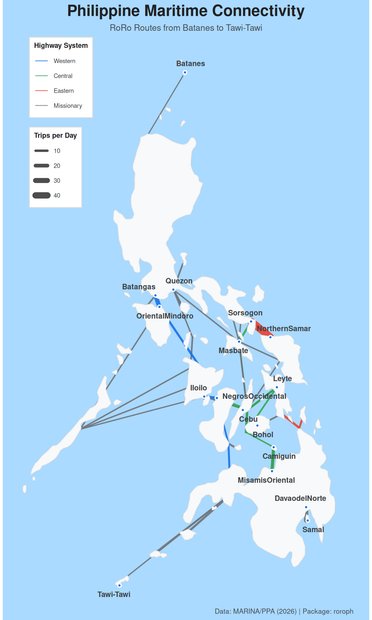
🚀 roroph v0.1.1 is live on CRAN! 🚢⚓️
Digitizing the fragmented maritime links of the Philippines into a unified framework for archipelagic spatial modeling. In an archipelago, the "road" is the sea. 🌊
Features:
✅ Directed topology for 108 core RoRo links (2024-26)
✅ GADM-standardized naming (45 provinces)
✅ Dynamic weights: frequency, travel time, and capacity
💻 Source: https://github.com/phl-r/roroph
📖 Guide: https://njtalingting.r-universe.dev/articles/roroph/roroph_guide.html
#RStats #OpenData #SpatialEconomics #Philippines #CRAN #Maritime
 thomas_rauter
I just released the R package scholidonline to CRAN
scholidonline enables querying of scholarly identifier services to verify identifier existence, convert identifiers across systems, retrieve bibliographic metadata, and discover linked identifiers.
Supports common identifier types including DOI, PMID, PMCID,
arXiv, and ORCID.
Resolution, Conversion, Linking and Metadata for Scholarly Identifiers
Enables querying of scholarly identifier services to verify identifier existence, convert identifiers across systems, retrieve bibliographic metadata, and discover linked identifiers. Supports common identifier types including DOI, PMID, PMCID, arXiv, and ORCID.