Perennial

It’s significant that the major characteristics of wakefulness I’ve identified through my research are essentially the same… as the main themes of wakefulness as described in the world’s spiritual traditions. (…[T]hese included union, inner stillness or inner emptiness, self-sufficiency, compassion and altruism, relinquishing personal agency, heightened awareness, and well-being.) This synchronicity validates the insights of spiritual traditions and shows that wakefulness can exist outside spiritual traditions and is more fundamental than the traditions themselves. It suggests that wakefulness exists as a psychological or ontological state in itself. It may be interpreted in terms of spiritual traditions, but it doesn’t have to be.

Theologians and transpersonal psychologists have long debated the existence of a “perennial philosophy,” a common core to the world’s religions and spiritual traditions. According to the perennial view, the same basic truths lie behind all spiritual teachings but they’re expressed in slightly different ways. They’re simply different paths leading toward the peak of the same mountain, though there are some superficial differences between them, of course.

On the other hand, some people dispute the existence of a perennial philosophy, believing instead that spiritual and mystical traditions are independent. There isn’t a common mountain — all the paths are heading in different directions toward different peaks. Any similarities between different traditions are the result of contact or influence…

This seems highly implausible to me. For one thing, even if there was a chain of influence in the way this argument suggests, surely the original teachings would have been altered beyond recognition over centuries of dissipation (similar to a game of telephone), rather than remaining essentially the same. But the best way of verifying perennialism is to look outside spiritual traditions, as we’ve done in this book. Most of the participants of my research had no familiarity with spiritual traditions or practices at the time of their awakenings, but still described them in similar terms to the mystics of many different traditions. (Some of them became familiar with traditions later — in some cases, many years later; in other cases, only to a limited degree.) This strongly suggests that there exists some form of underlying or perennial landscape of experience that precedes interpretation by spiritual traditions.

Steve Taylor, The Leap: The Psychology of Spiritual Awakening, pp.233-234

[T]he physical world is not ultimately separate from its transcendental foundation, and so the perennial philosophy is a non-dualistic view of reality. There is no barrier between the so-called physical and metaphysical dimensions of reality (i.e., between the universe and its transcendent source); the two are a Oneness rather than a duality, and this is in contrast to systems of philosophy or religion that place a firewall between the transcendent realm and the physical world. For Perennialists, the universe arises from the Ground of Being, or, put the other way round, the Ground of Being takes form as the world around us. The One becomes the many, just as one ocean can rise up into multiple waves. Furthermore, and because we too are “waves” on the surface of a cosmic sea, our physical selves also arise from the Ground of Being. The Ground, therefore, is not only the Ground of Being but, consequently, the ground of our being as well.

Dana Sawyer, The Perennial Philosophy Reloaded: A Guide for the Mystically Inclined, pp.33-34

Ever since I first read Aldous Huxley’s The Perennial Philosophy in my early twenties, I have been drawn to the clean simplicity of the idea. In the passage I’ve quoted above, Steve Taylor provides one of the briefest and most credible responses to the most common criticism from both humanist and religious points of view: that the contemplative traditions, rooted in such radically different religious soils, cannot have anything in common. As Dana Sawyer points out, a few lines on from the passage above, “…human beings have the latent ability to grasp the content of the two previous postulates experientially. That is, we have a capacity, whether we cultivate it or not, to go beyond intellectual descriptions of the Ground of Being (transcendent) and the Oneness of Being (immanent) to the direct experience of these realities, as did the mystics of the past—and as do some mystics today.”

It doesn’t matter, either immediately or ultimately, whether the experience in question occurs within the taught practice of any one religion or philosophy; as Taylor explains above, “there exists some form of underlying or perennial landscape of experience that precedes interpretation by spiritual traditions.” I can testify to this myself: my earliest unitive experiences of inner stillness, emptiness and heightened awareness came around the age of five, long before I knew anything of religious or contemplative teachings in any form.

The simple phenomenology of contemplation – inner experience itself (by which I don’t mean experiences, altered states or spectacular changes in perception, but plain awareness) – will teach the foundational fact of oneness with the ground. Merely to sit still is usually quite enough…

#AldousHuxley #awakening #awareness #contemplative #DanaSawyer #practice #SteveTaylor #stillness
The Leap: The Psychology of Spiritual Awakening (An Eckhart Tolle Edition) eBook : Taylor, Steve: Amazon.co.uk: Books

The Leap: The Psychology of Spiritual Awakening (An Eckhart Tolle Edition) eBook : Taylor, Steve: Amazon.co.uk: Books

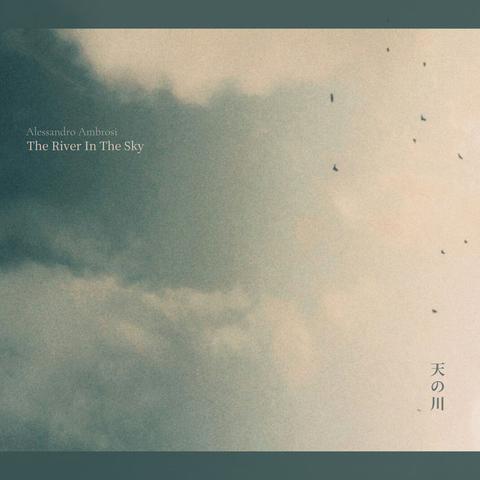
The River in The Sky, by Alessandro Ambrosi

7 track album

Alessandro Ambrosi

I went to Rishikesh to learn yoga. I found my grandmother instead.

Sitting by the Ganges at dawn, I recognised something from a terrace in Granada.

Have you found what you were looking for?

Read the full story

https://medium.com/@clarainsweden/what-my-spanish-grandmother-knew-about-yoga-without-ever-doing-it-1efcb85249f9

#rishikesh #yoga #culturalwisdom
#india #ganges #ancestralwisdom
#ashram #yogajourney #contemplative

Outside the Default Path: A Pagan Reading of the Federal “Anti-Christian Bias” Report

A reflective Pagan perspective on the federal government’s anti-Christian bias report, exploring how religious freedom can feel very different for Americans outside the cultural mainstream. Through personal experience, civic observation, and reflections on pluralism, this essay examines the difference between protecting faith and centering one faith above others.

https://pagangrove.wordpress.com/2026/05/11/outside-the-default-path-a-pagan-reading-of-the-federal-anti-christian-bias-report/

What is trust?

I’m aware that yesterday’s post perhaps raised more questions that it answered. That’s not a bad thing in itself, perhaps, but it’s not always kind to one’s readers. Richard Rohr reminds us:

Unfortunately, the notion of faith that emerged in the West was much more a rational assent to the truth of certain mental beliefs, rather than a calm and hopeful trust that God is inherent in all things, and that this whole thing is going somewhere good. Predictably, we soon separated intellectual belief (which tends to differentiate and limit) from love and hope (which unite and thus eternalize). As Paul says in his great hymn to love, “There are only three things that last, faith, hope and love” (1 Corinthians 13:13). All else passes. Faith, hope, and love are the very nature of God, and thus the nature of all Being. Such goodness cannot die. (Which is what we mean when we say “heaven.”) … Christ is a good and simple metaphor for absolute wholeness, complete incarnation, and the integrity of creation.

The Universal Christ, p.22

Now I know that using the word “Christ” in this context may bring some readers up short, but bear with me here: there is more to New Testament Christology than often meets the eye. The apostle Paul says of Christ (Colossians 1:16-17 NIV):  “For in him all things were created: things in heaven and on earth, visible and invisible, whether thrones or powers or rulers or authorities; all things have been created through him and for him. He is before all things, and in him all things hold together.” (This of course is the source of the concept of coinherence so beloved of Charles Williams.)

Using the word Christ in this context is far closer to Meister Eckhart’s Istigkeit, Spinoza’s Deus sive Natura, the Original Ground of Dzogchen, or the Ground of Being in Paul Tillich’s writings, than it is to the “Jesus’ surname” usage common to some thoughtless conventional Christian preaching.

One difficulty we often run into on the far side of deconstruction, it seems to me, is finding words adequate to just this deeply experiential aspect of the contemplative life. It is all very well scraping terminology from neuroscience (or astrophysics, or academic philosophy) and often this can serve us well if we are trying to conceptualise spiritual realities. But our practice, and our awakened lives, ask more of us than conceptualising spiritual experience. Perhaps it is worth taking the risk, with Rohr and Williams and Tillich, of using the language of direct contemplative experience within our own culture. The contemplative life is a life of the heart, after all, and much of our practice depends upon casting a cold eye on the chatter of discursive thought! We cannot trust a bare idea as we can the direct faith that all things rest in Christ, in presence, in the open ground of isness itself – waves of the one ocean, if you will – and that to that presence they will return.

#awakening #BenedictusSpinoza #CharlesWilliams #contemplative #dzogchen #MeisterEckhart #PaulTillich #practice #RichardRohr #trust
The Universal Christ: How a Forgotten Reality Can Change Everything We See, Hope For and Believe eBook : Rohr, Richard: Amazon.co.uk: Kindle Store

The Universal Christ: How a Forgotten Reality Can Change Everything We See, Hope For and Believe eBook : Rohr, Richard: Amazon.co.uk: Kindle Store

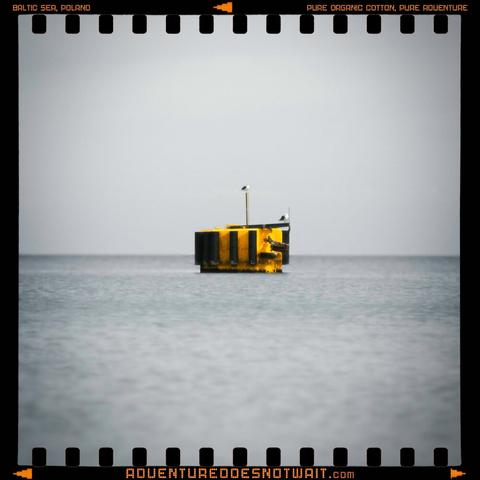
The Baltic at its most contemplative 🌊
There's something about a lone buoy on an endless sea that makes you pause. No waves, no wind - just the quiet hum of water against the hull and the weight of the sky pressing down. This stretch of the Baltic off Poland feels like a place where time slows, where the world narrows to the horizon and the sound of your own breath.
The mist, the muted light, the stillness. One of those spots that makes you understand why sailors used to believe in the edge of the world.
Our tees are made for this kind of wandering - organic cotton that moves with you, dries fast, and doesn’t weigh you down. Perfect for standing at the edge of something vast. https://AdventureDoesNotWait.com
Ever felt the pull of the open water?
📍 Baltic Sea, Poland
#AdventureDoesNotWait #Photography #Travel #BalticSea #Poland #Maritime #Solitude #Spring #TravelPhotography #Wanderlust #Explore #Nature #Minimalism #Horizon #Sea #Adventure #PhotographyDaily #Contemplative

I went to Rishikesh to learn yoga. I found my grandmother instead.

Sitting by the Ganges at dawn, I recognised something from a terrace in Granada.

Have you found what you were looking for?

Read the full story

https://medium.com/@clarainsweden/what-my-spanish-grandmother-knew-about-yoga-without-ever-doing-it-1efcb85249f9

#rishikesh #yoga #culturalwisdom
#india #ganges #ancestralwisdom
#ashram #yogajourney #contemplative