 Lukas Fuchsgruber
Community archiving today: 20:00-22:00 @ Mensch Meiers Zusammentreffen
Community archiving today: 20:00-22:00 @ Mensch Meiers Zusammentreffen
Diesmal als "Archiv für Zeitgenössische Kulturgeschichte" Zu Gast auf dem 39. Chaos Communication Congress in Hamburg. Ihr findet uns bei proving ground 2. Stock Hauptfoyer. Diesmal wieder zusammen mit @lukasfx vom @nullmuseum und @stephiewunder
27.12. - 30.12.25 CCH Hamburg
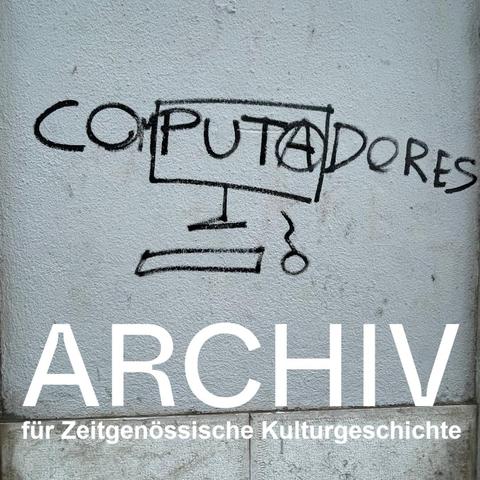
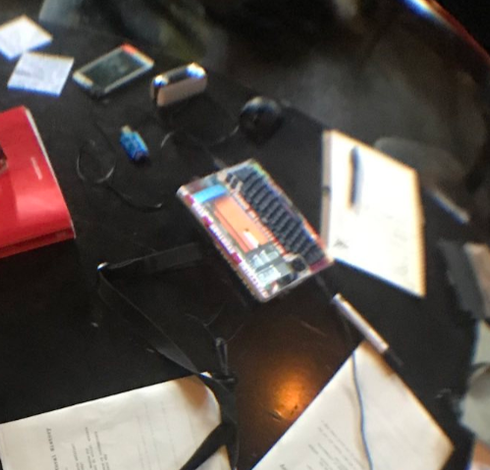
My current setup for digital community archiving projects:
open hardware (#raspberrypi) as interfaces. small screens to avoid sitting *behind* laptop screens (pi 400, #adafruit cyberdeck hat, #clockworkpi #devterm).
portable #scanography for creative tracing and mapping.
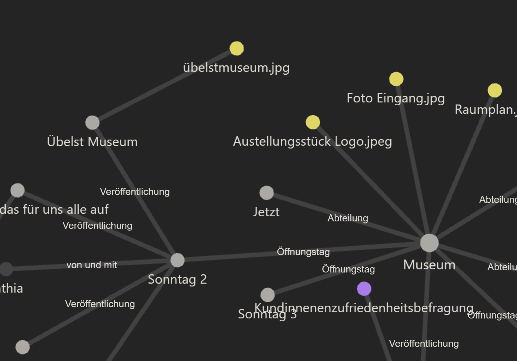
graph writing in #obsidian, with self-hosted livesync and other plugins (dataview, graph link types, juggl). can be combined with social media webarchiving.
this all is building on prototyping and experimentation in the cooarchi.net art-doc-archive.net #urbandermatology and #opferschicht projects, and recently in the @MuseumfZK
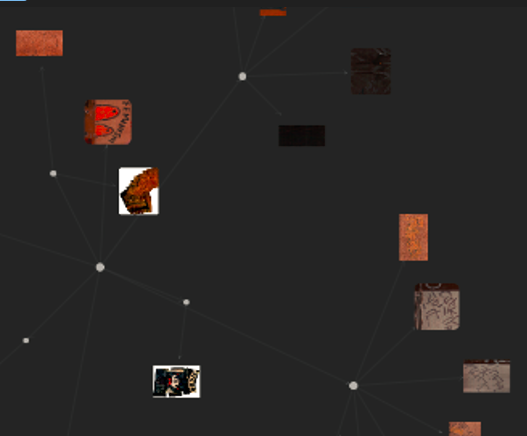
Since our "cooArchi - community oriented archiving interface" prototype in 2021, I have thought a lot about how to do interactive and collaborative network writing with existing software.
Currently I am experimenting with note taking software. I chose Obsidian, which is not open source, but has many open source plugins. And it writes Markdown files, which can easily be moved and used with other software.
With "Dataviewer" Plugin and "Graph Link Types" Plugin a markdown writing experience similiar to what we tried with the cooArchi interface is possible.
For synchronized/platform writing there is a commercial sync service and I will be exploring self-hosted "LiveSynch" with Object Storage, and "Remotely Save" with Nextcloud WebdAV.
Public test run this Sunday afternoon at the @MuseumfZK in B-Lage in Berlin Neukölln
Update. I just archived my #Twitter account at #CommunityArchive.
https://www.community-archive.org/
Easy to search with [from:petersuber KEYWORDS].
https://www.community-archive.org/search
The process is much simpler than for the Internet Archive Wayback Machine (earlier this thread). Recommended.
Note that I had more than 10.4k tweets and only 7.7k were successfully uploaded. Not sure why. Probably related to fact that I got thousands of error messages when I tried uploading to the Wayback Machine.
Repost mit Kurzlink: Meine alte Arbeitsstelle STICHWORT, Archiv der Frauen- und Lesbenbewegung sucht eine Archivar:in.
Da es vielleicht sonst nicht so leicht zu erhalten ist, habe ich die Ausschreibung (auf LinkedIn 😬) gepostet. Bitte verbreiten und weiterleiten an Archivar:innen. Es ist eine nette Moeglichkeit in einem #CommunityArchive zu arbeiten. Fuer mich war es eine tolle erste Stelle. #Archiv #Frauenarchiv #Lesbenarchiv
Are you a South Asian American history nerd? Or just curious?
SAADA, the incredibly online archive of community history (bttps://www.saada.org/), is celebrating its 15th anniversary on Monday, July 10.
Register at https://www.eventbrite.com/e/celebrate-saadas-15th-birthday-tickets-664718158907
#SouthAsianAmerican #CommunityArchive #AsianAmerican #EthnicStudies
Had meeting earlier this morning with the main stake holders in our new local district #CommunityHistory venture, going over various #Aotearoa #NZ laws, #ethics and expectations of public in #digipres, to ensure we are all on the same page moving forward.
The level of support and encouragement I am receiving for my mahi (work) in this #CommunityArchive is beyond anything I have ever experienced in the #GLAM field, so glad I moved on from a pāmamae (traumatic/painful) job previously.
My journey into my current #digipres project came from leaving my prior mahi (job/work) in another town due to bullying & threats which led to MH struggles & a relapse of cancer.
Another community wanted me to get involved with their own #history institution but the vibe was just as bad as what I'd left... So, I proposed that instead, we create an online portal for our local #CommunityHistory in a #CommunityArchive - as an #Archivist & #DigitalTechnician So, here it is:
https://ehive.com/collections/202139/central-western-murihiku-southland-archive

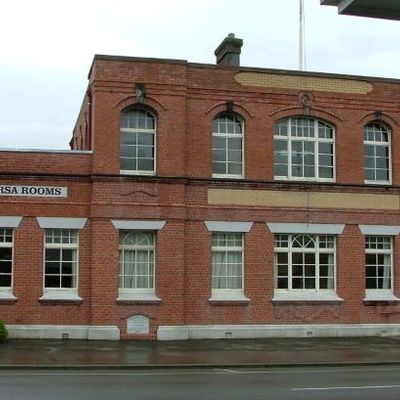
The Central & Western Murihiku Southland Archive has been set up as a community archive project, to digitally gather, store, preserve, record and share our district history. It is especially important for those local communities who have no history repository locally, to have a place to keep a copy of their local heritage safe and to promote the history of their communities and those who settled them. But all district histories are welcome here. So, if your district, town, farm, business or family are within our area and you would like to have the history of this recorded for our current and future generations, please make contact. This is a free community service. Our motto is: "By Community, For Community". We accept photos, articles, memories, books, records, maps, ephemera and all paper based items for digitizing and putting into this new archive. You can also ask us to take photographs of objects and properties for the archive. Oral history is something else we will be working on shortly. If you have a story of local history to tell, please do let us know. Remember this is YOUR archive as part of your local community, a place where you can save and store any local history, without it leaving your ownership. This archive is a place where everybody in the community can contribute, comment, interact, share memories and our combined history. We do not take your important history to keep, we professionally copy it, ensure these copies are safe and share them with the community. Your heritage remains in your hands. So if you have precious family memories you want to share with others but retain ownership of, this community archive is for you. The area we will be covering with the archive is one in which the settlers within it often moved around to live and work in different local districts, so their family collections can be held together and not spread across varying institutions. The Western part of the district covered by the archive will be roughly from Piopiotahi/Fiordland in the West, right across the Waiau District, and along the coast south west coast, down into the Aparima/Riverton in the South. We are focusing on the Waiau area in the beginning, mainly as our museum here does not have any online presence or set opening hours. We have also started with preserving the history of the Eastern Bush community first up, as it is an area without a fully recorded written and photographic history and with quite a few long-standing families moving out of the area in recent years, it was imperative that the history of this community and its important past stories and heritage be saved for our future generations. If you can provide any photos and information from the Eastern Bush area, please contact our local Digitisation Project Manager as below, for how you can help out. We hope to have a community information event soon. We will also have a small fee based research service based within the online archive, which will help to fund the growth of the project. If you are looking for information on any family, person, business, farm, property or event within the local area and in the districts we cover, we can quite possibly help you with this, as we have a trained historical researcher. Please contact the Social History Project Manager for information about our research service, as per the details below: The archive is completely digital so is only available online, but the beauty of this is that it can be accessed by anyone, anywhere, 24/7. As this is a new site, a new model and a community voluntary project, please can you bear with us as we progress, grow and add new features. The plan is for each local community to have their own entries within this site and for all the early settler families in each of these, to also be included in that, with a brief history and photos. If you can help with this by providing yours, please contact as below. For more information, questions or donations, please just ask.
 Museum MfZK
 Nullmuseum
 petersuber
 Archivist Liz
 Anirvan Chatterjee
 Central & Western Archive/GLAM