"Thousands of years ago in what is now the Dominican Republic, there was a cave full of bones. And those bones were full of bees.

In a paleontological first, researchers have discovered that bees used the jawbones of now extinct mammals as burrows."

https://www.scientificamerican.com/article/ancient-bees-burrowed-inside-bones-fossils-reveal/

#Bees #Fossils #Bones #TraceFossils #Burrows

Ancient Bees Burrowed Inside Bones, Fossils Reveal

Bones of now extinct species became a haven for bee babies thousands of years ago, scientists report in a first-of-its-kind discovery

Scientific American

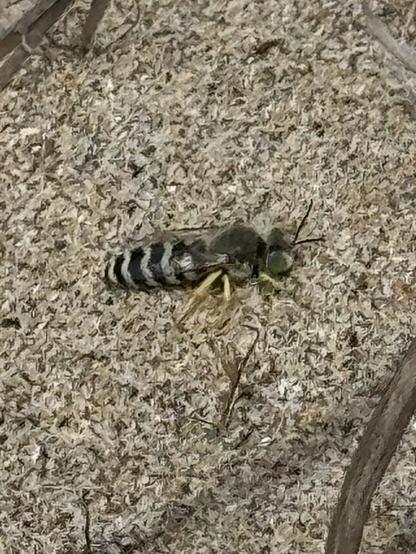
Sand wasps (tribe Bembicini) hunt mainly flies, which they paralyze and store in underground burrows as food for their larvae. Females often nest in dense groups, which can attract parasitic insects—some of which the sand wasps turn around and prey upon themselves.

#wasps #burrows #nature #wildlife #insects #california

🚨 We have a new paper!
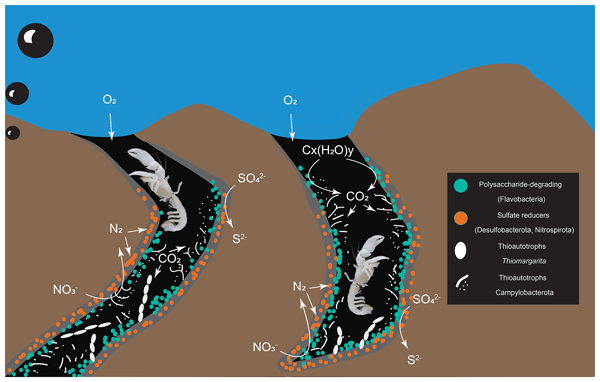
Led by Maxim Rubin-Blum, we show the role #burrows and burrowing #animals have on in cold seeps.
Burrowing doesn't just mix sediment, it opens conduits that connect #seawater rich in NOx and sulfate to a subsurface domain rich in organic matter but poor in oxidizers. Fueling biological reactions and interacting as well as, potentially, things like diagenetic calcification.
https://bg.copernicus.org/articles/22/1321/2025/
Animal burrowing at cold seep ecotones boosts productivity by linking macromolecule turnover with chemosynthesis and nutrient cycling

Abstract. Hydrocarbon seepage at the deep seafloor fuels flourishing chemosynthetic communities. These seeps impact the functionality of the benthic ecosystem beyond hotspots of gas emission, altering the abundance, diversity, and activity of microbiota and fauna and affecting geochemical processes. However, these chemosynthetic ecotones (chemotones) are far less explored than the foci of seepage. To better understand the functionality of chemotones, we (i) mapped seabed morphology at the periphery of gas seeps in the deep eastern Mediterranean Sea, using video analyses and synthetic aperture sonar; (ii) sampled chemotone sediments and described burrowing using computerized tomography; (iii) explored nutrient concentrations; (iv) quantified microbial abundance, activity, and N2 fixation rates in selected samples; and (v) extracted DNA and explored microbial diversity and function using amplicon sequencing and metagenomics. Our results show that gas seepage creates burrowing intensity gradients at seep ecotones, with the ghost shrimp Calliax lobata primarily responsible for burrowing, which influences nitrogen and sulfur cycling through microbial activity. Burrow walls form a unique habitat, where macromolecules are degraded by Bacteroidota, and their fermentation products fuel sulfate reduction by Desulfobacterota and Nitrospirota. These, in turn, support chemosynthetic Campylobacterota and giant sulfur bacteria Thiomargarita, which can aid C. lobata nutrition. These interactions may support enhanced productivity at seep ecotones.

A measurement of the extent that animals shape the environment:

“Global diversity and energy of animals shaping the Earth’s surface”, Gemma Harvey et al. 2025 https://www.pnas.org/doi/abs/10.1073/pnas.2415104122

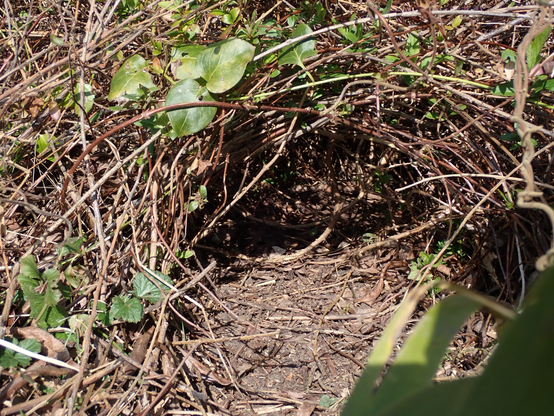
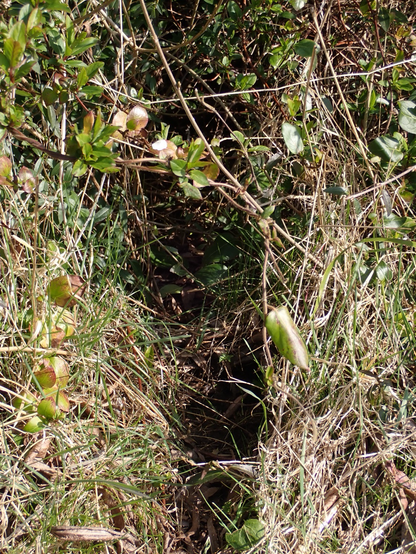
Traces of the work of animals are everywhere. Here, a couple of entrances to burrows, which have been in the same place for years. The grass can’t grow on its path and is shaped to the size of the animal on the sides, drawing a tunnel.

#ecology #burrows

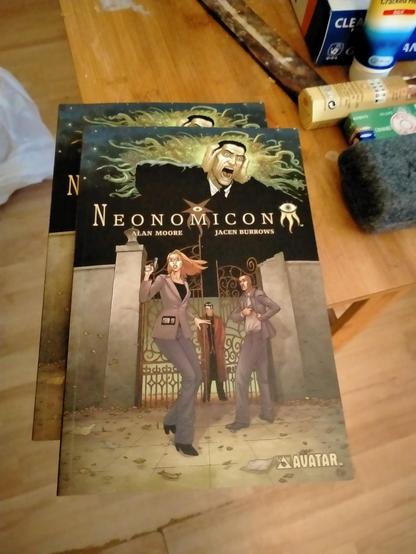
I'm off to bed with #Moore and #Burrows' #Neonomicon, again.

The opening chapters have been interesting ... !

And another #PrePrint, led by Maxim Rubin Blum (with many collabs from #IOLR, and other institutes) going into the details of what exactly happens in #burrows around #ColdSeeps, biologically, chemically, and sedimentologically.
https://egusphere.copernicus.org/preprints/2024/egusphere-2024-1285/
Animal burrowing at cold seep ecotones boosts productivity by linking macromolecule turnover with chemosynthesis and nutrient cycling

Abstract. Hydrocarbon seepage at the deep seafloor fuels flourishing chemosynthetic communities. These seeps impact the functionality of the benthic ecosystem beyond hotspots of gas emission, altering the abundance, diversity and activity of microbiota and fauna, and affecting geochemical processes. Yet, these chemosynthetic ecotones (chemotones) are far less explored than the foci of seepage. To better understand the functionality of chemotones, we: i) mapped seabed morphology at the periphery of gas seeps in the deep Eastern Mediterranean Sea, using video analyses and synthetic aperture sonar; ii) sampled chemotone sediments and described burrowing using computerized tomography; iii) explored nutrient concentrations; iv) quantified microbial abundance, activity and N2 fixation rates in selected samples and v) extracted DNA and explored microbial diversity and function using amplicon sequencing and metagenomics. Our results indicate that the gas seepage yields gradients of burrowing intensity at the seep ecotones, especially by the ghost shrimp Calliax lobata. This burrowing alters nitrogen and sulfur cycling through the activity of diverse microbes. Burrow walls form a unique habitat, where macromolecules are degraded by Bacterioida, and their fermentation products fuel sulfate reduction by Desulfobacterota and Nitrospirota. These in turn support chemosynthetic Campylobacterota and giant sulfur bacteria Thiomargarita, which can aid C. lobata nutrition. These interactions may support enhanced productivity at seep ecotones.

🔊 Auf #radioeins läuft...

Smith & Burrows:
🎵 As The Snowflakes Fall

#NowPlaying #Smith #Burrows

https://open.spotify.com/track/2Hz57u4brnuNIJqRc2p3Rz

Schon gewusst❓

Wenn Du einen Beitrag des Bots ⭐ FAVORISIERST, erfährt das nur der Bot - nicht Deine FollowerInnen.
Wenn Du einen Song weitererempfehlen möchtest, dann 🔁 TEILE ihn❗

As the Snowflakes Fall

Smith & Burrows · Funny Looking Angels · Song · 2011

Spotify
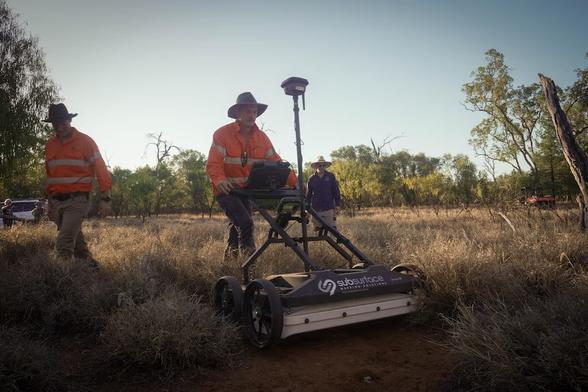
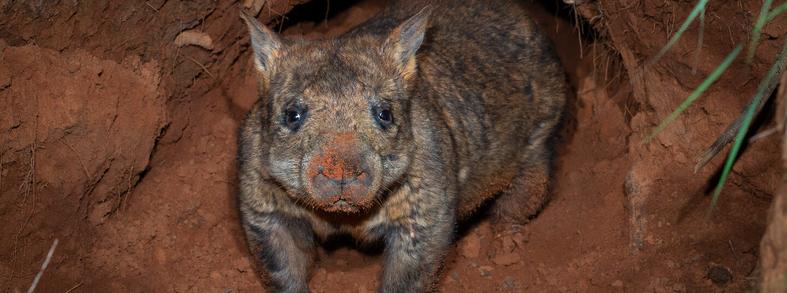
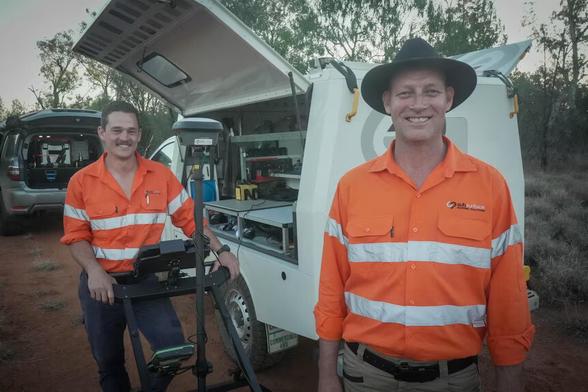
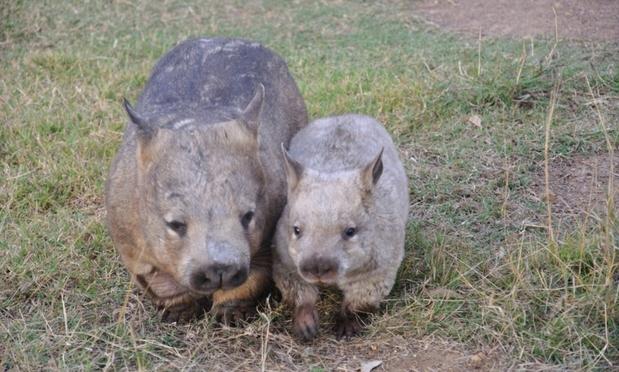
Ground-penetrating radar used to map critically endangered northern hairy-nosed wombat burrows

With only 315 of the creatures left, conservationists use subsurface mapping to see what sort of burrows they are building in different landscapes in a bid to find potential new habitats for the critically endangered species.

ABC News

Why is Kevin McCarthy still supporting Donald Trump?

The answer? He’s a coward. He’s a hypocrite. And he’s a fraud.

Please, help me end his career. Pitch in $25 or more to my campaign to DEFEAT Kevin McCarthy once and for all.

https://defeatmccarthy.us/coward?t=FGqs5

Thanks for your support,

#John #Burrows

Straight People Explain What Pride Means To Them

Pride month is recognized each June in remembrance of the 1969 Stonewall Uprising in Manhattan, when a police raid at a gay club sparked the riot that began the gay rights movement. While at its core Pride is a celebration of and for the LGBTQ+ community, straight people often join in the festivities. We talked to…

The Onion